Stephen J. Dubner
Journalist and Host, Freakonomics Radio
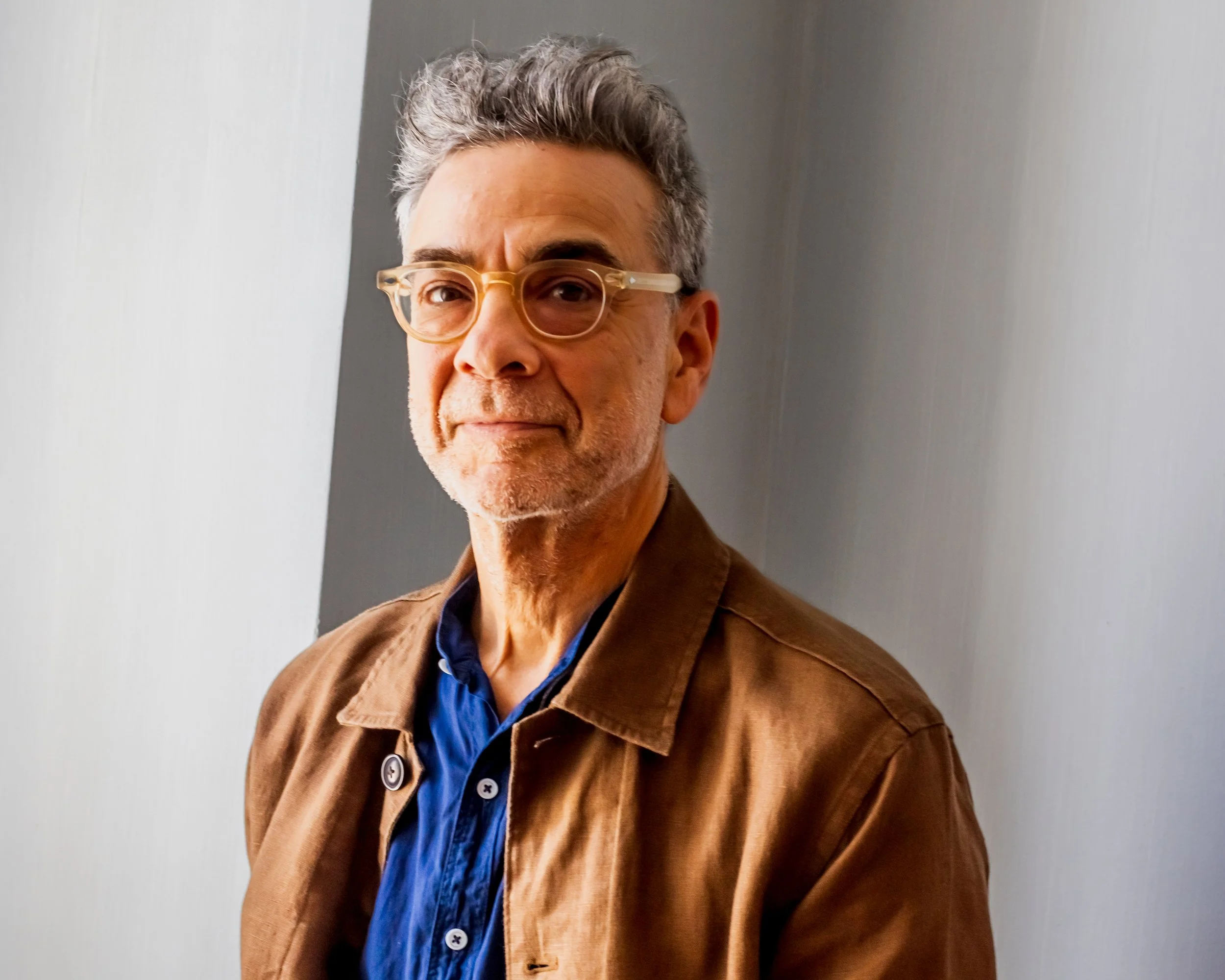
“Everybody who does something great fails a lot on the way there.”
Summary
In this episode of Leadership Matters, I had the honor of being joined by journalist, author, and fellow SiriusXM radio host Stephen J. Dubner. Stephen is the co-author of Freakonomics, one of the most acclaimed works of nonfiction in the twentieth century. The book recently received a twentieth anniversary reprint, helping a new generation foster an economist’s perspective on topics ranging from crime rates to sumo wrestling. Stephen also hosts Freakonomics Radio, which reaches some 2.5 million listeners a month, and has recently turned his attention to a new talk show, Better in Person, in which he invites remarkable people into his living room and follows them out into the world.
Our conversation traced the full arc of Stephen’s life, including his childhood in Duanesburg, NY, signing a record deal with Clive Davis, and the New York Times Magazine profile of a young University of Chicago economist named Steven Levitt that eventually evolved into Freakonomics.
Along the way, Stephen makes a case for what we might call a Freakonomics mindset: fostering curiosity as a discipline to be practiced, entertaining every alternative explanation before defending your own, and appreciating luck as a far larger factor in any success story than most people care to admit. He closes on an argument worth hearing at this moment in history: that we too easily mistake a period of disruption for a bad time to be alive, and that skepticism should not be confused with cynicism.
Mentions & Resources in this Episode
Freakonomics Twentieth Anniversary Edition: A Rogue Economist Explores the Hidden Side of Everything — by Steven D. Levitt and Stephen J. Dubner
Choosing My Religion: A Memoir of a Family Beyond Belief – by Stephen J. Dubner
“How to Host a Talk Show, with Dick Cavett,” Freakonomics Radio
Guest Bio
Stephen Dubner is co-author of the Freakonomics book series, host of Freakonomics Radio, and host of the new TV talk show Better in Person, which you can watch on the Freakonomics YouTube channel, on Apple Podcasts, and elsewhere.
The eighth and last child of an upstate New York newspaperman, Stephen has been writing since he was a child. (His first published work appeared in Highlights magazine.) As an undergraduate at Appalachian State University, he started a rock band (The Right Profile), which Clive Davis signed to Arista Records. This brought Stephen to New York City, but he ultimately quit music and earned an M.F.A. in writing at Columbia University, where he also taught in the English Department. He was an editor and writer at New York magazine and The New York Times before quitting to write books. He is happy he did so. In addition to the Freakonomics series, he is the author of Turbulent Souls (Choosing My Religion), Confessions of a Hero-Worshiper, and the children’s book The Boy With Two Belly Buttons. He and his family still live in New York, and Better in Person is to some degree a love letter to that great city.
Episode Transcript
Alan Fleischmann
Welcome to Leadership Matters on SiriusXM and leadershipmattersshow.com. I’m your host, Alan Fleischmann, and I’m joined today by an author, a journalist, and an inspirational thinker, doer, and speaker who has spent two decades asking and exploring questions that few others thought to ask.
Stephen Dubner is the co-author of Freakonomics and the host of Freakonomics Radio. What began in 2003 as a magazine profile of a young University of Chicago economist named Steven Levitt became an acclaimed nonfiction book that has sold 5 million copies in 40 languages. Last November, HarperCollins published a revised and expanded 20th anniversary edition of the book.
From that foundation, Stephen has built a media network that today reaches some 2.5 million listeners a month across roughly 400 public radio stations and right here on SiriusXM. Last month, he launched Better in Person, a talk show that invites remarkable people into his living room and then follows them out into the world. As Stephen puts it, Freakonomics Radio is about how things work. Better in Person is about how people work.
Today we’ll explore Stephen’s early life in upstate New York, his remarkable career, his new show, and the many lessons in leadership he has learned along the way. Stephen, welcome to Leadership Matters. It is such a pleasure to have you on the show.
Stephen Dubner
Alan, thank you. That was a very nice introduction. I feel you’re giving me a little bit too much credit for too many things, but I’m going to accept it.
Alan Fleischmann
Well, I can probably do a lot more based on what I know and following you and your work since you launched that book many years ago. I have very vivid memories of carrying around Freakonomics when it came out, and then not only reading it once or twice, but sharing it and rereading it. It’s the kind of book — I get why there was an anniversary edition that came out. It is a book that is evergreen in so many ways.
So let’s start a little bit at the beginning. You grew up the youngest of eight children in Duanesburg, New York. What was your home life like? I have to imagine, being the youngest of eight kids — when I grew up, I loved the show Eight Is Enough, and I can only imagine you’re Nicholas Bradford. What sort of topics and activities? What did your parents do? Tell us a little bit about the dynamic there.
Stephen Dubner
Actually, before Freakonomics, I had written two books, the first of which was a memoir — really a family memoir about this strange family of mine. The book was called Turbulent Souls. When Freakonomics came out and was a big hit, the publisher decided to reissue my first book, and they retitled it as Choosing My Religion. So those two titles, Turbulent Souls and Choosing My Religion, are the same book.
I grew up in this family. My parents were a pair of Brooklyn-born, first-generation American Jews — both kind of typical story. Both their parents had immigrated from shtetls in what’s now Poland or Belarus. And my two parents, before they met each other, both converted to Catholicism, which was a very unusual route, and it was a very unusual and dramatic story. They were very, very devout, spiritual people who created this big Catholic family. We ended up moving upstate to New York, this place, as you mentioned, called Duanesburg.
As the youngest of eight children, I grew up knowing very, very little about their history and their past. And it wasn’t until I was in my 20s — my dad died when I was a kid — in my 20s, I’d always been a writer. My dad was a newspaperman. I’d always loved asking questions and writing down the answers, which is a good thing, especially for a shy kid. Journalism and writing were a wonderful thing to do. And I began to interview my mom in my 20s about this Jewish history I knew nothing about, and so that became my first book.
The family I grew up in was a wonderful family. I actually just got back from a high school reunion — 45th reunion — up in Duanesburg. And boy, oh boy, memory is such an amazing thing. Things that you had no recollection of at all — the minute you see someone’s face or hear their voice, the entire universe comes back.
It was a very rural place. It was a working-class place. I would get up typically at about five and do some chores, and I would hitchhike to the little town called Quaker Street, which had one stoplight. And I would work in the general store. I’d go on to school. And I loved it, in theory, the place — because there were a lot of really good people, and I was surrounded by love. I would say it was a healthy environment to grow up in. But I did yearn for something a little bit more.
I didn’t think I would end up living in New York City, which strikes me as the direct opposite of Duanesburg. But that’s where I’ve been now for the past 35 years. So I’m really a farm boy who turned out to be a city boy, but I do need to get my feet back on the grass every now and again.
My dad worked as a newspaperman. There were a few papers in the Albany, Schenectady, Troy area. He worked for each of those over time. And my mom ran the house, and we ran a little farm, I guess you’d call it. We grew a lot of our own food, had a few animals here and there. So yeah — very, very different life from what I’m doing now.
Alan Fleischmann
Should people read Turbulent Souls?
Stephen Dubner
I think that’s up to them. I think it’s a pretty good book. It was my first, a real labor of love. At the time, I was working at The New York Times, I guess, when I first published that. And I felt like I was succeeding as a writer because that book sold, I don’t know, 35,000 or 40,000 copies in hardcover, which I thought was amazing.
But then I realized that to make a living writing books is very, very, very difficult. But I was going to give it a shot. And then when Freakonomics came — that was my third book, that was going to be either make or break. In fact, before the book was published, I was thinking about getting another job back in journalism because I’d been on my own for a few years. And then it came out and it did well. So I haven’t had a job in a long time.
Alan Fleischmann
Tell us a little bit about — as you said, your parents converted from Judaism to Catholicism before you were born, before they met — and then you came back to Judaism. How did that happen?
Stephen Dubner
It happened — I would say, who was the famous quote? Was it from Fitzgerald or Hemingway? How do people go bankrupt? Gradually, and then —
Alan Fleischmann
Suddenly. I think, “and then suddenly.”
Stephen Dubner
Yeah. So my return to Judaism was, I would say, just an organic evolution, in that I was a very obedient and devout Catholic for my young years, my junior years. I was an altar boy, the whole thing. There were four boys and four girls in the family, and as the youngest boy, there was great hope that I would be the one to become a priest. And even though I was very obedient, I knew that was not in my future. It just wasn’t where I was headed.
Once I got to college — I went to a place called Appalachian State University in Boone, North Carolina, kind of a long, strange story how I wound up there, although it worked out very well — I wasn’t really an observant Catholic in any significant way. Although when you’re raised in any tradition, whether it’s a faith tradition or a cultural or familial tradition, that has a huge impact on you. So I certainly have felt that and the benefits of that.
But then it was really as a writer that I began to think about what it meant to be Jewish and who Jews were. I knew this distant fact that my own parents had once been Jews, but I knew very little about their lives. I knew really nothing about it. But then I’d be reading Jewish writers, I’d be reading Isaac Singer and Woody Allen, and on and on, and looking at the Jewish scientists — the scientists, many of whom came to America during the Nazi purge — and trying to look at the development of America in the 20th century through a Jewish lens was a remarkable thing to do.
And then when I moved to New York — I moved to New York actually because in college I was playing in a band. I got involved with a great group of young guys, and we had a band, and we were kind of bad at first, but we kept at it. We started by playing other people’s songs, but then we started writing, just the way every band does, and we kept at it, and we started to get good, and we ended up getting a record deal. We were signed by Clive Davis, who came to see us at CBGB on the Bowery, and we were signed to Arista Records and moved to New York City to make our first record. And that was exciting and thrilling, really.
But then, the closer we got to some version of rock stardom, the more I realized that was not the life I wanted long term. It’s unbelievably fun to be in a rock band and travel around and write music and play it. But — I don’t want to say the temptations that come with it, but the circumstances that are attached to showbiz like that — I just knew that wasn’t good for me. It was everything from the sex and drugs and rock and roll part, but also the idea of presenting yourself as a performer, looking for adoration, in a way. And I understand that sentiment. I think we all want to be adored and loved, but maybe not so much as a public figure.
So I began to have doubts about that, and I ended up quitting the band and music as we were making our first record. But then I stayed on in New York, went to grad school at Columbia, studied writing. And by that point, many of my friends and teachers and mentors were Jewish, just because it’s New York. And I began to say, “Well, wait a minute, my parents were Jewish too.” And they’re like, “Wait, they were? What do you mean? What happened to them?” And I realized how unusual my parents’ story was.
And then, as I began to explore the many, many facets of what it means to be Jewish throughout history — there are religious, cultural, ethnic, linguistic, intellectual components, on and on — it felt like home. I don’t really know another way to say it. And New York City began to feel like home. So since 1980-whatever — ’87, ’88, ’89 — I’ve been in New York City and Jewish. So just another Jewish Upper West Sider now, who started out as an altar boy.
Alan Fleischmann
That’s amazing, though, when you think about it. And your wife — is she Jewish too?
Stephen Dubner
She is, yeah. It was, I would say, important for me to marry, have a Jewish family. And so yes. Our son’s name is Solomon, which was my dad’s name. My dad, when he converted, became Paul. So Solomon Dubner became Paul, but now there’s another Solomon Dubner, my son. And our daughter’s name is Anya, which comes from Hannah, which was a biblical story I always loved. So we’re a pretty standard Upper West Side Jewish family now, I’d say.
Alan Fleischmann
I love that. And what happened — you can’t do all of them, but did the other seven members of your family stay in the area, or did they leave too? Did any of them make a pilgrimage to New York as well?
Stephen Dubner
No, no siblings moved to New York. I’m the outlier there. No other siblings came back to Judaism. I’m also the outlier there. But I’m happy to report that they’re very fine people spread across the states, really, the way that so many families are now.
It used to be, where I grew up, a lot of our family friends were other families with eight, 10, 12 kids. And it was typical then for everybody to be in the area. But now the technology and transportation and so on have changed so much that I feel like the function of family is very, very different. I think we see that in the way that our society has become atomized and splintered a bit. But then, I’m not saying it’s all bad, because you also form your own non-biological families in a place like New York, or anywhere. “Family by choice” is an interesting phrase that I think is worth considering.
Alan Fleischmann
We call mine “big family.” We do Thanksgivings together, and it’s the high school friend and the college friend and other folks that we’ve brought together over the years. And our kids grew up knowing and feeling the genuine aunts and uncles. It’s a great thing.
So you were in the band. The Right Profile was what it was called, right?
Stephen Dubner
Correct.
Alan Fleischmann
Which is pretty cool. And I’m just curious — I wonder if your perspective of coming to New York, the love of music, the love of writing, whether that also created what became eventually what you created in Chicago with Freakonomics. I’m just curious, because you come with so many different perspectives, and what makes Freakonomics so fabulous and powerful is you create these uncommon thoughts and these uncommon combinations of thoughts that you wouldn’t normally expect.
Stephen Dubner
Yeah, I think the one thing that everything I’ve done, vocationally at least, or professionally, has in common — I just think of the very simple explanation as: I’m a writer. I’ve always been a writer. In my family, we actually had a family newspaper. My first publication was in Highlights, the magazine for kids. When I was, I think, nine, I wrote a poem that a teacher had submitted. And so I just always sort of processed the world as a writer. And by that I mean you observe and question and try to explain. Really simple at the end of the day — although in most professions, you don’t do those things.
So from the beginning, I didn’t set out to be this, and I don’t think I had any particular skills or ability at it, but it was something that I was just animated by, which was being observant, trying to figure out why X happens in Y circumstance, but not in Z circumstance.
And then the secret sauce, really, is the reporter’s notebook. I was very, very shy as a kid. I’m actually still really shy, but I’ve learned to fake it. The thing about being a writer, especially if you’re a journalist doing nonfiction, is you have a notepad, and that just gives you permission to walk up to people and say, “Excuse me, I’m so-and-so, and I’d like to ask you some questions.” And nine times out of 10, they’ll answer your questions.
I felt like I’d cracked the code when I was a kid. And this was way pre-internet. This was pre-cable TV, and so information was in scarce supply. You’d go to the library to look up books to find out things. And so if you could walk up to an adult or an institution and begin to ask questions — that was not public information. That was really thrilling.
So I think I’ve always just been driven by, I guess, natural curiosity. I find that all kids are pretty curious. Kids really are natural-born scientists. If you think about it, everything you do, you’re experimenting with something or other. If I drop this, does it break? If I run there, do I get yelled at? And so — I’m not saying this is a positive attribute — but I’ve never really lost my childlike sense of why does this happen, or why does that happen. It’s just that now I have the ability to ask people who are extremely learned about things, from economics and physics and government institutions and so on.
So yeah, I feel like I have a kind of dream job based on extremely foundational human traits and abilities, which are curiosity, and — I especially like to find people who are doing good work, pro-social work. No offense to you, I know you work a lot in the political sphere, but I tend to avoid the political sphere a little bit because it’s such a high-stakes game, if you want to call it that, that there are a lot of incentives against collaboration. There are a lot of incentives against transparency and so on. So I tend to look for things where I can explain to myself and then to the world how a given system or industry or whatnot is working. And that’s a real thrill, if I can explain it well.
Alan Fleischmann
That’s great. It sounds like you’ve never lost — I have this conversation internally in my firm, but also among my kids — never lose the insatiable yearning to be curious, and to ask questions, and never think you know it all. And the idea of you asking questions — you can feel the curiosity, the energy. The other thing I think is —
Stephen Dubner
I find that brilliant, successful people — maybe they’re not well known — but there are a lot of people out there that I would consider brilliant and successful who aren’t well known, whether they’re scientists or in institutions or whatnot. I almost feel like the smarter you are, the more eager you are to explain what you do, because there are a lot of smart, accomplished, amazing people out in the world operating under principles that they’ve developed over time, and they aren’t really often asked to explain how they got there, how they arrived at that.
One of my very favorites, really a role model of mine, was the late physicist Richard Feynman. He was a physicist who did work on all different kinds of things that matter in that realm. But he also was, (a), deeply curious, and (b), really driven. Even though he was very, very smart, he was really driven to understand things from the ground up. He wanted to understand the physical attributes of something, the social attributes of things like that.
And so, being an explainer in the world — I would say in some ways there’s much less value to that now than there used to be, because we all have so much information at our fingertips now. But I think this predates AI by a long shot. Although AI has been around a lot longer than people tend to give it credit for — we’ve had some version of AI since the late 1950s. But what we now call AI does produce, as we know, a lot of slop. But I think humans produce a lot of slop too, and we let them get away with it.
And I’m anti-slop. I’m pro people being able to answer the basic questions of journalism: who, what, why, where, when. And if they start coming at you with an explanation that’s got a lot of corporate or institutional or political buzzwords, then you know that either they don’t really know what they’re talking about, or they’re trying to sell you something in one form or another. And that’s not the area that I love. I’m not into that.
Alan Fleischmann
It sounds like there’s a humility in the way you write. You take people with you. There’s an irresistible combination of confidence and humility — to believe in what you say, but the humility in how you say it is such a big part of that as well.
When you describe yourself, are you first and foremost a writer? Is that how you would describe yourself?
Stephen Dubner
It’s funny. Yes, I do, but I get a lot of blank stares, because then people say, “But I hear you on the radio,” or “I see you making this TV show.” And I totally get that, because I think most people think of a writer as someone who just sits alone and types — which I do a lot of, too. But I happen to type scripts that are for audio, or prepare for interviews that are for radio or TV.
But yeah, I do think of myself as a writer, in that I’m driven by the principles that drive a writer. I’m always looking for, or receptive to, ideas. For a writer, the coin of the realm is the idea. And then I try to interrogate that idea and say, is this worth pursuing? And if so, why? Is it new and novel and unknown, or at least something from the past that we haven’t really thought about for a long time?
Then I say, can I gather evidence about this? In other words, I don’t want to write opinion, or I don’t want to write about guessing. I want to write facts of some kind. And facts differ from realm to realm. Facts mean one thing in sports versus politics versus business and so on. But I tend to think of myself as having an empirical framework, as opposed to a theoretical framework or an opinion framework. And what I mean by that — empirical just means, if someone tells me this happened, a basic question I’ll come back to them with is, okay, what’s your best evidence that you’re right? In other words, you’re arguing that you did this thing that produced this result, but it could have been 10 other things. So how do we figure that out?
And I got a big boost in that kind of thinking as a writer by writing Freakonomics with my friend Steve Levitt. So Steve Levitt, I met, as you mentioned, when I wrote a piece about him for The New York Times Magazine, with no intention of becoming collaborators or friends. In fact, there was a little bit of antagonism, because the relationship between a journalist and a subject is not a friendship at all. But then over time, after this article came out, we became collaborators accidentally. And it turns out that it’s been the best partnership I’ve ever had outside of my marriage.
And with Levitt — because he’s an academic economist at the University of Chicago, he’s a wonderful teacher — over time, I began to think a little bit more like an economist. And one thing that economists do that I really treasure is, if you read an economics paper in an academic journal — and I’m not saying they’re better than the other social sciences, but they’re different — they have a large empirical framework. In other words, there’s usually a lot of data, as opposed to, in a psychology paper, you might see an experiment that was done on a college campus with 15 undergrads, right? And eight of the undergrads did one thing, six did one, and one didn’t do anything. And from that, you’ll try to reach the conclusion that the majority do X behavior. That’s just such a tiny and artificial environment.
What economists are good at is going out into the world and working with big, big sets of data, and then interrogating those data from a variety of angles. And when you read an economics paper, my favorite thing is they’ll say, “Here’s what this paper is about. Here is the thesis that we’re going to try to argue. Here is the data that went into our analysis. Here’s the methodology of the analysis,” et cetera. “But before we go on to tell you why we think our thesis is accurate and important, we’re going to entertain all the alternative theses that could be in play here.” And then they walk you through, one after the other, why they believe those are not the case. And what this gets down to is a very basic but important and valuable way of analyzing the world.
Some people call it multivariate analysis, which just means you’re factoring in an awful lot of inputs to try to figure out what’s affecting the outputs. And that’s where I say, with politics, it’s tricky, because politicians will tell you, “The reason the stock market is up is because I passed legislation six months ago that does this.” Well, first of all, that’s not the way the stock markets work. Second of all, there might have been 1,000 other things happening. Third of all — I mean, this is a tangent, but it’s an important third of all — I do have to question the validity of someone making an argument when they are in a position to actually trade on their private knowledge, which is a whole other separate problem in Congress.
But yeah, I try to look for — they’re basically detective stories with better data than detectives often have. That’s what I would say.
Alan Fleischmann
That’s cool. So tell us a little bit of how this happened with you and Steven. You went from this profile to the book. How did that happen? Tell us a little bit about Steven for those who don’t know him, also, I guess.
Stephen Dubner
Yeah. This is in praise of one person in particular, and in praise of a literary agent in general. So my agent was and is Suzanne Gluck, who’s at William Morris — WME, William Morris Endeavor. I’ve been with her for a long, long time.
And I wrote this New York Times Magazine profile about Levitt. He was a young economist at the University of Chicago who’d done a lot of really interesting and often seemingly oddball research on topics ranging from potential collusion among sumo wrestlers to cheating among high school teachers when the No Child Left Behind movement was requiring that teachers lift up scores in their grades.
His most famous paper was one that argued that the legalization of abortion in the form of Roe v. Wade led to a decrease in crime years later, because there was a cohort then of would-be parents who didn’t become parents. And we know that parents, especially in a low-income, low-opportunity environment where they feel like it’s going to be very, very hard to raise a child — if a child is born into really adverse circumstances, their opportunities in life are much different. And so that was a big paper that Levitt had written.
And I wrote this article. It got a lot of attention. A lot of people were asking me to write a book about him, which I said I don’t think I want to do. I just wrote an article about him. I don’t know if I want to spend a couple of years writing a book on something I’ve essentially already done.
People were calling Steve Levitt at Chicago, saying, “Hey, do you want to write a book about your research?” And Levitt said, “Have you ever read my academic papers? I don’t think you want me writing a book.”
And so Levitt called me — and like I said, we weren’t buddies, but we got along well. And he said, “I don’t know what to do. I’m getting all these publishers calling. What do I do?” And I said, “Well, do you want to write a book?” He said, “No.” I said, “Well, maybe, if you just want someone to respond to the publishers, you should get an agent. They know who the publishers are, they know who’s good, who’s not, and maybe you’ll change your mind, or whatnot.” So he said, “Do you know any good agents?” I said, “Yes, I have the best, Suzanne Gluck.”
So they talked, and then Suzanne, my agent, was the one who said, “Hey, dummy, why don’t you guys think about writing this book together?” Which, as obvious as it seems now, I never would have thought. I don’t think Levitt would have either. And at first, I wasn’t enthusiastic, because I didn’t approach this looking for a collaborator, and I already was a writer. But then the more we talked about it and talked to each other, we really just clicked.
We sat down one night — I remember in a deli, the Stage Deli, Seventh Avenue, 53rd Street, or whatever — and just started making a list of Levitt’s research and other research that we thought would be fun to write about. And we just sat for hours and hours, laughing, thinking how fun this would be. And once we decided it would be a fun collaboration, we decided to do it.
Then the agent sold the book proposal. We wrote a book. We had a blast doing it. Came time for a title. Steve Levitt’s sister, who unfortunately passed away, she was the one who came up with the name Freakonomics, among like 300 or 400 other suggestions, because it was a book without a thesis, really. So we needed some kind of unusual title. And the publisher hated the title.
We tried to talk them into it. Hated it. They were holding out for a better title. I will tell you that I did possibly suggest a bunch of intentionally bad titles in the interim, to see if we could get them to come around to Freakonomics. And finally they did. And then the book came out, and it did 100 times better than any of us expected, and it’s been pretty fortunate ever since then.
Alan Fleischmann
Well, 5 million copies, 40 languages — and the word became part of the vocabulary. People use it as if it’s a word. It’s a word you created. It’s amazing, and it’s held up. When you said earlier, 20th anniversary edition — that’s amazing, actually.
I mean, I think the only other equivalent I’ve got — and there are many more, I know — but I think of Getting to Yes. I feel like there are certain books that become like life Bibles. Maybe Dale Carnegie’s book, How to Win Friends and Influence People.
Stephen Dubner
Isn’t that funny? Yeah.
Alan Fleischmann
If you did like the Mount Rushmore of books that are so substantial for decades and decades — your book, certainly, and then maybe there’s two others for sure as well. Which is pretty amazing, actually. It must make you feel very good.
Stephen Dubner
It definitely does. Because I’m a kid from Duanesburg, I don’t know — this may not sound genuine, but I promise it is — I just don’t think that much of myself. I’m a trier, right? And I think I’m a good guy, and I think I’m relatively intelligent. But mostly, what I do, I think, does not require any special talents. I do work hard. I try to do things the right way.
But what it really points out to me — the success of Freakonomics — is that luck is a massive, massive factor. Especially when I was starting out in New York and working in journalism, most of my friends are writers, and many of them had a much better pedigree than me coming into writing their books. They also work really hard. They’re very smart. They have great taste, et cetera. And yet a lot of us — all of us — write books that no one knows and cares about.
So the fact that this one exploded the way it did, but then more than that, for me, gave me an opportunity to keep doing more work that was related to it. I called my podcast Freakonomics Radio not by accident, because I wanted to expand from that. But Freakonomics Radio has now become a totally separate operation, and then this new TV talk show, which grows out of that, also totally separate.
But I don’t think any of this would have been possible without really a good bit of luck. So I don’t mean — I once heard someone say, if you can fake self-deprecation, you really got it made. I promise, I’m not trying to fake it.
Alan Fleischmann
No — but I do believe in manifestation. You manifest things in life. But I also believe in luck. And I also believe — I just wrote an op-ed about this — that you can direct gratitude. If you make gratitude a part of your love and life, then it does create that humility that we need in life in order for us to see things that you wouldn’t see. When you’re arrogant, your eyes are closed. When you’re humble, your eyes are open. And that’s also a big part of what you do.
I’m very curious about your new show. You do video and audio?
Stephen Dubner
It’s really a TV show. It sounds crazy — it’s a TV show that’s not on TV. It’s a TV show that’s on YouTube and Apple Podcasts and so on. It’ll probably end up on TV somewhere at some point.
But the point is, we live in an age now of distributed media, let’s call it, where you can make something and get it out to the world instantly and essentially for free. As a creator, the distribution systems that have been created over the past 20 years digitally are remarkable. It happened with podcasting. Podcasting was nothing, and over time it grew into an industry, and it invited people like me to publish on it.
When I was working at The New York Times, writing for them, or writing books — if you think about the infrastructure required to get your article or book published, it’s massive. With digital media, whether podcast or even this TV show, whatever you make, you can put it out to the world.
So that’s the reason we self-funded this. I didn’t want to go to a network or platform who will say, “Okay, I’ll give you a chance to do the TV talk show you want, and we’ll fund it. But that means this kind of guest, yes. This kind of guest, no. This kind of conversation, yes. This kind, no. Oh, by the way, it can only be 18 seconds long, because that’s all anybody has the attention span for.”
There are all these conventional wisdoms in media and everywhere — politics and so on — that often turn out to be wrong. And so my approach has been just make what I think is interesting to me. Try to make it well. And if I make it well, then there’s a chance it’ll be interesting to other people as well. That’s the lesson I learned from Freakonomics, honestly.
Alan Fleischmann
And does Freakonomics Radio mean that you have a part of your job kind of playing an organizational, operational role in content — kind of editor and things like that? Because not all the shows are yours, right?
Stephen Dubner
Well, now the only shows we’re making are mine. We have something called the Freakonomics Radio Network, which over the years would make other podcasts. But actually, we’re not making new episodes of any other podcast now, other than Freakonomics Radio and then the TV show, Better in Person. So the entire output of my company is with me also as host, but I’m also, I guess, the CEO of the firm.
Alan Fleischmann
I love that you call your title Better in Person. In the age of AI, so much of my life and our lives is trying to figure out, how do we balance — or not even balance — how do we make sure we assure and preserve the human-to-human connectivity, the trust that comes with that as well? Even though we obviously are all about the love of data and metrics and insights — you’re brilliant at that. But the fact that you called it Better in Person — tell us a little bit about what made that happen. Because you’ve been highly successful with Freakonomics Radio. One could argue, why do another show?
Stephen Dubner
Yeah, one could definitely argue that. So Freakonomics Radio is mostly about topics or ideas, and sometimes it’s just an interview with one person. But usually we’re trying to explain or explore something, or ask a question.
Right before I got on with you, Alan, I did a two-hour interview, which will be one of like three or four interviews that we do for one episode. So we do a lot of research and reporting and interviewing. We’ll interview, let’s say, three or four or five people each, for between 90 minutes and two hours, and then we take the best of that and turn that into one good, let’s say, 45-minute episode of Freakonomics Radio. So we work hard to really tell a coherent story that’s factual and all that.
And I love doing that, and I don’t think I’m ever going to stop. That’s, to me, as a writer — you have an idea, you figure out who to talk to, you interview them, you take the parts that are most relevant, and then you put it together and you write it. That’s what Freakonomics Radio is.
Better in Person was inspired by a desire to have a different kind of connection with people, and also, to be fair, people that may not work their way into the Freakonomics Radio realm. So I don’t always have a way to talk to, let’s say, athletes or musicians, things like that in Freakonomics Radio. It’s not a direct fit. So for Better in Person, I can talk to anybody that I think is amazing and that I want to speak with.
The real inspiration came one night. I was at a dinner party, and I was sitting down at the end, and I had one person on either side of me, and the three of us were just having an amazingly great conversation. They were a pair of particularly interesting, accomplished people, and I thought, oh, mama, I wish this was a TV show.
I love Dick Cavett. I love The Dick Cavett Show. In fact, I interviewed Cavett recently, and we put out an episode with him as a Freakonomics Radio episode to kind of trigger Better in Person, to kick it off. And there were moments in Cavett’s shows sometimes where — it could be a love fest, it could be a fight — but there’d be these people, Cavett and one or two or three other people, just having a conversation of a type, with a level of, I don’t want to say intellect, but a level of — these are people who love language, who love ideas, who are vibrant, often accomplished, et cetera.
And I thought, man, if I could do some version of that, but maybe not in a TV studio in the typical way — what if I did it in my house, in my living room?
And then this idea began to develop, because during COVID, when the lockdown happened, I was not unhappy to not have to be with people a lot, because as a writer, I’m a bit of a loner. I love spending time alone. I really do. I love being in my head, reading, writing, et cetera, et cetera. And so with COVID, I thought — I hate to say it, it sounds terrible — this is going to be fantastic for me. I don’t have to go anywhere.
And after a few months, I was miserable. Like we all were miserable. And I thought of something. There was an economist at the University of Chicago named Gary Becker.
Alan Fleischmann
I know Gary Becker. He was a Nobel Prize winner.
Stephen Dubner
He was. And Gary Becker is a great story, because he was considered a heretic in the field of econ for a long time, because he, like my friend Steve Levitt, would ask questions that people would say don’t seem worthy of the institution of economics. Gary Becker studied things like the economics of the family, child rearing, but he also studied the economics of addiction.
And he was once asked by my friend Steve Levitt, for whom Gary was a real mentor — Levitt once asked him, “What’s the most addictive substance on the planet?” And Gary said, “Oh, that’s easy. Other people.”
And when I heard that answer, I was like, “Wait, what?” And then I thought about it, and I’m like, oh my gosh, of course you’re right. We really are social animals. And some of us need more time alone than others, but there’s so much evidence to show us that spending too much of your time on your own, in your head, in your bubble, is just not good for us.
And so I was inspired by that to say, Freakonomics Radio is awesome. It’s successful. I love it. I’m not going to stop. But that’s kind of like my remote show. That’s my studio show that I do in my studio, doing multiple interviews with multiple people, then we put it together in a written form to make a script. Better in Person — I wanted it to be more of a real, live connection with remarkable people. And so that’s why I felt the need to do a whole second show.
Alan Fleischmann
And that show will be an hour episode? And how often will —
Stephen Dubner
Well, we are publishing right now our first season. We made what I thought was going to be, Alan, a short pilot season. I wanted to make three or four episodes, and then we started shooting them, and we were just having too much fun. So we ended up making 10.
So we’re right now about in the middle, I guess, of publishing our first season of 10 episodes. The easiest way for people to find it, if they’re at all familiar with YouTube — you go to the Freakonomics channel on YouTube. Just search Freakonomics on YouTube, and it’s all free and easily accessible. We’ve published a few episodes there, and there will be a total of 10 by the middle of September. And it’s also on Apple Podcasts, which has just introduced video as well. And I think it will probably be in many other places as time goes on.
We’re essentially building a distribution collage, which is viable in this age of digital distribution that wasn’t viable 20 years ago. I don’t have to make a deal with an NBC or CBS or CNN or whatnot — although any of those might be ancillary distribution at some point. But yeah, I wanted to make it the way we make stuff. I’m not saying that’s better than the way networks make stuff, but it’s the way I’m comfortable doing it.
Alan Fleischmann
I love that. But also it’s about charting a new path of how, and making it authentically yours. You’re not trying to just cut and paste somebody else’s success. You’re making it really great.
Stephen Dubner
I don’t know about really great. I hope it’s great. But definitely authentic.
Alan Fleischmann
I’m curious how you decide, in the great population out there, how you choose the guests you have. Because you’re bringing forward a real diversity of guests.
Stephen Dubner
Yeah, I love our season one guests. Some of them are maybe minor household names. Many of them are not. My favorite comments, though, on YouTube or whatever — people say, “I’d never heard of blank.” Rabbi Angela Buchdahl. Warren Zanes, a rock and roll guy who now writes books about Springsteen and Tom Petty. John Urschel, former NFL player who’s now a math professor at MIT. Bjarke Ingels, this remarkable architect. Jennifer Egan, great novelist. People say, “I didn’t know who they were. I started watching…”
And to answer your earlier question, they’re usually between 35 and 45 minutes long. But these are people of great substance, decency. I tend to prefer the decent people. Not going to lie. I’m not having the dictators on the show yet.
Alan Fleischmann
Hold off on that one for now.
Stephen Dubner
Again, I don’t mean to say that if I were making the show for a network, they’d say, “Hey, you’ve got to sit down with the dictator.” But we know how things work. So I did want to at least make this first season as good as we could, within our lights, the way that we like to think about and do things.
And from here on out, I don’t know. Will Better in Person and Freakonomics Radio kind of hybridize each other a little bit over time? That would be great with me. Should we add some video to Freakonomics Radio? Maybe. But I’m just a guy who makes stuff that seems interesting and worthwhile and fun, and what happens to it after it’s out in the world, I can’t really control that much. So I try not to worry about it too much.
Alan Fleischmann
I love that. And also let the creativity that comes from these conversations kind of prevail as well, which is kind of cool. It’ll create its own organic nature, even though obviously it’s an inorganic platform, but the organic topics are real and relevant.
Stephen Dubner
That’s such a good way of putting it. Another inspiration for making this show — we did a live event in L.A. about a year and a half ago in a big theater. It was a Freakonomics Radio live show, maybe 1,200 people, and it turned out to be a bit of a disaster, because the people who were supposed to record it failed to hit the button, apparently.
So we had pre-produced this episode. You spend months on it to get really good guests. We had the documentary filmmaker R.J. Cutler and Ari Emanuel, the super-agent who runs WME. And then it wasn’t recorded, so that was a big problem. So that was one inspiration to say, okay, maybe if we’re going to make something, we should control it ourselves. We should be the ones pressing record.
But the other takeaway from that is, while we were getting ready to do that show, there were some AV problems in the hall, which were indicative of the later problem, and we were just hanging out backstage. So it was Ari Emanuel, R.J. Cutler, then my team, and I had a relative there. And those conversations among remarkable people, when you’re just shooting the breeze —
Alan Fleischmann
That’s priceless.
Stephen Dubner
So much fun. But then the minute you turn on the mics or the cameras, understandably, it changes.
What I’m trying to do with Better in Person by shooting it in my living room is invite people into my home — and the fact they can suss out relatively soon that I’m not the kind of person who’s going to try to play gotcha or make them feel like an idiot. But I am going to ask them questions that are not necessarily impolite, but I really want to get to know them and what makes them tick, what got them to where they are.
There were two commonalities during this first season that were very, very evident. One is that everybody is deeply, deeply influenced by the families they grew up in. And that may sound obvious, but about half of them had extremely supportive and loving families, and the other half had the opposite. So I found that to be interesting. But none of them didn’t go back to their families in telling the stories about how they got there. So I found that to be a note worth making to myself.
The other one — and I know we all know this, and I know we can all acknowledge it in other people, but I feel we’re too tough on ourselves in this way — everybody who does something great fails a lot on the way there, even while they’re great. And I think that’s just a foundational idea that we need to remind ourselves, not just because of how social media works, although social media certainly exacerbates this. If you’re only seeing everybody at their best, in their triumphs and their great successes, then inevitably you’re going to think, oh boy, I must really stink. But if you talk to people who accomplish a lot, as I’m sure you know well, they’re failing all the time. And then it’s how you move on to the next one, how you recover. And I find that to be a really inspiring component of what makes people tick.
Alan Fleischmann
And it’s harder and harder to have the courage to take risk when you have success, because you worry that it’s that one last gamble. Am I going to throw it all away? And part of what you do and I do in our lives is we give people the confidence sometimes to actually go with that instinct, and know that leadership means a transformation, and not that immediate transaction that sometimes —
Stephen Dubner
Look, I think there are a lot of people to be inspired by out there in the world. I happen to be a big Rolling Stones fan. The Rolling Stones were probably my favorite band during my youth, and then while I was playing music, and even now. A lot of things about the way that they made music, but also the way that they’ve endured — they’re putting out new studio records now.
And Jagger’s, I think, 82 — let me see. No, no, I think he turned 83. For some reason, Mick Jagger is one of the few people in the world whose birthday I know. July 26, 1943, I think. So I think he just turned 83.
And when you hear him talk about it, his desire is the same as it was: to make stuff that’s fun and good. I got to meet Jagger at an event by accident. I talked to him for about 30 seconds. I fanboyed out so hard. I saw him. I thought he was a friend — you see a famous person, it’s a familiar face. I thought it was a friend. I go up to him almost to hug him, and he takes a step back. And then I realized who he is. And what came out of my mouth was, “I think you are just great.” That’s all I could muster. And he broke into this big smile, and he just said, “That’s very kind of you to say.” I think that’s probably his stock response. But oh my gosh, I felt like it was a really nice full-circle moment. So maybe I need to get him on the show sometime.
Alan Fleischmann
Well, I had lunch today, and we talked about the Rolling Stones. So this is the second day. And I was talking about Bianca Jagger and all her work, and Mick Jagger, and that he is just this incredible example of eternal joy, love, and youth. Talk about not letting the norms stop him from being what he wants to be and live a life fully. With all that energy, it’s incredible. It’s a great role model on how one should live in many ways. You should definitely have him on the show.
Stephen Dubner
I should. Let me know if you can slip me his number. I’ll give him a call.
Alan Fleischmann
I’ll do that. I’ll get it. I’ll make sure. But he does like going on shows now, so I’ll work on that with you. I think that would be — well, we’ll have him on here too.
But this idea of producing this whole thing — look, you could have just changed your format for Freakonomics Radio, or done every other episode, “I’ll do this.” But you decided to have something totally different. So you’re obviously following your own instincts. And it sounds like you’ve been financing it and creating it and developing it separately. Even though you said there would be some vertical and horizontal connectivity, maybe, you want it to be separate as well.
Stephen Dubner
Yeah, there’s definitely some integration. Freakonomics Radio is a huge platform that has helped us launch Better in Person. So we definitely have been able to take advantage of that. That said, it’s a new show, a new concept in a new place, because it’s video instead of just audio. And so it’s a startup. You know, it’s a startup. We’re having to educate people about what it is and where to find it.
I’m happy to report that so far it’s going great. I mean, it’s hard for me to say, because I’m the guy making it, but people like it. Like Sally Field — “Hey, people like me.”
But the joy I get is mostly in the making of it. The joy I get is not in the publishing part. In fact, that’s the very same thing that made me leave rock and roll, gosh, a lot of years ago.
Alan Fleischmann
That’s your opening line that should have been for Mick Jagger, by the way. “We both share the same background.”
Stephen Dubner
Well, there is one episode of Better in Person, an interview with a guy named Warren Zanes, who I mentioned, who was in a band years ago called the Del Fuegos. They made a few good records. Then he got kicked out of the band by his big brother. Then he turned into a scholar of rock and roll. Now he writes these books, including one about Springsteen.
But I was with Warren and his band one night in Greensboro, North Carolina, when Springsteen came into the club where these guys were playing, between sets. Springsteen was touring Born in the U.S.A., and he’d heard these guys’ record, their first record, and he loved it. It was a great record. And he came to say hello to them, and he wanted to see if he could sit in with them on a couple of songs, which of course they were enthusiastic about.
But it was the Del Fuegos, Bruce Springsteen, his guitarist Nils Lofgren, and me back in the storage room of this pub in Greensboro, North Carolina. And we were just about to sign our record deal, my band.
And what I heard Bruce saying, as he was just describing his state of mind — because this was, he’d really just become now a superstar. He’d been a rock and roll star, but among a kind of rock and roll cult. But now he was having number one hits, touring big, big stadiums and so on. And he didn’t say it in these words, but my takeaway was: if I knew what it’s like to be famous, I’m not so sure I would have signed up for that.
And that stayed with me. And then a year and a half later, maybe two years later, when we did have our record deal and we were making our records, I did think back to what Bruce had said. And there were a few other bands that I had the opportunity to hang around with, and I just thought, that’s not the thing for me — putting myself out there and being on the road all the time, and so on.
So it’s a little bit uncomfortable for me to put myself out there, not just my voice, but the rest of me on a TV show. But I’ve matured a little bit. Doesn’t bother me so much anymore, I guess.
Alan Fleischmann
It also sounds like it’s fun. I mean, honestly, you love what you’re doing, which is so powerful. And it’s fun.
Stephen Dubner
It is fun. And I guess another obvious upside is that I don’t have to leave home to do it. I like my family. I like where I live. I love New York City. And if you’re, let’s say, in a rock and roll band, you make your money by being on the road, and that’s not so good for family life.
For years, when Freakonomics came out, I made money by traveling around and giving lectures, talks to universities and corporations and so on. It was fantastic. I was able to send my kids to college, buy an apartment — great, great financially. But because we had young kids, I would do crazy things. I flew to India and back the same day to give a talk. California and back all the time. So I did it because that was a way, as a writer, to make a living. But now that I can make my living by staying in the city where I live and inviting other people into my home — make them travel. Now that’s better.
Alan Fleischmann
No, I totally agree. I used to do that. I think back — I went to China once for the day. I’ve done crazy things, things that I would never even consider today. And it has nothing to do, I don’t believe, with energy or age. I think it just has to do with: I don’t have to do this anymore. I’m not doing it.
What question did I not ask you? That would be great to share with our listeners.
Stephen Dubner
Oh boy. That’s a good question. I always ask that of people, and they’re always stumped. And now I’m stumped too. Let me think for a minute.
You didn’t ask me who my favorite NFL team is, which is okay.
Alan Fleischmann
Answer that. That’s important.
Stephen Dubner
Well, my favorite NFL team is the Pittsburgh Steelers, but I’m concerned about them now. I’m concerned that maybe time has passed them by a little bit. And I love the Rooney family. I think they’re fantastic stewards of that team.
But it’s interesting when you look at the NFL — which I would argue is the most successful entertainment enterprise in the history of the world. It happens to be sports. It’s an unbelievably well-run and powerful entity. But it’s interesting to watch how that industry has changed, and how the family-run teams are often having a hard time keeping up and committing to spending.
There’s no question that would prompt the response I’m about to give, but one thing I’d like to just add is that I don’t think we should mistake living in a time of great disruption and chaos for a bad time. There’s the old quote that they say was Confucius — and it almost certainly was not Confucius — which is a curse: “May you live in interesting times.” What does it mean to live in interesting times? It means nobody has any idea what’s going on.
I think it’s very easy for all of us, whether on a political level, societal level, even in our families, to feel like there’s so much chaos and disruption around that the essential core functions of what it means to be a human have changed. And I don’t think so. I just don’t believe so.
So I believe that a lot of the arguments that we’re having — whether it’s about technology, about political power, and so on — these are eternal. They really are. Read a little Ecclesiastes. If you read in the Talmud, “Turn it and turn it, for everything is in it.”
So I think that human nature hasn’t really changed that much, but our exoskeleton, let’s call it, has. And I think it can be a great challenge to live up to that. But I also think it’s a wonderful opportunity. I think it’s wonderful to grow up with so much potentially pro-social technology around us — whether that’s the pro-social elements of AI, whether it’s the medical research that’s happening.
And I try to encourage myself and my family and my friends, but I would encourage anyone within the sound of my voice to really look at the possibilities and opportunities of all these new technologies and formats and so on, as opposed to feeling like the world is ending. I feel like that’s become sort of the drumbeat in journalism. It certainly is. Being a journalist and hanging around with journalists still, there’s a deep, deep pessimism.
I think that skepticism is fantastic. I think that cynicism is not. I think optimism is usually more warranted. Pessimism, I understand, is a natural response for a lot of people, but I don’t think it’s really warranted. I think if you look at the accomplishments of humankind — I think we’re a pretty terrific species. We really are. There are plenty of us who do stupid things, and even hateful and hurtful things, but I think on average we’re okay. I know you are, Alan. I know you’re a good one.
Alan Fleischmann
And I know you are too. It’s a wonderful way to end the show — or maybe I should say end part one, because I’d love to do a part two.
Stephen Dubner
Let me know. I’ll be back whenever you want.
Alan Fleischmann
It would be fun, because we could go through — it would really be fun to spend an hour just going through lots of big questions and coming up with answers. I’d love to suggest a whole bunch of questions for you and then explore them together. That would be really fun.
Stephen Dubner
You know where to find me.
Alan Fleischmann
I will do.
Well, you’ve been listening to Leadership Matters on SiriusXM and at leadershipmattersshow.com. I’m your host, Alan Fleischmann. We just spent the last hour with Stephen J. Dubner, co-author of Freakonomics and host of Freakonomics Radio, and his new talk show, Better in Person. We discussed his childhood. We discussed his music career, as well as other parts of his life and journalism. But most importantly, just to get his thoughts and ideas about where we are and where we’re going.
It’s such a pleasure, Stephen, to have you on the show, and I look forward to that part two.
Stephen Dubner
Thank you, Alan. I really appreciate you having me. I enjoyed the conversation.
Alan Fleischmann
I look forward to seeing you soon. Thanks so much.
This transcript has been edited and condensed for clarity.