Rye Barcott
Co-Founder and CEO, With Honor
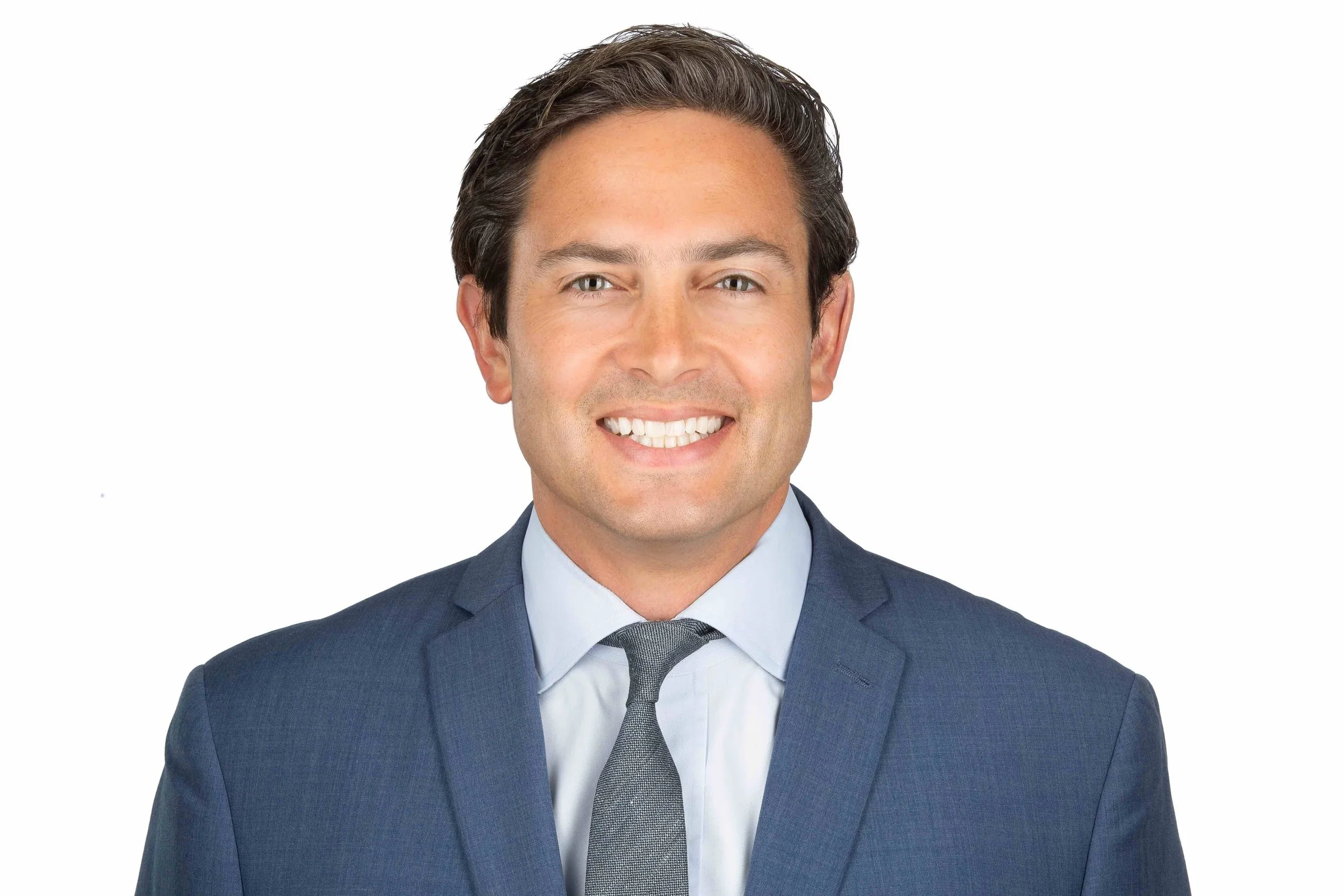
“Courage, as I define it in this book, is always contemplative. It considers the risks. … And then it makes a choice in the service of what the Stoics referred to as the common good.”
Summary
Over the last half-century, the share of veterans serving in Congress has fallen from nearly 70 percent to about 20. From Rye Barcott’s perspective, this decline has come at a real cost. Veterans in Congress vote across party lines at a higher rate than non-veterans and, along with nurses, are among the only groups that Americans still trust across the political divide. Veterans understand what it means to serve the country, and their increasing absence from the highest levels of government leaves a gap that is difficult to fill.
On this episode of Leadership Matters, I sat down with Rye to discuss the work that he and his organization, With Honor, are doing to fix that problem. With Honor is a cross-partisan nonprofit that recruits, elects, and supports principled veterans who pledge to serve with integrity, civility, and courage. Since 2017, it has helped elect more than one hundred veterans and national security professionals — fifty of whom now serve in Congress — and help advance more than two hundred bipartisan laws.
This battle is a personal one for Rye, who served five years as a Marine Corps officer in Bosnia, the Horn of Africa, and Iraq, and has also co-founded a number of other organizations aimed at promoting the common good. Over the course of this episode, we discussed Rye’s background, the remarkable advice he’s received from figures like Colin Powell, and his latest book, Courage Can Save Us, which profiles ten Americans now serving in public office.
Amidst an age of rampant polarization, Rye makes a case that is both hopeful and clear-eyed: courage is, in his view, fundamentally a form of service, and service may still be the thing most likely to bring us back to one another.
Mentions & Resources in this Episode
Guest Bio
Rye Barcott is a Marine Corps veteran, social entrepreneur, investor, and New York Times-bestselling author of Courage Can Save US. He is co-founder and CEO of With Honor, a cross-partisan organization that fights polarization by supporting principled veteran leadership in public office. As a college student, he co-founded CFK Africa (formerly Carolina for Kibera), a locally led youth leadership and public health non-governmental organization based in the Kibera slum of Nairobi, Kenya. He later co-founded Double Time Capital, a solar power investment firm. His first book, It Happened on the Way to War: A Marine’s Path to Peace, juxtaposes humanitarian and military service in Kenya and Iraq. Following its publication, Dartmouth College awarded him an honorary Doctorate of Humane Letters.
Episode Transcript
Alan Fleischmann
Welcome to Leadership Matters on SiriusXM and at leadershipmattersshow.com. I'm your host, Alan Fleischmann. I'm joined today by a Marine, a social entrepreneur, and an author who has spent his life in service and who has taken on one of the hardest missions in American public life today: helping to repair our divided democracy.
Rye Barcott is a friend. He's the co-founder and CEO of With Honor, a cross-partisan organization that fights polarization by supporting principled veterans running for public office. He served for five years as a Marine Corps officer in Bosnia, the Horn of Africa, and Iraq, and told that story in his acclaimed memoir, It Happened on the Way to War. Rye's new book, Courage Can Save Us, profiles 10 Americans now serving in public office — five Democrats and five Republicans, nine veterans, and a former FBI agent — who have carried the ethic of service from the battlefield into public life. In the book, Rye makes a hopeful case that courage, understood as service, can still renew our democracy.
Today, we will explore Rye's early life, his path to leadership, the mission of With Honor, the ideas at the heart of his new book, and the broader lessons about courage, service, and leading across divides that he has gathered along the way.
Rye, welcome to Leadership Matters. It is such a pleasure to have you on the show.
Rye Barcott
It's great to be on, Alan. Thanks for having me. And it was occasion to remember a great mentor of both of ours, the late Madeleine Albright, which is how I first met you. We miss her voice. I still hear her voice — and fortunately, we can all hear her voice, because she recorded her audiobooks, which were superb over the years.
Alan Fleischmann
It's so nice to remember that. It is amazing how immortal some of our leaders are. In our desire to cross and create bridges, we think about those who were fundamentally principled and had great, strong convictions, but yet knew how to put a hand down. Colin Powell and Madeleine Albright were two of the best of friends, and they didn't agree on policy, but they certainly agreed on people.
Rye Barcott
It's funny — I think of Colin Powell's line as one of my favorite all-time leadership lines, which was, "Perpetual optimism is a force multiplier." You want to follow folks that have an optimistic outlook, even when it's tough out, because it lifts all boats.
Madeleine Albright supported our organization early on and was a great friend. She recognized that it was cross-partisan — she was very much in the Democratic camp, but believed fundamentally in seeing more young people, in particular, serving in different capacities. And Colin Powell did as well. But Colin Powell, on the veterans piece, gave me a piece of advice. He said, "Listen, I'm going to support you. I'm going to cheer you on from the sidelines, but I am not going to affiliate with the organization, because I've also seen a number of veterans that have gone a different route" — not become cross-partisan, or been able to maintain trust across party lines. That was really great feedback very early on for our organization when we were setting up With Honor, because it made us focus on the core ethos of the organization, which is to take a pledge to work with integrity, civility, and the courage to actually cross party lines in a time when it's difficult to do so.
Alan Fleischmann
Those are the beacons of honor and recognition. There's the statesmanship that people show when they're patriots, when they care about country above all — it's how we build those bridges, which is amazing.
So let's talk a little bit about the young Rye. Let's start with your childhood in Rhode Island. Your mother was an anthropologist, and your father a sociologist and a decorated Marine himself, who I believe was wounded in Vietnam. What was family life like? Tell us a little bit about your parents, any siblings, the early lessons your parents taught you.
Rye Barcott
Sure. My mother is an anthropologist. She actually gave me the middle name Mead, as in the anthropologist Margaret Mead, and I'm very much a reflection of my parents. I love them dearly and have tried to honor both of them in both of my books.
My father gave me the orientation to go into the military, although it was very interesting — he had served in Vietnam in 1965 and '66. He volunteered for the war, and in many respects, it was maybe the most transformative experience of his life. But he held great caution about the military, because he had seen how it was both used effectively at times and, frankly, misused — and that was his view on the Vietnam War. So he was proud that I wanted to serve, but didn't necessarily push a particular path to service. At his core, he was a very critical thinker — that was what he prided himself on — and he spent a lot of time focused on writing and the generation of ideas.
So I gained some of that service gene from my father, and also some of the focus on understanding people and other cultures from my mother and her commitment to anthropology. She's also a nurse, which is a great service-oriented profession.
Alan Fleischmann
And undervalued, because it's probably one of the greatest callings of all callings to me. As a nurse, you use your brains, your body, your mind, your spirit — everything you have to give. It's probably the most taxing job there ever was.
Rye Barcott
The Wall Street Journal just asked me to do a column called "Five Best," where you select five books that have influenced you on a particular topic, and they're doing this in lieu of a book review for Courage Can Save Us. I'm so glad they did. They asked me to write on everyday heroes, and I picked a book about teachers, a book about nurses, and books about a number of other service-oriented professions.
What I learned in that selection of the book on nurses — which is a wonderful book called The Shift, by a woman who is a nurse and also has a PhD in literature — is that 3.4 million Americans serve as nurses. It's one of the largest professions in the United States, yet we also have a dramatic shortage of nurses throughout the country. It's not only an important profession, but one that I think people find very gratifying, because it brings the human touch to individuals that sometimes are facing their worst days.
It's amazing. Talk about needing an IQ, an EQ, and then a physical cue — a PQ, I guess. You really need it when you're a nurse. The book is wonderful — The Shift, by Theresa Brown — and she describes a 12-hour shift. At the end of the shift, she's just completely exhausted, every day, and she says, "I am leaving, leaving, leaving — but I will be back tomorrow."
Alan Fleischmann
And did your parents play a role in being that mentor to you and shaping what you wanted to do, or was it more you kind of calling yourself?
Rye Barcott
Well, I have teenage kids now, so I also see the moments when they're less open to mentorship. And I certainly went through a phase of that. I am truly very lucky that social media wasn't around — I'm very lucky that I made it through some of the teenage years. But my dad and mom stuck with me.
And frankly, my father also stuck with the sons of his best friend from Vietnam, Larry Ball, who died tragically of cancer in his 40s. His three sons and daughter went through a very difficult period of time where they just kept ignoring my father's outreach, but he stayed with it — just like he stayed with it for me over the years.
My dad — I look back and I just marvel at it. He read every single paper that I wrote, every single one, up until college. And again, there were moments where I couldn't hear the feedback, but I respect that so greatly.
My mother is just a very kind and loving soul. I heard a piece of feedback from a parenting book, which was: first and foremost, you just want your kids to be kind, to be good people. That's the most important thing at the end of the day. And certainly my mother really instilled me with that. My father was often kind, but sometimes he had his grumpy days.
Alan Fleischmann
And any brothers and sisters?
Rye Barcott
No, I was an only child.
By the way, both my mother and father are in this book on courage. My father lived with severe PTSD. He never talked about it; he never would use the term. But I start the book out with really the first moment where I got interested in courage. He had survived, miraculously, getting shot in the face in Vietnam. In 1965, he was leading a Marine Corps reconnaissance platoon — casualty rates were particularly high for our recon officers — and he took a bullet through the face that somehow didn't chip a tooth, but it left him with a scar that reminded me and a lot of my friends of the scar of the character Barnes in Platoon.
I pressed him on this when I was 10 years old and asked him what had happened. He kind of resisted, resisted — and then he took me to his office in the basement of our home, which he had built with his hands, and showed me this smoke grenade that was encased in wax. The smoke grenade, when he was shot through the face, was hanging above his heart on a flak jacket, and an enemy round came in and went out the exit point and basically saved his life. I still have that smoke grenade.
I became very interested in the idea of courage. I didn't differentiate it from bravery at the time, but I do now. I think that my father's action in the moment was brave — he continued to try to lead the platoon as he was shot. But bravery can be instinctive; it doesn't necessarily need to think through an action. Whereas courage, as I define it in this book, is always contemplative. It considers the risks. It has an idea of the risks — sometimes there's fear, sometimes there's not — and then it makes a choice in the service of what the Stoics referred to as the common good. In the case of my father in Vietnam, that was the country, but the more significant common good for him were his Marines to his left and right.
So the common good can be many things. It can be your family, it can be your friends, it can be your community, it can be your country. But it is fundamentally not yourself, and that's the genesis of courage. My father sparked that curiosity.
Alan Fleischmann
That's amazing. Nelson Mandela — I actually have an op-ed coming out talking about this — but there's this idea that courage is not the absence of fear, but the triumph over it. It's a directed emotion. We like to look at people and say, "Oh, they're naturally curious, they're naturally confident, they're naturally courageous," and in many ways, those are things you build. You're not born courageous, necessarily.
Rye Barcott
One of the things I loved about Mandela's writing — and I look forward to reading the op-ed — is that he's contemplative about the decisions and the risks. Courage is not static. One of the other seminal texts for me in this regard was Marcus Aurelius's Meditations, where he's writing his own private journal to himself, and he's going through this period of self-doubt on decisions. I really think that's the case for many, especially people that are in the public arena and constantly are being tested in terms of what their beliefs are — are they going to do what they see as the right thing in the service of the common good? You can have courage in a moment, and then not in another. You aspire to it, and you try to reach for it.
At any rate, I try to bring people into the thinking, the stress, the anxiety of those moments — especially the moral courage, because moral courage is very different from physical courage. Physical courage is what a lot of people think of when we hear about courage, and it's very important — the risking of the body. You think a lot on the military. But moral courage is often harder for individuals. It risks your friendships, your reputation, your integrity — some go as far as moments where you put in even matters of the soul. I think it's so foundational.
Alan Fleischmann
And the idea from your mother — that you can be kind and courageous, and you can be good and respectful. Courage does not mean that you have to roll somebody over. It's really about that community-building part that you're talking about so much.
Rye Barcott
I think so. I really view courage as fundamentally a form of service, and that's where the title of the book came from — our mutual friend and colleague Wes Moore, governor of Maryland. Wes was on our initial advisory board for With Honor about nine years ago. He was also the first candidate that we supported for governor. We call it a cross-partisan organization, because we support veterans regardless of their party. In fact, about 10 percent of veterans run as independents.
When Wes ran — and he ran a long-shot race against the former chairman of the Democratic National Party — he started saying a slogan which I think is a brilliant and really an aspirational one, and that is that service will save us. Service, whether that's in uniform or in a civilian capacity, makes you focus on others, so you focus less on yourself. It improves you as an individual while also improving your country and your community. That was the genesis of this idea around Courage Can Save Us — "us" being a capital U.S. It's the country, but it's also us as individuals.
I wrote the book in particular for students — thinking about high school students especially. As I mentioned, I've got teenagers now, and you see it: we are in an epidemic of loneliness. We are in a mental health crisis across the country, and that's felt acutely in our schools. And we're also serving at lower rates, especially among youth — less than 2 percent of Americans now go into either the military or civilian government service. Of course, there are other ways to serve, as we mentioned — nursing and teaching and other forms.
At its core, that's what I hope this book does, by profiling a unique assortment of individuals. How many times do we actually cross party lines right now in our divided culture, where the algorithms are rewarding the absolute opposite? But this is five Democrats, five Republicans in the arena. If there were more independents actually elected, we might very well have independents in the book. But these were 10 individuals that I know that do strive to serve the public common good before themselves, and that ethos in particular is the unifier.
Alan Fleischmann
I love that. And I also think about this idea that we live in all these verticals, these algorithms you mentioned — the idea that you're breaking the algorithm by going horizontal to create a circle of uncommon tables is powerful.
Tell us a little bit about, as you grew up and then into college — are there any mentors that supported you and helped you find this path to service, either directly, or were there people that you admired from afar that inspired you and still inspire you?
Rye Barcott
The one that was one of the big giants, and that I've tried to really recognize and honor in this book, is David Gergen, who was also, of course, a mutual colleague and became a great friend. I still hear his voice. He passed away a year ago — the first anniversary of his passing was this Friday.
David, after serving as an advisor to four presidents from different parties, where he focused a lot on speechwriting and communications, decided to dedicate the next and final chapter of his life to education, and helping educate students in particular. He set up a fellowship at the Center for Public Leadership at Harvard that focused in part on veterans. He also had a focus on what he referred to as social entrepreneurs — folks that bring an entrepreneurial mindset to solving public problems.
I was fortunate to get one of these fellowships, but just because I got the fellowship didn't mean that I got into his class. His class was very popular, and I didn't get in — I just didn't make the lottery. So I went up to him and proposed an independent study with him focused on speechwriting. He said he had not done a study like that, and he was of course very busy, but he said sure, he'd give it a try.
What he wanted me to do was to come to his home office, go through his library, pick one book a week, read it, and then we would discuss it for 45 minutes. The whole thing was amazing, but one of the most amazing things was that each of the books had his notes in the margins. So I was reading his notes, often written over the course of many years, because he would go back to the books that he most respected — Marcus Aurelius's Meditations being one of them. You had different generations of David Gergen at different points in his life on these amazing texts.
The first one that I picked up was Profiles in Courage, and we discussed that. It's the 70th anniversary of Profiles in Courage. Kennedy writes on eight historical figures, also across party lines, and he looks at those moments of courage in public office. It just stayed with me — that was now well over 15 years ago — and it became a source of inspiration for not only this book but also With Honor.
When I started the organization nine years ago — and all the author proceeds go to With Honor — we identified a dramatic trend: veterans in Congress had declined from almost 70 percent to about 20 percent over the course of my lifetime. When we looked at the data — which David encouraged us to do immediately; it was myself and Peter Dixon, who I'd served with in the Marine Corps, who were founding this organization — what the data showed was that veterans in Congress voted across party lines at a higher frequency over the last 50 years than non-veterans, and they had that shared commonality of service. They also happen to be one of the only groups — nurses is also one of the few — that have trust across party lines, especially this day and age.
So we decided to set up an organization. David was gracious to become our third co-founder, and he just believed in us. He believed in me. He believed in the mission. He was a generous soul who really, at his core, saw the promise of what this country could be.
Anyways — a long response to mentors. I've been fortunate to have so many over the course of my lifetime, and I try to pay it forward, especially with individuals — especially Marines, frankly — that have served, or kids that are just in a tough situation, and reach out.
Alan Fleischmann
And this is not the first organization that you founded, right? Kibera also, if I recall.
Rye Barcott
That's right — thanks for asking. I got my start in nonprofit service, or social entrepreneurship, when I was in college. I was on an ROTC scholarship to UNC Chapel Hill, and it was right before September 11th. Most of the missions that the military was focused on were peacekeeping in nature. I knew I was going to the Marine Corps — that was my calling — and I assumed that we would mostly focus on peacekeeping missions.
So I followed some of my mother's advice and decided to go to a place that had been affected by ethnic violence, and that was in the informal settlements — residents refer to them as slums — of Nairobi, Kenya. I went to one in particular called Kibera. I had a small fellowship. I was 20 years old at the time, but I'd taken some Swahili classes with the starting lineup of the men's basketball team and this amazing Professor Mutima from the Congo. So I knew a little bit about the language, but not much. And I just immersed myself in that community.
I ended up forming friendships with two co-founders of an organization that now just turned 25 years old, called Carolina for Kibera. One of my co-founders, Salim Mohamed, had set up a sports program that had become a professional football team and a community outreach organization called the Mathare Youth Sports Association, and it had been shortlisted for a Nobel Prize. We decided to create something similar in Kibera together. I ran the numbers, and I was stunned — you could start an organization on a very small budget, some $10,000.
But even smaller than that: my co-founder Tabitha Festo, who happened to be a nurse, had taken a grant from me to sell vegetables at the end of the summer. She lived in a 10-by-10-foot shack, and she was a single mother with three kids. I gave her this grant for $26, not thinking much about it, and she bought vegetables and started selling them. Six months later, she decided to pursue her dream, which was setting up a medical clinic in the heart of this large informal settlement, where the majority of folks live on under $2 a day. It's about the size of Central Park. And that facility, which is now a hospital called the Tabitha Clinic, treats over 40,000 patients a year and provides incredible assistance to the community.
All locally led — which is really the key, I think, to driving any change in any community. It's got to be from the ground up. It's been an enormously gratifying experience to be involved as a volunteer. I'm on the board. My daughter, who's 16, is traveling back with me this summer, and she's co-edited a book about teen pregnancy in Kibera, which is just incredible. So we're forging ahead with that work.
Alan Fleischmann
I love that. I can see your mother and father in this tradition as well, when you think about the work and the mission and purpose. The motto that you shared — sacrificing for success — is so meaningful.
Rye Barcott
Yeah, that was Tabitha's motto. I miss her. Her daughter now helps oversee the clinic. Tabitha passed away of HIV/AIDS when she was only 38 years old, a number of years ago. She had spray-painted on the first medical clinic sign, "Sacrificing for success."
It takes on a whole other dimension — what sacrificing means — when you see conditions like that.
Alan Fleischmann
There's so much about your book and so much about you, Rye, and who you spend time with, which is just the definition of inspiration and inspiring people. It's amazing.
Let's talk a little bit about — you went right into the Marine Corps, right? You were ROTC, so after you graduated, you started your military service right away, I imagine.
Rye Barcott
Yeah, I did. I actually started at The Basic School with one of the 10 — there are nine veterans and one in the FBI, as you mentioned, that are profiled in this book — and that was Seth Moulton. I know all of them very well, because we spent a lot of time together — these are kind of mini-biographies of a sort.
Seth and I were at The Basic School shortly after September 11th, and I remember us waking up and thinking, "God damn it, we're going to miss this war" — we're going to miss the conflict, because we were still in training, and our friend Nate Fick was about ready to deploy to Iraq. But who would have thought at that stage that these wars would go on for so long — obviously starting in Afghanistan, and then Iraq. Seth ended up deploying four times as an infantry officer. I became a counterintelligence and human intelligence officer and spent five years and three deployments in the Marine Corps. I couldn't ask for a better education as well as meaningful experience.
Alan Fleischmann
And were you five years as a Marine officer, directly from Bosnia to the Horn of Africa to Iraq — all the way through?
Rye Barcott
I was. We were just deploying all the time, essentially — six-to-nine-month deployments. We actually went through a period of time in 2005 and 2006 where they were putting into place stop loss, which was the Marine Corps term for essentially stopping individuals — especially officers; we were in such short supply of officers — from voluntarily leaving the military for a period of time.
Hard to believe — we're getting ready to recognize the 25th anniversary of September 11th this year.
Alan Fleischmann
In your previous book, It Happened on the Way to War, you describe waging peace while fighting a war. How do you hold those two things together?
Rye Barcott
Well, that's the essence of the book, and I thank my editor Anton Mueller at Bloomsbury — which is also the publisher of my second book — for really pushing me to go there, because I had initially written a book that was really focused on the Africa work instead of the dual form of service.
A lot of counterinsurgency, though, has a focus on essentially stabilizing and then enabling the country that you're in, or the location that you're in, to be able to govern themselves. I think that was a major insight that occurred once the surge started, and we were really focused on training and capacity building of, in this case, the Iraqi forces. I was very skeptical that it would work — it just felt like such a chaotic environment — but it is the essence of having to intervene in these conflicts.
The broad takeaway that I had was that it is always so much more effective and so much less costly to take measures that prevent conflict. Participatory development, which is what we focus on in sub-Saharan Africa through Carolina for Kibera — now CFK Africa — is all about, again, that local leadership, but working in partnership in order to achieve outcomes. That mentality is very important, I think, to stability in the world, frankly.
Alan Fleischmann
I love that too. You talk about fear in your writings, which is amazing — you talk about uncertainty and fear and the challenges they present. You did that in your memoir as well, and then you really embrace and celebrate courage, as we talked about earlier. How do you reconcile them? Tell us a little bit about that.
Rye Barcott
You know, I don't necessarily think that fear has to be a factor in courage. I think that you have to recognize the risks, and sometimes that comes with a level of fear. As you mentioned, courage is not taking an action without fear — it's recognizing it and being able to persevere.
But I come back to the moral courage and the moments, particularly in public office, working with these veterans that now serve — most of them in Congress. One of the hardest decisions is when you break from your party and your party orthodoxy. There are a number of examples of that. I mentioned Seth Moulton — there are really two big courage moments that I profile in the book. One is on the party lines: he was one of the first to really call out the disaster that was coming with the hasty withdrawal from Afghanistan. He went so far as to host a press conference outside the White House, because he felt like the Biden administration at the time was not taking the actions necessary to safeguard and protect our Afghan allies in particular.
But the second form of courage, which is commendable and I think very important to recognize given where the country is, is that Seth went through PTSD himself and had the guts to be able to say, "I had this problem, and I faced it." He did that while he was in elected office, which came with a not insignificant amount of risk to being re-elected, et cetera. But it was fundamentally the right thing to do, and it set the stage for the passing of the 988 national suicide hotline, which has helped hundreds of thousands — I would gather that's a conservative estimate — of not only veterans but also Americans around the country. With Honor as an organization has also worked on that. That's one of the things that we do: we try to identify legislation that can still work across party lines and get done, and then put together these coalitions of veterans to do that.
Many other examples. Don Bacon is on my mind, because we're planning to go back to Ukraine on September 11th and 12th with a bipartisan congressional delegation, and that's been one of the key areas he's really focused on. He's had to take many strong votes and positions that put him akilter of his colleagues, and face it. Basically, he says: if you're going to fall on your sword, pick your battle — and make sure you don't miss.
Alan Fleischmann
I love that. Tell us a little bit about some of the folks in the book — you've highlighted a few. Tell us about the book itself and the journey.
Rye Barcott
So — five and five. Every one of the 10 are folks that I've gotten to know and work closely with. One of the really great privileges of the book was being able to travel to their hometowns. I often met with their parents — sometimes those were the key sources of information to really get to some stories from back in the early years.
A fun example that I like to share on that is Mikie Sherrill, who's the first chapter, and the first-ever woman elected as a governor who served as a veteran. Incidentally, this election cycle we're seeing a doubling — a more than 2x increase — in the number of women veterans running, across party lines. A very encouraging trend, I think prompted by examples like Mikie.
I sat down with her parents, David and Patty, for like three hours, and I had been trying, in the narrative, to really show just the guts and level of courage that it took to be a woman at that point in time, when she was going through the Naval Academy. This was in the 1990s. There was an incident where another woman classmate was handcuffed to a urinal. This had happened after Tailhook had occurred, so it was a very different context.
But the way that Mikie led, and the way that she really thrived in the military environment — which she did, and she loved — she had made it a goal to be a pilot in the Navy going back to when she was around 10 years old. The way that she approached it was that she didn't focus on the friction; she focused on doing a good job and basically outperforming, particularly, the men that were the loudest and the most aggrieved. As she recalls it, many of the ones that were most hostile to women were also the lowest performers.
She told me about the existence of something called the WUBA KKK — WUBA is a designation for the working uniform, and it was basically a profane statement about women. It was a toxic environment, to say the least. But there were limits to how far the conversation would go with regard to how she was feeling in the moment. Her mother told me about when she went on a summer cruise on an aircraft carrier, and I write about this because her mother received a letter from her where she sketched her face with a little tear in her eye. When I go back to the experience — she was around 20 years old, and she was on an aircraft carrier of 5,000 Navy personnel, and she was the only woman. Five thousand Navy personnel, right after Tailhook, and she's the only woman. I told my daughter that — she's now 16 — and she said, "Daddy, that is my worst nightmare." But Mikie didn't make excuses for it.
And she's continued that in the political courage moments. Each chapter starts with their upbringing — sort of a question like you asked me, on mentorship — and in almost every case, there was a loved one that was a significant mentor. In many of the cases, there was also serious hardship and tragedy: the loss of parents, domestic abuse, et cetera. The chapters start with the formation of character, and where I believe that courage comes from. The second part of the chapter is on the military, and then the third part is the political courage.
With Mikie, that started very early, because she made a pledge that if she was elected, she would not vote for Nancy Pelosi as Speaker of the House. She had campaigned on that, and many individuals that did the same thing decided to change their mind, but she stuck to what she said she was going to do. If you say you're going to do something, you follow through with it. So that's one of a number of examples for her.
Alan Fleischmann
Wow, that's great. And anybody that you wanted to approach for the book that said, "Please don't do it"?
Rye Barcott
It's a good question. I definitely had folks that I spoke with where I just wasn't able to pull together enough — because it's not just the what happened. That's important, but also the level of participation. I was looking for richness of profiles, and not coming across as hagiography or puff pieces. So I did have some folks that I had started with that didn't end up making the final evolution of it. But at the end of the day, these 10 were really the 10 that I had reached out to, and I so appreciate them doing it. It is a real act of trust, especially when you start talking with battle buddies and friends and folks that they grew up with.
Alan Fleischmann
I think the other thing, too, when you reach out, is that these people probably have enormous humility, so it creates an awkwardness there. They're so service-oriented, they don't want it to be about them. They've served and are serving, and I'm sure they're very we-oriented, not I-oriented.
Rye Barcott
It's one of the biggest obstacles. With Honor evaluates veterans that run across the country now for any office — any veteran can reach out to us. We branched out to state and local races when Wes Moore initially ran for governor, and we support candidates 50-50. This cycle alone, we've evaluated over 1,000 candidates running across the country.
The biggest barrier for folks initially, oftentimes coming from a military background, is that a campaign is very me-focused. Even if you're building a team — and the best ones are always building a team — you still have to be communicating about who you are. It's a very self-centered type of work, or at least it can be; it can drag you into that. I think the way to get over that is to basically say, "Listen, I'm doing this for a purpose."
And the healthiest piece — the absolute healthiest piece that we look for in candidates — is a willingness to lose. That I'm not looking to make this a career. I'm willing to lose if I'm in elected office and actually stand for something that might cost me my job.
Alan Fleischmann
And is that a commitment they make to you as well when you support them?
Rye Barcott
We have a pledge — it's on our website, WithHonor.org — to serve with integrity, civility, and courage, and that has some specific items that they're committing to, including participating in a cross-party caucus that meets each month, and co-sponsoring a piece of legislation if they're in Congress. We do not make it a commitment that they term-limit themselves or that there will be specific red lines — we don't find that that's necessarily realistic — but we certainly look for that type of attitude.
Jared Golden is the final chapter, and he sort of embodies this in his decision to not run for office again after eight years. He has this powerful Substack that he wrote, where he says, "My greatest fear is not losing; it's winning."
And of course, for Jared — one of the episodes that I write about is that he lives in Lewiston, which was the site of a mass shooting. His daughter was two minutes away from the bowling alley where this mass shooting occurred. The entire community didn't know where the gunman was for many hours. And Jared, as a politician in this environment, has also received many threats, both to him and his family. That's a real consideration that I think we should all think about as citizens — what public service currently entails. No longer are families off limits. They should be off limits, but increasingly, family is getting threatened. Don Bacon's wife started sleeping with a gun after he took a particularly hard vote on rejecting a candidate for Speaker of the House. And obviously, during the period I was writing, the assassination of Charlie Kirk happened, and the assassination of two Democratic legislators in Minnesota.
At its core, what I've tried to do is still write a fundamentally hopeful book that says: here are just 10 examples — there are others — of outstanding Americans that are in the arena, that are still serving. They're there. But we need to recognize that as a society, and appreciate it, and also reward it. Courage is not really recognized and rewarded, especially in public office, in the ways that it could be.
Alan Fleischmann
That's right, and it makes it harder to get people. Do you have a hard time recruiting people?
Rye Barcott
It's really interesting. We measure everything — or we try to measure everything — as an organization, and this cycle is actually the highest number of veterans that are running. It's 752 for Congress; we announced it with Politico two weeks ago. So in some ways, you have more that are running. I think part of it is the hardship mentality — you run to the problem and try to do something about it when you serve in the military.
I also generally don't like the word "recruiting." I mean, we do it, but the reason I don't like it is because it is a brutal job, and I think it is healthiest to have folks that are very clear-eyed about the costs it entails and the trade-offs — especially when you're younger and you have opportunity costs — to recognize that this is a difficult form of service, and just go into it very open-eyed.
So our version of recruiting is sort of like the Marine Corps. My favorite recruiting poster is from like the 1970s. It's got a drill instructor — a DI with his Smokey Bear hat — gunning into a recruit with his eyes, and it says, "We don't promise you a rose garden." It's a great ad.
Anyway, we try to basically say, "Hey, if you're reaching out to us and you're interested in running, we'll give it to you straight." We're not political consultants. We're not going to try to make money off you. By the way, many will. If you're running for office, there are many people that will take your call and encourage you to run, because they'll make money on it, and they know damn well that it's a suicide mission. If you are a Republican running in a Democratic district that's plus-20 Democratic, or if you're a Democrat running in a Republican district that's plus-20 — it's probably not going to happen. At least be very aware of those numbers before you dive in or quit your job to go make this run.
Alan Fleischmann
You talk about leadership — and you obviously exemplify leadership — and you often say leadership begins with listening. Tell us a little bit about that.
Rye Barcott
I'll bring it back to my mom, and Margaret Mead. There's also that wonderful Native American saying that you have two ears and one mouth for a reason. Anthropology — which I did a minor in in college, and of course learned from my mom — is all about trying to understand something before you just dive in, especially if it's a different culture or a different community. So I try to take that approach. It gets harder, obviously, the busier we get with our lives, and we're often bombarded.
But I think it's so important. I'm at the beach right now, and I went to this restaurant last night with our family, and we were having a wonderful dinner. But I look around, and every single table has their phones up. Every one — mom, dad, kid, and kid, and some of those kids are super young. This doesn't work. The texture of life comes through conversations and building relationships. There are all these wonderful happiness and fulfillment studies, and aging studies, that say one of the key factors for people living longer and living healthier and feeling more fulfilled is having real relationships — oftentimes intergenerational relationships.
To take it back to Madeleine Albright — I so miss her. We had a friendship across 40 years. But you only get that by listening and having real conversations.
I really appreciate that Jonathan Haidt just did an endorsement for Courage Can Save Us — I'll put a little bit of a plug out for the book; it's now in its fourth week on the New York Times list, not quite where John's is at 112 weeks. The Anxious Generation is such an important book. John's a friend and colleague now, but I think one of the key pieces for him has been on this service theme: again, service is a great antidote to anxiety. And that also involves listening, because you listen, you build real relationships, you work on missions that matter and that are bigger than yourself.
Alan Fleischmann
I love that. I also love the fact that these are skills that can be remapped in yourself. In other words, if you're not a natural listener, start to pretend you are, and then you become one — but do it with intent and do it with authenticity. We need people to listen. There are many people that are not being heard. That's why I love the way you do your politics — you're not focused on the party; you're focused on the people.
Rye Barcott
It's hard. It's super hard. Admiral Mullen is on our advisory board with Secretary Robert Gates and others, and at one of our last meetings, we just said, "Listen, let's hold this together." Keep that trust together. It's so hard to build — building trust takes years, oftentimes, and it can be ripped apart in an instant. So don't let them do that. Don't let the algorithms do it to us, or those that are trying to divide us. You can still disagree — sure, disagree — but look at each other as humans.
Alan Fleischmann
That's how we're going to be able to manage artificial intelligence, rather than artificial intelligence manage us.
Rye Barcott
Yeah — it's a huge upcoming component to all this. I wrote this principally with high schools in mind. I've tried to write this in a way that you could actually pick up this book and say, "Hey, I might not agree with five of these 10, but I will respect them as humans, and I will understand where they were coming from on certain decisions, and see the moments of courage that occurred."
And I think a lot of Americans are actually very hungry for that. As divided as we are, the number of unaffiliated Americans has increased to historic highs — almost 45 percent of Americans are now unaffiliated from parties. Many Americans still vote along partisan lines, but it's sending a signal of this deep frustration with how things currently are going. I do believe that we can have a reset here, and hopefully we'll continue to be a part of it organizationally with With Honor, and getting stories like this out.
Again, it's easy to tear people down. David Gergen used to say this in his final years to me: we should do more to recognize people among our midst that do heroic and good deeds, and not just try to tear everybody apart or tear everybody down.
Alan Fleischmann
It's probably one of the most fundamental things — if people paused and created windows of decency and respect, it would change everything.
Rye Barcott
Yeah. I include in the epilogue this stat that blew my mind — even though I'm living this every day with the cross-party lines — and that is that among registered Democrats and Republicans, so those that actually do have the party affiliation — again, that's probably 55-ish percent of Americans that are actually active — 80 percent of both parties viewed the other as the enemy.
That is a difficult place to cross, because — and this is often referred to as affective polarization, as opposed to ideological — it's not necessarily about the ideas or the policies, but about how we increasingly view the other side as the enemy. And if that's your starting place, it's very hard to go from there.
Alan Fleischmann
Two last questions for you. If Congress were suddenly made up of twice as many veterans, for example, what do you think would actually change, and what wouldn't? I mean, it's a hard thing to ask.
Rye Barcott
No, I'm glad you asked it. Listen — frankly, if they're With Honor veterans, they take the pledge. And by the way, we have accountability: we measure how they vote across party lines, and we watch what their rhetoric is. Some have been asked to leave the caucus — it's not my caucus; it's a congressional caucus currently led by Congressman Jake Ellzey, a Republican from Texas, and Don Davis, a Democrat from North Carolina. If that was the case, then I think you would have a more functioning body. I really believe that, and that's part of why I give my best hours to the organization.
If they're just veterans — I don't know, honestly, because there are plenty of veterans that are super partisan. This goes back to what I mentioned with Colin Powell: some of his caution was, "Hey, really get your vetting right, because this is a tough orbit."
I think most people that run for office come in with good intentions. It's not always the case — you have some real egomaniacs and sometimes even psychopaths that end up running — but for the most part, they come in with good intentions, and then it starts to really wear down on them. The incentives are to be show horses, not workhorses, and pick your culture war and become more partisan. It takes real character to be able to resist that. And again, the willingness to actually lose — the willingness to stand for something.
Alan Fleischmann
And knowing that losing is not losing. In fact, something's going to happen by your running — change will occur by your leadership, no matter what. It does make other people lean in in ways that, frankly, are worth it. I agree.
One last thing I want to mention. I often say the name of your book wrong — rather than say Courage Can Save Us, I say courage can save the U.S. And you always correct that, but there's an awful lot of me that believes that's a major theme of your book.
Rye Barcott
Oh yeah — it's a dualism. I've been capitalizing the U.S. And I love the cover design — it's by this amazing designer named Rodrigo Corral, and we put a crack in the "US." It's not a clean break, but it's a crack. Listen, it's a fundamentally hopeful and optimistic book, but let's be realistic as well — we're not in a great place.
Alan Fleischmann
That's what I love about you. You're not afraid to be inspiring and aspirational and optimistic, but you're also very realistic and pragmatic — that we've got a lot of work to do, and we've got to do it across party lines. We have to be listening and responding. And courage means leading, which is really important. This is an amazing book.
And my last question before we close: how do people get involved? I know you've got an amazing board. How do people get involved with With Honor? I'd like people to buy your book, but I want them to get involved with With Honor as well.
Rye Barcott
For With Honor, please check it out — please follow and sign up at WithHonor.org. If you're interested in running, even if you're not a veteran, we are happy to talk with you. If you know folks that are interested, please reach out. One of the most important areas is around legislation and getting things done across party lines. Each year, we'll pass almost 100 pieces of legislation, mostly focused on national security and national service, which I think could really have a revitalization, especially as AI chips away.
Alan Fleischmann
I was going to ask you about that, actually, because to me, that's one of the things you're inspiring, and I hope we get there. We had General Stan McChrystal here on the show, and we talked about his life quest to really create national service. You don't have to go into the military to serve this country, but we should serve this country if we want to make it better.
Rye Barcott
I think it's really a possibility here. It's an 80-20 issue when you poll it — voluntary national service. It's popular across party lines. And the job losses and job challenges are really hitting young Americans in particular. So let's look at a service year — and certainly our schools need it. That was a big calling as well of David Gergen and our organization. WithHonor.org — we would love for folks to check it out.
Thank you, Alan, for this opportunity. As I mentioned, all the author proceeds of the book go to our nonprofit. And I would love to mention in closing, too, that I am working on a way to really emphasize others' moments of courage and stories of courage. I think it's so important. At the book website, CourageCanSaveUs.com, we have an opportunity to submit a moment of courage that inspired you.
I had this wonderful example the other day where a student in high school wrote about somebody that he did not know, who was physically small. He said, "I'm a large guy — I'm a muscular guy; I play football" — but this smaller student intervened and stopped a bully from picking on a kid. His takeaway was that it impressed him. It kind of embarrassed him, but it also made him think: well, why didn't I intervene? Why didn't I have the courage in that moment to intervene? So I would really welcome your listeners checking it out and maybe contributing a courage moment at the website.
Alan Fleischmann
And I hope you continue to cite these stories, because even that story makes people realize we all have it in us — we just have to actually have the courage to be courageous as well. This is an amazing book, and what you do with With Honor is amazing.
You've been listening to Leadership Matters on SiriusXM and at leadershipmattersshow.com. I'm your host, Alan Fleischmann. We just spent the last hour with Rye Barcott — a Marine, a social entrepreneur, a CEO, an author, a leader. We learned about his path from Rhode Island to Kibera, the settlement in Kenya, to the battlefields of Iraq and elsewhere, and his memoir, It Happened on the Way to War. But today we really focused on two extraordinary parts of his life: With Honor, an extraordinary organization that I hope people get involved in, and his new book, Courage Can Save Us, and its portraits of veterans serving across party lines. We explored his broader reflections on courage, and I hope this is a movement around service and courage with you, Rye, because it's the kind of leadership this moment really needs desperately. We are demanding it. We need it, and you're an inspiration because of it.
So, Rye, thank you for being with us today, on behalf of myself and all the listeners of Leadership Matters. Thank you for all that you do.
Rye Barcott
Awesome — thanks, Alan. Great to be on.
This transcript has been edited and condensed for clarity.