Bonnie Brennan
CEO, Christie’s
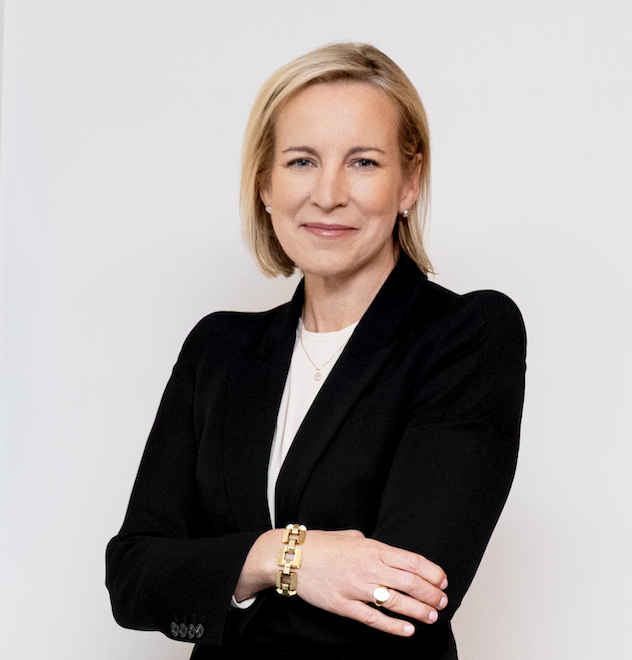
“There’s real importance to hard skills, but the soft skills of emotional intelligence are incredibly important in a business that is relationship-based and relies on being able to build that trust.”
Summary
What does it take to lead an institution that has continued to thrive through generations of change? For Bonnie Brennan, leadership at Christie’s is not just about preserving the past but understanding how history can become a foundation for the future. As CEO of one of the world’s most acclaimed auction houses, Bonnie is tasked with protecting three centuries of trust and expertise while reimagining what a global cultural institution can become in a rapidly changing world.
In this episode of Leadership Matters, Bonnie shares how stewardship has shaped her approach to leadership, from building relationships that endure beyond individual transactions to embracing the exciting ideas of the next generation of collectors. Our conversation explores what leaders can learn from institutions built to last: that the strongest organizations are not those that resist change, but those that know what values must remain constant as the world continues to evolve.
Mentions & Resources in this Episode
Guest Bio
Bonnie Brennan is Chief Executive Officer of Christie’s, where she is guiding a world-leading art and luxury business through a period of profound transformation. Appointed CEO in 2025, after more than a decade with the company, Bonnie has helped shape some of the most significant moments in the art market while demonstrating that honoring tradition and embracing innovation are complementary priorities.
During her tenure, Christie’s has overseen several of the most valuable collections ever brought to auction, including the record-breaking Paul G. Allen Collection. At the same time, Bonnie has expanded digital engagement which has opened new pathways for a younger and more diverse generation of collectors. Her leadership reflects her creative background and her skill in helping great institutions evolve with purpose.
Before joining Christie’s in 2012, Bonnie built her career at Sotheby’s after beginning in advertising at J. Walter Thompson. A graduate of Northwestern University, she also serves on nonprofit boards and remains committed to strengthening the cultural and civic institutions that enhance public life.
Episode Transcript
Alan Fleischmann
Welcome to Leadership Matters on SiriusXM and at LeadershipMattersShow.com. I'm your host, Alan Fleischmann. I'm joined today by Bonnie Brennan, who serves as CEO of the auction house Christie's. Prior to becoming CEO, Bonnie held a series of leadership positions in the organization, including president of Christie's Americas. She has played a key role in securing and auctioning some of the most extraordinary collections of our time, including those of Anne and Gordon Getty, Microsoft co-founder Paul Allen, and many, many more.
As the auction house celebrates its 260th birthday this year, under Bonnie's leadership Christie's has preserved its storied legacy and DNA while also embracing new markets and technologies to reach a new generation of collectors. Today we explore Bonnie's early life, her career journey, and her vision for Christie's — her perspective on leadership across art, business, and culture, and the many lessons in leadership she's learned along the way.
Bonnie, welcome to Leadership Matters. It is such a pleasure to have you on the show.
Bonnie Brennan
Thank you, Alan, for having me.
Alan Fleischmann
Let's start with your childhood in Michigan. Tell us a little bit about growing up there — where you grew up, and what family life was like around the house.
Bonnie Brennan
Sure. I grew up in a great suburb of Detroit, Michigan, called Birmingham. I am one of two children. My parents divorced when I was very young but were very engaged parents, so we had a great time with both of them. We're only two kids in our family, but I also grew up with a number of first cousins. So I come from a large extended family — an Irish Catholic family. Family was an incredibly important part of my young years: all around me, a great sense of support, but also a great source of inspiration.
Alan Fleischmann
I'm curious whether there were any mentors along the way, including family, when it came to art, music, culture — because I suspect that came early.
Bonnie Brennan
It did, actually. My mom was a really great artist as a hobby. She worked in fashion, but she was a great draftsman. She used to draw all the time at home — draw pictures of us — and she was encouraging me from a very young age. It was very clear from when I was young that art was an interest of mine. My mom and I were both left-handed, and we spent a lot of time on creative projects.
I was very lucky that both my parents were quite supportive of me pursuing not only studio art, but also, when I got further along in my education and wanted to look at art history in college, that was something they absolutely supported. I think they really believed that if you do what you love, you have a better chance of being good at it.
My brother similarly loved automobiles from the time he was a young boy, and he had a tremendous career — he has his own business now in private equity, a venture around transportation-related businesses. I think we both give credit to our parents that they saw those early passions and were very supportive of us both.
Alan Fleischmann
I love that. And was your earliest passion art — or were there other passions you look back on? Was art among your earliest?
Bonnie Brennan
Oh, definitely. I had an easel as probably a three-year-old and was constantly completing art projects. I was a big sewer. I did lots of crafts — I used to paint glass. My parents must have gone crazy with all the tools and supplies and the mess around my spaces. But like I said, they were quite tolerant and encouraging — sending me to art school in the summer to hone my craft as a painter.
Even when I was 12 years old, they sent me to New York City to a creative arts program, where I lived with a Cuban family in Forest Hills, Queens, and took the subway as a 12-year-old every day to Manhattan for a program for five weeks. So that definitely had an impact — on the focus, and also the geography. The fact that I live and work in New York City, I pay tribute to that early experience.
Alan Fleischmann
Well, I'm all about — and we're going to get into it — in the age of artificial intelligence, and so much divide in our country and globally, almost everywhere we go, the one thing we have that will bring us together is art, history, tradition, music, sports. So much of what you celebrate in your career and your job has been those very things.
I'll get to that in a minute, but I feel like I'm going to walk away from this interview today feeling emboldened — because that's what we need right now: to figure out what the things in life are that we need to celebrate. There's this extraordinary tension between tradition and transformation that shouldn't be a tension at all. What you offer with these extraordinary moments — helping art collectors and other collectors celebrate the past and the future — is where there's this intersection between tradition and innovation. And it's not a tension or friction. It actually is one and the same.
Bonnie Brennan
I think what you reference in terms of all those cultural moments — whether it's visual arts or music or the written word — is all grounded in beauty. Where we saw a real coming together of community in our world and business was in COVID. We realized that while everybody was disconnected and isolated, there was such a demand and interest in being in touch with us, and looking at art, and talking about art. It was exactly that sense of bringing people together — a way for people to connect, to share their thoughts, to look at the same thing, to experience beauty. It was a great sense of peace and comfort in such volatile times. And in the world we live in right now, with so much unrest and uncertainty, art has similarly provided a great respite from the realities of the world.
Alan Fleischmann
Are there mentors along the way besides your parents? They sound like they were great mentors, because they not only enabled it but encouraged it. Are there others?
Bonnie Brennan
Absolutely. I went to an all-girls school for 12 years, and I'm on their board now — a great school called Academy of the Sacred Heart in Bloomfield Hills, Michigan. I had some really wonderful teachers and leaders at that organization who were very supportive of my interest in the arts.
If you've ever seen the movie Dead Poets Society, I had a real Robin Williams teacher named Judge Mason, who really encouraged us to think, pursue our passions, and be bold. Many people have different opinions, but I really look back fondly on the single-sex education I got. It allowed me to find a voice, to pursue my interests, and to take on leadership roles — not feeling nervous, or that I had to worry about behavior in front of boys at those critical teenage years. It was really a clean white canvas, if you will, for whatever we wanted to study and pursue, giving us chances to step up, be leaders, and speak out about what we thought. I look back and I'm very happy. I have one niece, and she's in school there, and I'm so glad to see that she's having a similar experience.
Alan Fleischmann
And is it partly boarding and non-boarding as well?
Bonnie Brennan
It's part of a network of Sacred Heart schools across the country and the world. There's one close to where you live in Washington, but the one in Bloomfield Hills, Michigan, is a day school.
Alan Fleischmann
Nice. I love that you're on the board. Are there certain qualities in the school today that you can see were the same tenets that brought out this love of art and music in you?
Bonnie Brennan
It's a program that's really focused on the whole person — educating the whole child. It's not only through education, but also through a commitment to service, and it's grounded in the Catholic faith. One of the things that was hugely foundational for me was a weekly commitment to community service.
As we live in a world that's so fractured and so divided, it's important that when much is given, much is expected. You have to give back, and you should want to give back. Creating that whole person, preparing yourself to be a grown-up citizen of the world, being a good community leader or civic-minded person wherever you live — big or small, city or communities, whether through your church or the schools — giving back to the next generation has always been something I've benefited from.
I had mentors throughout my life and career, and I think in our job now as leaders of an organization, we have to think about the people who come after us at work, but also that younger generation, helping them navigate. It's hard these days — kids trying to get jobs, especially with people disconnected in this digital world of remote work. We all have to lean in and help those around us, and certainly help those who are less privileged.
Alan Fleischmann
I think that's right. And how do we create access as well? We want to celebrate things that are special and extraordinary, but we also want to create pipelines of access. I'm on the board of Carnegie Hall, and I'm always so blown away that we can do both — celebrate the best of the best in the most extraordinary context, like you do at Christie's, and at the same time create pipelines of access that frankly would never happen on that great stage if there wasn't that leaning-in moment as well. I'm curious how you do that.
Let's do this: when did you go to college?
Bonnie Brennan
I went to Northwestern University in Evanston, Illinois. It was the one and only place I wanted to go. My mother had other plans — she thought I would go to Princeton. But I was a first child; I did everything, I didn't break a lot of rules. The one thing I did do was never send my application in to Princeton, because I knew I wanted to go to Northwestern. I applied there early, got in, and that was it.
I was delighted to be there. It was a wonderful university with five colleges, and the proximity to Chicago gave me great access to the arts and to work opportunities in the arts. I worked for a fantastic museum, the Terra Museum, founded by Daniel J. Terra, who was the ambassador to the arts under Ronald Reagan, focusing on American art — which is a real love of mine. And the Art Institute of Chicago was one of the greatest gifts to have as a reference point as a student of art history. It's an exceptional place.
Northwestern was a great experience. I graduated in 1995 and moved immediately to New York City to take a job in the advertising world. I still love to visit Chicago — it's one of the most beautiful cities in the world, with some of the nicest people you'll ever meet.
Alan Fleischmann
The architecture is extraordinary, the summers are amazing, and the people really are the nicest in the world. Such a sophisticated city. Toronto and Chicago are two of my favorite cities in the summer.
Bonnie Brennan
Toronto's great as well. We have a lot of Canadians at Christie's, which makes me happy — such wonderful people, and the city of Toronto is a beautiful one.
Alan Fleischmann
It really is. So how long did you do advertising before you went to work at Sotheby's?
Bonnie Brennan
I worked at J. Walter Thompson, a global ad agency headquartered in New York, for two and a half years. It was a great experience — I loved every minute of it. Great teams taught me a lot about the power and the skills of business development, pitching, trying to win new business, working on teams, and storytelling.
So much of what made J. Walter so successful was that. They were known forever for their great jingles and campaigns for all-American brands like Oscar Mayer and Kodak. But over and over again, their strengths were really demonstrated in their ability to tell stories about these great companies and brands — Kellogg's cereal, Mott's applesauce. I got a great foundation for how those ideas are generated, the power of working on cross-functional teams, and communicating clearly and effectively with clients about why J. Walter was the best partner — why J. Walter over Ogilvy, or Foote, Cone & Belding, or some of the others.
The agency world has changed so quickly; there are so many more players now. But it was a great training ground. It was a business with a lot of turnover — in order to grow and excel and climb up, you had to look outside the firm, and that was not something I wanted to do. I'd spent a lot of time picking J. Walter as a place I wanted to work, so to think I had to leave to advance was frustrating.
It got me thinking about a return to being closer to my other passion — art history, objects, the art world. I was lucky enough to be hired by a really brave person who took a chance on somebody who hadn't been within the organization. She hired me for those business development and pitching skills, and that's what I did when I got to Sotheby's: I helped them try to win new consignments from collectors who had works of art or objects to sell, and made compelling arguments in writing for my colleagues about why that client should sell with Sotheby's as opposed to Christie's or Phillips or any of the other, sometimes smaller, auction houses in more specialized fields.
Alan Fleischmann
That's cool. And Sotheby's world headquarters at that point was also New York, right?
Bonnie Brennan
Yes, it was. A New York–based, publicly traded company. The majority shareholder was a wonderful collector from Michigan, actually, named Alfred Taubman, who was a great owner and supporter of the company. He bought it in the early '80s — I think it was 1982 — and amassed during his time there a pretty vast, cross-category collection. It was fun. When I first started, I didn't know them growing up, but working for a Michigan-based company, as a Michigan native, was kind of fun.
Alan Fleischmann
I remember his son — I think he married Christie Brinkley, if I'm not mistaken.
Bonnie Brennan
Different family, different talent. But he has wonderful children.
Alan Fleischmann
I didn't realize that.
Bonnie Brennan
Very involved in the business, too.
Alan Fleischmann
So tell me a little bit about what that move was like. And I'm curious about what you learned early on about client service as well. You're known for your love of the customer — the clients. Was that already part of the journey, or is it just part of who you are?
Bonnie Brennan
It definitely was. Ultimately, we're in a relationship business. The auction business is rooted in long-term relationships. It's a client-service business, and it's also a repeat business. We want people to think about us when they want to buy, and to think about us when they sell, or maybe upgrade or change direction. You're really going on what you hope will be a very long journey with these collectors. So it's about building those relationships and being there for them at every step.
I often tell my younger colleagues: the best business-getters recognize that the most important business-getting efforts are when there's no business at stake — because that's when you're really sowing those oats of strength for the relationship that will ultimately lead to a client feeling comfortable and wanting to choose you and your firm for whatever their needs might be.
I had a lot of good experiences at younger points in my career at Sotheby's, making relationships with advisors, lawyers, bankers, family offices, and independent art advisors — really being somebody they could count on and rely on, that frankly made them look good to their clients. So, business-to-business, professional-to-professional. And then, once I was lucky enough to make those direct connections with clients — so many of them are friends. I just got married a month and a half ago, and several of those clients and advisors were guests at my wedding. When you're really building authentic relationships, these are people you want in your life. It's not just a professional relationship — if you really throw your heart into it, they become part of your world.
Alan Fleischmann
That's amazing. There's a long runway between the moment of an auction and the curating part of it. But the trust level for people to choose you and say, "I want to do this with you," has to be the right journey and the right values.
Bonnie Brennan
Exactly. I have a funny story. Years ago, when I was at Sotheby's, I was working on an estate that had many categories — it was going to take many different types of sales, and it was competitive. I was talking to the family member, and he said, "You know, Bonnie, I'm probably going to have to talk to you more than I spoke to my first wife. So I better want to pick up the phone." And we did work through these issues and challenges — the work that goes into seeing a collection through fully in a series of successful sales. I always thought that was funny, but in many ways true. It's a long relationship.
Alan Fleischmann
And it may not be appropriate to ask you this, but I'm curious — since you had that experience at Sotheby's, and you're now the CEO of Christie's, and you've been rivals as companies since the 1700s. It's pretty extraordinary that you're celebrating Christie's 260th birthday at a time when we're celebrating America's 250th birthday. How different are they? How would you describe them being different? Is that okay to ask?
Bonnie Brennan
Yeah, no. Look, we like to talk about us. We're very proud of the culture we have. Sotheby's is actually a little bit older than us — they were founded as a bookseller in 1744. We were an art seller in 1766. When the two English companies started, they did different things and were quite complementary to one another. Then ultimately, as the businesses grew, they did the same thing and were direct competitors.
We've been on different journeys. At many points along that 260-plus-year journey, a lot of people think we're very similar. There have been other points where the roads sort of diverged in the woods, as Robert Frost would say. What we're really proud of is a focus on expertise, extraordinary art and objects, and extraordinary client service. Our feeling is that if we can stay grounded in those values, that is the perfect platform for any new, innovative areas or growth channels — and there are many right now.
We're in a generational moment — the great wealth transfer that everybody talks about. We're seeing real behavioral changes, and it pushes us to think differently about what we sell, where we sell, and how we sell. But the foundation of that expertise, passion, and service is always the underpinning of everything we do.
Alan Fleischmann
I love that. And it must be so exciting when you bring forward some of these extraordinary, personal collections. I love buying the Christie's books when you have these auctions. Reading them is almost like reading a novel, because it gives you both the visual and the story. You can feel the history, and it really feels very personal.
Bonnie Brennan
That's what makes the greatest collectors — those people who allow you to come and share on that personal journey with them. We had one of the greatest dealers and collectors of Chinese and Asian works of art more broadly, a man named Robert Ellsworth. This week we were speaking to some prospective clients and talking about him, and I was reminded of the passion, the depth, and his own expertise. Many people built their own collections of Asian works of art with his guidance, and at the same time he was building his own.
When he passed away, we were lucky enough to sell and celebrate that collection — what a rich, many-decade story of a collector. Somebody paid a wonderful price in a great bidding war for a small animal that sat on his desk, because they wanted that icon, that piece of him.
We see that through the power of celebrity, too. So many collectors love having something that was important to Elton John. Or recently, we sold a great collection of guitars owned by David Gilmour and Jeff Beck. Elizabeth Taylor was one of the greatest sales in Christie's history — the world wanted a piece of Elizabeth Taylor, whether it was one of the most extraordinary pieces of her jewelry, which she was known for, or something from her closet. Those are fun moments for us, because we get to open Christie's up to a much wider audience and to new people. That's what gets me most excited.
Alan Fleischmann
And with so many of those collections, you learn that not only are you going to get a great piece — a Rothko or a Degas, you name it — you find out that they themselves, or their family, had histories with some of these artists that were quite personal. You're not only getting a piece of their collection; you're getting a piece of their history with that artist.
Bonnie Brennan
Absolutely. We recently sold a Rothko from the collection of Agnes Gund, and she had bought it directly from his studio. She went with another great contemporary collector named Emily Tremaine. Mrs. Gund thought she wanted a red Rothko, and she got to his studio, and he pointed to the one she ultimately bought and said, "No, that's the one you should buy." We just sold it, and it set the record for Rothko.
But that personal story — the fact that she bought it directly from the artist, kept it her whole life in her home, rarely lent it because it kind of broke her heart to be without it — those are the really fun ones. It makes everything come to life around an object or a work of art.
Alan Fleischmann
And was Agnes Gund somebody who came to you before she passed away and said, "I want to do an auction"? Or was it one of those things where the family, the estate, comes together and says, "Now what do we do with this extraordinary collection?" She was so well known as an art collector, a patron, a donor — but she herself was such an extraordinary artist in many ways, too.
Bonnie Brennan
Oh, she was a great — talk about a mentor to everybody, even those who didn't know who she was. To think about what she did for the Museum of Modern Art: she gave them over 700 works of art. She was so philanthropic. She sold works to benefit causes she felt so strongly about, and I admire her so much as a strong woman who really used her power and her wealth to make the world a better place. She was a passionate collector who supported younger artists.
We had a relationship with her through a shared commitment to Studio in a School, which was something she founded in the '70s, when the New York City school system cut funding for the arts, to make sure culture and the arts were available to children in the public school system. We often have events for Studio in a School at Christie's. But the decision around the auction was not made until after her passing. And part of her legacy, obviously, is so many great donations of her works that can be seen in institutions.
Alan Fleischmann
So when you think about nearly three centuries of history at Christie's, you're absolutely balancing that heritage with meaningful innovation and tradition. How is today's art collector different from the collector even 10 or 20 years ago, when you started? In your own leadership and career, how has the auction business evolved to meet them where they are? Are there things you have to do differently in how you curate and express those collections?
Bonnie Brennan
Starting with the first part of that question — today's collectors are really global. They're buying and looking everywhere. Americans aren't just buying in New York; they're buying in our Paris sale room, they're looking at works we have in our Hong Kong sales. They're very connected globally, and they're also buying much more cross-category than collectors 20 years ago.
Collectors are passionate people who rarely stay in one lane — they love contemporary art, they want design furniture in their home, they have a real passion for watches. That's not a new phenomenon, but among the younger generation we're seeing an even greater diversity in what they're looking at. Young collectors are demonstrating great bravery and forging a new path. They're not continuing the collections they grew up with in their homes; they're looking at what really brings them joy.
That's why we constantly have to think about new categories. Vintage automobiles is something we brought back — we used to have a car department many years ago, which we exited, and we've recently reentered because that market is so robust. Younger collectors are spending quite large sums on great vintage automobiles. Same thing with some of the luxury categories we sell, like watches, or handbags. Collectibles, pop culture, guitars — we see tremendous enthusiasm in our auction room when we bring these unique objects to market, in a way that maybe 20 or 25 years ago those young collectors might have been buying prints of the contemporary work they grew up around. So a greater diversity — looking sideways as much as looking forward.
Alan Fleischmann
Tell me a little bit about access, too, because that's also been a big change. You don't have to be stuck going only to a U.S. auction house — you can go anywhere in the world. You can also glimpse in on your platforms and start to buy, or keep track of what you love, and learn what you might not know you'll love.
Bonnie Brennan
Absolutely. One of the biggest shifts for us, certainly in the last six years, is around technology and staying engaged. At a point in 2020, we were forced into this disconnected place, and we had to pivot: how do we connect with people in a way that allows us to offer them works of art when we couldn't open the sale room? That expedited things for us internally — how we leveraged and used technology, but also what the expectations were from our clients around the experience on our website and our application.
Eighty percent of our bids are now placed through our online tools. That's really extraordinary when you think about it. What it says to me is that we constantly have to refine and improve that interface to make sure it's seamless and easy. People have very limited attention spans now — there are so many things they can look at — and if it's not easy, people move on. So we want to engage them with something user-friendly, and present material that sparks interest, whether they're coming to our app or website or engaging with us through social media.
Once we can get them to us, that's when the journey of exploration can begin. They can read an article, click a link, see a beautiful stone or a piece of jewelry they might want to buy as a gift — and on their journey through our website or application, they might see a great collectible that also speaks to them, or their eye is caught by a great piece of contemporary art.
Alan Fleischmann
I love that. Is there a favorite story, a breakthrough moment for you? I guess it's like asking which baby you love the most, but are there certain collections that just stand out?
Bonnie Brennan
I have so many — we're so lucky. Each year you meet these families, build these relationships, offer these collections or works of art, and it's so moving. You don't just remember the sale of the work of art; you remember the moments, sometimes the very first moments.
One of the best experiences of my career was working on a collection from Seattle owned by a man named Barney Ebsworth, a fantastic collector of American art. He owned what is the record for Edward Hopper — a great painting of two people in a restaurant called "Chop Suey," which sold for $90 million. Every part of that experience — him as a collector, meeting his family and his advisors, works of art that spoke to me as a lover of American art — it was wonderful. The sale was a great success for the family, and it was that great price for Hopper.
We also had these moments of surprise — "Where were you when this happened?" The night the Leonardo da Vinci sold in 2017 at Christie's for $450 million, I remember exactly where I was, and that sense of complete disbelief. Up until that point, the record for any object had been $170 million — an extraordinary sum of money — and to more than double that was quite something. I'll never forget it.
Alan Fleischmann
So you have a rare perspective on leadership, obviously beyond even leadership in the auction industry. You've worked with some extraordinary people, at renowned auction houses, and you're leading the most extraordinary one I know. I'm curious about the leadership lessons you've taken along your journey. Your reputation is that you are bold and confident, but extraordinarily grateful and humble. It's a pretty nice combination, Bonnie. You seem to have this thermostat in you that never lets you become the arrogant one — you pinch yourself, and you get to celebrate.
Bonnie Brennan
Well, thank you for saying that. I feel very lucky to be in the seat I'm in. I've given a lot of credit, as it's due, to my predecessor Guillaume Cerutti, who was our CEO for eight years and really gave me many chances along the way. He was a huge supporter of putting women in leadership roles, and he was there as chairman of the board as I transitioned into this role of CEO a year and a half ago.
Those people who surround you — from above, next to you, great employees who work for you — create a great environment and culture. It's my responsibility to make sure it's a healthy one, that we're providing opportunity for the next generation, and constantly pushing the organization to make sure we're healthy for them long after we're gone.
On business leaders — we're so lucky. Some of our best clients are captains of industry in so many different fields, and what aligns them all, besides their incredible intellect, is their bravery — their ability to be bold and passionate and push, push, push — and their commitment to excellence. Across Christie's global organization, we've put together an advisory board, and these people are very generous with their time. They're collectors, members of the arts community; many serve on museum boards. It's an incredibly useful cabinet for me as we make big decisions.
Recently, as an example, we were thinking about whether our physical space was the right space for Christie's — this was about three or four years ago. Should we be thinking differently? Will we need a different space in the future? The advisory board was a really important voice, feeding back to me: "Christie's Rockefeller Center is part of what you are as a brand. It's part of your heritage." We moved there in 1999, and it is our home. It gives us the advantage of serving our clients in a full-service way — those clients building cross-category collections. We have the largest footprint in New York; we have the space to showcase many types of works of art, many stories of those collectors, all at the same time.
I credit that strong voice of our advisors and leaders. It's fun to ask them how they've grown their businesses. So many have led or are leading businesses with incredibly strong, rich heritage like ours. How do they continue to push and grow, and get that balance of heritage and innovation right? Because that's really what we have to do. I'm constantly saying to myself and to my great teammates: we have a very sound foundation. We have the strength of ownership for 28 years from the Pinault family, who are extraordinary people and extraordinary business people. They have incredible values, and they are committed collectors, so they really understand our market and our business. That gives us the permission to do bold things, to try things, to grow — knowing we might not get it right every time, but that it's clear from my boss, from our owners, that they want us to push forward and really focus on growth.
Alan Fleischmann
I love that. Are there things you're imagining today that haven't been part of the Christie's ecosystem, but that you're developing, that you could share right now?
Bonnie Brennan
The thing that keeps me up at night is usually something about technology — what are we not doing? Where could we be leveraging technology more? We use it a lot. We have a fantastic technology team and innovations team always looking at ways we can harness the power of artificial intelligence to make our business more efficient — to give our specialists and experts more space to do what only humans can do, which is build those relationships, find those new clients, and look at works of art standing in front of them. We're always looking at how technology will enhance our business in the future.
Right now our focus is also on geographic growth — getting to those new clients. Where have we not been that we need to be, or where have we been but not in a big enough way? For example, we've been in the Middle East for 20 years — we opened our office in Dubai, and this is our 20th anniversary — but we haven't been in other parts of the Middle East, so we're growing that presence and client-engagement opportunity. I was in Seoul last year, and I had a very strong reaction to the energy and opportunity that exists in Korea. We've been there, we have a small office, but it feels like a real opportunity for us to be more present and to engage with that audience.
Alan Fleischmann
I love that. And is AI changing you at all, or helping you at all — or is it not really playing a big role?
Bonnie Brennan
It helps us a great deal, when used as a tool. Many people across industries encourage their teams — almost demand — that they use it. We've all heard people say they don't want to use AI because they feel it's going to replace them. We're trying to create a culture of safety with these tools — we use Copilot within the firm — and to really embrace how it can make your life better, the products better, the quality of your time. Allowing you to have your highest and best use for the firm, using those AI tools, is part of evolving and getting better at that.
Alan Fleischmann
How do you make it so you can get more responsive, more reflective, more thoughtful? And talk a little bit about this intersection you live in every day — between culture and, honestly, all forms of the arts — and the fundamental belief that maybe it's a good conversation to have right after AI: what is it that we've got to make sure we're not missing, that we need to celebrate more and encourage more in society? Are you seeing leaders doing that? It's certainly a big part of who you are as a leader — a big part of your purpose.
Bonnie Brennan
Yes. I see so much goodness across so many different industries. One of the trends we've seen, certainly in the last 10 years — which I think is a great one — is people using their art collections to further their philanthropic goals. It started most poignantly for us with the Rockefeller family in 2018, when they sold their collection. What it's brought to the forefront is the reality that there are people out there — leaders and collectors — who want to do good things, but needed that guidance or example. Now we've had so many great sales of people who give the proceeds to whatever charity or organization they've been passionate about during their lifetime. And buyers feel very good about showing up and bidding on those works.
At a corporate level, when I ask my colleagues what they're most proud of about Christie's, it's often not our sale totals or market share. It's that we have the Christie's Fund for the arts, which helps young people get access to jobs or education in the arts. It's our commitment to sustainability. People thank us for thinking about things that are going to impact the world for their children. We have a lot of young people in our business who have young families at home, and are even more mindful of acting responsibly as corporate leaders — how we ship material, how we work as an organization, how we travel as individuals. We have really ambitious goals as a firm around being net zero by 2050. But it takes a village. All of us have to evolve our behavior and make sure we're living up to those best practices to meet those goals.
Alan Fleischmann
What differentiates leadership in the arts — certainly in a global business like yours — from other industries? Or do you think there's a lot more in common?
Bonnie Brennan
I think there's more in common. If you were to say what makes a good leader in the art world today, it's somebody who really understands — not only with great, deep expertise, and that could be in the paintings department, but it could also be in marketing, or legal, or press — because we're in an operational ecosystem where all of those players on the team are critical to our success. The art handlers who install our galleries, the client-service people who create that initial experience at the front door, are equally as important and critical to our business as the person who can tell me whether it's a Rembrandt or not.
So, expertise, but also that ability to make relationships — with your colleagues first, understanding what it means to be a good team player, but also building good relationships with the client. And moving forward, you have to have commercial technology fluency. More and more now, it's not just, "Do you know how to use Outlook?" You've got to be more adept, and that comes back to the drive to push people to use those AI tools and constantly be in a state of learning.
Because we live in a global world, there's a real need for people to have an awareness of the global environment — what's happening, how our clients are being impacted, and therefore how our business will be impacted, and how we adapt to that. Adapting to market shifts, technology shifts, client behavior and preferences — we have to be able to adapt and lead through these moments of change, sometimes very specific to our market in terms of ebbs and flows, but sometimes larger global trends.
And the one thing you can't teach, but you hope you find, is emotional intelligence. There's real importance to hard skills, but the soft skills of emotional intelligence are incredibly important in a business that is relationship-based and relies on being able to build that trust.
Alan Fleischmann
That's a really important point. I wrote an article recently, published in Fast Company, where we talked about the idea that in the age of AI we need not only IQ — we need EQ, we need the trust quotient and the work-ethic quotient, the TQ and the WQ, and perhaps most importantly the VQ, which is vision, seeing around the corner. I'd argue that the way Christie's has to do its day job, you need all five. You're building that trust, you have this incredibly tireless, around-the-time-zone work ethic to be available, you have to have this EQ, and then you have to have that judgment and vision — the boldness to see around corners, which is the VQ.
So I'm curious: when you think about that, how do you then identify the right talent? How do you identify that team culture you talked about? Is it changing as you think through cultivating your internal talent? And certainly when you're making a big new hire, is it different than it used to be because of all this?
Bonnie Brennan
First and foremost — before you even get to interviewing somebody — they have the hard skills. They've come to the table with a resume that qualifies them for the role. The first check for me is culture fit. This is somebody I'm going to want to put on a team, sit around a table with for hours, and put in front of a client to share good and bad news. Are they going to be able to do that? Are they curious? Are they going to want to understand our culture before bringing pieces from a culture they're leaving to join us?
Speaking so candidly, I'm also focused on people who want to show up and be there with me, be on the team, and do whatever it takes to get to the best product — who are ego-free, excited to dive in, roll up their sleeves, and really work well with others. So much of our business is an in-person business, and I believe we do our best work when we work together, when we physically are together. Of course, we live in a flexible-work society, and that's fine. As a woman, and as a supporter of other women in particular — who sometimes have needs, not that men don't — you have to be supportive of those needs, but you also have to balance that with what's best for the business. I'm a real believer in being together in person.
Alan Fleischmann
And to share something that's so spectacular — I know that being a steward, the custodian of someone's history, is so incredibly important. As I tell you, I love the catalogs, because I've experienced being inside. This idea of actually being among others who have a shared passion — it's like going to a great art museum that's less of a noun and more of a verb. You feel the heart beating, you feel there's excitement going on, and that there's going to be transformation occurring through what might be a transaction — but the transaction has so much emotion. It's pretty spectacular when you go through, and then you want to bring the catalog with you, because you want it to be your photo album of the experience.
Bonnie Brennan
Exactly.
Alan Fleischmann
Which is pretty cool.
Bonnie Brennan
I just had the experience of seeing one of the most amazing shows I've ever seen in my life — this Matisse show at the Grand Palais that the Pompidou put on in Paris. I love Matisse, but this show was just completely lights-out. Of course, all the Americans and English-speaking tourists in Paris this summer had sold out the bookshop of the catalog. But like you, I want a memory of that. I want to be able to pull it off my shelf and remember standing in a room of the Jazz series, in front of all those cutouts. It was great.
Alan Fleischmann
That's so cool. So you're still pinching yourself, like I described.
Bonnie Brennan
I am. Yep.
Alan Fleischmann
I love that, because it sounds like when you go to these extraordinary collections or exhibits, you celebrate that moment as well. That's pretty cool.
Bonnie Brennan
We're lucky — we have good jobs. We stand in front of amazing objects all the time and meet really passionate collectors. That's a pretty good gig.
Alan Fleischmann
As a CEO, what's harder — winning a billion-dollar collection, or preserving your 260-year-old institution while adapting it for the next generation?
Bonnie Brennan
I think they're both challenging, in different ways. I'm a competitive, spirited person — I like to win. It's very hard when you don't win, because you put your heart and soul into these projects, and you really want to do something great for the people you're meeting — these clients you have the privilege of preparing a proposal for. You put a lot into that, and those moments are challenging but really fun. I love sitting around the table with my colleagues, hashing it out and getting the story right: the pitch, why we're the best partner, what really interesting, creative things we're going to do to help tell that story. Those are challenging and time-consuming, but really joy-filled.
The different responsibility of preserving our heritage is also so exciting. It comes with a great weight of responsibility. But like you said, the greatest leaders ask others for help and advice, and I'm very lucky that I'm surrounded by a cabinet — a management team that I really trust and respect, who have great ideas. We're in a multigenerational business with a lot of young people who are helping me see around corners and anticipate the trends they're hearing from collectors of their own generation. Some of our most celebrated moments come from good ideas from the younger generation. So that's also great fun. We have a great responsibility, and we have an amazing shareholder — I want to perform for him.
Alan Fleischmann
Love that. There's such glamour in what you do every day. I recently watched, with my family — two daughters on my lap, two daughters next to me, my wife and I — Upgraded, a Marisa Tomei movie that came out a year or two ago.
Bonnie Brennan
Oh yes, I did see that. She works at an auction house, right?
Alan Fleischmann
Exactly — this powerful head of a prestigious New York auction house, and the competition. It's a romantic comedy, and it was fun. But I knew I was going to be interviewing you, and I was thinking about how Hollywood loves to talk about this too. There's such glamour — masterpieces, bidders. You just said you're like an athlete competing; there are record prices involved. What is the one question no one ever asks you that I should ask as we conclude our time together? And what is the one part of your business that even movies like that never capture?
Bonnie Brennan
They never capture that so much great work happens by people who never make the front page of the Times, but who are really carrying the water. We have so many great colleagues in the building who are extraordinary, and I wish there were a New York Times front page for every one of them, because they make our business what it is.
I also think the truth of good client service is a lot of unsexy work. It's showing up and getting a piece to a client in the dead of winter to make sure it's there for Christmas in Colorado. It's colleagues of ours who drove during the pandemic from New Orleans to Fort Worth, Texas, to do an appraisal in COVID, because that's what the estate lawyer needed. There are these moments of real commitment that are not glamorous, but are part of what solidifies those incredible relationships and keeps people coming back to Christie's. Yes, we achieve extraordinary prices and have glamorous, beautiful exhibitions — but so much of the hard work people respect about Christie's involves very unglamorous tasks. We're glad to do them, because we're in it for the long term and to build those relationships.
Alan Fleischmann
It goes back to the earliest thing we talked about in this conversation, which is building trust — and you can only build trust if you have that work ethic and you're consistently reliable. Those who show up, show up early, and stay late — that's not the glamour, but it's actually what leads to the victory. It's so nice that you know that, and it sounds like that's a big part of why you're known for having a great team culture.
Bonnie Brennan
It's really important that the team — we're a team that really treats each other like family. You can be really open and honest, but you also have a responsibility to show up for one another and fill in when somebody's sick, or has a child, or whatever it is. Everybody has a different journey, and they're full. I've been really grateful, and we're proud of that culture — but it's also one we demand from people who decide to join us.
Alan Fleischmann
That culture of family — knowing there's a "we" and not just an "I" — is fundamentally how you can do what you do, and at such extraordinary scale. We're going to do a part two at some point — maybe come to Christie's for the video version of this conversation — because showing off how beautiful Christie's is, in New York in particular, would be a really cool thing to do. People could get a sense of that team you're talking about, and all the magic that comes from the work that creates the magic.
So you've been listening to Leadership Matters on SiriusXM and at LeadershipMattersShow.com. I'm your host, Alan Fleischmann, and we spent the last hour with Bonnie Brennan, the CEO of the extraordinary auction house Christie's. We discussed her influences, her remarkable career, her incredible team — which she's the first to acknowledge and celebrate — and her vision for the future, certainly through the eyes of what she's building at Christie's, and the many lessons in leadership we can learn from you, and have learned from you today, Bonnie, along the way.
Thank you, Bonnie, for being on the show. I look forward to many more, and to spending time with you in person. Thanks for being — and doing — all that you're doing to remind us that culture matters, person-to-person matters, and it's never going to go away.
This transcript has been edited and condensed for clarity.