Ronnen Harary
Co-founder & Chair, Spin Master
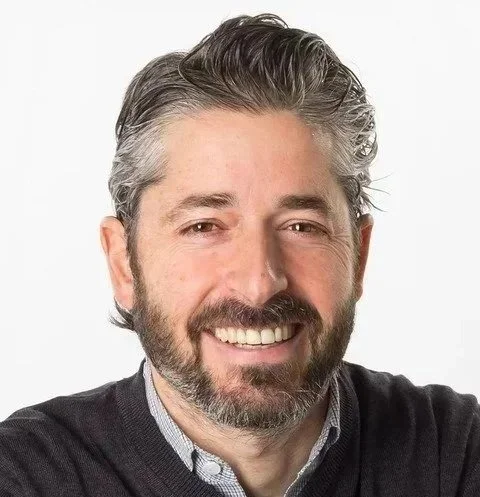
“You don’t know your capability until you start doing, and when you start doing, it unlocks so many magical things.”
Summary
We often assume that experience is what gives leaders the confidence to build something extraordinary. Ronnen Harary has spent much of his career arguing the opposite. What began as a $10,000 venture between three childhood friends became Spin Master, one of the world's leading children's entertainment companies because its founders approached every challenge with curiosity. They questioned assumptions, looked for opportunities others overlooked, and discovered that a willingness to learn could be more valuable than years of experience.
I wanted to have Ronnen on Leadership Matters to discuss the ideas behind his new book, No Experience Necessary, and the philosophy that has guided him throughout his career. Our conversation explores how curiosity can become a competitive advantage, why confidence often follows action rather than preceding it, and how leaders create organizations that continue to learn, adapt, and reinvent themselves amidst constant change.
Mentions & Resources in this Episode
Guest Bio
Born in South Africa and raised in Toronto, Ronnen Harary is the co-founder and chair of Spin Master, the global children’s entertainment company behind PAW Patrol, Bakugan, Hatchimals, Rubik’s Cube, and Melissa & Doug. Since cofounding the company in 1994, alongside childhood friend Anton Rabie and university classmate Ben Varadi, he has transformed a $10,000 startup into one of the world’s leading children’s entertainment companies into a foundation for innovation.
Beyond Spin Master, Ronnen founded the Toy Movement, a global initiative that has delivered hundreds of thousands of toys to children living in underserved communities around the world, and established the Ronnen Harary Foundation to support young people with learning disabilities and educational initiatives. He also serves as Chairman of the MEAD Foundation, which convenes policymakers and thought leaders from North America and the Middle East.
His first book, No Experience Necessary: Why Betting on Yourself in Your Twenties Is the Best Decision You’ll Ever Make, draws on the lessons of building Spin Master to make the case that curiosity and action are often the true foundations of leadership.
Episode Transcript
Alan Fleischmann
You're listening to Leadership Matters on SiriusXM and on LeadershipMattersShow.com. I'm your host, Alan Fleischmann. I'm joined today by an entrepreneur and remarkable creative who has helped shape the way an entire generation of children play.
Ronnen Harary is the co-founder and chair of Spin Master, the Toronto-based children's entertainment company behind iconic properties and products like PAW Patrol, Air Hogs, the Rubik's Cube, and so many others. Alongside a pair of childhood friends, Ronnen founded Spin Master in 1994, turning a $10,000 investment into the fourth-largest toy company in the world, with more than 2,500 employees across more than 20 countries.
Ronnen has just released his first book, titled No Experience Necessary: Why Betting on Yourself in Your Twenties Is the Best Decision You'll Ever Make. Drawing on the story of building Spin Master, Ronnen makes a counterintuitive case that youth and inexperience are entrepreneurial advantages that can fuel the risk-taking, partnership, and creativity critical to innovation. The book is structured around 11 core principles distilled from his own life journey.
Beyond Spin Master, Ronnen is the founder of the Toy Movement, a global initiative that has delivered hundreds of thousands of toys to children in crisis around the world. He also leads philanthropic work through the Ronnen Harary Foundation, which supports young people with learning disabilities and public space initiatives in Jerusalem. Today, we'll explore his early life, the ideas behind his new book, the remarkable way in which he's built Spin Master, and the lessons in leadership that he's learned along the way. Ronnen, welcome to Leadership Matters. It is such a pleasure to have you on the show.
Ronnen Harary
Thank you, Alan.
Alan Fleischmann
This is really exciting for me. I've been looking forward to this for a while, and your book is amazing. I hope everybody who's listening will actually buy your book, because it's really, really inspiring. It's sitting right here, and it's delivered in a way that makes it very personal — something people can relate to. I want to get into all the principles you mentioned. But let's start off with talking about your early life. You were born in South Africa. You moved with your family to Toronto when you were — I guess, how old?
Ronnen Harary
Five. Five, yeah.
Alan Fleischmann
What do you remember about the early years before the move? And what motivated your family to go to Toronto — any meaningful moments during that transition?
Ronnen Harary
You know, I was pretty young — I came when I was five. I don't remember too much other than the snow in Canada and the snowsuits. My parents weren't born in South Africa. They were originally born in Bulgaria, and they ended up going to Israel and then South Africa. With apartheid and everything that was going on back in the day, they had an opportunity to come to Canada, and it was one of the most incredible countries in the world, barring the weather. So, they decided to pack it all up and come to Canada, which turned out to be a blessing, because the most amazing thing about Canada is that you could become anything. Everything's available to you there.
So, I don't remember much other than getting to Canada. And I was very lucky when I arrived I was 10 years old, and I got identified in the public school system with a learning disability, which really shaped me as a person. I think it actually set me on an entrepreneurial journey that I knew would happen later on in life.
Alan Fleischmann
Was it in university in Toronto that you met Anton?
Ronnen Harary
We went to the University of Western Ontario. I actually met Anton at camp when I was 12 years old.
Alan Fleischmann
That's what I thought — that's in my notes. Really young. Okay.
Ronnen Harary
Yeah, we met when we were 12, and we loved tennis. We'd be very competitive on the tennis court. We were both entrepreneurial, and we both said we'd never go into business together until we needed to. After our first year of university, we were selling fertilizer — we needed to pay for school, so we went into business together. And Anton met Ben at Western too, so everything coalesced at Western for the three of us.
Alan Fleischmann
And you actually decided you were going to work together. How old were you when you all decided that?
Ronnen Harary
Anton and I, when we decided, were probably about 20, and it was more of an opportunity at first. It was like we were dating in university, so we had this business called Campus Faces, which was all about taking pictures of kids during Frosh Week. We'd sell advertising around the perimeter and give out 9,000 posters for free. Our first year, we grossed $12,000 in revenue, and by the end of the third or fourth year of university, we were grossing $100,000. When we graduated, we were committed to starting something. We didn't know exactly what it would be, but we knew we were going to start something together.
Then, when we started this product called the Earth Buddy — which I can share a little about — we needed some help. That's when Anton said, "I went to business school with Ben. You'd love him — let's bring him into the business." And the crazy thing about our partnership with Ben is that he came into the office, I met him for 45 minutes, I liked him straight away, we had a handshake deal, and that was it. He joined our business.
Alan Fleischmann
Wow — it was all intuitive. But I bet, with your learning disability, you also built very strong intuition. The other superpowers became even more of a superpower.
Ronnen Harary
Yes, I relied heavily on intuition.
Alan Fleischmann
People often talk about a limited set of these. I just wrote a piece in Fast Company about the need for other Q’s — it's not just EQ we need in addition to IQ. There's vision Q, which is the most important of them; there's trust Q; and there's work-ethic Q’. But there's this commitment to going with your intuition and understanding, and that goes with people too. EQ and BQ go together. I bet, with your life experience, you already had superpowers — and those superpowers got heightened even more.
Ronnen Harary
Yeah, 100 percent. I'm very much a lateral thinker, connecting the dots — very much so.
Alan Fleischmann
So is it true you founded Spin Master in '94 with $10,000?
Ronnen Harary
That is correct. That is correct.
Alan Fleischmann
And where did that $10,000 investment come from?
Ronnen Harary
It came from Campus Faces. All the money we made from it went to paying for university, and then we were left with $10,000 to begin with.
Alan Fleischmann
And that was Earth Buddy — that's when you started.
Ronnen Harary
So what happened was, my mother was reading a newspaper in Israel, and there was a story about people manufacturing this product called Earth Buddy, which was a small chia pet — you put it in water, and it grows grass for hair. It's a soft version of a Chia Pet. It said there were six different people selling about half a million pieces in Israel, a country of about 10 million people, and no one was doing it in North America.
So I went to Anton and said, "Let's manufacture these and take them to market." He thought I was crazy, so he said no. But I stayed on him, and two weeks later he was like, "Okay, let's do it." Next thing I know, we found ourselves in Kmart buying pantyhose and sourcing sawdust. I got my brother-in-law to help build the contraptions for us — we gave him some profit sharing — and my sister created some packaging. Within two weeks we created 5,000 pieces for Mother's Day.
We started with 5,000 pieces. We were on the streets of Toronto, and we sold about 700 pieces that weekend. Came back to the warehouse with 4,300 pieces left, and we were like, "Okay, we'd better get to work." And we were super lucky, because I think when you're young, people just want to help you out — they're rooting for you all the time. This incredible person I got introduced to got us an order for 26,000 pieces from Walmart, and two months later we got an order for half a million pieces from Kmart.
Alan Fleischmann
That's super focused on genuine supply and demand. You discovered something people want, and you curated the demand and made it happen.
Ronnen Harary
Yeah, we didn't overthink it. We just went with what was working out there. We matched ourselves to where we were at. It was difficult, but it was manageable.
Alan Fleischmann
That's so cool. That was a big success almost immediately.
Ronnen Harary
It was, straight away — within nine months. And the biggest thing was that Kmart order for half a million pieces. It really accelerated the business for us.
Alan Fleischmann
Did that solidify it in the back of your head — "I've got something here, we're onto something"? What was your mission initially, and did it change? Was it, "Okay, we're going to focus on this market"?
Ronnen Harary
It didn't solidify until our second product, the Devil Sticks — and that set the course to go into the toy business. When we brought that to market, we started noticing kids playing with them in the schoolyards. I'd been selling them at some Grateful Dead shows, so I was familiar with the product, but my interest was piqued. I was like, "Why is something played by 20-year-olds or teenagers now being played by 10-year-olds?" So we brought them to market. We went to Toy Fair in 1995, and suddenly we sold them into Toys "R" Us and KB Toys, and the product did great that year.
At the end of the second year, we asked ourselves, "Do we want to go into horticulture, or do we want to go into toys?" We realized there's a whole stream of toy inventors who come up with the ideas that generate a lot of the stuff in the industry, and that's when we picked the road to go down the toy-invention route. We said we'd be open to ideas wherever they came from, and we'd try to build the company as big as we possibly could. But before that, it was more about just the Earth Buddies — that specific product itself.
Alan Fleischmann
So cool. Well, tell us a little about those early days and the lessons learned. I'm thinking about the book as we go along, because this all goes along with the risk-taker in you and in the team you were building. How aware were you that you were willing to take that risk? Or do you look back retrospectively and say, "Wow, now I see this is exactly the prototype of what one has to do"? Or were you aware then?
Ronnen Harary
There was one moment I'll share with you. After the Devil Sticks, I looked at Anton and said, "We each have about $200,000 in the bank — should we call it quits?" And he looked at me with a strange look in his eyes. He didn't say anything, but the look was enough for me to know: we're in. Why are you doubting yourself? Good things are happening here. Let's keep going. From that moment on, doubt never came into my mind.
We have a philosophy: never bet the farm — never do anything so risky that it's going to end you up in a bad place — but always keep pushing the envelope. One thing about being in the toy industry and children's entertainment is that you're constantly getting kicks at the can to bring new products to market, and that gave us the ability to keep trying. When we got our first opportunity with a product called Air Hogs — which came from two British inventors, an airplane that ran off compressed air — the craziest thing is that we brought it to market and it redefined flight, but at the time we didn't know all the toy companies had turned it down. Hasbro, Mattel — everybody turned down that product.
So we were always curious, and the curiosity de-levered the risk for us. We were passionate about everything: the Earth Buddies, the Devil Sticks, Air Hogs. So we didn't really view it as being that risky, to be quite honest.
Alan Fleischmann
Because you just knew it was in demand.
Ronnen Harary
No, no. The first two products we knew were in demand, but Air Hogs was a brand-new product — a complete innovation. We had patents on it. We knew we had fun flying it, and we loved the prototype. We figured if we were 25 years old and having fun, then a 10-year-old would have a lot of fun with it. But we're always looking for cues — to match the art with the science. The art is your intuition and what you love and what you're passionate about; the science is what's in the marketplace and what's come before you. I think you have to be a student of both.
Alan Fleischmann
I love that. So tell us more about how you went from having, at this point, only successes — there were no failures at all yet, right?
Ronnen Harary
Well, I'd say it wasn't that rosy. Between Air Hogs and Devil Sticks, we were selling this one product — a figure in a bar of soap — and we had a product called Radical Reptile, this foam lizard that crawled on the ground. Those were paying the bills. And then after Air Hogs, we had a string of failures. That's when we really went to school in the toy industry. We had Don't Free Freddy, we had Tickle Secret Baby, we had Key Charm Cuties.
I'll never forget, Alan — one product was called Don't Free Freddy. It was about this monster whose hands were tied up in handcuffs; you'd press the button and his whole face changed and he roared. It was kind of cool, but we'd never been in the plush category. We wanted to try it out, and I'll never forget the day we were testing the commercial. I saw the look on a 10-year-old kid's face when he watched the commercial, and I knew right there that this product was not going to go.
Alan Fleischmann
That's interesting. Was it a focus group, or something more random?
Ronnen Harary
I can't remember if it was a focus group, or if I was at someone's house and they were watching the commercial. But it was right at the beginning, and I was there with a 10-year-old kid, and he was totally disinterested. The commercial and the product did not capture his imagination. I just remember that feeling: "Oh, this is not going to work. This is done. This product is not going to fly."
Alan Fleischmann
I love it. And then what did you do when you realized it wasn't going to fly?
Ronnen Harary
The most important thing is you mark down the product. The technical thing is that in the toy business, if you read your point-of-sale data from your retailers, you'll know within four to six weeks whether a product is going to be successful. It's that quick. If it's not going to go, you mark it down from $29.99 to $19.99 or $9.99, get it to a price where it can clear itself out, and you move on to the next product.
And the one thing I'll say we do at Spin Master is that we never blame anybody for anything. We just move on. There's just no blame. I can't remember a time — even with Don't Free Freddy — where it was like, "This was your fault," or "That was your fault." We just move on to the next product. So that's what you do: just look forward.
Alan Fleischmann
And how did the next product go?
Ronnen Harary
Well, the next one didn't do well either.
Alan Fleischmann
It's good for people to hear that it takes a lot of perseverance to be successful.
Ronnen Harary
We had a string of three in a row. But in the middle of the string, we did get lucky. When I was developing Air Hogs, I was developing it in Chicago, going back and forth — I'd probably been there 15 times in two years. One of the times I went, Jeff Raycamper, an inventor, said to me, "Hey, Ronnen, I've got this cool idea, I need to show it to you." And it was this little BMX bike. Back in the day, BMX bikes were really popular. It had a real working brake in the front and the back, and it could do wheelies. You stick your finger in the handlebars and emulate what you do with a real bike. I was like, "Wow, this is so awesome. Jeff, I want to option it from you." So I optioned it for $5,000, took it home, showed the guys, everybody loved it — and that went on to do close to $100 million in business over the next three years. It was just something not planned.
The thing about inventors is they're like kids: when they invent something, they get so excited they just want to show it to you straight away. So I got so lucky that I happened to be in the office at that moment, because we were doing so much work on Air Hogs. If you're batting 600, in our business, you're okay.
Alan Fleischmann
I love that. I think of the legendary franchises you've created — but you're saying not everyone was a hit. You cut your losses quickly. It sounds like if it didn't work, you went right to the young people: "What are they thinking? What are they doing? How are they responding?"
Ronnen Harary
I actually went about it differently. The most important thing is that we were staying busy, keeping the momentum, and learning — because we went into different categories. Key Charm Cuties was a small-doll category; we went up against Mattel. You've got to think twice before going up against Mattel. We went into the baby-doll category. We went into plush. We met new buyers, opened new factories, did commercials. So through the failures, we were constantly learning. I call it "learning luck." You're not going to get to the good stuff without the failures. You're just not.
Alan Fleischmann
There's got to be a ratio — a few more successes than failures — and that seems to be your trick.
Ronnen Harary
That's why I say it's 60 percent.
Alan Fleischmann
Exactly. Because when there's an upside and it goes well, it goes great. I love that. Tell us a little more about your process — how you built out how you identify what's worthy to explore more deeply. Either you bring in something that can work, or you invent it from the inside out. What's the process? How do you build the supply and curate the demand?
Ronnen Harary
The first thing is a philosophy: we're open to ideas from wherever they come from, and we're open to partnering with people. We love the partnership model, and we love when other people are making money and doing well — because then we're going to be doing well. That's the underlying premise.
In the toy industry specifically, there are about 200 people who invent toys for a living. That's their profession, and each is probably coming up with 500 ideas a year. My partner Ben's role, especially in the early years, was meeting with these inventors. He was constantly on the road, looking at thousands and thousands of ideas, and then he'd cull it down to, say, 300 a year and bring that to a small group — myself, Ben, and a few others.
So the whole key is to have a really wide funnel at the top and be very judicious about what you're going to develop and bring to market. We'd sit in a room, three or four of us, and debate the merits of each product — the pros, the cons, the competition, what did well previously, what didn't. I wish I'd recorded it back in the day, because it makes for great television. It was a very heated exchange of points of view. At the end of the day, it came down to your ability to make the case on the past, the future, and your intuition — mixing those three things together, always looking for the magic of the product, and having it championed.
Alan Fleischmann
It sounds like you love the products you're championing.
Ronnen Harary
Yes, everybody needs to really love it, because it's really hard to get it over the line. First it's hard to convince everybody around you, and then it's hard to actually bring it to life and bring it to market.
Alan Fleischmann
How has your role changed over time? In those early years — when did it start to change?
Ronnen Harary
It just progressed over time. No one wanted to do the manufacturing, so I was the one. I went to China. When I debugged the Air Hogs product, I stayed in China for six weeks. I used to ride to work in a rickshaw and pick up oranges to bring to the factory workers every morning. So my role slowly went into product development, engineering, and manufacturing. Ben did inventor relations and commercials, and Anton gravitated to sales and human resources.
Over time, things changed. I have an entrepreneurial itch, and I always wanted to produce TV shows. I had an opportunity to be involved with a show called Beyblade back in the day — it got shown to us on one of my trips to Japan, from Takara Tomy — and I turned it down. That's one of the biggest errors in my career, because it went on to be a billion-dollar franchise. But it planted the seed in my head that at the next opportunity, I'd love to produce a TV show. So that's when we did Bakugan, and my role evolved into producing shows, and then into digital games and movies.
Alan Fleischmann
When you look at the different verticals within the Spin Master universe, tell us about how you organized it. Was it independent parts of a mothership, or was it all one?
Ronnen Harary
For probably the first 15 or 16 years of the company, it was all toys, and within toys you had different categories — boys' toys, girls' toys, activities, outdoor, plush, and so on. That's how we built out the toy business, going into new categories with new inventions. Then we opened up our own entertainment division to produce our own television shows. Then we acquired a company in Sweden that got us into digital games, and we split the company into three distinct creative centers.
Alan Fleischmann
Under one roof.
Ronnen Harary
Under one roof, correct. We actually consider ourselves a children's entertainment company, not just a toy company, because we have all three. All the creative abilities are quite distinct — they're all around kids, but they're all unique art forms in themselves.
Alan Fleischmann
And how were you set up over the years? Did that change over time too?
Ronnen Harary
Our geographies and locations changed. Toca Boca is based in Sweden. We opened an office in L.A., because that's where a lot of the toy talent is, so we have a big presence there. We have an office in Hong Kong to manage all the factories in Asia. And then we expanded into Europe more for sales and distribution, less for product development.
Alan Fleischmann
So tell us a little about the book now. What made you write it? I guess you stepped down as co-CEO — but did you step down full-time, or did you hand off the day-to-day to somebody else? How did that work?
Ronnen Harary
Both Anton and I stepped down from co-CEOing the company back in 2020, and then I took a sabbatical for a year and a half during COVID.
Alan Fleischmann
During COVID?
Ronnen Harary
Yes, COVID kind of set me free. I'll admit I was a workaholic, so I took the sabbatical to get myself healthy again — and I didn't realize how unhealthy I was until about a year into it. But during the sabbatical, because I was a recovering workaholic, I decided I needed another project. That's when I wrote the book. I have this drive to always create and bring things into the world. I'd wanted to do it 10 years earlier and just never had the time. Looking back, I probably could have taken the whole year and a half off, but within that time I wrote the book.
Alan Fleischmann
Did you base yourself in Toronto, or did you travel while doing it?
Ronnen Harary
I traveled. I was in Africa for five months, and I wrote the book over a three-month period in my apartment in Tel Aviv. So, I was in Israel and Africa — all over the world.
Alan Fleischmann
And the kids? How were they at the time?
Ronnen Harary
I actually don't have any kids.
Alan Fleischmann
You don't have kids. Okay — that seems like a very cool thing to do. But how do you do that when you have kids?
Ronnen Harary
You don't — unless you bring your kids with you. My friend is traveling the world right now for a year. Her husband's a doctor, and she's got three kids. She built her own business, sold it at 40, and now she's traveling around the world.
Alan Fleischmann
That's cool. That's great for the kids. So where were you in Africa?
Ronnen Harary
I went to Africa for two months, and I then bought a Land Rover Defender. I drove all the way from Cape Town through Namibia, Botswana, Zambia, Malawi, Tanzania, and Kenya.
Alan Fleischmann
You drove all the way through?
Ronnen Harary
Correct.
Alan Fleischmann
That's not easy.
Ronnen Harary
It was great. It was awesome — so many nice people along the way.
Alan Fleischmann
How long did that take?
Ronnen Harary
I did that over three months, that piece.
Alan Fleischmann
And when you did it, did you know you were going that route? Did you map out several countries over a period of time, or did you just get in a car and drive?
Ronnen Harary
I had my first country mapped out — I knew I was going to Namibia — and then I figured it out from there. But I knew I was going north. My dream was to do Cape to Cairo. It's a very famous trip, and I made it halfway. So my destination was Cairo; whichever way I got there, I wanted to go.
Alan Fleischmann
And that was during the sabbatical?
Ronnen Harary
It was during my sabbatical.
Alan Fleischmann
Before you went to Israel, or after?
Ronnen Harary
After — in the middle.
Alan Fleischmann
So the book was already in the midst of being written.
Ronnen Harary
I'd written the book before I did my trip.
Alan Fleischmann
You did your homework — you earned it.
Ronnen Harary
I earned it.
Alan Fleischmann
I'm curious — being a founder and co-CEO, did you cut off completely, or did you have calls and Zooms? By that point your whole company was virtual, so did you stay connected? I know you said you did a major cutoff.
Ronnen Harary
Let me tell you something. If I was connected, I didn't let anybody see me, because my hair was so long and my beard was so scruffy. I was a CEO off the grid. Because we were a public company, I called in for the board meetings, and that was it. But I'll tell you this much: if I were to do it again, Alan, I wouldn't even call in for the board meetings. I was pretty off the grid — 95 percent off the grid.
Alan Fleischmann
And did Anton do the same thing you did?
Ronnen Harary
He tried, about a couple of years later. He took a sabbatical, but not the way I took a sabbatical — not completely disconnecting from the business.
Alan Fleischmann
As the former co-CEO — he also stepped down when you did — did he stay a little more on the grid during the period you were off?
Ronnen Harary
Yeah, he was still in the business, managing certain projects and contributing where he could.
Alan Fleischmann
And was the idea that you'd both come back at a certain point? Or was that a permanent decision? Being a public company, you had to indicate it.
Ronnen Harary
It was a permanent decision in terms of bringing in an outside CEO — we weren't going to do that anymore. In terms of what our contribution would be, that was yet to be determined. So when I came back, I started doing more M&A and ventures, and building out our AI capabilities the last couple of years. I did special projects, but it wasn't really clearly defined. I could do a whole podcast just on how you step down and transition with a CEO — we could talk for hours. I've had so many learnings in terms of how to do that.
Alan Fleischmann
And the point is that you were successful at it, obviously.
Ronnen Harary
No — my point is that we were not that successful at it. That was probably one of our larger learnings. So if anybody's listening: if you think the learning ever ends, it doesn't.
Alan Fleischmann
It is — and that's a good thing. Is the leadership team you left when you stepped down as co-CEO by and large the same leadership team?
Ronnen Harary
Quite a lot of it has changed — a lot of the leadership. But within the belly of the company, a lot of it is the same.
Alan Fleischmann
And what is your connectivity to the company today?
Ronnen Harary
What I described before — I'm building out our AI capabilities.
Alan Fleischmann
That's present tense. Got it. That's exciting. And you're still on the board, obviously.
Ronnen Harary
Yeah, I'm now chair of the board. Anton and I would rotate out, so I'm chair now, and I'm determined to be the best chair I possibly can be. I didn't do the best job the first time around, so now I'm going to do a better job.
Alan Fleischmann
That's the best lesson in life — when you can learn from them.
Ronnen Harary
And you get a second shot.
Alan Fleischmann
Yeah. So let's go back to the book. I bet that's one of the principles. Tell us a little about the principles.
Ronnen Harary
The biggest principle is momentum and staying in the game. The first principle I'm passionate about is inverse risk, and reframing how people think about risk. The biggest challenge is that you can always game out the downside, the pros and cons, and the cons list is always longer than the pros list. The reason it's longer is that you know the bad things that can happen — but you can't write the screenplay of your life. You don't know what's going to happen once you start, and that inability to visualize it holds people back from actually going ahead and doing certain things.
If I could hand it to you and say, "Here, Alan, if you start, this is what's going to happen," it would make your decision a lot easier. But you just don't know. So it's a reframe on risk. And it's a reframe on the fact that when you're young, everybody is rooting for you.
I remember when we were starting to sell Earth Buddies. We went to Sam Kotzer, and he ordered 26,000 pieces from us, and we didn't have enough money to buy the raw materials to make them. So we said, "Will you pay us COD?" And he said, "Yeah, no problem." He didn't even ask us for a discount. He paid us $3.25 a piece back in the day. Normally I'd think, "Okay, pay us two-ninety — I'm paying you $2.90." But he was such a mensch. He paid us $3.25, and he did it because we were super young. He was rooting for us. He really wanted us to succeed and get the order out.
Same thing with Adrienne Zacks. I'm 100 percent convinced today that she gave us that half-million-unit order because I was 23 years old, sitting in that office, my shirt crinkled, sweating — but boy, did I have passion and pepper, and she loved it. And I know it for sure, because she called me three years later and said, "Ronnen, will you come down to Detroit and speak to a group of inner-city youth who are disadvantaged?" Of course I said yes. I drove down to Detroit and did it.
So the greatest thing is that when you're young and in your 20s and you're going to start a business, everybody's rooting for you — and the thing is to ask people for help and not be shy. The biggest thing in starting anything in life, especially a business, is that you need all the momentum you can get to get it off the ground.
The other thing is the zeitgeist, which I'm super passionate about. When you're in your 20s, you're so close to what's happening in culture and society. You've just spent 20 years in your parents' home, and now you're out in the world — you've got agency, you've got the abilities, and you see so many white-space opportunities. This combination of seeing white-space opportunities and people rooting for you — that's what happened when we saw the Devil Sticks. I was like, "Something's happening here. There's something in the zeitgeist with Devil Sticks, and we're going to capitalize on it." So there are so many things available to you. And there's the notion that not having experience is, in my expectation, sometimes a benefit — the power of not knowing.
Alan Fleischmann
The power of not knowing is a chapter.
Ronnen Harary
Yeah — the power of not knowing. When we did Air Hogs, we went from $7 million — the year we launched, we were doing $7 million — and we did $35 million by the end of that year. The next year, we went up to $100 million. We were leaders in flight for 15 years. I can't even count the number of flying toys we produced and sold. We generated over a billion dollars in flying-toy sales over 15 years — and it was all because of the power of not knowing. Because if we'd known Hasbro and Mattel had turned down that product, we probably wouldn't have done it.
Alan Fleischmann
So you turn something I always think about and refer to as the fear of the unknown into the power of not knowing.
Ronnen Harary
Yeah — but it should be the power of not knowing with the passion, because you've got to have passion to match it.
Alan Fleischmann
And that's what she saw in you too. Different investors and people saw it — they want to be part of it as they see there's something in you that's not the average thing.
Ronnen Harary
That, and the other thing I'd say is that people love being around young people. Young people have an energy — there's just something about it. It's a bit of naivety. It's the hope, the dream. You want to make stuff happen. And when you hit middle age, like me, you want to be around young people; you want that energy. You also want the ability to give back. One of the buyers at Walmart — I'm convinced he bought our product, and probably shouldn't have, because he wanted to help young people at the end of the day. That's just something to always remember: people love being around you, they want to be around you, and you're also giving people an opportunity to give back, because older people love to give back.
Alan Fleischmann
I'm curious whether any of them became — I'm sure a lot of them thought they were great mentors to you — but were any of them great mentors to you in reality? The reality is people want to be part of your success.
Ronnen Harary
They were mentors in the moment — in important moments, where they could be.
Alan Fleischmann
Of the principles you outline in the book, which ones do you think are most important? They're all important, obviously, or you wouldn't have put them in. But which stand out most for entrepreneurs as you look to the future — AI and everything else they're trying to figure out? How would you rank them?
Ronnen Harary
I think they're all unique. I personally love luck and the ability to generate your luck. You can bring luck into your life by doing — if you don't go, you don't get. If you're constantly out there and applying some of the other principles — knowing that everybody's rooting for you, knowing that people want to help you, asking, surrounding yourself with really good people, and being very genuine — then you can bring more luck into your life.
There's one gentleman who's been working at our company for almost 30 years. He was my good friend's younger brother, and I just knew he was a lucky guy. I said to him, "Adam, come join our company." He showed up his first day of work and said, "What am I going to do?" I said, "We'll just figure it out. I just want you in the business." And he's continued over 30 years to bring in the most incredible things. He brought in our whole partnership with Monster Jam, which is over a $250 million business. He's just one of those people you want to be around, and other people want to be around too. Luck is within your control.
Alan Fleischmann
I believe in karma, and in setting out great karma in the world. There are people who seek luck, or identify opportunity and then call it luck — because it's that confidence, humility, and gratitude that come from seizing those magical moments, being grateful for them, and scaling them. Once they have a history of it, people like you say, "Hey, join us, because we want more of that good luck."
Ronnen Harary
Yes. The luckiest people are the ones who can identify the opportunity and actually seize on it. I call that the uber-luck.
Alan Fleischmann
I love that. Tell me a little about play and creativity, and the love of young people. The creativity and ingenuity that comes from focusing on young people is a big part of your leadership journey. How much should play and creativity play a role in leadership — even for executives in totally other worlds and industries? You were seeking and identifying joy in what you built. I'm curious how that became a big part of your leadership.
Ronnen Harary
It's a great question. I grew up in the '70s and '80s, very much an analog time. It was just about your imagination, because you didn't have much. I played a lot of tennis, and ironically I didn't have a lot of toys as a kid. But I was creative with my imagination. When you don't have a lot to play with, you're always wondering, and your imagination is going. I brought that imagination into the way I manage.
I think of myself as similar to a conductor — I didn't realize this at the beginning. The way I like to work is to bring out the best in people. I'm always looking for the introverts, because I think introverts have so much to contribute, but they stay quiet. I have this ability to pull ideas out of the introverts. I love to conduct ideas around the table and wait for the best ones to surface. I'm a strange guy, Alan — I'd start a meeting with two people, and by the time the meeting's done, we'll end up with 10. In the early days, I used to hit the pager button and page a person into my office. It drove everybody crazy — they cut off my line, they didn't want to hear me paging people. And I've done five lunches in 30 years. I've gone out for lunch five times in my career.
Alan Fleischmann
Is that true?
Ronnen Harary
Five times.
Alan Fleischmann
And why five times? That's a stunning statistic.
Ronnen Harary
I like to be in the flow, and I think lunch takes you out of the flow. I like to come into the office at 10 and leave at six — I just like the momentum of the day. I'm also notorious for being late, and I have a philosophy about it: meetings have a cadence, and I'd never end a good meeting when you're peaking with ideas. When you're in a flow and all the ideas are coming and coming, and the good things arrive — and then you've got to go — I'd always keep the meeting going. So yeah, I'm a very unique bird when it comes to organizing people. I just like bringing out the best ideas in people.
Alan Fleischmann
You may be the first person I've ever heard say that. I know another significant CEO who's been on the show who used the lunch break to work out and reflect in the middle of the day, so he could perform better in the second half. I've had people say no lunches because they use the time for themselves. But I've never had anybody say, "I did it five times, and I know exactly how many." That's pretty amazing. So you didn't feel it was important to build the ecosystem and use it as a time to be with others? Does that mean you didn't do breakfast either, if you started at 10?
Ronnen Harary
I did not do breakfast either. You do not want to meet with me in the morning, Alan. We'd use other times. I do believe the real magic happens outside the office — the partnerships, especially if you're internationally focused. But we'd save that for trips. I'd go to Japan — I've probably done 30 trips to Japan. I did about 15 trips to Japan before we did a stitch of business.
Alan Fleischmann
Wow. And Japan is famous for lots of protocols — getting together for meals, exchanging cards, looking each other in the eye, going through a lot of cultural processes. You didn't do it, or you did?
Ronnen Harary
No, no — I was just going to say, don't be late to a meeting in Japan. That's a big no-no.
Alan Fleischmann
That's a big no-no. But you actually did — they invited you to lunch or dinner or breakfast?
Ronnen Harary
Yeah. Once I'm out of the office, I'm schmoozing.
Alan Fleischmann
You're doing what you've got to do.
Ronnen Harary
Doing what I've got to do. I'll tell you a funny story. My nickname in Japan is Banana Boy. Everybody in the toy industry knows me as Banana Boy, because back in 2003 we were trying to get the rights for a product called Aquadoodle, which was owned by Pilot Corporation — a very famous pen company that's been around for over 100 years.
We went for dinner the night before, which is very customary when you're doing business in Japan. The next day we had the big meeting, and at 9:30 in the morning, my blood sugar went down. I turned to my buddy Matt and said, "Matt, I'm really hungry." When you go to Japan, the jet lag is a killer — you're completely upside down. So I said, "Matt, I'm really hungry," and he said, "Ronnen, you brought the banana from the restaurant." I said, "Oh yeah, I forgot." So I lean down, pick up the banana, and start peeling it. And my business partner Ben says, "What the — are you doing?" — and he swears, right in front of everyone. Then the guy who made the meeting for us, in a suit, says, "Put the banana away." And I said, "It's a banana. How do you put a banana away? It's already peeled. And I'm hungry."
So I ate the banana. I ate the banana. And then someone ran in with a garbage can, shaking it, shaking it, for me to put the peel inside, and then he ran out of the meeting. The meeting carried on like nothing had happened, and we didn't know if I'd screwed up the whole thing — if I'd missed the opportunity to get the business. But we got the business. And then Abe's son, who is the exact same age as my father — same age, same birthday — he became my Japanese father, and he got so much mileage out of telling that story. He loved it.
Alan Fleischmann
That became your name.
Ronnen Harary
In Japan, I am Banana Boy.
Alan Fleischmann
I love that. It's a great — and very colorful — nickname. What didn't I ask you that I should have, before we wrap up? I really want people to read the book, and to understand your humility and your confidence about how one can navigate their own journey by embracing their youth and building momentum — that's a real key takeaway from this interview. But is there something else you'd want people to know as we close?
Ronnen Harary
I think we're all really capable, but you don't know your capability until you start doing — and when you start doing, it unlocks so many magical things. But you have to get into the doing mode, and you need to meet yourself where you're at at a certain stage in your life. Don't think too far in advance. Don't think 10 years out or five years out at the beginning. Think about the moment, but frame where you're going in broad contexts.
For example, with us, we said we wanted to build our company to be the largest company we possibly could — but we never put a number on it. We said we're open to ideas from wherever they're going to come from, and we're going to be in the kids' space. That's what we said. I've never written a business plan in my life. I've never done a PowerPoint presentation in my life. It was all: broadly define where you want to go, and match up what you're doing to where you're at. Once you've done one thing, add to it, and just keep going and keep adding — but do it all in proportion to where you're at.
And don't bet the farm, because you need to stay in the game. When you stay in the game, magical things happen. You're going to fail along the way, but if you don't fail too big, the failures are going to lead to magical things and unlock the opportunities. So it's just about staying in the game, staying in the momentum, being in the mix. Being in the mix is the most important thing — and then you build that muscle from there.
Alan Fleischmann
Love it. That's a great lesson, and how people should navigate life. Your book is out now in July, and the idea is that people should buy it and follow your journey a little bit.
You've been listening to Leadership Matters on SiriusXM and on LeadershipMattersShow.com. I'm your host, Alan Fleischmann. We just spent the last really extraordinary hour with Ronnen Harary, the co-founder and chair of Spin Master and the author of No Experience Necessary — a powerful argument in favor of youth risk-taking. It's going to be at a bookstore near you, so you can order it in any way, shape, or form. But buy it — it's a great book. We've had a wonderful conversation about an extraordinary entrepreneurial journey and adventure, a case study around the superpowers of youth, Ronnen's ongoing work in philanthropy and international policy, and the messages, lessons, and leadership he has learned along the way. Ronnen, it has been such a pleasure to have you on the show, on behalf of myself and the listeners of Leadership Matters. We look forward to having you on again.
This transcript has been edited and condensed for clarity.