Bruce Feiler
Author & Columnist
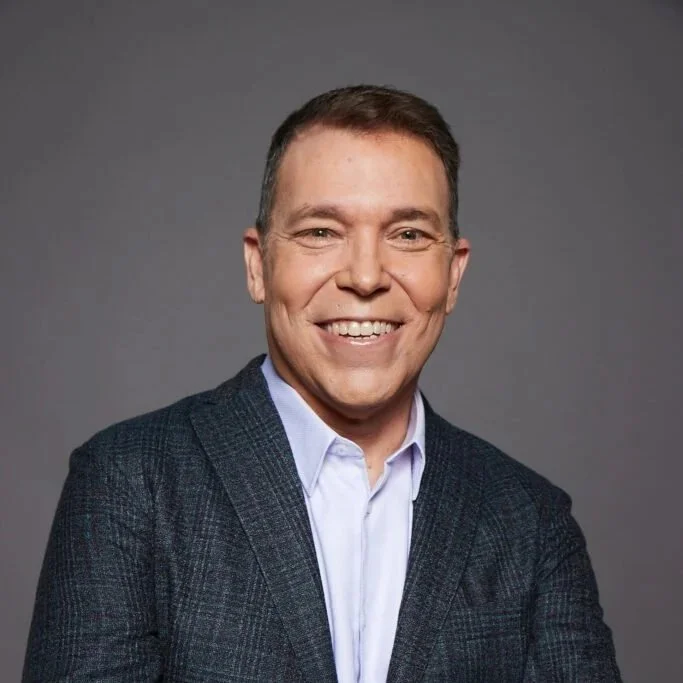
“The three most powerful words in the English language are, ‘You’re not alone.’”
Summary
Great storytellers tend to be people who have experienced lots of diversity through the course of their life journeys, and that is certainly true of Bruce Feiler. A fifth-generation son of Savannah, Georgia, Bruce has taught English in rural Japan, performed as a clown in the circus, and has walked the lands of the Bible. His has been a lifetime of joining other people's worlds and coming back to tell us what he found.
I wanted to have Bruce on Leadership Matters to talk about that journey and the question that motivated his latest book — namely, how we can rebuild connection in an age of loneliness, division, and digital saturation. Titled Time to Gather, the book traces a 50,000-mile journey across six continents to document what he calls a ritual renaissance: the surprising, hopeful ways ordinary people are reinventing how we come together. I am a huge fan of Bruce’s work, so it was a pleasure to spend some time together and trace the threads that tie together his larger body of writing.
Mentions & Resources in this Episode
A Time to Gather: How Ritual Created the World–and How It Can Save Us, by Bruce Feiler
The Council of Dads: A Story of Family, Friendship & Learning How to Live, by Bruce Feiler
Guest Bio
Bruce Feiler is one of America’s most thoughtful voices on contemporary life—he uses original research into life transitions, life rituals, and life stories to help people find meaning in times of change. Bruce is the author of seven New York Times bestsellers, including Life is in the Transitions, The Secrets of Happy Families, and Council of Dads. His four TED Talks have been viewed more than five million times; he teaches the TED Course “How to Master Life Transitions;” and he is a fellow at the Stanford Computational Psychology and Well-Being Lab.
Bruce’s latest book, A Time to Gather: How Ritual Created the World and How It Can Save Us, describes his 50,000 mile journey to sixteen countries on six continents chronicling the astonishing rise of reinvented life rituals. From the Vatican to Bali to Ireland, the book is both a stirring adventure and a practical manual for restoring togetherness.
Bruce is the host of two primetime series on PBS: Walking the Bible and Sacred Journeys with Bruce Feiler, in which he retraces pilgrimages in France, India, Japan, Israel, Nigeria, and Saudi Arabia. A longtime columnist for the New York Times, Bruce Feiler writes the popular newsletter “The Nonlinear Life” about navigating life’s ups and downs. He has contributed to The New Yorker, Parade, and Gourmet, where he won three James Beard Awards. He has been the subject of Jay Leno joke and a JEOPARDY! question, and his face appears on a postage stamp in the Grenadines.
A native of Savannah, Georgia, Bruce lives in Brooklyn with wife, Linda Rottenberg, and their identical twin daughters.
Episode Transcript
Alan Fleischmann
Welcome to Leadership Matters on SiriusXM and leadershipmattersshow.com. I'm your host, Alan Fleischmann. I'm joined today by one of America's most thoughtful storytellers, a writer who has spent his career helping us understand how we find meaning, how we hold our families and communities together, and how we navigate change.
Bruce Feiler is the author of 15 books, including seven New York Times bestsellers. His three TED Talks have been viewed more than 5 million times, and through his Life Story Project, he has interviewed hundreds of Americans about the shape of their lives — giving us indispensable language, from lifequakes to the nonlinear life, for the journeys we all take. Bruce's latest book, A Time to Gather, traces a 50,000-mile journey across six continents to uncover what he calls a ritual renaissance: the surprising, hopeful ways ordinary people are reinventing how we come together to push against loneliness, division, and disconnection.
Today, we'll explore Bruce's early life, the unlikely path to becoming this extraordinary writer and leader, the ideas at the heart of his new book, and the lessons about leadership, resilience, and reinvention that he's gathered along the way. Bruce, welcome to Leadership Matters. It's such a pleasure to have you on the show.
Bruce Feiler
Thank you, Alan. Thank you for that kind introduction. Everyone who listens to you should know the amount of work that goes into this, and the thought you put into shaping a great conversation. I'm looking forward to it. I'm such a fan —
Alan Fleischmann
You're so sweet. I'm such a fan of yours, because there's an extraordinary, insightful, confident way in which you share insights, and there's a powerful we in the way you go about everything you write. It's amazing. It's very clear, and you do it with a great sense of wonder, awe, and humility. That's why people become not only grateful — which I am, one of many, for what you write — but also big fans of you. You've got fans, my friend, because people are searching for we. In an age of a lot of arrogance in leadership, and we talk about that a lot on the show, to have someone who's confident enough to lead with humility and gratitude and urgency at the same time is very rare.
So I start there because I just want to say I've really, really wanted you on the show. A minute ago, before we went on, you made a comment thanking me for persevering — and I want to be clear to our great audience, I have really wanted you on the show, so I'm very excited about the conversation ahead.
Let's talk about you. You can't necessarily hear it — I don't hear a strong Georgian accent — but you were born and raised in Savannah, one of the great American cities, a fifth-generation man of Jewish faith from Savannah, Georgia. You grew up with one foot in and one foot out. How did that sense of being, on the one side, a multi-generation insider, and at times an outsider — how did that shape your worldview? I bet it's become a big part of how you write.
Bruce Feiler
It is a big part of who I am. And I want to go back a second to what you said about the we. I've become very enamored of this idea that we have a kind of we-I axis in our lives — a way of trying to balance the we and the I. And I think, as maybe one of the many ways we might frame this conversation, our we-I axes are just entirely off-kilter. We've become way too focused on the I — as a culture, and as a result, in the many groups where we attempt to have leaders and followers, where we attempt to accomplish things as a group. I think we've lost the we because of the I, in a lot of ways. So it's fair to say that a lot of my work, and how I view the world, is trying to wave the flag for the we.
That relates to the question you just asked. Why is it that I've lived this unusual life? I do think a lot of it comes from my childhood. I actually had a conversation this morning, for a new book I'm working on, with people who study high-net-worth families, and they were talking about the arrogance, the vanity, of everybody thinking that they did it alone. "I pulled myself up by my bootstraps. I live the great American story. I did it myself." It's sort of like that study where they ask men and women who does more housework, and both say more than 50 percent. Everybody thinks they're the hero of their own story. That's a very valuable insight — but on the other hand, there are other people who were telling that story.
So, to answer your question: I grew up five generations of Jews in the American South. I love being a Southerner. I love the family-ness, the we-ness, the togetherness, the stickiness, the storytelling-ness. There are great things about that, which are central to who I am. But I also grew up Jewish in the South, which meant I was a part of the South but apart from it at the same time — five generations of Jews going back to the 1840s. And I grew up not only apart from the American Jewish experience, because I was in the South, but of course apart from the long 2,500-year-old story of Jews going back to the ancient world. A part of it and apart from it. That tension of having one foot in, as you say, and one foot out really helped me become who I am.
Because I'm sort of three things. I'm an experientialist — I like going out and becoming part of different worlds, and I've done this; I've been to 90 countries in my life and written books about five continents. I'm also an explainaholic, which now you're not supposed to be as a man, but that was an Isaac Asimov thing — I like joining a world, coming back, and telling people what I saw and what I found. And, as you mentioned, I've been collecting life stories; I think of myself as a life storyteller, someone who thinks about the stories we tell ourselves and how they integrate with other people. So I'm three different made-up words — and that made-up-words-ness of me comes from this childhood of having a foot in a world and a foot out of the world at the same time.
Alan Fleischmann
What I love about your writing, about your speaking, about your dreaming — right now you're showing me — is this vividness in creating your own language. I know you studied English, and you taught English, so I'm curious: was young Bruce a kid who made up his own vocabulary? Or did you realize you don't let yourself conform, you don't let yourself just use the same old language? In some ways, the great storytelling tradition you've joined, you've actually expanded with your own vocabulary.
Bruce Feiler
Oh, you are good, man. That is such an insightful question — but also a generous question, and maybe that's the essence of why you're good at what you do.
I do think — and we'll get to the life transitions part of this conversation a little later — that a large part of the reaction to my work, and this is a technical, scientific term, is: "You've put language to this thing that I didn't realize there was language for." The way my wife likes to say it — Linda, who started and runs an organization that helps entrepreneurs in 50 countries around the world — is that I have hard knowledge about soft things. I like trying to see something that's not there, put it in some sort of context, and give it language. And I do think a lot of it comes from this tension between being an insider and an outsider.
Now it'll be 40 years next year that I sold my first book, and I've lived my life outside of traditional structures. I'm not a tenured professor. I wrote a column for The New York Times for a long time, but I don't work for journalistic organizations, so I'm outside. It's a huge flaw in my life, because I'm really bad at office politics. I'm not very good at figuring out who's the person you're supposed to kiss up to, at getting ahead by playing the inside game. But the strength is that because I'm not beholden, because I don't really understand these invisible networks of power and authority, I can say what I really think.
Alan Fleischmann
I had a father-in-law who passed away last summer — my wife's father. English was not his first language; he came from Morocco. He once said to me, "I recognize that." I said, "Charlie, what are you saying? What is that word — recognize? I've never heard it that way." He meant precognition. I said, "What does that mean?" And he goes, "I see things, I say things, before it's clear." That's kind of what you're describing. I said, "That's not a word." And he goes, "But shouldn't it be?"
Bruce Feiler
Shouldn't it be?
Alan Fleischmann
I feel like he would have been liberated — because I chastised him for coming up with a new word, when I should have been celebrating the fact that you do what you do so beautifully. It's not just that you come up with a new word. You come up with clarity.
Bruce Feiler
Yeah, I think there are a lot of disadvantages to being a writer. I've got no one to steal office supplies from. I have sprinkle-cookie deprivation, because I don't get invited to holiday parties. But at the top of the advantages: I get to make up words. Very early on in the unusual life I've lived, I realized that when you open up a dictionary and look at the etymology of a word, it'll say, "Jonathan Swift said this," or "Charles Dickens said that," or "William Shakespeare invented that." And I was like, well, why can't that be me? So, yes — I do not mind making up words.
Alan Fleischmann
I love that, and I hope you continue to do it. At Laurel Strategies, we say we're a bunch of worriers and warriors. When I meet you, I think of somebody who does worry — and you're a warrior — but you add another element, and I hope our listeners can feel it: you bring a joyfulness to your curiosity. You've done so many interesting things — maybe because you had to be lonely, as well as a community member, as you grew up. Both. And then you go off to a small town in rural Japan, teaching. You lived abroad, you've done all these things, and from what I understand you've been insatiably hungry to understand other people's points of view and their perspectives. You may not be a chameleon, but I bet you soak it all up.
Bruce Feiler
If you ask me where this came from, I think it came from the fact that I was grounded as a child. I came from a place, as you say — Savannah, Georgia — and from a family that's a very sticky family.
Alan Fleischmann
Your mom and dad and brothers and sisters, yeah.
Bruce Feiler
My father is the Georgian. He's a fourth-generation Georgian — a very classic 20th-century great builder, a civic elder who wanted to make the community a better place. He went off and joined the Navy, went to Penn, and met my mom, who's from Baltimore. Then he was summoned back to Georgia to work on a family business his father had started. So my mother had to move to Georgia in the early 1960s, at a time when it was perhaps not as welcoming to outsiders as it could have, should have, and might have been. She was very much "over my dead body should you stay here — you should go forth."
My bar mitzvah portion was Genesis 12, which is Abraham going forth into the rest of the world. And I came of age in the era of discount airfare, in the 1980s, when you could travel. I left Georgia in the '80s. I went to Yale, and I learned more about myself as a Southerner by leaving the South and going North. So when I graduated from college, I wanted to continue that: now I should learn about myself as an American, so I should go abroad. And I went to Japan — what became three years in Japan.
This tells you how old I am: I started writing letters on airmail paper. The kids today don't know from this — you'd weigh it by the ounce, it was crinkly —
Alan Fleischmann
The paper you had to get, you licked it at the end, and it came pre-licked —
Bruce Feiler
There were no lines, but the pad would have lines, so you'd put the pad underneath. And I wrote these letters: "You're not going to believe what happened to me." This was a moment when Japan was re-entering the world in the '80s, and it blew my mind. When I came back home, everywhere I went, people said, "I love your letters." And I was like, "Great — have we met?" It turned out my grandmother had Xeroxed them — another dead invention — and passed them around, and they went viral in the OG sense of the word.
I thought, well, this is interesting to me and to all these people; I should write a book about this. I'd never met anybody who wrote a book. I went to the Chatham-Effingham County Public Library in Savannah and checked out the only book on publishing they had — which was about propaganda in World War II. And — it doesn't happen this way — but I sold my first book at 24, now 39 years ago, and I've basically never held a job since. That process of going, traveling, thinking, sharing — being far away but communicating to the people back home — is what shaped my life. It was a great way to experience the world, and not a particularly good way to make a living. But eventually I did it enough that I started telling stories that reached larger and larger audiences, and that's when a whole new world opened up professionally.
Alan Fleischmann
One of the great father figures in my life, a great mentor, you haven't heard of because you're too young. He died at over 100 years old. His name was Robert St. John, and he was a great war correspondent and journalist. He was the AP reporter who declared the start of World War II in Poland on September 1, 1939, and he was the NBC anchor who announced the end of World War II. A fascinating non-Jewish guy who covered all the Israeli wars and wrote an incredible number of books about his travels and observations — almost like an anthropologist. He was the Jane Goodall of culture, in some ways, and we worked closely with Jane and with Robert. It was a great force in my life. The way you write, Bruce — I feel this enormous draw into understanding humans, understanding culture, understanding the way we communicate. I don't think anybody does it the way you do.
Bruce Feiler
That's very nice. If anthropology is the fundamental process of trying to understand what it means to be human, I do think that is a through line. And in A Time to Gather, which we'll get to later, I learned a lot about the history of anthropology — and you can see in it a story, a change in how we understand ourselves.
The first generation of anthropology emerges in the middle of the 19th century, when there wasn't the kind of broad-based travel we were talking about, the age of discount airfare. The original great anthropologists — Durkheim, or Arnold van Gennep, who invents rites of passage — the whole first generation, they were what were called armchair anthropologists. They were basically sitting in European salons, looking at reports from cultures around the world.
The second generation — that's Margaret Mead, that's Jane Goodall, the people in the mid-20th century — were experiential. They were field anthropologists; they would go out and live overseas, immerse themselves in local cultures, try to understand what they were seeing, and, if possible, generalize from it. I grew up at the tail end of that in the '80s. When Margaret Mead and Lévi-Strauss were doing it, they were taking ships; then we could start going by airplane.
But the new wave, the 21st-century anthropologists — first of all, they're not just immersing themselves in tribal cultures. They're writing about truckers, they're writing about workplaces, they're writing about major-league baseball teams. They're entering lots of different groups of humans. And they're often what I call biometric anthropologists: they're using brain waves, sweat glands, emotions, and modern techniques to understand us. In that evolution you can see the change in how we tell the stories that help us understand where we are.
So if you're talking about leadership, for example, you wouldn't be an armchair student of leadership anymore, just reading other people's reports. And you wouldn't just be a field leadership student who goes out and embeds in corporations or teams. You'd use a lot more contemporary metrics to understand well-being, communication, connection, teamwork, and leadership. You can see that evolution in lots of different fields — anthropology, leadership studies, and, frankly, well-being in general.
Alan Fleischmann
That's so true. The move from the armchair to actually being there is really a modern phenomenon.
Bruce Feiler
Absolutely, a modern phenomenon.
Alan Fleischmann
Now, I might think this is exaggerated — you ran off with a circus as a clown. Is that part of this journey?
Bruce Feiler
I mean, we could stress-test the "ran off" part, but yes, I sort of drove off and joined the circus. When I was a kid, I learned to juggle at 13, at summer camp in Maine, and it changed my life. I learned to juggle, I learned to do mime, and I used to joke that I put myself through high school doing birthday parties for $30 apiece across Savannah, Georgia. I thought about joining the circus before college; I got the application to what Ringling Brothers, in an act of incredible marketing, called Clown College — a six-week training program they invented in the '80s as a marketing tool. When the circus was going from place to place, they'd announce auditions for Clown College, get the local broadcaster to come cover it, and get free publicity on the NBC affiliate in whatever town they were in.
Then I went abroad — I went to Japan, I went to Cambridge and got a master's degree in international relations — and I was ready to come back to America. I thought, "I want to rediscover America. How can I be a field anthropologist" — in the language of what we're talking about now, which I wouldn't have used then — "what if I joined the circus?" And I did. I wrote to a bunch of circuses and said, "I'm a writer and I want to spend a year with you." I met a bunch of them, and I joined the Clyde Beatty-Cole Bros. Circus in 1993. I did 501 circuses in 16 states, two shows a day, three on Saturdays, every day from March to December, without a day off.
When you step into a cage with tigers, or you walk the high wire, you can't have a bad day. When you hang by your hair — we had two hair walkers — you can't have a bad hair day. But you know: clown joke, sound effect, drum bang. It was great. It was an incredible way — you talk about a we-I axis — to see people from all walks of life.
Alan Fleischmann
All walks of life, actually.
Bruce Feiler
Absolutely, all walks of life. And here's a surprising thing to say: the greatest storytellers I know are circus performers. Every act is a little story. It begins with, "We're going to do this," and then it builds to the climactic trick. Think about wire walkers, or aerialists, or people doing the flying trapeze. You begin with, "This is the family, and we do this together," and you do an easy thing, and it gets harder, and then, "Now we do the first-ever quadruple somersault" — and you get that heat, and then you come down. Or you fall. And how do you — now you've had a moment, everyone's gasping — do you do it again? They're incredible storytellers.
One of the things I still appreciate most in my life is this idea: you have these people on the edge, sort of outsiders in society — the tall people, the skinny people, the non-skinny people, the talented people, the people with animals, the people who've maybe had a difficult life, come from prison. And you come to the edge of a town, put up a tent, and invite the people from town to the edge of town. You go into this dark tent, and together you create this world — you co-create a story of fantasy, of dreams coming true, of bright colors, where everyone's strong and beautiful and the best version of themselves. And then they go back to their separate worlds. It's a fascinating example of what collective storytelling can be.
I told this story recently, because I met somebody from Winchester, Virginia, which is home to — not a cherry blossom — an apple blossom festival. I marched in that in costume behind the elephants, and it was our job to clean up after what the elephants do. If they're going to walk across the streets of a town, they're going to make a mess. And the greatest applause of my life — I have given speeches in front of thousands and thousands of people, I've been on stages and television shows — the greatest response I ever got was cleaning up elephant dung in a parade, because the people realized that was real labor, and it was in the service of a larger story. So, the circus — may all your days be circus days.
Alan Fleischmann
Do you still go? Do you actually go to the circus?
Bruce Feiler
I go to circuses, and I've been to circuses all over the planet. I've seen them in Iran, I've seen them in Europe. I think circuses are great. I love them now, in a world where everything is AI, because you know what it is? It's real.
Alan Fleischmann
It's like watching FIFA — like watching the World Cup, or great concerts and music. You're seeing real people do real, talented things. But I love the way you describe the magic of it, the idea that it inspires us to go on the journey with you. When you're doing some great, heroic moment of courage, we're all at the edge of our seats, looking up and down and across, because we're on that journey with you. You take us with you. Shared dreams.
Bruce Feiler
We need shared dreams. This might seem very far afield from the leadership question you ponder every week in this community, but I'm telling you it's essential — because it's a bunch of Is telling a we story. And in this case, it's a story that helps our own collective shared dreams come true. That is the leadership challenge.
Alan Fleischmann
And it's life-threatening — which is what it truly is. If you do too much I in life, we don't always realize it that way. But compared to the circus, you completely realize that the we is life or death.
Bruce Feiler
And — to hint at some of the ritual stuff to come — one of the things all successful rituals have is stakes. There's something that matters here. Somebody is suffering, somebody is going through a transition, somebody is celebrating. There is something that matters, and we have to collectively identify that and mark it together.
Alan Fleischmann
You've written so many wonderful books. I find most of your books evergreen, but one I'd find so profoundly needed today, for so many obvious reasons, is Walking the Bible and your Abraham book, which you wrote after 9/11. It sent you on this incredible search — this Savannah-born boy who studies and teaches English in Japan, goes to Cambridge, ends up in the circus, and then ends up wanting to understand the shared father of Judaism, Christianity, and Islam, immersing yourself in all three faiths. Tell us a little about that experience, because I'd urge people not only to buy A Time to Gather — I hope everyone does — but also to read Walking the Bible and Abraham, because I think they're evergreen.
Bruce Feiler
So here I am from this place. I write in Walking the Bible about being grounded in a place, as I said earlier — I'd be like a bungee cord: I'd go out, I'd jump, I'd touch a place, and I'd pop back. The first time I went to the Middle East, the bungee kind of caught in another place, and I felt at home in that world.
The essence of that story is that I went to see an old friend. I grew up Jewish in the South, and I had "read the Bible," which meant I hadn't really read the Bible since I was a kid — which meant I hadn't really read it. At this point I'm living in Nashville, writing a book about country music, and I realize I'm a writer, I can't deny it. So I put the Bible by my bed, where it sits untouched for two years, gathering dust. Then I go to see an old friend in Jerusalem — and I'm guessing you've been to Jerusalem — and on my first day my friend says, "Over there is this controversial neighborhood, and over there's the rock where Abraham goes to sacrifice Isaac," and he points to that golden dome in the middle of Jerusalem. And I thought, wait a minute — these are real places you can touch and feel.
I didn't say this publicly for a long time because I was embarrassed, but what I really thought was: "What if I go to the places and read the story? What if I join the Bible as if it were the circus, and seek to become a part of it?" And that's what I did. I spent two years going to three continents, five countries, four war zones — going to places and reading the story. Walking the Bible is now 25 years old as we have this conversation. It comes out in the spring of 2001 and becomes a thing. It spends a year and a half on the bestseller list. I make a TV show seen by 50 million people. On and on.
But six months later was 9/11. Five days after 9/11 — that was a Tuesday — I met friends for brunch in Manhattan, and we're all talking about 9/11. And I say — you talk about putting language to things — "This is shared. We all come from Abraham. He's the shared father of half the world's believers: 12 million Jews, 2 billion Christians, 1 billion Muslims. This is the greatest family feud of all time." My wife, who was not my wife at the time, tells the story. I say, "If we understand Abraham, we can understand how to heal this division," and everybody's nodding along. At which point I say, "Trust me — Abraham is going to be on the cover of Time magazine a year from now." And Linda likes to say everyone was nodding, and suddenly they're shaking their heads: "What are you talking about?"
Well, people can't see us as we're having this conversation, but you can see over my shoulder there's a picture of Abraham on the cover of Time magazine. It turns out I put him there, because it was an excerpt of the book I decided that day I would write about Abraham. And here we go back to the I versus we: everybody thinks that story is their story, but in fact it's a shared story. It was very purposeful. Jews start telling the story; then Christians come, and they can't escape it, so Christians make Abraham the ancestor; and then 600 years later, when Islam is created, they go back to the same story — because we need shared origins.
We need to understand this. We need to understand the story of people trying to tell the same story and claim it for themselves and push other people away. It's, in some ways, the oldest story in the book: "I get to tell the story, Alan, and you don't — and as a result, we're going to have conflict." That is the story of Abraham, ancestor of half the world's believers. That's the story of your family, of my family, of any organization you're part of, any organization I'm part of. We have a we-I axis, and we tilt it — through intention, inevitability, rivalry, insecurity — we tilt it toward an I story. And if it's out of whack, the entire community is out of whack. We have to restabilize, reconnect with, and reassert the we story.
Alan Fleischmann
And share the love that comes from having that shared tradition — whereas right now it's all about the hate, not the love that should bind us. What's binding people is binding them toward hate, which is the wrong way to go.
Bruce Feiler
And let's remember, we're talking about something that was 25 years ago — and you know what was not widespread 25 years ago? Digital technology. The iPhone comes in 2006, and social media comes soon after. What we know now, 25 years down the road, if there's one thing we've learned that's inarguable about digital technology, is that the algorithms are designed to divide us — because that serves the algorithms and the overlords who create them and make money from them. Division, tension, stoking fear, encouraging hate — that serves them, but it does not serve us.
So the only force strong enough to push back and reclaim our humanity from these new algorithms is the original human algorithm: gathering together and working it out in person. That was writ large in 2001, and now it's writ everywhere in 2026.
Alan Fleischmann
I want to get into the new book you mentioned, but I also want to acknowledge another book. When your daughters were three, and my daughters were maybe one and four, you wrote The Council of Dads. I remember it, because I knew your wife, and I knew you a bit, and as a young father I felt the fragility of your life when you were diagnosed with bone cancer. I don't want to spend a ton of time on it, but I have to say: the way you talked about the opening of the new book reminded me of that book — the vulnerability, the rawness, the authenticity, the honesty with which you decided how you'd deal with a situation every parent fears: "What if I'm not here?" You chose these six close friends, representative of different stages of your life, and you created something.
I don't think I even realized it, but we've been thinking, in my family, of something we call "the big family." It's my friends and my siblings; we're on a WhatsApp that communicates practically every single day, and we get together —
Bruce Feiler
Who's the big family?
Alan Fleischmann
Is it biological family, chosen family, or both?
It's both. It's my college roommate and his family, my best friend growing up and his family, my brother Steve and his family, and other great friends along the way — and then Billy, my little brother, who's been my colleague at work and in life. I don't even know whether I intentionally tried to make it that way; it was natural for me to do it. But I remember consciously thinking about how important it is that I do it. There was a catalytic level to how I approached it, and the speed and urgency came from you, Bruce — this idea that, God forbid, something happens to me: who's the storyteller, who's the convener, who's the person that's going to play the role of sound judgment financially to support Dafna? All of that came out of being a young dad and discovering what happened to my friend Bruce — who wasn't yet my friend, but whom I admired for his writing.
There's a natural bridge from that discovery to A Time to Gather, because you start off talking about what it feels like to be a stranger in your own home. You'd just lost your father, you were losing your mother as she declined, you'd dropped your children off at college, and there's a sense of loss.
Bruce Feiler
As we sit here this week, it's the 18th anniversary of the Council of Dads. For those who don't know the raw story: I was diagnosed with a rare, aggressive form of bone cancer in my left femur. I was the walking guy — from Walking the Bible — and suddenly I couldn't walk. I was facing the possibility of a lost year, a lost limb, or a lost life. Linda and I were the parents, at that time, of 3-year-old identical twin girls. Maybe because I'm a writer, I thought, "They're not going to have my voice." And I woke up three days later with this idea of how I could give them my voice: reach out to a group of male friends and ask them to be present in the lives of my daughters. I called this group the Council of Dads. It came to me fully formed — kind of like the idea behind Walking the Bible — and I wrote a memoir about it, and it became a TV show on NBC.
Sitting where I'm sitting now, having the conversation we're having now, I'm reminded that that is an extreme moment — a lifequake, as I call it now. An extreme moment of fear, for sure, but also of isolation and disconnection. Suddenly I'm 43 years old, I'm not supposed to be dying, and this breaks the natural linear progression of life I expected. And what do I do in that moment, without thinking? Because you don't sleep in a moment like that — you get a diagnosis like that and everything is awash in fear. I say, "I want to take this lonely, isolated, scary moment and turn it into a group activity. I want to take the I and turn it into a we."
We're looking for through lines here, and messages of leadership for people in lots of different kinds of life. Turn the fearful, isolating I moment into a reassuring collective we moment. That, I think, is a big reason the story resonated. "It takes a village" is one way of looking at it, but the way I think of it now is: you can't have too many adults who care for your children, you can't have too many people around you. And we're in a moment where change is coming at us faster than at any time in our lives — arguably the best comparison, and there's a reason people keep going back to it, is the 19th century, the Industrial Revolution: a third of people lost their jobs; 25 million people in America moved from rural areas to cities; 25 million people came from Europe and moved to cities in America. A period of incredible global flux in all sorts of ways. We can face that alone, or we can face it with councils of dads, or councils of moms, or communities, or teams, or gatherings of any kind. The message is the same: the only way to get through this is to get through it together.
Alan Fleischmann
Which should be our primal instinct, but it's not always the way — which is why I love what you're doing now. We don't always imagine what's possible until we see a proof point. What I love about A Time to Gather — and honestly about all your books — is that you show people almost a roadmap: to see something and then build it themselves. You're telling everyone, "You can do it your own way. Let me tell you how Bruce Feiler did it." My version of building community had the same urgency, but it was going to be born and built differently, because it had to be a mirror of the world I could create.
Bruce Feiler
Exactly right. You didn't create a council of dads, but you created — to drive the point home — leadership that meets a need people already have, so people were willing to follow. And there's an advantage, ironically: as we were discussing, these algorithms divide us, but these technologies, if used properly, are neutral, and can connect us.
Alan Fleischmann
The whole tension of Facebook was to connect us. When you think about what made it magical, it was that we got to communicate with people we hadn't talked to.
Bruce Feiler
We could quibble about whether the original purpose was to connect us or to get dates — but maybe that is connecting us.
Alan Fleischmann
Maybe you're right. Maybe the original purpose was different, but you could share. Your description of ritual as a shared, unnecessary act that makes us feel at home — this idea of building community, building a home, with big quotation marks around the word "home" — these things seem unnecessary, but they matter enormously.
I watched a very funny thing with Tracey Ullman, the comedian, the other day — it was probably a few years old — where she's pretending to be an old lady on her deathbed, and the family gathers around her the way only Tracey Ullman could do. They say, "Mom, your last words of life and wisdom — what do you want to share?" And she says, "You know, I wish I'd taken more photographs of my food, and I wish I'd done more selfies." This idea that we're living in these algorithms, running around taking photographs of our food — even though I do it too — and forgetting about these magical moments of gathering, of being together, of celebrating community. But they're urgent.
Bruce Feiler
I think that's right. And as my kids say, "The phone needs first." So, to answer that question: yes. Linda and I went from empty nest to full nest in 32 minutes, 21 years ago, and then 18 years later we went from full nest to empty nest in 32 minutes, when we dropped our twin daughters off at opposite ends of the same college campus. I walked into our home here in Brooklyn, and I had this very precise feeling: I felt homesick in my own home. I was like, "You can't use that word — that's what kids feel when they go to the first day of kindergarten, or their first night of sleepaway camp." But as you said: my dad had just died, my mom was aging, my marriage, which had been built around our children, now needed to be redefined, my friendships remade.
And it wasn't just me. Everybody has this sinking recognition that the enemy is in our pockets, that we've abdicated our relationships for our smartphones, and that we crave connection — or maybe, more properly, reconnection. I went looking for answers, and I stumbled into what I now think of as maybe the greatest story I've encountered in almost four decades of writing books professionally. The essence of it is: rituals work. It's one of the few things we know holds people together. We have evidence from 300,000 years ago that the first thing we did — before we were even anatomically human — was gather and bury our dead. In these times of change — a couple coming together, and, as we tape this conversation, we've had a few weddings generate a little attention in the news — we gather in these moments of change. Someone comes into the group, someone leaves the group, and rituals work.
Alan Fleischmann
And you call it a ritual renaissance.
Bruce Feiler
The first thing is: we've done it for thousands of centuries — until this century, when we've turned our backs on them. A lot of traditional rituals are in decline. Birth rituals, coming-of-age rituals. Only half of us are married. Only a third of us are buried anymore, because cremation has risen so quickly. So in some ways we're in a celebration recession. But what I realized is there are all these new ways people are gathering in real life, often around things people never gathered about before: NICU graduations, first-day-of-school photos, daddy-daughter dances, mom proms, end-of-life doulas, end-of-pet doulas — pet funerals are a $3 billion business — end-of-company doulas, sober-versaries, cancer-versaries. All of these things.
I call it a renaissance of ritual, because I'm not saying we should do this — I'm saying it's happening. Here is another technology, to go back to one of the first things we said, that's having a human response. And the human response is: we do not want to outsource everything to some digital algorithm. We want to get together in person. In-person dating is on the rise. Going to bars. A new organization called Lectures on Tap. Scream clubs. Silent retreats. There's this incredible outpouring of new ways of gathering. To me, it's one of the hopeful stories, and it's not being told enough. Humans are pushing back. There will be a response.
And whatever your problem is, ritual gatherings are the answer. If it's loneliness, gatherings are the answer. If it's division, gatherings are the answer. If it's polarization, gatherings are the answer. If it's apathy in your company, and you're a leader or on a team — gathering together, making human connections, fighting back, fighting together, fighting smart, rebalancing the we-I axis in the shape of we — that's the future happening right before us. And we need to spend a lot more time celebrating it, learning what we can, and getting better at it.
Alan Fleischmann
We invest in self-care a lot, and that's becoming a great fundamental priority. But you argue, I think, that on the we-I axis, we under-invest in caring for the community, the group, the us, the we — how we get to the balance of even our organizations, our firms, our operations, our families at large, the big family. Part of what you're saying is: think broader. Think about the neighbor. It goes back to the Ten Commandments, literally — honor your father and mother and the greater community, and do right by them — and we can heal the world.
Bruce Feiler
Let me sharpen the self-care/group-care thing. If you go to Instagram and look at the hashtag "self-care," it's like 21 million usages. If you look at the hashtag "group-care," it's like 18. We don't — and back to the point you made earlier — we don't even have a language for it.
So one of the things I've tried to do is put a language on it. What is a ritual? A ritual is a shared, unnecessary act that makes us feel at home. Let's break that down. It's an act — a doing, not a talking. We're not talking; we're getting together and doing something. It's shared — I read 500 academic studies that talk about how ritual gatherings synchronize our heartbeats, align our brain waves, make our families, teams, neighborhoods, and communities stronger. There's all this biometric evidence that when we get together we are more effective. I'm all for remote this, remote that, but sooner or later you're going to have to be together at least some of the time, because it's a cooperative event, and that happens when we're physically present.
But it's unnecessary. You don't have to get down on one knee to propose. You don't have to wear black to mourn. You don't have to circle the bride seven times to get married. You don't have to have the office retreat. You don't have to have the all-hands meeting. These are things we do that are unnecessary but become necessary — why? Because we invest them with collective meaning. When we say it's important to connect, to gather, to celebrate, to mourn.
To me, it goes back to Ecclesiastes: there's a time to mourn and a time to dance, a time to weep and a time to laugh, a time to scatter stones and a time to gather them. We've been doing a lot of scattering of stones in this culture, and now is the time — which is why this book is called A Time to Gather — because it's there in our bones, in our craving. And what we need is the leadership to bring it together. This is a situation, Mr. Professor of Leadership, where the leadership is coming from the bottom up. People aren't waiting around for their leaders to tell them; they are asking for it and doing it themselves. So the leaders need to catch up. Here's an example where leading from behind might be a good thing: recognizing that there is this clamoring for these activities.
While I begin A Time to Gather with that definition, where I end is the idea that we need a ritual state of mind — recognizing that the algorithms are coming at us 24/7, the first thing we see in the morning and the last thing we see at night. Our phones. We need to spend more time in between, clamoring to connect, coming up with new ways of gathering, using the blueprint of togetherness I've tried to identify, and the tools and suggestions in my book, to come up with new ways to promote togetherness in everything we do.
Alan Fleischmann
It strikes me so much. A year and a half or two years ago, I lost a cousin who was like a sister to me — 16 years older. When I spoke at her funeral and gave the eulogy, I always said: if there's one thing Raquel did, it's that she always showed up. What struck me about your book, in the age of Zoom, of FaceTime, of everything we can do on our phones, is that you traveled 50,000 miles to 16 countries. You went to a baptism in the Vatican, you went to 10 funerals in Ireland, you went to six weddings in Las Vegas. You show up. I watched The Council of Dads — they wouldn't have responded the way they did if you hadn't shown up before that as a friend.
At the end of the day, you're right: bottom-up, top-down. When we think about why John F. Kennedy still matters even today — for those of us, like you and me, born just after he died, who grew up in the halo of his presidency — he was Mr. Peace Corps, the man who challenged us to gather. He wanted the we, not the I, as a president, and he wasn't afraid to call on the best of humans to do it. I've always admired RFK and JFK, even though they came before me, because I always felt we want a leader who's going to bring out the best in us and ask us to build community and think about our neighbor. What your book is telling us is that we've gotten way off course, but it's not over. You're not pessimistic. You're telling us it's happening, and that we've got to put more vim and vigor, more energy, into it ourselves — reclaim it, and go from I to we.
Bruce Feiler
Exactly right. I'm saying I think this should happen — but before that, I'm saying it already is happening. So I'm not wagging my finger and telling us to do something; I'm saying this is already underway. The human response to the technology is real. It is before us, and I'm shining a light on it to remind us that we're already doing it. And in so doing, to say: we can follow the lead.
My book opens with this incredible story of a young woman in Ohio who grew up in a service-oriented family. Her father was the fire chief and the mayor; her mother taught Presbyterian Sunday school. She grows up, becomes a nurse, moves away, comes back home. Her little sister, who's going to get engaged the following week, gets in the car and drives into a tree. She's declared dead the next morning, and the doctors come in and say she's an organ donor, and they're taking her away — wrench her away — and the family is devastated. And this woman says, "I don't want anybody else to go through this." She quits her job, moves back home, becomes an organ donor specialist, realizes there's tension in the community, and she says, "What we all need is a ritual."
So she invents a ritual called an Honor Walk. When the deceased is going to donate their organs, they put the body on the gurney, put a little cell phone by the ear — they pick a song, "Annie's Song," John Denver, who's in the news right now because "Take Me Home, Country Roads" is what the U.S. men's national team is playing in their World Cup matches. They push the body into the hallway, and the entire hospital staff has paused, lined the hallway in dark blue scrubs, holding flameless candles, to pay tribute and honor to what she's doing to save someone else's life. They stop 5 feet before the operating room doors, and the family says goodbye. She has a rule — Missy, the woman I'm talking to — no pictures. She makes an exception for the first widow, and the next morning Missy's phone blows up: "I want to do an Honor Walk. How do I do this?" The woman posts the picture on — wait for it — Facebook. It gets 2 million likes, and there are now 50 donor support groups. They all do Honor Walks, dozens around the world.
It's a hall-of-fame modern ritual, and an example of an invisible pain that people were experiencing all alone — and they've turned that invisible pain into a shared moment of dignity, honor, tribute, and respect. The community draws closer at exactly the moment it feels a little bit rent apart. It's a perfect example: leadership from the bottom, then leaders above saying, "We will embrace it," creating a new way to make connection through one very simple, very powerful gathering.
Alan Fleischmann
What I love about everything you write — honestly, I want everybody to read all of it; I think I'm going to make sure I read every one of your books — is, in another book you wrote, The Search, this thread that runs through all your work: you're the anthropologist of human culture and of building community, and there's this sense of yearning. We have a voice; we want to be heard. Not everybody has to be the CEO, the C-suite leader, the founder, the entrepreneur — but there's a yearning we all have, that we're here for a reason, that our voice matters, and that the collective voice is profoundly impactful.
What I love about this book — and about The Secrets of Happy Families, and The Search, and all the books you've written — is that in A Time to Gather you're speaking to this yearning, this calling, and this message to our CEOs and our leaders: either you call for it and show us the way and help us be the convener, the catalyst — or people will ask for it, demand it, and create it, because ultimately we yearn for it. What are we yearning for?
Bruce Feiler
Yearning.
Alan Fleischmann
We're yearning for belonging, and longing for that.
Bruce Feiler
Yeah, we're yearning for belonging. We're yearning for connection. We're yearning for meaning. I'm looking here on page 164 of my book The Search: Finding Meaningful Work in a Post-Career World. I talked to 150 people about what they're looking for in the organizations they belong to and the work they do. I asked them: "What are the upsides about work you learned from your parents?" Two-thirds of people said the value of hard work. The next two answers were divided: love what you do, and be true to yourself. Two-thirds — that's a very high finding, statistically. And I thought, "I'm missing something."
So I went back and asked everybody not only what the upsides of work they learned from their parents were, but the downsides. And here the top three answers all clustered together: number one, overwork — "My dad worked very hard, but he worked too long." That created number two, strain on the family. And number three, unhappiness.
To me, that is the story of work today, and the story of leadership today. Young people want to work hard — this idea that they don't work is not true. They want to work hard, but they are not prepared to overwork, they are not prepared to put strain on their family, and they are not prepared to be unhappy. And they will walk if they're pushed too far, because the stigma against job-changing and job-hopping has almost entirely disappeared. So if you're a leader today, you need to recognize that people aren't looking for the old days, when you'd just get the paycheck and be miserable. They are not prepared to be miserable. Obviously the paycheck is part of how people make meaning, but it's not the only part. We live now in a meaning economy — a world where people's identity comes from meaning, from belonging, from connection, from agency. So if you're a leader today and you're not speaking the language of meaning, you are not communicating with the people who are part of your teams.
Alan Fleischmann
That's a brilliant message for people to hear. It's the purpose we're all longing for as human beings — this idea that we're part of something bigger than ourselves, and yet each one of us has a voice and a role to play.
So I'm going to challenge you to come back. It was hard to get you on the first time, but if we could do a part two, Bruce — we don't do this often, but every once in a while there's an insatiable need — I'd love to go through your books and bring out some of these insights. There's a tapestry here, a weaving of your stories. When you put all your books up next to one another, it becomes a compass, a blueprint for how we need to build community, and the urgency of it — whether it's family, faith, tradition, or transformation. All of it is we versus I, and A Time to Gather is the latest.
I'm now saying: don't buy three books, don't buy four — buy all of them. They're almost all evergreen. They're as relevant and real today as when you published them, including the first book 39 years ago. I'd love it if you're willing to come back and walk through the books a little bit together — because, just like you did a minute ago, if you could quote from them and then talk about it, and we grab a few of them, it would be brilliant.
Bruce Feiler
I'm happy to do that. I like the challenge of finding the shared themes, and I like inviting people to see a little of what I feel I've seen in the story we're telling together. We can find a time to make it work.
But here's one thing I know for sure. The three most powerful words in the English language are, "You're not alone." If you know someone going through a change or a difficult time — whether it's at work, or in their personal life, or in their beliefs, or they've got an addiction, or an injury, or a diagnosis, whatever it might be — the three most powerful words in the English language are, "You're not alone." And that, I am 100 percent confident, is the only way we're going to get through the amount of change coming our direction. Not alone, but together.
Alan Fleischmann
I love it. I'm heading to New York tonight so I can be with my neighbor, who's going to have heart surgery the day after tomorrow. He and I were sitting in his kitchen this morning, and he said, "You're really going to be in New York?" And I said, "I'm absolutely going to be there. I promise. At 5 a.m. on Wednesday morning." And my words to him were, "You're not alone."
I thought you were going to say "I love you," which is another three words that matter in the world. But "you are not alone" — whether you're talking to your daughters, your neighbors, your work colleagues, or your politicians and your CEOs — that's the message we need. You're absolutely right. We're in it together. That's the only way we're going to solve this. And right now, this is a challenge. It's enormous, because we have a lot of people thinking differently, and we've got to change that — urgently.
So, we've been listening to Leadership Matters on SiriusXM and LeadershipMattersShow.com. I'm your host, Alan Fleischmann. Honestly, I've been doing this for a long time now, and this may have been the most exciting hour I've spent on the show in a long time — with Bruce Feiler, who is not only a best-selling author of so many extraordinary books, but a great chronicler of modern life, of our lives and the lives before our lives, of our history and our traditions. We've learned how somebody can take a path from Savannah to the circus to walking the lands of the Bible, and teach us that you're not alone — that we live in a time together, in the great quiet renaissance of ritual. Your research on lifequakes, Bruce, your work on life transitions, your vulnerability, and the fragility you identify as part of what it means to be human — it's all about how we can learn to be better leaders, to be more resilient, to reinvent, and to gather ourselves as we try to create careers and communities of influence. So I can't wait for part two. You are a genuinely humble man who does profound work, and I just want to keep urging you to keep doing what you're doing. Let's amplify all you've done, and let's do more of it together. Thank you so much for this.
Bruce Feiler
Thank you very much for inviting me. What an honor.
This transcript has been edited and condensed for clarity.