Jimmy Wales
Founder, Wikipedia
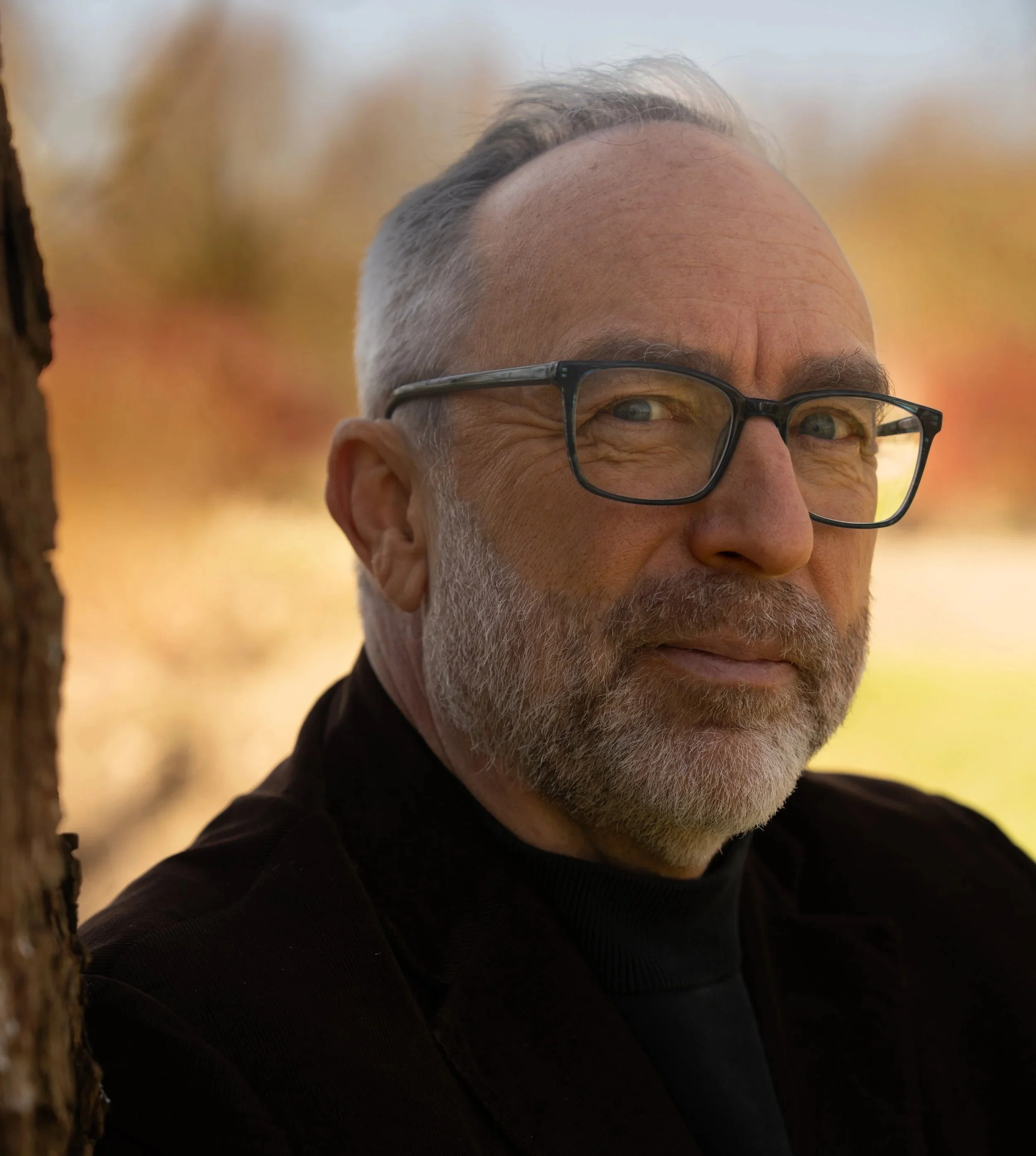
“If you extend that trust to people, they tend to live up to it.”
Summary
There are few things more valuable, or more fragile, than trust. Across politics, journalism, and business, the last quarter-century has seen it steadily erode. It might come as a surprise, then, that one of the most trusted institutions of the internet age is a free encyclopedia that anyone can edit, defined by its willingness to extend trust to almost everyone.
On this episode of Leadership Matters, I sat down with Jimmy Wales, the founder of Wikipedia and the Wikimedia Foundation. From a career in finance to a failed first attempt at an online encyclopedia called Nupedia, Jimmy's path to building one of the world's most-visited websites was anything but linear. We discussed the wiki insight that unlocked everything after Nupedia stalled, why a volunteer-run community can outperform a top-down editorial hierarchy, and how Wikipedia has sought to protect its independence. We also explored the ideas in his new book, The Seven Rules of Trust, and what a low-trust society costs all of us in business and beyond.
In an age of deepfakes and zero-click answers, Jimmy makes a compelling case that trusted, human institutions matter more than ever — and that there is far more good in people than the algorithms would have us believe.
Mentions & Resources in this Episode
Guest Bio
Jimmy Wales is an internet entrepreneur and philanthropist best known as the founder of Wikipedia, the free online encyclopedia that has become one of the most visited websites in the world. Since launching Wikipedia in 2001, Wales has helped pioneer a new model for creating and sharing knowledge, empowering millions of volunteers to build one of the largest collaborative projects in history. His debut book, The Seven Rules of Trust, was published in October 2025.
Wales is also the founder of the Wikimedia Foundation, the nonprofit organization that supports Wikipedia and its sister projects, and the co-founder of Fandom, a leading platform for fan-created communities. Through these organizations, he has championed open access to information, digital collaboration, and the responsible stewardship of online communities on a global scale.
A graduate of Auburn University and the University of Alabama, Wales was appointed a fellow at Harvard Law School’s Berkman Center for Internet & Society and has served on the board of Creative Commons. Throughout his career, he has been a leading voice on issues ranging from internet governance and free expression to the future of trust in the digital age.
His contributions have earned widespread international recognition. Wales was named one of Time magazine’s 100 Most Influential People, selected as a World Economic Forum Young Global Leader, awarded UNESCO’s Niels Bohr Medal, and recognized among The Daily Telegraph’s “25 Web Superstars.” He continues to serve on the Board of Trustees of the Wikimedia Foundation and remains one of the world's foremost advocates for open knowledge and trustworthy information.
Episode Transcript
Alan Fleischmann
Welcome to Leadership Matters on SiriusXM and on leadershipmattersshow.com. I'm your host, Alan Fleischmann. I'm joined today by Jimmy Wales, an internet entrepreneur who is best known as the visionary founder behind Wikipedia, the free online encyclopedia written and edited by a network of thousands of volunteers. Wikipedia is consistently ranked among the top 10 most popular websites in the world and receives billions of views each month.
Jimmy has guided the growth and philosophy of Wikipedia for more than two decades, serving both as the public face of the enterprise and as a member of the Wikimedia Foundation Board of Trustees. Along the way, he's received numerous honors and recognition, including Time's 100 Most Influential People and the World Economic Forum's Young Global Leaders.
Today, we'll explore Jimmy's early life, the development and impact of Wikipedia, his recent book, The Seven Rules of Trust, which I've mentioned on the show before as a favorite book of mine, and the lessons in leadership that Jimmy's learned along the way. Jimmy Wales, it is such an honor to have you on the show. Welcome to Leadership Matters. It's such a pleasure.
Jimmy Wales
Thanks for having me on. It's good to be here.
Alan Fleischmann
We're going to have some fun today. I've been looking forward to this for a long time. Let's start a little bit with your childhood. I believe Huntsville, Alabama, is where it all began. What role does your family play in your story? Tell us a little bit about the role models that helped shape your values early on — even the people maybe that you identified early on as not wanting to be like. Maybe part of that.
Jimmy Wales
Well, I think a big part of my childhood growing up was my family being very focused on education. My mother and grandmother had started a small private school that sometimes gets misreported as being a Montessori school. It wasn't technically, but it was very Montessori-influenced. And I grew up in a very book-filled household. We had encyclopedias, which I loved — that was a big part of my childhood, cracking open the encyclopedia to read whatever random thing took my interest.
And then, of course, Huntsville, as most people will probably know, is Space City — that's its nickname. It's where the rocket scientists were for the space program. So Wernher von Braun came there after World War II and developed rocket engines and so forth. As a kid, we lived close enough that sometimes the windows in the house would rattle when they were testing the Saturn V booster rockets, so it was all very exciting. That was like our hometown sports team.
And it was a bit of a boom town. Huntsville went from 20,000 people in 1960 to 200,000 in 1980, and I was born in the middle of that, 1966. So there was a lot of excitement, a lot of technology — the defense industry was big, there were some computer startups and things like that. So it was a good ground for things that I ended up doing later.
Alan Fleischmann
And it sounds like your mother and grandmother were among the biggest influencers. Were there other members of the family — teachers, for example? Any brothers and sisters?
Jimmy Wales
Well, my dad also was a very, very important influence. My dad was like the mayor of the town. He was a grocery store manager, so he worked a lot of groceries, and a lot of young people obviously come through the grocery business as cashiers or bag boys — bag girls, I guess they would be these days. So a lot of people knew him around town. Everywhere we went with Dad, people would be like, "Oh, Mr. Wales, Mr. Wales." That was fun. He had a very friendly nature, and I think that's had a lot of influence on me — just, basically, be nice to people. It's quite important. So that was another big influence.
And then teachers, yeah. I remember Mr. Palmer, my English teacher in ninth grade — very inspirational. So, lots of different people.
Alan Fleischmann
Any brothers, sisters?
Jimmy Wales
Yeah, I've got two sisters and one brother, all younger than me. We're all still on the family group chat together — although we moved to Signal, because we prefer Signal to WhatsApp. My dad's now in a care home with dementia, so he's not really on the chat with us anymore, but we're always chatting with Mom and all that pretty normal family stuff.
Alan Fleischmann
And Mom's still living at home?
Jimmy Wales
They've moved to Seattle just a couple years ago, because my sister lives in Seattle, and with Dad needing more care, they decided to make the big move.
Alan Fleischmann
Any highlights from high school? I can tell that the young Jimmy — I can see him with these stacked-up encyclopedias. I turned to them when I was growing up. I was a World Book Encyclopedia member, it was my favorite best friend. But did the curiosity kid have anything else — any hobbies or things that stand out, like a debate club or anything like that?
Jimmy Wales
Well, no, but what we did have — at my school it was quite unusual for that era. I graduated from high school in 1983, so we're talking about '81, '82. We got a computer lab at school. One of the parents had donated a PDP-11 minicomputer with several terminals, and this was before the IBM PC came out. So people were aware that computers were a coming and big thing. And my uncle, who also had a huge impact on me, ran the first computer store in town. So that gave me the opportunity to start learning about computers, doing emails and writing some code and things like that.
Alan Fleischmann
You went to Auburn, but really young. You left high school earlier — you got enrolled early?
Jimmy Wales
Well, yeah. I started school early, a year early, and plus I was born in August, so it was basically two years. I was the youngest kid in my grade every year, but then add another year younger. So I was terrible in sports, as you can imagine — I was little for sports. And then I did graduate. I graduated at 16 from high school, sort of.
I first went to the University of Alabama in Huntsville. I did absolutely terribly. I was way too immature to be trying to do college work. I just wasn't very disciplined and so forth. Eventually I did pull myself together and go to Auburn a couple years later.
Alan Fleischmann
How'd you like that?
Jimmy Wales
I loved it. I went to Auburn, and then to Alabama, and then later I went to Indiana University. I really enjoyed the whole university lifestyle. I think it's great. I sometimes fantasize about going back to school, but I don't think I will. I'm not sure I have the discipline again.
Alan Fleischmann
But you liked it. You enjoyed the college time?
Jimmy Wales
Yeah, I did. Much more. I didn't really like high school. High school was a bit tough because I was a year younger than the second-youngest person in my class, and in those teen years, that's a big difference. I didn't really like much about that. The school was great and all that, but I was much happier once I got to college.
Alan Fleischmann
And then you went on for a master's or two, and you chose finance.
Jimmy Wales
Well, I was always interested in the markets. When I was very young, I didn't know anything, but I remember I got very interested in the stock market. I must have been nine or 10, I guess. There was the oil embargo in 1974 — so I would have been eight years old then. Oil prices were really high, and I remember reading about Winnebago, the company that makes the big RVs. They were in dire straits because nobody was buying RVs — they couldn't afford the fuel for them, and it was a big recession, and obviously that's one of the first things to go.
And then when the oil embargo ended, I was like, huh, I bet Winnebago is going to do really well. I started watching this stock, and it went from — as I recall, maybe I have rose-tinted glasses — from about three to about 21 over the next couple of years. I thought, "Oh, I'm a genius. I should go into the stock market." A lucky call. I actually think the markets are more efficient than that, and a simple idea like that doesn't always work. But it was interesting to me — how are prices set, and how does that all work? So I was very interested in finance.
Alan Fleischmann
And when you were thinking about what your life would look like going forward, did you think you would be on Wall Street, in finance, at that point in your life?
Jimmy Wales
Yeah, that was one of the options. I didn't really want to work in a bank — that wasn't that kind of thing. But I certainly thought at the time I thought stockbroker. That wouldn't have suited me — that's a sales job. I didn't know it as a kid. I was like, "Oh, stockbroker, you help people find stocks that are going to go up." But ultimately I did study finance at the PhD level. I never finished my PhD, but I published an academic paper on option pricing theory, and really enjoyed it.
Alan Fleischmann
And what was your PhD going to be in?
Jimmy Wales
In finance.
Alan Fleischmann
It was okay. I love that your journey started a certain way, and obviously didn't end there. You had a few other ventures before Wikipedia, too, right?
Jimmy Wales
Yeah. So what happened is, when I was working, I moved to Chicago. I left grad school because I was fed up with academia, and worked as a futures and options trader in Chicago. The cool thing about that job — there were a lot of cool things about that job — but the markets open at 7:20 in the morning and close at 2 p.m. in Chicago, because they're really more on New York time. So I would finish my paperwork at the end of the day — I was trading Fed funds, LIBOR, financial derivatives and things like that — and then I'd go home in the afternoon, get on my computer, and I was a complete computer geek. I had to program for my job; it was mathematical trading. So I started writing a web browser, just because I was interested in the technology and what was going on.
The web was just starting, and there was Netscape. I remember when Netscape went public — on the first day of trading it was worth something like $4.3 billion, and I thought, gosh, my web browser that I am writing at home is not as good as Netscape, but it's not $4 billion worth. I was like, hmm, if I had three or four people helping me, we could probably catch up with Netscape. So that was interesting to me. I was like, "Wow, the market is really saying this internet thing is going to be big."
So then I started doing more stuff on the internet. Tim Shell and I started — I mean, we did a lot of different things. We did a search engine web directory. We did some early blogging. I remember we had a blog about baseball that was completely unsuccessful. We did several different things. And out of that process, in the midst of all of that — there was a short period of time when it was pretty successful, not super-duper successful, but we were doing well — I started a project called Nupedia.
I was very interested in open source software, and thought, okay, what else could be done this way, with people coming together to collaborate and give away their work for free online, like open source software? And I came up with the idea of doing an encyclopedia. I started Nupedia, which was the first attempt, and that ultimately failed. I hired a PhD in philosophy to be editor in chief, and we designed a seven-stage review process to get anything published. We were going to be even more academic than Britannica — but it failed because it wasn't fun. So after a couple of years of that, we stumbled across the wiki concept.
Alan Fleischmann
How did that happen? That was very audacious, I would argue.
Jimmy Wales
Yeah. Well, wikis had been around for about six years, and a guy who worked for me, Jeremy Rosenfeld, came to me and said, "Oh, have you seen this wiki thing?" — because he had heard me complaining around the office. I'm like, "It's so hard for people to participate, this seven-stage review process. We need to make it easier for people to get started collaborating and writing something." And he's like, "Oh, have you tried this?" I was like, "No, I haven't. But yeah, let's give it a go."
So I set up Wikipedia. There's a whole story in my book — my daughter was born, and she was in the hospital, and all that. I came back really kind of energized, like, you know, life's too short, I really want to make this thing happen. Nupedia is not working, we have to try whatever we can try. So I installed some open source wiki software — we used UseModWiki — set it up, and we said to the community, "Here's this scratch pad, you can come and check this out and see."
And we actually had more work done in two weeks than in almost two years. It was really a total change. We had a couple hundred people who were active on the mailing list and interested in the project, but the system we created was too difficult to get anything through, and then suddenly they were unleashed to start writing. "Paris is a city in France" — it wasn't much, but it was a start. It was kind of fun just to go, "Oh, okay, now we can just start making stuff, and we can think about how to make it better over time."
Alan Fleischmann
That's very cool. Did you envision it? Because at that point people didn't know about it, right? It was virtually under the radar.
Jimmy Wales
Yeah, yeah. We had gathered a group of academics. We'd gotten some attention from Slashdot, which was the tech press at the time — quite important. Slashdot still exists; it's just not as famous as it was. At its time, it was like Reddit. If you got to the front page of Slashdot, that was a big deal. There was the "Slashdot effect," when all these people would come and click and crash your servers because too many people came. They were interested because it was open source, and they had a real open source tech community.
So we had gathered quite a lot of people, but it wasn't famous, it wasn't mainstream. It was just something we were doing in a little side corner of the internet, having some fun. And indeed, the fact that nobody was really paying attention to us was actually quite important to the wiki concept, because it meant the only people who were really coming into the site were the people who were editing articles. Slowly more people would come in through search engines or whatever, but initially that allowed us the time to screw things up. Oftentimes the front page was a mess, or articles were in a pretty sloppy state. And then once it started getting more famous and bigger, we had to say, "Oh, okay, hold on, we've got to really think about some new things."
Alan Fleischmann
How large a team was this at that point?
Jimmy Wales
It was — depending on how you count it — maybe five of us, six of us in terms of staff. We had a couple of software developers, we had Larry, who was editor in chief, there was me, Tim. A couple other people were chipping in part time around their other jobs. And then the community was — I don't know how to measure it — probably 20 people at first, and it just grew and grew from there.
Alan Fleischmann
Was there a headquarters?
Jimmy Wales
Yeah, we had an office in San Diego, so that's where we lived and worked at that time.
Alan Fleischmann
Looking back, was it a really exciting time?
Jimmy Wales
Yeah, it really was. In fact, I think it's got to be similar today for young entrepreneurs working in AI — and I don't mean necessarily the huge hyperscaler AI companies, but people who see the opportunity to build new kinds of apps, new kinds of websites, using AI as a tool. There are a lot of green shoots coming up, and it's got to be really exciting to be the first people doing some of that stuff.
Alan Fleischmann
Share a little bit with us about the community that you created — this extraordinary community of writers and editors. That was a new concept then. It still is very new; people don't know it even now, that on Wikipedia — how did they work together? How did they create the content we read every day? What was it like then, and how did that evolve? Has it changed over time?
Jimmy Wales
Yeah, there's a lot of elements to it. The first thing is, we're a bunch of nerds, and we just like writing an encyclopedia as our hobby, thinking of how to improve it, having debates about what should be there. We have a lot of social rules around things like no personal attacks. We try to be a civil space. Obviously we're human beings, so that doesn't always work as well as it should, but broadly, that's our spirit.
We had the idea from the very beginning that we wanted to be Britannica quality or better. That was really with us always — we want to do good quality work. But a lot of that was just implicit for a long time. Obviously, if you're going to do good quality work, you need to only pull information from good quality sources — that's sort of obvious, but it wasn't written down anywhere. Pretty soon it was, to help newcomers: "How do you write a Wikipedia entry?" To give people some guidance — don't just come and write any random thing that pops into your head. You need a source. It needs to be fact-based, it needs to be neutral, it needs to be kind of in our house style.
And so, differentiating us from — well, these days you'd say from social media, where it really is a wide-open free-speech forum. At that time there was Usenet, which was a giant, largely unmoderated message board kind of thing, and people would come in from Usenet with a very battleground mentality. Just like nowadays, people come in from Twitter, and they're like, "I've come to fight for the truth." And it's like, well, settle down. That's fine and all, but actually, battleground isn't going to get you very far. It's really about collaborating with others, being thoughtful, finding good quality sources, making arguments and not insulting other people.
So that's always been a big part of the work from my perspective. As we're talking about leadership matters here, you can't boss volunteers around — that just doesn't work. They've got other things to do, they'll just leave. So it really is about reminding people: here's what's effective, here's what we're trying to accomplish, here's the spirit of what we're doing. And we take a little bit of pride — and we should take a little bit of pride — in the fact that this isn't like other places online where it's all about bashing other people. It's really about trying to be constructive. Yeah, we're going to have some hard debates, and we're going to have some unpleasant characters come through, but in the end, let's try to find a way to do something productive and useful with our time, not just put up with trolls.
Alan Fleischmann
That's great. And a big theme of your life is trust. How do you establish that kind of trust, both in the culture you're building and at the same time the thing you're building?
Jimmy Wales
Yeah, totally. We always knew from the very beginning — in fact, that was a big part of the motivation with Nupedia, with that seven-stage review process. We knew we needed to have ways of establishing trust with readers. What that overlooked is that it didn't trust the volunteers.
Somebody said to me — and it's unfortunate they said this to me after the book was out — "Oh, so the Nupedia system was the seven rules of mistrust instead of the seven rules of trust." And I'm like, "That is exactly right." You had to fax in your CV to prove you were qualified, and every step of the way you'd get questioned and grilled on things. It was really not the idea of saying, "Oh yeah, come on, just do some good work, we trust you, just get started, have some fun" — which really made all the difference.
If you extend that trust to people, they tend to live up to it. They tend to say, "Oh, wow, that's great. Actually, I've been told that I can write this. Nobody's supervising what I'm doing, but I should do a good job, and I'm going to take some pride in that." People do respond very well to that kind of positivity.
Alan Fleischmann
And the open source, the open model idea — you guys are pioneers in that regard. I imagine at that point, right?
Jimmy Wales
Oh, yeah, definitely. Well, yes and no. We were very inspired by open source software, free software — Linux, MySQL, PHP, Perl, all this fantastic software that really runs the internet, even today, is released under a free license. It's largely written by volunteers, or donated by companies, or whatever it might be.
Seeing that kind of collaboration actually working, and realizing that the open licensing model actually helps a lot with certain incentive problems — if you're a company with proprietary software, and you say to people, "Hey everybody, please come and volunteer for free to write our software, which we're going to completely control and own, and we're not going to give you anything for it," people are going to go, "Yeah, that's crazy." But if you say, "Look, the software will be free for everyone forever, because the license guarantees that, so we're all going to work together" — some people may find a way to make a company out of it, but it's not because the software is proprietary, it's because they built some services on top of it.
That's really the spirit that inspired Wikipedia — to say, oh, actually, if we do an open source model, then people will say, "Okay, great, Wikipedia will always be free, so the work I'm doing is really for the good of everyone, and nobody can close it and make it proprietary."
Alan Fleischmann
Which also builds that whole idea of how you actually formulate something that is endearing and is creating that trust, which is pretty awesome. But again, you were doing something that nobody else had been doing — this open model, this idea of community collaboration. It must have seemed very radical at the time. Now it's obviously still impressive, and it doesn't seem like it's the common thing, but then it must have been quite crazy.
Jimmy Wales
Yeah, yeah. I mean, it was — except for the fact that we kind of came from that open source world. A lot of the early volunteers were very familiar with open source software. There was a natural frame of reference — people understood, "Oh, it's like that, we can do it like that." But outside of that world, yeah, definitely, I would say quite surprising.
And you know what, if I say it this way, you'll still say it sounds impossible, that sounds crazy: you can come to Wikipedia, and I don't know, 99 percent of the pages are completely open for editing. You don't even have to log in — you just click edit, you make a change, you hit save, and it goes live immediately, live to readers, immediately. That's unbelievable, that's completely crazy. But it works, and it works because generally people don't come in and vandalize. Obviously we have to revert vandalism all day, every day — people do come in and do it — but it's pretty easy to revert. We make it very simple, and people patrol and all of that.
And the benefit is enormous, because when we look at edits from people who are brand new — they've never even logged in, we have no idea who they are — those edits are not as good as the edits of experienced Wikipedians, but they're on net a benefit. They're positive. People usually start by adding a reference, or correcting a typo, or fixing a sentence that's a little bit clumsy. That's pretty exciting to see — okay, actually, most people are pretty nice. It's really uplifting.
Alan Fleischmann
Which is inspiring. What were some of the most difficult decisions and leadership challenges that you faced growing this? You were laying out these values — what I would argue is not just the value proposition, but the values proposition.
Jimmy Wales
Yeah, I would say there are a few things. The growth of the community and the growth of the website was going pretty well, but the growth of the organization — the nonprofit Wikimedia Foundation behind it — was a lot bumpier. It had all the traditional issues. In the early days, we made some hires who weren't as good as they could have been, and that caused some problems for us.
I had to learn a lot. One thing I really learned is that I'm a terrible manager, so I shouldn't be anybody's manager. I'm a better coach, a better person who tries to help guide the tone and things like that.
And then there were some tough moments in terms of how we were going to get the funds we needed in order to buy servers. In the early days especially, if we started to see a plateau of growth on the website, it was generally because it had gotten slow — because we didn't have enough servers to serve the traffic. And I learned at the time that it doesn't take much: if it takes a second to load a page versus point-two of a second, people leave. They fall off quite quickly. It's very frustrating to use a website that's too slow. So every time we would buy more servers and the site would speed up, we would have this huge surge in traffic. I was like, "Oh, wow, that's actually super interesting." I didn't realize how powerful that could be — that the performance of the website mattered so much. But of course it does.
But then we had to go, "Oh, okay, actually we need to buy a lot more servers." It was one thing to buy three, another thing to buy eight, and then when the traffic was doubling every three to four months, you're like, "Oh, right — now we have eight servers, and in four months we're going to need 16, and then 32 and then 64." That kind of doubling starts to get painful. Obviously, the server count didn't necessarily double like that forever, because you found faster ways of doing things, and hardware was getting better. But that early growth issue was a lot of behind-the-scenes work — just, how do we keep this thing running, because it's growing so fast? Nowadays, obviously, the website's very stable and professionally managed, and it's quite good.
Alan Fleischmann
And you have a team that's very focused on quality control, another team focused on maintaining the openness — others working with the editors and doing content. How do you divide and conquer?
Jimmy Wales
Well, so — I'm kind of going to say no to, I think, all three of those. The Wikimedia Foundation is responsible for keeping the site running — operations, just keeping things moving and safe and secure. That's a big chunk of work. Software development, improving the software, adding new features — that's another big chunk of it.
We do have trust and safety people who work with the community, but that isn't what a lot of people imagine. They aren't supervising the community on editorial matters — they're there as a backstop. The kind of example, just to make it easy to understand: if somebody is vandalizing Wikipedia in one language, the local community will just ban them immediately. But if somebody is running a bot and causing trouble across 75 small languages, each of those 75 languages may say, "Oh, wow, somebody's misbehaving on the site," but they may not realize that it's happening across more. So the foundation has to step in and do that kind of global work — monitoring for botnet attacks and things like that.
We do a lot of community support, community meetups. We have local chapters all around the world who do a lot of that work, and we fund those local chapters. Getting people together in person actually is very, very powerful for conflict resolution, sharing best practices — super important. I feel like we should actually do more of that. But nobody at the Wikimedia Foundation is deciding, for example — if you look at the front page of English Wikipedia, there's a picture of the day. The foundation has nothing to do with choosing the picture of the day. That's a whole community process that's completely run by volunteers.
Alan Fleischmann
That's cool. And how long into the journey of Wikipedia was the Wikimedia Foundation created? I know you're one of the folks who made that happen.
Jimmy Wales
Yeah, it was about two and a half years in — so, in 2003. Wikipedia started in 2001, and then in 2003, in the summer, that's when I set up the foundation. I remember it being summer, but you can fact-check me — Wikipedia will have the exact date.
For the first two years it was really just a project, hosted by my company at the time. But in 2003 — this was the depths of the dot-com crash — there was a lot of interest in the community that we be a nonprofit. I thought that sounded like a good idea in terms of the business model: how are we going to get the money to do this? But even once I put it into the nonprofit, it was still the very earliest days. It was still funded by the company, funded by me, basically. I was like, okay, we'll do this nonprofit thing, but we're going to have to see — will people donate money? We had no idea. We knew that as a prerequisite to getting people to donate money, it should be a charity.
And so we did our first fundraiser, and it was great. People donated, and it was like, "Okay, wow, I can see a path forward here." That was good news.
Alan Fleischmann
That's cool. And then, obviously, that allows you to maintain your independence — and not be beholden to anybody by doing it that way. That's pretty cool.
Jimmy Wales
Yeah, it's really great. In fact, it's one of the reasons — sometimes people will say, "Oh, why aren't you asking for money from the readers on the website? Why don't you just get the big tech bros to pay for it?" And it's like, well, that would not be good for our independence. You can imagine — what if, five years ago, if Elon had said, "Oh, Jimmy, don't worry about raising money, I'll just pay for everything"? Then we would be beholden to one person, and obviously I think everybody can see why that might not be the best for intellectual independence.
It's the support of the readers that really matters. Everybody chips in a little bit, and that's really good. It means that if people come to us and say, "We want you to change this article, and we're a huge advertiser" — well, you're not a huge advertiser. We don't have ads. So it's like, no, we don't think so. And even major donors understand. We do appreciate major donors — we have nothing against people donating a lot of money, that's great, fantastic, thank you. But they know they can't come in and push us around on the content, because they're going to be a small part of the overall revenue.
Alan Fleischmann
Tell us a little bit about the relationship you've constructed with the Googles of the world, Microsoft, Meta, other companies.
Jimmy Wales
Yeah. So, traditionally, historically, there's no formal relationship of any kind, really. People always assume there was some sort of partnership with Google, for example — "How did you have to pay Google a fortune to be at the top of every search result?" No, they just linked to us because it was useful. That was organic search. People also thought I was some sort of genius at SEO, search engine optimization, and I was like, well, no, we just have good pages, and it's what people are looking for. So that's the secret: have a simple page that does what it says on the label.
And then, these days — I'm sure we'll come on to the world of AI and the use of the content of Wikipedia for AI — we do have deals, but they're not about selling the content or the rights of the content, because that's all completely free, open source. You're free to do whatever you want with it, basically. It's about the fact that we were having a problem with them absolutely hammering our website, crawling very intensively. Google was actually our first big customer to say, "You should have a feed. Pay us for a feed, it'll be easier on our servers, we can organize it to send you a live feed, and you don't have to crawl every single page of the website." That's much better, and that has done very well. Most of them are signed up as customers, and the others are starting to block them, and things like that.
Alan Fleischmann
What made you write the book? I love your book. Tell us about the book.
Jimmy Wales
Yeah, so the book — I've been keeping my eye on the Edelman Trust Barometer survey for many years. Richard Edelman of Edelman is a good friend of mine, and what we've seen across society in the last 25 years — but also even longer than that, the trend is longer than even the Trust Barometer — is a real decline in trust. A decline in trust in journalism, in politics, in business. To a lesser extent, but still there, a decline of trust in each other, which is unfortunate. It's not universal — still, in the Nordic countries, you see high-trust societies — but it's pretty widespread, and it's leading to a lot of really toxic problems.
Certainly, we can see certain political debates have just become really, really toxic, and part of it is that people can't trust across the aisle. People don't trust the other side to even be basically decent human beings, which means they talk past each other and they can't understand what's going on. And then you see things like — it wasn't that long ago when the U.S. government went through the longest-ever shutdown because they couldn't agree on some basic budgetary thing. The basic job of governance has collapsed in many ways because neither side can compromise, neither side can trust the others to go, "Okay, you're going to get something, I'm going to get something." None of us is going to get what we want, but it's more like a little give and take — you're going to give me this, but the next time it's going to be your turn. That kind of negotiation, where you negotiate in good faith and you realize you aren't going to get everything, depends a lot on trust. And if you think the other side is about to completely destroy civilization, then it's pretty hard to get anywhere productive.
So I just feel like we need to put trust on the agenda. And I was also looking at Wikipedia, saying, well, that's interesting, because I've always talked about trust in the Wikipedia context. It's been on my user page in Wikipedia for — I don't know, a million years now. I should look up when I first put it on there, but it was a long, long time ago. I said, "Oh, you can edit this page, even this page, my own user page, because I trust you to do something good and not bad." The exact wording has changed over the years, but that's more or less what it says.
And that has led to Wikipedia becoming very successful. It's led to Wikipedia becoming largely trusted — not by everybody, obviously. Wikipedia is far from perfect. We know that there are problems in Wikipedia, things that could be better. But people get, okay, it's a bunch of nerds, and they're trying to do the right thing and give this gift to the world. And that's very helpful.
So I just think, if we can try and put trust back on the agenda, I think it'll be very helpful. In business, I always say, doing any kind of business in a low-trust environment just costs a lot more money. If you treat your employees like they aren't respectable, trustworthy human beings, but you're just on their case all the time, they're not going to give you the best performance. They're not going to find that a nice place to work. They're not going to be inspired. If you've got a business-to-business relationship — let's say something goes wrong, we're supposed to deliver this piece of work to our partner, we've screwed up, it's not going to work, it's a problem. If you have a relationship of trust with your partner, you can go to them and say, "Look, this is awkward, but we're not going to hit that deadline. Here's what happened. Here's the things you could do to help us."
Jimmy Wales
"We're going to make it right for you," et cetera. And people are forgiving. People will be like, "Okay, great, I'm glad that we know this, and we can work together." Whereas in a low-trust environment, you end up in court five minutes later, and that isn't ever going to be a good outcome for either side. As compared to saying — I like this — I'm having some work done on my house, and one of the most important things is I've got a guy who I trust. He's helping me do all this stuff, and it's like, yeah, that's a relationship that really matters.
Alan Fleischmann
One of the things you talk about in the book is "make it personal," and you talk about something very close to my heart — the idea of walking in the shoes of others to understand their perspective. How do you do that? And I always debate this: is this something you're wired for, something innate — or is it something you can learn? Do you think it's impossible to learn to actually have that strong EQ and walk in the shoes of others?
Jimmy Wales
Yeah, I think you can learn it. I think it's not easy for everybody, depending on their whole life circumstances. Let's say somebody has grown up in a very abusive household that's completely chaotic, with abuse around every corner, with untrustworthy parents. That person is likely to find it really hard to trust later in life, and they'll have lifelong problems with that. And we all understand that if that's causing them problems, they need to get help, they need to think it through, they need to get therapy — whatever you can do to make things better. You need to find better people and surround yourself with trustworthy people. I think that's true for everybody.
But most people don't come from those really toxic backgrounds, and so we can learn — both, we can learn negative or positive attitudes toward others. Certainly, if you spend too much time on toxic social media, you will get the idea that people are absolutely horrible. People say things to me on X or Twitter where you're just like, "What is wrong with you? Are you kidding me?" It's like, "You're a disgusting and horrible human being." I'm like, I'm actually not — I'm happy to report I'm actually a very nice guy, so I don't know what the hell you're on about. But people don't act that way in person, and that isn't natural for human beings.
People are naturally pretty social. If you think about it — if you remove your mind from that toxic space, and you just think about random people you meet in an elevator or whatever, you think, "Yeah, actually they're pretty nice." Basically, people are nice. You don't think one of them is about to stab you or rob you. You think, "Yeah, actually, there is good in people." And we can bring out the good in people, or we can bring out the bad in people.
So for me, this is one of the big lessons of the book: let's try and build more spaces online, offline, and so forth, that foster that kind of positivity. Actually, today I saw something completely random — it was a quote from Ronald Reagan. He was talking about, he wanted to bring back more local things, like the local church gatherings and local clubs, whatever it might have been. I can't give the exact quote, but I thought, "Wow, I actually agree with that" — sort of, get out and meet some real people. If you're feeling sad and depressed about the behavior of people, and you're getting there because you saw it online, just remember that isn't reality. That's really something the algorithm is showing you, because it keeps you clicking for longer. And basically, there's a much healthier way to live.
Alan Fleischmann
Wikipedia is actually, I would argue, probably going to become an increasingly important source in the age of disruption, misinformation, disinformation, deepfakes. I've got to imagine you'll be challenged too on the platform, obviously — but I imagine people might go back to legacy television, the Wikipedias of the world. The New York Times may be looking more attractive at some point, if we're inundated by lots of misinformation.
Jimmy Wales
Yeah, I think we're already seeing some of that. I definitely think — again, if you look at surveys of people and how they're thinking about things — people, particularly young people, it's kind of funny. We're always worried about young people being fooled by fake stuff on social media, but the research shows it's actually older people who are more vulnerable to it. Young people are like — my kids love to point out to me, "Come on, Dad, that's AI." Some picture of, "Oh, look at that, that looks like a great place to go on vacation," and they're like, "Ah, it's completely fake." And that's great. That idea of, "Oh, actually, you do have to care where some image sources came from — what is your source? Is it trustworthy?"
Now, the downside — and this is what I find interesting. When we first started seeing deepfakes, and it's been several years now, at the time you had to have really advanced software, you had to download it, it was very difficult to do. Now you just go to any sort of AI and ask it to make an image for you, and it can make a fake image quite easily. What our concern was back then was, what if a false, scandalous image emerges just before an election, and everybody believes it? Like, what if there's a picture of Barack Obama snorting cocaine, and everybody's like, "Oh my God, he's a drug user." Well, that never really happened — there weren't many cases of that.
The actual problem is the opposite. The problem is now, if a real image comes up of something scandalous, people say, "It's probably fake, it's probably AI." That's a problem. And I think the solution to that is to say, well, no, actually, you have to be really thoughtful about where you're getting information. Because if you can trace it and say, "Well, actually, this comes from a respected reporter, and they've got an editor, and there's a photo taken by a photographer who's known to the news bureau, and they've vetted that the person was actually there at that time" — that's something you can begin to be like, "Oh yeah, that's true, that's a real picture." As opposed to any random thing that comes across social media, where you're like, "I don't know if it's real or not."
Alan Fleischmann
Which one of the seven rules in your book were the most important ones in building Wikipedia?
Jimmy Wales
It's really hard to say. I would say probably — I think it's rule three, if I've got the order right — have a good purpose. The very clear and simple purpose for Wikipedia is: let's build a free encyclopedia for every single person on the planet in their own language. It's really clear, really simple, everybody immediately understands. When you show up to Wikipedia, you know, okay, here's what we're trying to do, this is what we're trying to accomplish. It makes it a lot easier to make decisions. We don't think about, "Oh, maybe we should have more funny cat videos." Well, no, that's not an encyclopedia.
And then it gives people a framework to be able to trust each other, to be able to know, "Oh, I can predict what Jimmy is going to say. What is Jimmy going to say about this issue? Well, he pretty much always says the same thing: How does it help the encyclopedia? How do we make things better? How do we fulfill our mission?" Without that, I think it becomes quite hard. Actually, I think this is one of the things a lot of social media has struggled with, because what exactly is the purpose? People are using it for all kinds of different things, and my reason for using social media might be completely different from somebody else's, which could be fine — but it actually makes it a bit of a challenge for the platforms to decide, "To what extent do we want to go this way or that way?" They sort of end up looking at the algorithms to tell them what keeps people on the site longer.
Alan Fleischmann
Yeah, that's so true. Is there a Wikipedia 2.0 that you're looking at for the future — that, with AI being what it is, and the disinformation and misinformation being so nerve-wracking and worrisome, in order to actually stay that platform of truth?
Jimmy Wales
Yeah, not really. I think Wikipedia works. There's a lot about what we do that we have to be really serious about and defend and extend — things like our neutrality. That's always something that's complicated and tough to grapple with, but it's something we have to take seriously. To the extent that we find areas of Wikipedia that may be biased, we need to root that out, and we need to think about how to do that. That's a big job for all of us in the community, always.
But in terms of using technology like AI, I think it's to be seen. We don't see that AI is anywhere near good enough to write text for Wikipedia — it really isn't. It hallucinates and gets things wrong; there are all kinds of problems with it. But ultimately, as the technology improves, I think there are ways that we can and should use it to support the work of the community. That could be anything from — oftentimes a good Wikipedian will come to Wikipedia and say, "Ah, okay, I've got a couple hours, I'm going to do something on Wikipedia. I wonder what I'm in the mood to edit tonight. I don't really know." And if we had an AI that was sort of saying, "Oh, well, I've scanned over what you've been editing in the past, so I kind of know what you're interested in, and I found these articles that don't seem to have enough sources, or there's information in the sources that could be in Wikipedia but isn't — maybe that's a good one to look at."
If a tool like that — it doesn't have to be perfect, it has to be good enough to not waste people's time. And then suddenly you say, "Oh, okay, actually that's great," because now, if we can root out areas of Wikipedia that have been neglected, and we realize, "Oh, actually this is great — I'm getting an edit suggestion of something I find interesting that hasn't been edited in six years, and there's been new developments. Fantastic. Now I've got something fun to do tonight." I think that kind of thing could be very, very helpful. But we're just at this point where a lot of people in the community are experimenting. The Wikimedia Foundation's got a machine learning team who are looking into things, and we're partly in a wait-and-see mode, but also partly in an experimental mode.
Alan Fleischmann
Yeah, there's a lot to think about. What are the things about Wikipedia that people don't ask you and they should — and they don't know, but they should know?
Jimmy Wales
Yeah. I think one of the things that people don't know, which is really worth knowing — and it's hard to get your head around — is that people's model for a newspaper or an encyclopedia is that there's an editor in chief and there's some elite editors, and they ultimately decide the content. But Wikipedia isn't like that. Wikipedia is an open dialogue. It's a discourse that takes place over time. Anyone's welcome to come and join that dialogue, as long as you behave yourself and don't be mean to people.
If you come in angry because something's wrong in Wikipedia, you need to understand — no, actually, we know there are things that aren't right in Wikipedia, so you don't have to be angry with us. You have to come and help us and be nice to us, and we'll be nice to you, and that's actually very helpful. And so I don't decide what's in Wikipedia. At the end of the day, that open community is really what people should understand.
Alan Fleischmann
And what do you think the next major challenge for open knowledge and the internet is? Is it the diminishing level of trust?
Jimmy Wales
Well, I think the diminishing level of trust is a problem. I think there are other things that are really interesting to watch unfold, and I think we're going to see a lot over the next few years.
So one example for us — and it hasn't been that big of a deal for us, but it's not nothing — is you see now people turning to AI to get information, and so that does take away some traffic from Wikipedia. So far, what we see, and what we believe it to be, is mainly just the short quick-hit traffic. You think, "Oh, how old is Tom Cruise again?" Twenty years ago, if you went to Google and typed "How old is Tom Cruise," Google had absolutely no idea — it was just keywords, and it was like, "Oh, Tom Cruise, here's a page about Tom Cruise from Wikipedia," and then you would come to Wikipedia and find out how old. Now Google just tells you the answer, and that's been true for several years.
But increasingly, more complicated questions — you can just ask an AI and get a decent answer, and so people just get that quick answer, and if that's all you really wanted, then you're done. You don't even have to go — it's zero-click search, right? You just search for whatever, and you get the answer right there, and you don't click through. That's a big deal — that's a big transformation in terms of how people are getting information now.
What we see still is the long reads — people coming to Wikipedia and spending a couple of hours reading a bunch of pages all on a certain topic area. That hasn't changed, because with AI, if you dig deep, what you find very quickly is it starts hallucinating and gets things wrong, and people still enjoy that.
But I think that's a big deal that we are keeping a close eye on. Just to give two examples: a lot of news sites have seen a significant reduction in traffic from search engines, and they're obviously in a panic about that. A lot of them, if their revenue is advertising-based — which ours isn't — then a reduction in traffic is kind of one-to-one, a linear relationship to revenue. If your traffic drops 20 percent, probably your revenue drops 20 percent. That's a problem. For us, it doesn't really work that way. Our revenue is from making sure people know they got the information from Wikipedia, which Google is quite good about, and they remember to donate. So if they do visit the site and go, "Oh, hey, why don't you help us," then they do. That's great.
And then the other example that I find really interesting — there's a programming website called Stack Overflow. Traditionally, what programmers would do, particularly bad programmers like me — I write code, I just do it as a hobby, I'm not very good, but I write code — you get some error message, and what you used to do is you would Google the error message, and it would send you to Stack Overflow, where somebody else had the same problem, and there's a discussion there, and you get your problem answered, hopefully. If somebody had exactly the same problem, and somebody else was able to help them, that might have helped you. Now that's just a very inefficient way of doing it. If you've got an error message, just go and ask Gemini, or ChatGPT, or Claude, and say, "Oh, I got this error message.
Here's what I'm doing," and then it'll say, "Oh, we'll check this, check that," and you can have a dialogue with it, and you can say, "Oh, but can you explain that to me?" and it'll explain it to you. So Stack Overflow's traffic has dropped by about 90 percent, according to one headline I read. Ninety percent. So that's a big deal. And for us at Wikipedia, we don't anticipate traffic dropping 90 percent, but we have seen a significant drop in human traffic. Meanwhile, bot traffic has come up, and so that's something we need to keep an eye on.
Alan Fleischmann
And to close here, I'd love your thoughts on what keeps you most optimistic. Obviously there's so many challenges, so much noise. You are so firmly focused on trust and establishing and maintaining trust. What would you say keeps you optimistic?
Jimmy Wales
Well, recently I was in Kerala, in India, and had organized a meetup with the local Wikipedians there. I don't know how many — maybe eight people came out. One small group was a family, so it was the two parents, Mom and Dad, both of them edit Wikipedia. Their kids — some of them are too young to edit Wikipedia, a couple of teenagers just getting old enough to start editing Wikipedia. And this local community was very excited to tell me, "Oh, we've got this project with the local schools and libraries, we've got all these ambitious goals for our language version of Wikipedia." Just to see the excitement in their eyes about sharing knowledge, about helping with education in their communities — that really is inspirational to me.
There were these ordinary people saying, "You know what?" And nobody there was moaning about the internet, nobody was moaning about toxic social media. They were just like, "Who cares about all that stuff? We've got Wikipedia, and it's fun, and we're having a lot of fun working on it." So that, for me, really gives me that optimism about the future.
Alan Fleischmann
That's wonderful. Well, you've been listening to Leadership Matters on SiriusXM and LeadershipMattersShow.com. I'm your host, Alan Fleischmann. We just spent the last hour with an extraordinary entrepreneur and founder, Jimmy Wales, the visionary leader and founder of Wikipedia and the Wikimedia Foundation. We discussed his early influences, the creation and growth of Wikipedia, his recent book, The Seven Rules of Trust, and the leadership lessons he's learned along the way. Your extraordinary career, and maybe even more importantly, your extraordinary example, is quite inspiring, Jimmy. We're very grateful you joined us today.
Jimmy Wales
Great, thank you.
This transcript has been edited and condensed for clarity.