Sherrie Westin
President & CEO, Sesame Workshop
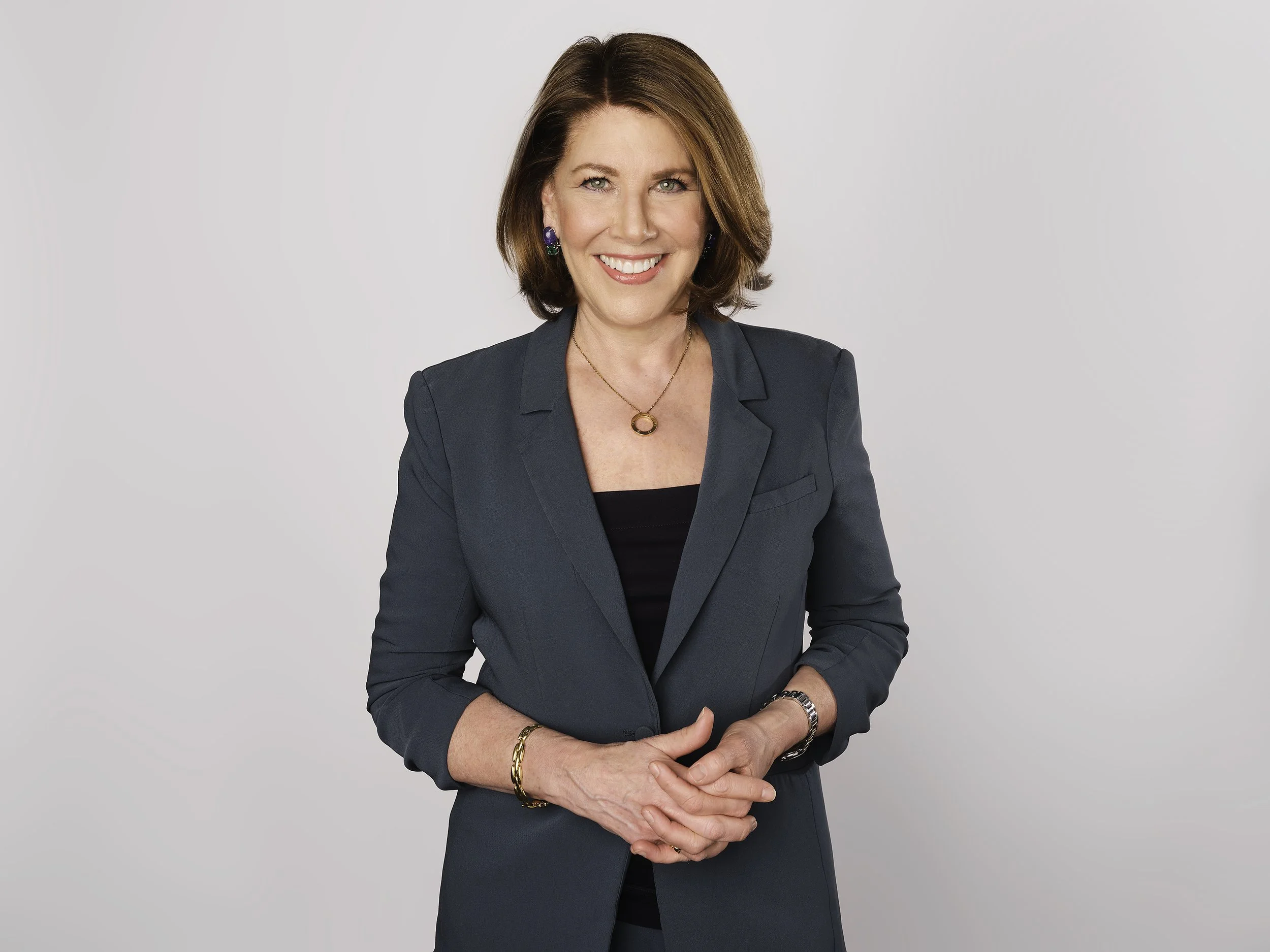
“If I’m going to work this hard and continue to — how fortunate am I that it’s for something that matters.”
Summary
Among the many issues modern society is grappling with, getting children’s education right is especially challenging. It is of supreme importance for the future of our country, but often lacks urgency, as its consequences will only be felt in the decades to come. It is a topic where vocal, forward-looking leadership is needed to produce the best possible outcomes for the next generation of leaders.
Sherrie Westin is exactly that kind of leader. As the President and CEO of Sesame Workshop, the nonprofit that powers Sesame Street, she is the steward of one of the world’s most recognizable children’s educational brands and has fought tirelessly to bring science-based educational content to children around the world.
In addition to the quality of Sesame Workshop’s programming, I wanted to have Sherrie on Leadership Matters because of the scale that she is able to reach. We discussed the neuroscience beneath the fun at Sesame Street, Joan Ganz Cooney’s genius in designing a show for grown-ups as much as for kids, and the candor it took to step up as CEO during the hardest year in the Workshop’s history. In a race-to-the-bottom children’s media ecosystem, Sherrie makes a compelling case that the need for Sesame and its high-quality programming has never been greater. Her reflections on self-awareness and purpose offer a wonderful roadmap for any leader trying to both build with purpose and build to last.
Mentions & Resources in this Episode
Guest Bio
Sherrie Westin is President and CEO of Sesame Workshop, the nonprofit behind Sesame Street, and serves on its Board of Trustees. Westin leads the organization’s efforts to deliver research-driven early learning to children in more than 190 countries through mass media and community programs designed to meet the most pressing needs of children today.
Westin has held leadership positions in media, nonprofit, and public service. She served as Assistant to the President for Public Liaison and Intergovernmental Affairs for President George H.W. Bush, Assistant Secretary for Public Affairs at the U.S. Department of Housing and Urban Development and held senior positions at the ABC Television Network and U.S. News & World Report.
She was named a “Leading Global Thinker” by Foreign Policy Magazine, one of Fast Company’s “100 Most Creative People in Business,” a CNBC Changemaker, and to Forbes’ “50 Over 50” list. She was also recognized with the Smithsonian’s “American Ingenuity Award” and the Thomas Jefferson Medal for Citizen Leadership by the University of Virginia.
Westin is Board Chair of the Joan Ganz Cooney Center, serves as a director of the U.S. Global Leadership Coalition and Vital Voices Global Partnership, and is a member of the Council on Foreign Relations.
Episode Transcript
Alan Fleischmann
Welcome to Leadership Matters on SiriusXM and LeadershipMattersShow.com. I'm your host, Alan Fleischmann. I'm joined today by Sherrie Westin. Sherrie is president and CEO of Sesame Workshop, the nonprofit behind Sesame Street, that uses the power of educational media to help children grow smarter, stronger, and kinder. She leads the organization's efforts to deliver research-driven early learning to children in more than 190 countries through mass media and community programs designed to meet the most pressing needs of children today.
Beyond Sesame Workshop, Sherrie has held leadership positions in media, nonprofits, and public service. She served as assistant to the President for Public Liaison and Intergovernmental Affairs for President George Herbert Walker Bush, 41; assistant secretary for public affairs at the US Department of Housing and Urban Development, HUD; and in senior positions at the ABC Television Network and US News & World Report.
Today, we'll explore Sherrie's early life, her career journey, her leadership at Sesame Workshop, and her thoughts on the future of early childhood education. She is such an inspiration, a good friend, and someone I've admired for a long time. So, I'm especially pleased and thrilled to welcome her to Leadership Matters today. What a pleasure to have you on the show.
Sherrie Westin
Well, Alan, I am so flattered to be included, and I love the chance to talk with you. So, thank you so much for inviting me.
Alan Fleischmann
I'm really excited. You are the Pied Piper. Behind your back, I describe you as a Pied Piper, because no matter where I am, when I'm with you, I'm energized and inspired. I want to get a sense — I know your mom's still a big inspiration in your life, and I'd love to get a sense of the beginning. What was family like growing up, and who were the great influencers and role models that shaped you? I think so much about you being such a mentor to so many people, and I've got to think there were mentors — whether family or others — who really inspired you at a young age. Tell me about you family life at home.
Sherrie Westin
I grew up in Roanoke, Virginia, which was a great place to grow up. Roanoke at the time was maybe 250,000 people. It's called the Star City of the South, you may know. Let's just say it was a wonderful place to grow up, but you're not exposed to that much, right? I just had a great family life and childhood, and at that age you think that's what everyone has — you don't really know how to compare. Looking back, I realized how incredibly fortunate I was, just because my parents were such wonderful parents, and they loved being parents.
It was a very traditional childhood where we grew up. My mother was a stay-at-home mom, but just the most energetic, fun. She loved kids. Everyone was always at our house — all the neighbors, there were always dogs and children, and we were climbing apple trees outside. My mom would be in the top of the apple trees with us. She was just a kid at heart. And I think about how different — my mom was probably married at 23 and had me at 24, and I didn't have children till I was in my late 30s, so no wonder she was so energetic, right?
Alan Fleischmann
She had the energy.
Sherrie Westin
We were like her playmates.
It was a wonderful childhood. I was the oldest of three; I had two younger brothers. It was the age where you were outdoors all the time, you were creative, you were building theater out of a refrigerator box — just turning everything into some fun project. I had a creative class in my basement, where in fourth and fifth grade I would have all the younger children from the neighborhood over, and we would do a summer creative class where I would teach. I started the Neighborhood Gazette, where I would do a different article on different neighbors and their pets, and then stuff them in everybody's mailbox. There were just all sorts of really fun childhood memories and adventures.
It was also the kind of neighborhood where Mom just let us out the front door, and if she needed us, she would call the dog and know that we were wherever the dog came from. So, it was a very safe, nurturing, wonderful place to grow up, and my parents were my role models. I was very close to my dad. I always thought of myself as my father's daughter — a daddy's girl. But it's interesting, because I did this project recently called What I Learned from Mom, and it was interviewing others about their experiences with their mothers, and I realized in that process how very much I did learn from my mom, and how many wonderful traits I really gained from her example. She's stubborn, determined, but incredibly enthusiastic and fun.
Alan Fleischmann
The way you describe — you're the great convener: you brought everybody together in the neighborhood, the young kids, and you also created your own media platform. One can see the vision of you later, in a way that few young kids can. Looking back — but were there other mentors, like teachers, that you'd also —
Sherrie Westin
I loved my teachers. In third grade I had Mrs. King, and we loved Mrs. King so much that I wrote a petition at the end of third grade asking if Mrs. King could move to fourth grade with us. Mrs. King was so touched that she invited Mr. Thompson, the principal — who we were all petrified of — to come to the class. So, Mr. Thompson comes in, and of course she's so flattered, she's showing him this petition, and he decides to turn it into a civics lesson. He starts with, "Who gave you the right to write this petition?" And the whole class turns and points to me, and I thought I was in so much trouble — but of course I wasn't. He was just trying to turn it into this interesting lesson. They didn't let Mrs. King move to fourth grade, but Mrs. Mullins was our fourth-grade teacher, and to this day she's my favorite teacher ever. Loved Mrs. Mullins. So, it all worked out.
Alan Fleischmann
It all worked out in the end. In other words, it was a good lesson in life, too — that if you let life unfold a little bit, it may turn out to be something great.
Sherrie Westin
Right, exactly.
Alan Fleischmann
Now we've seen the media person in you, we've seen the entrepreneur in you as a young kid — and then there's a political activist in you that wanted to change things.
Sherrie Westin
Yes. And I also remember starting the Kindness to All Animals Club, where everyone met at my house. You're going to chuckle — I would start by playing Born Free on the piano.
Alan Fleischmann
I love that movie.
Sherrie Westin
And we would have a lesson each week about conservation and the importance of animals. Recently, when I was cleaning out — we had to sell our family home — I found the Kindness to All Animals rule book, code book. We even had a secret code, of course. I think I was, again, in fourth grade.
Alan Fleischmann
Were your brothers kind of suckered into all these things you were doing? Were they part of the staff?
Sherrie Westin
Sure, I would enlist my brothers. They loved to tease me and do practical jokes on me. My father had a great sense of humor, my mother does too, so there was a lot of humor. I remember when I was in high school — my younger brothers, I was seven years older than my youngest brother, five years older than my middle brother, and in highschool, we added on to the house, and my room was upstairs. Whatever gave them this idea, they decided to say that my room was infested with what they called "yipping schnoozers." They cut up a gazillion of these little teeny pieces of paper, drew a red line down the middle and two green dots like eyes, and they were about an inch long and a half inch wide, and they just put them everywhere in my room. I'd open a cabinet and they'd fall out. They were in my bed, they were everywhere. The sign on the door said, "Quarantine — this room is infested with yipping schnoozers."
Of course, I'm in high school, so I'm furious. They've invaded my space, they've done this thing. I'm yelling, "Mom, look what they've done!" And I made the mistake of picking them all up and putting them in my trash can.
So, of course, the next day they've just been infested everywhere again, right? And then that night they had audio-taped — on the old-fashioned tape recorder, where you push down and it's record, then you push down and it's play — they had put it under my bed and taped it, so it would be very quiet for a while, and then you'd hear "yip, yip, yip, yip." Get it — the yipping schnoozers. To this day, I will sometimes find one of those little things that have just permeated. These are silly stories, but —
Alan Fleischmann
It shows you the long —
Sherrie Westin
The level of sophistication, yeah.
Alan Fleischmann
We don't realize that we direct in ourselves courage, and we direct curiosity, and we direct gratitude. It's not something that just comes at us. So, we look at someone who's courageous, or someone who's optimistic, has curiosity, and it's not — I don't think it's just always the wiring. I think we make ourselves that way, because we're always fearful. Everyone has fear, right? Mandela's great quote is that courage is not the absence of fear, but the triumph over it. I think about that. But your parents and your school had to have created an environment where curiosity was encouraged. It was in you, but you directed it.
Sherrie Westin
I think you're right. Curiosity, creativity — I do worry a bit about when you had to entertain yourselves and come up with fun ideas, make things out of boxes. We weren't distracted by mobile phones or screens all day. But you're right, we had a family that was very encouraging of humor, of creativity, of activity, of bringing people together. And again, you don't know that that's not what everyone has when you're young; you just think that's what it's like. Only as I've grown up have I appreciated what an incredibly healthy, happy early start in life I had. I realize that is such a gift that I should never take it for granted.
It certainly made me want to try to emulate that when I had young children. We have so many traditions — I would have the Easter egg hunts here, the neighborhood Secret Santa party. We had a wonderful neighborhood here raising my children too, and I love how many traditions and activities we had, and how much we brought people together in the neighborhood. I'm sure I have my mother to thank for that. I love being a mom too, especially when you have young children.
Alan Fleischmann
I bet you have the best traditional Thanksgiving ever.
Sherrie Westin
Well, I'm not a very good cook — maybe pick another holiday. But growing up I always kept all these photo albums and scrapbooks, because they may think I'm a terrible mother now, or that I'm not very good — you always point out the things you're not good at — but I prove that when you were young you had a really good childhood.
Alan Fleischmann
It's so amazing that you identify with the power of play, and you live that way — the joy. Not everybody has it, so part of your life's mission is, how do we make it available and accessible to everybody? It is amazing that you didn't get negative because not everybody had it. It became part of your life purpose and mission to share it and to make sure other people understood the power of play, in building your own sense of self and your own sense of community. We don't let ourselves embrace joy without some guilt, but somehow, if we just embrace joy and share it and create access for it, we should not feel guilty.
Sherrie Westin
That's such an interesting point. I do think it's the power of play, absolutely, in terms of a child's healthy brain development — it's critically important. But also it's the engagement with a caring adult.
If I've learned anything in terms of real neuroscience, the most important thing in the first five years of a child's life is nurturing care. It's the engagement with a caring adult. That's how a child's brain forms synapses, that's how they're put on the best path to be resilient. We all face challenges at some point, but there's nothing more important for young children.
I think it's another place where it's been so rewarding at Sesame: when we've looked at those places where children are particularly challenged — like displaced or refugee children. And it doesn't have to be a refugee. Children who grow up in poverty have so many more adverse childhood experiences that can affect their early childhood development. That's one of the reasons that at Sesame we tend to focus on those areas where we could actually help address that issue, break down that barrier, raise awareness. I do find that work so very rewarding.
Alan Fleischmann
I love that. Tell us a little bit about your dreams when you were in high school, and then what made you choose where you went to college.
Sherrie Westin
Telling you the stories I did about my childhood, it won't surprise you that I thought I wanted to be a teacher. I also really was interested in special ed, and when I first looked at colleges, I looked at colleges that had special education schools. I also loved art — I was always painting growing up — so I had this weird thing where I wanted to be both a graphic designer, an artist, and a special education major.
We weren't sophisticated in terms of where we looked at colleges. I didn't really know that much; you just applied to all sorts of different schools you heard of, and those I'd done a little research on, I understood they had good education departments. I ended up going to the University of Virginia. It was not my first choice — for some reason I didn't want to go to Virginia, because I grew up in Virginia, and I thought it would be more exciting to go out of state. But I ended up accepting UVA, and I had other choices, and I'm so grateful I did.
I didn't know that UVA was such a better school than many of the others I was choosing between. I didn't really have the wherewithal. When I look at the other options of where I might have been, I think I was exposed to so much more. UVA had a much more diverse audience — in art, in class, in terms of people coming from New York and other places. So I'm so grateful that, even though it was closer to home, I was exposed to more by going there.
Alan Fleischmann
I love that. And are you an active alum?
Sherrie Westin
I am. I've gone back many, many times. I was on the alumni board for many years — not now — and I've gone back to speak or to do various courses. One of the highest honors was a few years ago: I received the Thomas Jefferson Medal, which is their equivalent to an honorary degree. They don't do that, but — and it was for civic leadership, and I have to say that is one of the things I really am so deeply proud of.
Alan Fleischmann
I love that, and I know it to be their highest award. It's an amazing place. So, was there any mentor you want to highlight from college?
Sherrie Westin
I ended up not going to the Ed school. I always say, when I would talk at career days, "Look, I went to school with Katie Couric." Katie and I were — I always point out she was a year older, but as she knows, I always pointed out — Katie and I were very close. I always give the example that Katie knew from the moment she was there that she wanted to be a journalist, so everything she did — the college newspaper, the radio stations — and I said, if you know that's what you want to do, you take any job and every job to learn everything you can.
I was not that person who knew exactly what I wanted to do, so it was always reassuring to those students like me who weren't quite sure. I said, then you just stay open, you try things, you learn from them — even if you learn you don't like it, that's really valuable — and one thing tends to lead to another.
I actually wanted to take marketing courses. UVA had a wonderful undergraduate school of commerce, called the McIntire School of Commerce, and I loved taking the marketing courses, but I didn't want to be a commerce major, because then you couldn't take any art — you couldn't have liberal arts after the second year. So, I got them to agree to let me take the courses in marketing and the things I was interested in, and not have to do accounting and all the other business courses for a business major, but they would allow me to still take art and communications and rhetoric.
Believe it or not — this is a while ago — they didn't have a communications major, so they allowed me to create one. The one caveat was that I had to go work and do some sort of internship to tie it together. I found the one marketing and public relations firm in Charlottesville, and went and asked if they would let me work for them for free. It was called Gleason and Thomason. I'm still close with Frank Thomas, and he was wonderful, so I learned a lot. I don't know how I came up with that, but I ended up with a communications major. Today there's, of course, a communications school and a fantastic major.
Then it just so happened that when I was graduating from college, Gleason and Thomason was opening an office in Washington, DC, in Georgetown, and so, they wanted me to come work for them in a real job. That's what led me to Washington.
Alan Fleischmann
I love that — that was my next question, how you got to Washington. You've had such an amazing career, and it started in Washington, through government, media, public affairs. That journey must have been pretty exciting, and fundamentally it helps you navigate as a CEO today, I'm sure.
Sherrie Westin
Absolutely. The firm had an account called the Business and Professional Association of Georgetown. It was like a chamber of commerce, and that was my account, and I loved working for them. Then they decided to hire an in-house director. I was way too young to be their in-house director — I'm only about a year out of college — and it was a board of directors; there was no other staff. I remember they decided to recruit me, and I said, "Oh, well, I don't have the experience yet." And they said, "We're willing to give you the guidance you need in exchange for the enthusiasm you've shown." I never forgot that.
Alan Fleischmann
That was very profound — "the guidance you need —"
Sherrie Westin
"— for the enthusiasm you've shown." I had an office, one assistant, and I worked there for four years, and I worked for a board of directors. I learned how to do the board meetings. It was everything from events to promote Georgetown — the winter carnival we created, the Star-Spangled Banner Weekend, all these things to bring tourists and people to Georgetown. I would plan all those events, and then the opening of the Georgetown Park Mall, all these fun, incredible events. A lot goes into that.
We hired a trolley, because there was no metro to Georgetown, and I literally hired and fired the trolley driver and had to manage the maintenance of this big trolley that drove around. And then we would raise money to put wonderful barrel trash cans out, and we would decorate for the holidays. I also lobbied the city government for issues affecting Georgetown, so I was learning local government. I got to know so many people, and I wore my hair in a bun every day, trying to pretend I was older. I ran an association, basically, for the first four years, and I learned so much. That's really what led to everything else.
The Reagans were in the White House. I wasn't necessarily a Reagan person, but you worked with the White House, because that's who was in the White House. If you could get Nancy Reagan to come to one of your events, that was a big deal, right? So, I just got to know everyone.
Alan Fleischmann
The White House was also part of the community in Washington, in many ways. When you think about Kay Graham and all the people who were these iconic conveners and hosts —
Sherrie Westin
Oh, I loved getting to know Kay Graham. I was so young. Art Buchwald, David Brinkley, and Ben Bradlee would all go every Sunday to Doc Dalinsky's pharmacy, and I got to know all of them. And Dr. Newman was the other person who I loved. It was just a great experience for someone in her early 20s.
Alan Fleischmann
You built this whole community ecosystem of folks. They loved what you were doing.
Sherrie Westin
It was great. And then it led to other positions in Washington. I worked for the Oliver Carr Company, which was a large real estate developer that was opening the Willard Hotel. I ended up at the Department of Housing and Urban Development, largely because I'd had the experience in real estate development. I ended up in the first Bush White House — that was after I left for ABC and came back. But all of those were really because I just met so many people in Washington. I loved that. I was in Washington for 15 years before I moved full-time to New York.
Alan Fleischmann
And what made you make that move to New York? Was that hard to do?
Sherrie Westin
I had commuted so many times. I had commuted when Roone Arledge tried to talk me into coming to ABC News after I'd been at the Department of Housing and Urban Development, and I said no, because I didn't want to commute. And little did I know that in those days, saying no to Roone Arledge made you so much more desirable, I guess. Not many people did. They said, "Well, we'll give you a furnished apartment." Are you kidding? These are the old glory days of news, right? This doesn't happen anymore. "And you can come up three days a week." Oh my gosh, it was so exciting. I guess at this point I'm in my early 30s, and I came and worked —
Alan Fleischmann
Before you had your daughter.
Sherrie Westin
Before I had children, and worked at ABC News for a few years. That's when I got the call from President Bush — would I come to the White House? It's the kind of thing — how can you not? So I moved back to Washington full-time. When I left the White House, I decided I didn't want to commute anymore, and I stayed. I worked at US News & World Report. I wanted to find something in Washington, but when Bob Iger became president of the network, he asked me to come back to ABC, and I just felt like I wanted to do that. So that's what brought me back to New York afterwards.
Alan Fleischmann
It's such an important thing, because we talk about this a lot on the show. I believe that we often ignore our greatest gifts because they came too easy, but they may be originally yours, and we often strive to be something that we're not.
Sherrie Westin
I couldn't agree with you more. I think even companies do that — when you focus on what you don't do well and where you need to expand. Sometimes you're better off focusing on, "What do we do better than anyone else? Let's focus on that, and knock it out of the park." Professionally, when you're working your way up in your 20s and 30s, I do believe you need to be good enough at everything — you like all the aspects of your job. But I believe that as you grow, then it's so important: don't spend your energy on the thing you're never going to be that great at. Focus on where you do have the greatest strengths, and double down.
In leadership, too, to surround myself with people who are much better than I am at other things is so important. It will be a much better use of my time to focus on where I can add the most value than to try to get better at things I'm just not that great at. So I do think self-awareness is critical in leadership.
Alan Fleischmann
It also allows you to fortify the things that you're great at, because you've got the strength of others around you who are going to be there where you're good but they may be better.
Sherrie Westin
For many years I would always focus on where I didn't think I was as strong, and it's not the healthiest use of your time to be fixated on, "Yeah, but I'm not that good at that, and I should have known that, and I don't." I don't know if that's more so for females than men — part of imposter syndrome, where you're always thinking you're not quite as good as everyone thinks you are.
Alan Fleischmann
I think that's an issue. I think boys, unfortunately — to stereotype — boys often think they're meant to be in the room and they should be there, which is really kind of horrible.
Sherrie Westin
Hillary Clinton used to always say that she would have a job opening, and she would know exactly who should do it — it would be a woman — and she'd say, "You should do this." And the woman would look at the job description and say, "I could do eight of those things, but two I can't do yet." And she said she would have all these younger men apply, and they'd look at the list — they could only do two of the eight, they couldn't do the rest — but they were totally ready.
Alan Fleischmann
So sad, but so true.
Sherrie Westin
I don't mean to be male-bashing, I'm just —
Alan Fleischmann
No, you're not. You're telling the truth about why that happens. But it does. So, you're in New York, you're loving New York. You recreated a lot of your life — and that reminds me of the way you described your childhood, those albums.
Sherrie Westin
I've never thought of that till you said that, but maybe you're right.
Alan Fleischmann
I would think you forced yourself — you could easily have said, "I'm living in Manhattan," but you chose not to. You wanted that community. You're very devoted to your community, from what I can see, although you're in Manhattan all the time.
Sherrie Westin
Well, I live in Bronxville, and commute into New York, but it was a great place, because we have a yard and a tree house. When the children were young, it was a really great neighborhood with a lot of young children, which has been great. There's nothing wrong with raising children in Manhattan — that's fantastic too — but —
Alan Fleischmann
It's a different kind of community when you're not in an urban environment. You have the benefit of both worlds. Tell me a little bit about how Sesame Street came into your life.
Sherrie Westin
I had adopted my daughter from China when I was at the ABC Network, and I'm a new mom, with all that comes with that, and wanting to be an incredible mom. At the time, Disney had purchased ABC, and they had hired Jerry Laybourne, who had run Nickelodeon, who was fantastic. They brought her in, and they were going to create a children's channel called ABZ, and Jerry said she thought I should run the children's channel.
Well, I was thrilled, right? I have a daughter, I like this — it's combining being a new mom with what matters most to me, and it would connect my professional life even more closely with children's media. So I got so excited, and then Disney pulled the plug.
I will say, in all honesty, I had never ever looked for another job — one thing just always led to the other, and I often wasn't ready to leave yet. But how can you say no? This was the first time where I thought, "No, this is really what I would love to do." The idea of being in children's media, and quality children's media, now matters to me significantly, and I've always loved working with children. And again, I'm a new mom.
Joan Ganz Cooney, who I knew through Diane Sawyer, said to me, "Would you ever consider coming to Sesame Street?" And it just seemed like — oh my god, that might be the perfect thing. So that's what led me to Sesame Street. I give Lily full credit, because had I not adopted Lily, I really don't think I would have decided that children's media is where I wanted to be. When I went to Sesame Street, she was 3 years old. I've been there ever since. And then I had my son — I have one adopted, one biological — I had my son almost seven years later.
When you have little kids and you work at Sesame Street, they just think you're like Elmo. Elmo is right down the hall. It was a wonderful place to be a mom and have a career that was so connected.
Alan Fleischmann
It's so cool. You must have been the coolest mom, because Sesame is so cool.
Sherrie Westin
They do outgrow Sesame Street, let's say. So I was cool for a few years.
Alan Fleischmann
As somebody who also admired Sesame Street and then raised kids on Sesame Street, I just think — I don't know any other example of any other member of a family, and I would argue that Sesame becomes part of a family, that is beloved no matter where you're from and who you're from, whatever identity you come into your life with. You feel like Sesame is part of your family.
Sherrie Westin
I do love how often I meet people you would never expect — from celebrities to people internationally — who say, "Oh my god, I learned English watching Sesame." So many people have their story of how they connected and why Sesame mattered to them, and it is pretty rewarding.
I give Joan Ganz Cooney, who's the creator of Sesame Street, so much credit. When you talk about who have been my mentors — obviously, later, Joan has been one of my most significant mentors. When she created Sesame Street, she was in her 40s. It was 1969, during the War on Poverty, the Johnson administration, and research showed that children in poverty were showing up without the skills they needed to learn. So Joan and Lloyd Morrisett — who at the time was with Carnegie, the Carnegie Corporation, before he went to Markle — had this premise: if children could learn advertising jingles from watching TV, why couldn't they learn letters and numbers?
There was a study Joan did on the educational potential of television, and they raised money from the Ford Foundation, the Carnegie Corporation, and what would be the equivalent of the Department of Education — $8 million, which is a lot of money, in 1968. That's what led to the creation of Sesame Street. That was radical at the time. Television was thought of as the vast wasteland — that was the famous Newton Minow quote; he was head of the FCC.
They not only knew that focusing on preschoolers would be where we could have the greatest impact — helping give children access to quality education to arrive at school ready to learn — but while it appealed to all children, reached all children, the whole impetus was: could those who have fewer advantages be helped by giving them access to education? And the other thing that I think is just incredible, incredibly prescient and brilliant, was that she had a hunch the learning would be deeper if an adult were watching with a child, and that the learning would carry on off-screen.
Alan Fleischmann
And that was not proven at that point. That was really —
Sherrie Westin
No. It's proven today — we have the neuroscience, as I was saying earlier; the most important thing in a child's brain development is that engagement with an adult. But she just had a hunch. The reason she enlisted Jim Henson and the Muppets, and the reason they had celebrities and musicians and parodies and humor, was a very deliberate attempt to appeal to adults as well as children. I am absolutely convinced that, 56 years later, we would not still be this relevant, popular, beloved children's show if it weren't for that multigenerational appeal. I think it's where we've had the greatest impact, because in so many of our special projects and initiatives, we're not just the tool for the child — we design our content to be a catalyst for more engagement between adult and child, and that is absolutely where you have the greatest impact.
Alan Fleischmann
It is amazing that there are certain ingredients in the science of this, and the art of this, that still are the central ingredients today. As much as you are ahead of the curve, even today, on research, there are certain things — I imagine that's the continuity that still exists. What she created is still —
Sherrie Westin
When we won the MacArthur Foundation's first-ever $100 million grant, called 100&Change —
Alan Fleischmann
Wow.
Sherrie Westin
— I said to Joan, "The whole reason we won this, ultimately, is because of your brilliance to appeal to adults as well as children." There were 1,900 applicants. When we applied, we never thought we'd be the last one standing. It was for a project I had put together with the IRC, the International Rescue Committee, to reach displaced children in the Middle East. Because of the Syrian crisis, more children were displaced than at any time since World War Two, and we thought, what can we do? We have so much experience with Arabic content.
In the end, when you look back at what separated us from other applicants — one thing was that they didn't choose anyone who didn't already have a pilot program or weren't in the field. David Miliband and the IRC and Sesame had raised about $250,000 to do a pilot in Jordan, so if that hadn't happened, we never would have been the recipient. And I'll never forget — we got the funding for the pilot because the Bernard van Leer Foundation specializes in early childhood education, and they said they wanted to fund us because we were the only children's brand that appealed to adults as well as children, and that would be so important in having real impact for the most vulnerable children. See, I give Joan total credit.
Alan Fleischmann
I love that, and I love that you give her credit. You give everybody credit, but she deserves it, because she really was the pioneer. She's been your mentor. What roles did you have, and was there any time on that journey that you thought you'd be CEO?
Sherrie Westin
Joan would always say to me that she wanted me to be CEO. But early on, my children were very young; that's not something I wanted to take on. And even later, when it would come up on occasion, I just thought, "I can't work any harder than I already do." I loved what I was doing. When I was running our social impact, all of our international work, philanthropy — I always felt like I had so much ability to influence our direction and have real impact, and I just couldn't imagine taking on more. I thought, "I don't need the added stress, and I can't work any harder than I do." So it was not something I really aspired to.
It was only in the last — I've only been CEO for the last two years — but it was a time when there were a lot of challenges. The board decided to ask me if I would be an interim CEO, and of course I said I would be interim, but I made it clear I didn't want to be a permanent CEO. I think the board probably knew before I did that maybe I would change my mind. It was once I was interim CEO that I thought, "Wait a minute, why am I not just stepping up? I can do this." And it sort of dawned on me that it would be more stressful to bring someone in from the outside than to just take it on.
Alan Fleischmann
And at this point you've probably felt this continuity of leadership with all those who preceded you — but also Joan, who cared so deeply about this. This became part of your life as well. It's not just stewardship here; it's, in essence, ownership of its future as well.
Sherrie Westin
I did feel a huge responsibility at that juncture to help carry on Joan's legacy, and so I'm so glad I did step up. I don't mean to sound immodest, but I feel like I was the right person at that time. I will say, though, that first year was the hardest year I've ever experienced at Sesame Workshop. I knew how hard it was going to be when I agreed. I knew we were going to have to downsize, and there's nothing more difficult for any leader — largely because we were facing a very different economic landscape and reality. But I thought, "I'll do it better than someone from the outside will. I'll do it with more care. It'll be hell, but I know we have to."
The other thing was, I do think that full year I sort of felt like I had no choice. I did the right thing, but I felt slightly put upon. I'm very proud to say that at this stage I no longer feel put upon. It's a privilege to lead Sesame. I am grateful for the opportunity. It doesn't mean it's not still incredibly hard — there are still some real challenges — but I think I'm just getting better at it.
Alan Fleischmann
You have a very strong sense of purpose, and that same persistence you talked about — the one we can identify with little Sherrie — is probably magnified even now. What draws you every day? Because it's like going to battle when you're fighting for resources, and it can be draining and exhausting when you're making a case that you know in your bones changes the world, and yet you've got to convince others to join you and do it. That goes back to this incredible energy you bring, and this incredible love of people. What would you share with the folks here — your own principles, your own doctrine, that you pull together every day that keeps you going?
Sherrie Westin
You're absolutely right, it's a sense of purpose. And as challenging as it's been — beyond the economic, we faced policy changes. The USAID funding was hard; losing that was heartbreaking. It was not unique to Sesame, but it meant we had to eliminate years of work in places like Bangladesh and Iraq. So it was a bit of a perfect storm, with a number of different challenges. But we stayed laser-focused on our mission, and our mission, as you mentioned earlier, is to help children everywhere grow smarter, stronger, and kinder.
We're a nonprofit organization. We need philanthropic support; that is always challenging, and something I spend a lot of time on. Our mission may sound like a clever tagline, but it's not — it's the foundation of everything we do. Helping children be smarter is academics. Stronger is resilience, it's health. Kinder is empathy, understanding. And I think, given the drastically changing world that children are growing up in today — whether that's societal, technological, environmental — the need for what Sesame does and provides in those critical early years has never been greater.
Alan Fleischmann
And the fact that —
Sherrie Westin
I do feel such a sense of purpose. If I'm going to work this hard and continue to — it's challenging — how fortunate am I that it's for something that matters?
Alan Fleischmann
The challenge is so extraordinary — to make sure that we have a society that's built on people being smarter and kinder. I love that you say kinder as well. I think what's important is that people understand they have the ability to help, because your scale is so enormous. It blows me away when I hear 190 countries, and the ability to actually create a kinder world and a smarter humanity.
Sherrie Westin
I should also say that one of the biggest challenges to raising money for Sesame is that people love Sesame, but they don't always think it's a nonprofit. They see our IP or our licensed product, which helps to support the mission, so it's understandable why they may think it's a commercial organization or that it doesn't need funding. But we're research-based — we have so much research to prove the curriculums we set out to teach, that we have the impact. There have been over 1,000 studies on the efficacy of Sesame. That's important too: that we can prove we're making a difference.
I know you're almost out of time, but I can't tell you how grateful I am to have an opportunity to talk about it, because so many times people really don't understand the impact of Sesame, the depth and breadth of our work, and our needs.
Alan Fleischmann
Tell us a little bit more about the things people don't know — the non-obvious things people should know. I'd go so far as a call to arms here, a little bit, because I can't think of another example of anything in the world right now that represents both science and a non-political execution of that science — it's an art — but does it at the scale that you do.
Sherrie Westin
For all of the challenges of screen time, the technology today moving so quickly, it's challenging for parents. Children are growing up in an AI-powered world, like it or not, but that makes it even more important that we're reaching young children with the critical-thinking skills and the emotional learning that are so important and going to help them navigate that world. So, I think the need for Sesame has never been greater.
When you also think about the polarization — our curriculum this past season has been called a compassionate mindset. That's the developmental term, but it's about helping children see themselves and others with real understanding and kindness and non-judgment. That all sounds lovely, but we have data and research to prove that children watching it have increased empathy skills, that there's less aggression — all sorts of data points. And if we're not achieving the result we need, we iterate. We're always learning. We're a workshop.
So, I think, again, we can be a trusted resource to parents in helping navigate challenging times. What do children need? How can we help them build a stronger foundation at a young age — something we call digital well-being? There are so many areas we'll continue to focus on: autism, like See Amazing in All Children; mental health; social and emotional learning; and really emotional well-being. When we see issues that we know we can address that are challenges, we continue to create those resources and that work, which you can always find for parents and for caregivers, partnering with local organizations.
If you want to support Sesame, you go to sesameworkshop.org. That's the most wonderful thing you could do — donate to Sesame Workshop to help us sustain this work for future generations.
Alan Fleischmann
That's the most important calling here. I want people to know to go on sesameworkshop.org and to donate, and get others to donate, and to tell the story of why Sesame is so relevant today — as relevant as it's ever been. In many ways, the 60s were a pretty turbulent time in this country and globally, but gosh, I don't think we've ever had a time where there's more disruption and more concern. And Sesame brings me such optimism. You bring me optimism.
I wanted to say one thing about your incredible family, too. David Westin, your husband, is the great executive, the great journalist — Wall Street Week. I think the two of you are such an extraordinary couple, because he —
Sherrie Westin
He puts up with a lot. I would not want to be married to me. He deserves more attention than he gets.
Alan Fleischmann
He takes the truth, as do you, and you both have a love of people — in his journalism and reporting and leadership, and in your leadership, there's this love of people and truth. When you find the truth, you're not going to hold on to it and harness it; it's something you want to share. I think that's one of my lessons from you: to bring joy, to bring science to scale, and when you find a truth — and we can all argue what's your truth versus mine, but when you find something you know is impactful — you want to build community around it to share it. That's one of the greatest qualities of being a great leader, and you do it every day, which is not easy. You could be a little more complacent. You don't choose to be complacent about anything.
Sherrie Westin
I so appreciate this opportunity, Alan. I was just saying to someone earlier, too — you are a truly good person who wants to help good people and good causes, and it's so clear in terms of your passions. So, I'm again so honored that you would ask me, and I so appreciate that you would give us this opportunity. Thank you. I've loved working with you.
Alan Fleischmann
Me too. I love working with you, and I can't wait to work more with you. And everybody, stay on the lookout for what Sherrie does as a CEO and leader and community leader — because there's that book that she just wrote, What I Learned from Mom, which is around 27 celebrated individuals on how mothers' wisdom shaped their lives. It's a pretty powerful book.
Sherrie Westin
And if you buy it, all the author proceeds go to Sesame Workshop, so that's one other way to help. That's why I was willing to work on it.
Alan Fleischmann
It's amazing, and it's a great book, but it's also illustrative of the way you celebrate others, and the way you want people to celebrate each other. Another part of your leadership. We're going to have to do a part two — there's more to learn.
Sherrie Westin
Anytime.
Alan Fleischmann
This is Leadership Matters on SiriusXM and LeadershipMattersShow.com. I'm your host, Alan Fleischmann. We just spent an amazing hour, I would argue, with Sherrie Westin, the president and CEO of Sesame Workshop, the nonprofit behind Sesame Street. We discussed her incredible childhood, her family, this amazing career journey that I'd love to spend even more time on, her leadership at Sesame Workshop, and the indispensable need for us to have Sesame succeed and scale. It's so important if we care about our children, and we care about our children's education and its future. These are lessons we need, and we need more about you and your remarkable career, to make sure we all know that we've got work to do — and you inspire us to do so. So, thank you, thank you.
Sherrie Westin
Thank you so much, Alan.
Alan Fleischmann
Thanks.
This transcript has been edited and condensed for clarity.