Rebecca Blumenstein & Diana Kapp
Authors, The Last Free Women: A Daring Escape from Afghanistan and Coming of Age in America
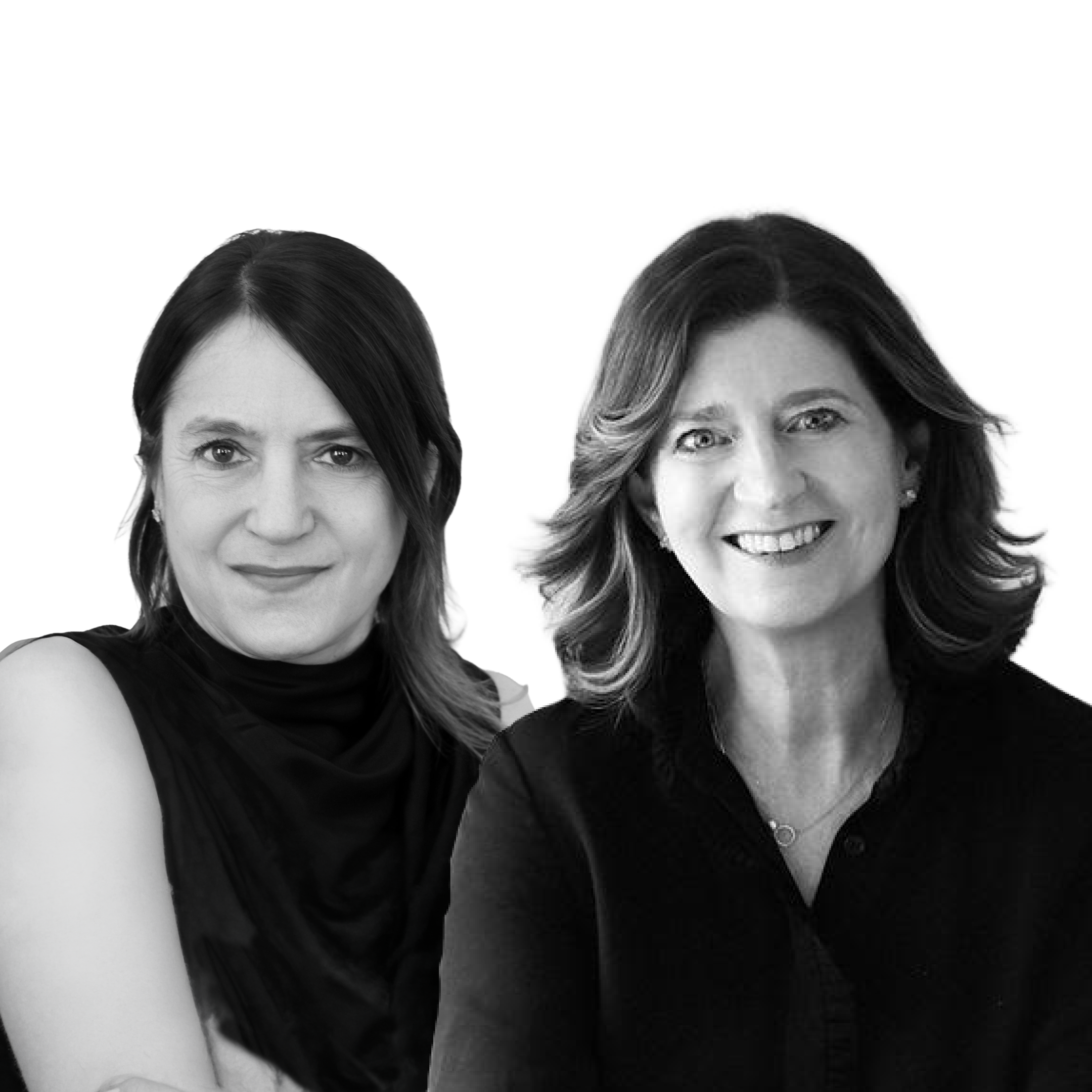
“Leadership is using your own platform to help others along, to help them use their voices and have their stories told.”
Summary
When Kabul fell in August 2021, the world watched. The crowds at the airport, the desperation, the tragedy at Abbey Gate — for a few weeks, it was the only story anyone was following. Then it receded. For many, this was the closing of a difficult chapter of history; but for many Afghans who fled abroad to escape the Taliban, it was the opening of a new one.
On this episode of Leadership Matters, I sat down with Rebecca Blumenstein, president of editorial at NBC News, and Diana Kapp, a journalist and author whose reporting has taken her from San Quentin to rural Afghanistan. Rebecca and Diana are longtime friends, and together, the two have authored The Last Free Women: A Daring Escape from Afghanistan and Coming of Age in America. The book follows four young women — Marwa, Mursal, Maryam, and Samira — from the airlift into their new lives in the United States after TheNew York Times, where Rebecca was then serving as deputy managing director, decided to evacuate not just its correspondents but the entire Kabul bureau and their families. Doing this successfully was no mean feat: it required remarkable acts of kindness and leadership from a long chain of strangers from Qatar to Mexico. It also required a daunting degree of courage from the women at the center of its story, who had mere minutes to pack everything they owned before taking the plunge into the unknown.
At a time when America sometimes seems to be irreparably divided, Rebecca and Diana make a compelling case that human stories like this one are capable of bringing people together — and that the generosity they describe is far more common than the headlines suggest.
Mentions & Resources in this Episode
Guest Bios
Rebecca Blumenstein
Rebecca Blumenstein is President, Editorial of NBC News, where she manages newsgathering and operations around the world, digital and flagship shows including NBC Nightly News, Meet the Press and Dateline. From 2017 to 2023, she was a Deputy Managing Editor at The New York Times and worked closely with New York Times Publisher A.G. Sulzberger as Deputy Editor, Publisher’s Office. She spent 22 years as a reporter and editor at The Wall Street Journal, rising to Deputy Editor-in-Chief. She led the China team that won the 2007 Pulitzer Prize for international reporting. She was named chair of the board of the Columbia Journalism Review in August 2022 and was named to the Aspen Institute’s Henry Crown Fellowship in 2009.
Diana Kapp
Diana Kapp is a journalist who writes frequently about the intersection of women and modern culture, and has traveled in Afghanistan to report on the education of girls in the country’s rural northern provinces. Her longform pieces have been published in The New York Times, The Washington Post, The Wall Street Journal, Elle, More, The San Francisco Chronicle, and Marie Claire, among other publications. She is the author of two YA books profiling female changemakers, Girls Who Run the World and Girls Who Green the World.
Episode Transcript
Alan Fleischmann
Welcome to Leadership Matters on SiriusXM and at leadershipmattersshow.com. I'm your host, Alan Fleischmann.
I'm joined today by two journalists who have together told the story of one of the most remarkable rescues in the modern history of American journalism, and of the young women whose lives were remade by it. Rebecca Blumenstein and Diana Kapp are the co-authors of The Last Free Women: A Daring Escape from Afghanistan and Coming of Age in America, which will be released on September 8. The book tells the remarkable story of the evacuation of hundreds of Afghan employees and their families by The New York Times in August of 2021. Beginning on the day Kabul fell, the book follows four Afghan women through the airlift into the long and unglamorous work of building new lives in the United States. All proceeds from this book go to the Journalism Refugees Education Fund.
Rebecca is the president of editorial at NBC News, where she leads journalism and original content across the network's broadcast and digital platforms. She spent 22 years at The Wall Street Journal, where her team won the 2007 Pulitzer Prize for International Reporting. In 2017, she joined The New York Times as deputy managing editor, and it was there, in August of 2021, that she led the paper's evacuation efforts from Kabul in what became the largest privately sponsored refugee rescue in modern American history.
Diana is a journalist who has spent her career writing about women and modern culture for The New York Times, The Wall Street Journal, and The Washington Post, among others. She's the author of Girls Who Run the World and Girls Who Green the World, two books that put the lives of women leaders and changemakers in front of young readers. And she's reported from Afghanistan on girls' education.
Together, we will explore Rebecca and Diana's early lives and careers, the remarkable story at the heart of their book, and the many lessons in leadership they've learned along the way. Rebecca and Diana, it is such a pleasure to have you on Leadership Matters. The book is so extraordinary and inspirational, and I'm looking forward to diving in with both of you.
Rebecca Blumenstein
Alan, it's so great to be here. Thanks for having us.
Alan Fleischmann
Before we dive into the book, tell us a little bit about your early years, what family life was like growing up, and where you first discovered your passion for journalism. Rebecca, let's start with you.
Rebecca Blumenstein
I grew up in mid-Michigan in a town called Essexville, Michigan, and I was the oldest of five girls. My family expanded over the years. My mother, who had been a nurse by training, decided that she wanted to do nothing more than have kids. We almost had something called a first-grade rule in my family, where there was myself and twin sisters, and when they went to school, she had another. And then she did something very radical in mid-Michigan in the mid-'80s. She had a reverse tubal ligation, and my senior year of high school, I got a new baby sister, which was very rare at the time. This was a high school where some of my fellow students were getting pregnant. So — kind of an unusual family, but a wonderful, warm family.
I went to Jewish summer camp. I was the only Jewish girl in my grade growing up, and that became a big part of my life. Between high school and college, I spent a year in Israel. Along the way, I decided I wanted to be a journalist, and when I came to the University of Michigan, I went right to The Michigan Daily, which was and is a great student newspaper — one of the last independent student newspapers in this country.
But I remember from a very young age always wanting to figure out what was in my dad's Wall Street Journal. He was a physician who was a poor investor but loved the Journal. And even being shooed out of the room in my early years when there was something really intense on TV. So I always just had a curiosity.
Alan Fleischmann
And you went from the Tampa Tribune to Detroit, and that's where you covered GM for The Wall Street Journal, if I'm not mistaken, right? You got involved in the American auto industry early on.
Rebecca Blumenstein
When I graduated from college, it was the beginning of a contraction in journalism. I was lucky enough to get an internship at New York Newsday, which was a fabled paper at the time. They called it a tabloid with a tutu, and it was giving the Times a real run for its money.
I was not a New York native. This was way before Apple Maps and Google Maps, and you had these Hagstrom maps. I was in Queens, and they would give you an address like 113-27 30th Street — or Avenue, or Road. If you got any of that wrong, you would completely end up on the wrong side of Queens. And I just fell in love with New York.
I then found a real job in Pasco County, Florida — that's north of Tampa. Made my way back to New York. Finally made my way back to Newsday, which took years. I worked in Albany twice, and was really into doing political reporting and breaking news.
And one day they closed New York Newsday, and it was just a shock. It was the first real moment — I think that we all knew in retrospect — that journalism was changing. Initially, the estimates were that 600 people would lose their jobs. It became a huge talent fair. Newspapers around the country came in. I think 40 people from Newsday went to The New York Times at that point.
I heard about a job opening at the Detroit bureau of The Wall Street Journal, and because I'm from Michigan, perhaps, it just was like — that's my dream job. I'd never covered a business story before. I flew myself to Detroit and told the bureau chief I happened to be there, and kind of talked my way into business journalism, even though I'd never written a business story.
Alan Fleischmann
Wow. And you went from business to global there, too, right? How long were you in Detroit with The Wall Street Journal before you went to New York?
Rebecca Blumenstein
I was in Detroit with the Journal, and they gave me General Motors as my first beat, which is crazy. But it was just a great beat, because General Motors touches everything, right? Labor, and safety, and consumer preferences, and finance — its influence in the world was vast. I did that about two and a half years.
The Journal was incredibly supportive, I would later find out along the way, of women and working moms. I was very nervous. I got pregnant with my first child about two years into my time at the Journal, and went on maternity leave, was called back early because there was a massive GM strike, and in the middle of that, the managing editor called and insisted that I move to New York to cover the telecom beat. And so I did that when my son was six months old. Eventually, every time I went on maternity leave — I have three kids — I would get a promotion. They were very good to me.
I was eventually bureau chief of this telecom group covering the boom and the bust of the internet boom, and then the scandal. And I heard about an opening in the China bureau. They were looking for a bureau chief. I kind of thought to myself, "Gosh, I'm, you know, three kids stuck in the suburbs. I wish I could have done that." I didn't even tell my husband, but it came up randomly in conversation about a week later. I said, "Yeah, they're looking for someone to run China." He said, "I would do that. I'd go there. They're going to have the Olympics." And I said, "Could you get it?"
So I raised my hand, and they were quite shocked, but it turned out that our kids were of the perfect age to go. And I had a really good view as someone with fresh eyes in China, because China at the time was emerging from a narrative story to the biggest business story in the world, and I had a good sense of what our audience really wanted to know about it. So before we knew it, we were on the plane with three kids moving to China — probably the biggest risk I ever took, going there, because I had not been to China before my look-see visit and did not know any Mandarin.
Alan Fleischmann
How long did you live there?
Rebecca Blumenstein
We lived there three and a half years, and it was just an extraordinary time. It was a very different time. It was like the height of expat life and opening in China. It was heading into the Olympics. I moved in 2005. The Olympics, of course, famously were in 2008. And it was the negotiations of the WTO, China opening up. Could they pull off the Olympics? When I moved there, China was the fifth-largest economy in the world. When I left, it was the second-largest economy in the world.
I can't even describe the number of interesting people pouring into China — whether it was the heads of business, the arts, the World Bank. It was just a truly global scene. We lived out in a suburb of Beijing, one of the first to be open to foreigners. My kids went to British school, and every weekend on the soccer pitch or at barbecues, I would just hear what everybody was doing in China.
And we lived actually across the street from this correspondent Jim Yardley from The New York Times, while I was the bureau chief for The Wall Street Journal. That taught one of the lessons from China. They became very close friends of ours, even though we were direct competitors. And it would drive me crazy, because at night, when I would see his light on, I knew that he was just going to have a huge story. It was just wild — how to live and compete against someone that directly, but also to like and admire them.
And they won the Pulitzer the first year I was there. I was bummed. I'd only been there three months. I'm like, that will never happen again. And the irony of the fact that the next year, our bureau — which was a little bit like the Bad News Bears — would win the Pulitzer, and he was the one who really told me, or confirmed to me, that we had won. It's just wild. And that eventually paved the way for me to go to the Times some years later.
Diana Kapp
I'm loving listening to this whole history, because I've been part of every single part of it. We met at the University of Michigan, and so I saw her skipping all her classes to do her reporting at The Michigan Daily and rise up through that organization. And then I would go spend time when she was covering government in Albany for Newsday, and usually just hang out with her husband while she worked all weekend. And my family went to China to visit while they were living in Beijing.
Her career story is quite conventional in the sense that she did the college internships that led to the early jobs, and then she continually got promoted. And we have a joke in a friend group that we all want to wear necklaces that say WWBD — What Would Becky Do? Because we follow her career and how amazing it's been. We once asked her what the keys to her success were, and she said, "I get along with people. I'm solutions-oriented." What was the third one? I'm forgetting.
Anyway, I've learned a lot doing this process with Rebecca — and her talking about Jim Yardley and her competitive juices. I'm watching, as this book is starting to come out into the world, how much of herself she puts into wanting us to get this story out and get it the attention that it deserves, because these young women are amazing. And she's competitive in that way. So it's great. Myself, I grew up —
Alan Fleischmann
There was nothing linear here.
Diana Kapp
Mine is totally — I say I'm like a pinball machine, and when the ball would land in a certain place, I would go in that direction. I want to make a comment, though, because —
Alan Fleischmann
I was yesterday in Ann Arbor, in Michigan, celebrating the Board of Regents' appointment of Cybele Raver as the new incoming president. She starts in December. She is quite a phenomenal leader, an extraordinary person. And I was just so struck by the DNA of this incredible place called the University of Michigan.
I've got two nephews and two nieces that graduated from there, and my brother lives right there, so I'm no stranger to it. But I am just blown away by the size and the diversity and the complexity and the positiveness — the happiness, even — that's at Michigan, where you can be anything and everything across the board, and you'll find your home there. It's a really amazing place.
Diana Kapp
I grew up outside of Washington, D.C., in Maryland, and I was from a long line of University of Michigan attendees. My parents met there. My father was in the law school. I'm the youngest of four kids, and none of them had yet signed up to go to the University of Michigan, so there really was never any choice about where I would go.
Alan Fleischmann
A little bit of that journey, a little bit of the home life here. What made your family be in Washington? And I know you went to B-CC High School, which is where our daughters went. Tell us a little bit about that.
Diana Kapp
My parents came to Washington in the '60s for my dad to go to work for the Justice Department. He was a tax lawyer. He went on to work for a big D.C. firm, Hogan & Hartson, for 50-some years, and started the pro bono practice there. He's done a lot of human rights law. My mom was, first, a reproductive rights educator, and then she was a teacher at Edmund Burke, taught English. And I went off to Michigan and, like her, became an English major. I was in a book program called Great Books, which was such a huge part of forming who I am. I love to read and everything words.
But I wasn't someone who grew up knowing I wanted to be a writer. I started to say the analogy of a pinball machine, where I would just try a lot of different things, and if it would go in a bucket and it would ding loudly, then I would continue in that direction. Otherwise, pop out and try something else.
Right after college, I worked on the Hill for Senator Riegle from Michigan, doing legislative correspondent letter writing, and I worked for the Children's Defense Fund. I did an internship at CNN. The jobs all sounded really good, but they were really boring, by and large. I really feel for people that are right out of college and trying to find their path, if you're not someone who absolutely knows, because it's not easy. But I learned a lot by finding things that maybe weren't singing to me, and I just kept moving forward. And I always tell people that's just as good a way to go about things. You don't have to know and be linear.
The best thing that I ever did for myself — since I'm the youngest kid in the family, and I had gone back home to Washington — I really needed to spread my wings and become independent. And I decided I'm going to move across the country to San Francisco. I barely knew anybody there. It was just an alluring place to me. It felt beatnik and cool. I got an apartment in Haight-Ashbury, and I did a lot of small jobs and temp work.
And I landed in a fantastic job, which was head of communications and investor relations for a startup biotech company. I literally knew nothing about Silicon Valley. I thought silicon was something that grew in the ground. I was unfamiliar with anything technical or biotechnology. But little did I know, I had landed right in the middle of the biotech revolution. It was the year that the human genome was being sequenced, and I went to work for this startup that was doing really revolutionary work with sequencing DNA and sequencing peptide drugs. I took genetics classes at Stanford. And I fell in love with my now husband on the first day of work, so we met there.
Being in that culture of innovation, working for this incredible entrepreneur named Alejandro Zaffaroni, who founded three major biotech companies — one of my jobs was just to listen to him talk about what was happening, the revolution in science and technology, and write it down and create kind of white papers out of the speaking he was doing, because he was quite elderly.
Being in that environment, I ended up applying to Stanford Business School, because I was interested in innovators and new businesses and all of this science that was happening. And when I came out of business school, I went to work in an ad agency. I liked a guy I met who came to speak in one of our classes about consumer psychology and how we motivate and inspire and get inside consumers' heads.
He was famous for the "Got Milk?" campaign, which I don't know if you remember it, but it was this deprivation strategy where they would show the Oreos and you had to have the milk, or they would show the peanut butter and jelly and you had to have the milk. That became a really famous campaign.
During that time working for that agency, I got put on the Nike account, and I spent time doing storytelling. I went inside locker rooms in the South with teenage girls who were trying to become basketball players, just gathering what their life was like, what they cared about, what their motivations were. I had them doing diaries. It was sort of like anthropology-type research. And I realized, I'm doing storytelling, but it's in the service of making ads. And then all of a sudden I felt like, okay, I found the thing I want to do — storytelling — but I don't want to do it for ads.
At that time, I was starting to have my first child, and I literally started from the very beginning thinking, I'm going to become a journalist. I want to do magazine and newspaper writing. I got this incredible piece of advice from my husband. I had this one contact at Health magazine. I didn't know anyone who worked in the magazine world, and I would send out these emails to her saying, what do you think about this pitch idea, or can you read this query? And then if I wouldn't hear back from her for a few days, it was like my life was over. I was so dependent on her advice. And he said, "Why don't you change the dynamic with this woman by asking if she would be like a mentor to you, and you could pay her for some of her time? Spend an hour each week getting a coffee, showing her your queries."
And she ended up giving me my first big story. I was one of the very first journalists to write about fertility egg freezing, and there was a lot of new technology happening at Stanford. Today, all young women are freezing their eggs. It's covered by insurance in a lot of progressive companies. But at that time it was completely unheard of and new. I wrote a feature story for San Francisco magazine, and that editor then faxed it over to ELLE magazine, and they wanted a different version of the story. I ended up following this young woman entrepreneur that was starting a chain of egg freezing centers, and I did a story about that. And then it just kind of rolled from there. I got pieces in O, The Oprah Magazine and Glamour and Marie Claire.
And in 2012, I got an assignment. I pitched a story to go to Afghanistan for More magazine — which is now gone; it was called More — and of course, for 40-plus women.
I had heard about a physician who, as a second career, was building schools in Afghanistan. She had spent time early in her career as a doctor in refugee camps. She wanted to go back to that region of the world and do something to help the people of Afghanistan. And she decided that where her energy should go was schools. That that was actually going to change the trajectory of this nation.
So it was 2012. It was kind of the height of Afghanistan's modernization period. We'd been there for a decade. The Americans landed in 2001, and the schools reopened. Our girls in the book start school right at that time. And I was there watching this country go through a complete transformation.
We would go into classrooms — we were in Takhar Province, which is in the Hindu Kush, right on the Pakistan border — and we would ask the girls in the classrooms, how many of your mothers can read or write? And not a single hand would go up. Even today, 75 percent of women in Afghanistan cannot read or write. But those girls in the classroom all put up their hands when we asked how many of you plan to go to university. And they were already sending girls to university — one year three, the next year seven, the next year 10.
So it was incredible to experience this country at that time. And that was what led to Rebecca and me starting to talk about this work that she was doing, getting this group of Afghans out, and made the decision that we would try to write this story down.
Alan Fleischmann
Rebecca, tell us a little bit about that — where you were then, a little bit about the journey there, because that's pretty amazing, what you were experiencing, and then how you guys linked up.
Rebecca Blumenstein
I was a deputy managing editor at The New York Times. I moved over to the Times in 2017, and I'd helped oversee a revamp of business coverage, and then ran digital and live coverage during 2020, the pandemic, and of course that election year. A.G. Sulzberger, the publisher of the Times, asked me to work as his partner. He had taken over a short time earlier, and just to help him really manage the paper's rapidly expanding operations. So I was, in retrospect, I guess, in a kind of perfect position for a crisis — and one certainly happened.
Nobody expected Kabul to fall as fast as it did, and Afghanistan to fall as fast as it did. In the weeks leading up to it, there was a premonition of dread, really, as the Taliban started advancing. And David McCraw, the deputy general counsel of the Times, who's a fabled First Amendment lawyer — he helps keep our people safe around the world and rescue them — in various instances, he grew worried about what would happen if the U.S. pulled out and Afghanistan crumbled, and began pushing the State Department for visas to get our people out of there, because we knew that they could be at great risk if the Taliban took over and wanted to get revenge on anyone who had worked with Americans. That includes people who'd helped our military, but also people from American news organizations.
Anyway, those visas never really came through. Kabul begins falling, and Dean Baquet, the editor of the Times, basically puts an all-points bulletin out to the senior editors to say, any contact you have around the world, we need them. We needed to find a way to get our people out of Afghanistan and someplace else — anywhere but Kabul.
And they made a pivotal decision that I think is a very admirable one: instead of just taking the expat reporters out, which has happened in the past in Vietnam and Cambodia, to take the whole bureau out. The Times had had a bureau in Afghanistan for 20 years — the 20 years of the U.S. occupation of Afghanistan. And the people who would work for the Times included translators, drivers, cooks, gardeners. There was a bureau. It's obviously a very dangerous city, so our reporters basically lived there, and we had a whole staff supporting us, and also including very good Afghan reporters. So this became a huge list of people. We trimmed it to 124.
And I was calling any contact I had around the world. It turned out my time in China was useful, because someone who had worked for me briefly, who had actually quit journalism to join the military and had ended up working for the NSC during Trump's first administration — his name is Matt Pottinger. I was on a road trip with my family at the time. I was calling India, Canada, all sorts of things, and I thought, you know what? Let me ask Matt. He might know someone in Qatar. I knew instinctively that Qatar was the only country hosting those talks.
And to my surprise, Matt wrote me a note back the next morning, an email. He said, "I think I have someone who can take your whole group out. Get the names together."
And so that's how I fell into this. It was a chaotic evacuation, so many twists and turns. Our people had to rush to the airport. Half the young women we profiled had 30 minutes or less to pack a bag and run for their lives. They came under attack at the airport. We were able, through a very good contact in Mexico — Mexico agreed to take our people in, and Qatar agreed to get them out. It was only because Mexico had agreed to take them in that we were able to even go to Qatar, and we were one of the first groups on the list of Qatar to do it. But it didn't go smoothly. It didn't go as planned.
They came under attack at the airport. They tried three days later, and eventually we were told by the U.S. that we could bring the entire group into Houston once we got into Mexico. So we had been obviously pushing the U.S. for anything, any kind of help. And it's a remarkable thing that when we landed in Houston, we did become the largest private sponsorship in modern U.S. history.
Diana Kapp
I always like at this point in the story to take the listeners to one of the young women who, at the time that Rebecca's describing, is Marwa Rahim. She's about to return to her fourth year of medical school after a hiatus for the pandemic. So literally at midnight on August 15, she has set her alarm so that she can wake up in the middle of the night when electricity is more reliable in Kabul and iron a special dress that she's bought to return to her in-person classes. She's got her book bag ready, and she irons the dress.
But when she wakes up in the morning, she's getting all these pings on her phone that say, "They are coming, they are coming." And it's the Taliban. She looks up at her mother at the window, and she says, "Can I go to school?" And her mother just looks at her like, "I have no idea." But they both knew the answer was no. They looked out at the street, and everyone was moving in the same direction. And she fixed her eyes on this one officer who was just standing there, looking dazed, holding a bag of grapes. She says that's the moment she knew that her country had fallen, because this person in a position of authority wasn't doing anything and looked like he didn't know what to do.
This family had lunch that day, and during the lunch hour, their brother Najim calls from the bureau, where he'd gone in the morning. They were breaking computers and shredding paper, and they learn they have 30 minutes to pack whatever they can into a backpack and start running for the airport.
And the girls — these two sisters on the cover of our book — they talk about just being frozen at that moment. Marwa grabs a curling iron and a pair of high heels. And Mursal, who is a clothes horse, she stares into her closet thinking about what she can bring. Just imagine yourself. You're a girl. You're 21 years old or 24 years old, and you've worked your whole life to — Mursal had finished law school, and Marwa was almost finished with medical school — and now you don't even know what country you're going to, or anything that's going to happen to you from then on. And that's where our book opens. That's the story of these girls and so many people.
Alan Fleischmann
Are people following the story of these extraordinary women and the story of this extraordinary time, which I think people need to know? I'm so glad you wrote the book. Are people following this story? Are they excited for the book?
Rebecca Blumenstein
Whenever people hear about the book, it really seems to resonate — especially for women, especially for young women.
I have a sense that when Kabul fell — I mean, Afghanistan had been a long, grinding war, and the Times took great pride in doing consistently excellent coverage of Afghanistan and its commitment to Afghanistan. But a lot of people didn't read those stories, to be honest. When Kabul fell, it was just a shock to the world, and it was a massive story for weeks. And there was a ton of interest and audience for that story. We remember the images of the crowds at the airport, and the people so desperate they climbed into the wheel wells of the planes, to fall to their death, and obviously the tragedy that happened at Abbey Gate and all of that.
But then that passed, and we clearly had lost the war, and it has not been a topic of much conversation. And I think that that's a shame, especially given what's happened to the women who live in Afghanistan. I think it's also quite striking, because this country had the biggest influx of refugees since the Vietnam War, and we haven't really talked about it that much. Obviously the political climate has changed to a certain extent, but I think that a lot of people almost forgot about these women and the plight of Afghanistan's women.
Our book doesn't provide many answers. But I think those of us who are storytellers know that it is that human story that sometimes helps people reconnect with important issues. And we're really hoping that it does spur discussion, especially of the plight of the women in Afghanistan.
Alan Fleischmann
And you report so closely on these four young women, who I would argue have every reason to be guarded and not to trust. How did you earn their trust? How did you handle the parts of their lives that they weren't ready to have told, or didn't want to be told? How did you get them to reveal so much to you? It must have been extraordinarily difficult for them to be part of this at the same time.
Diana Kapp
It really started with Rebecca making an early, very deep connection with them. Because when she finally had a chance to meet on her own with the women — initially, in this group of Afghans, when she would go to look for apartments with them, or they would have a group meeting, the women stayed back, and it was the men who would go out and convene or look for apartments. Finally, when she got time on her own with the women, she was so taken by these young women and wondering, how are we going to get them back onto the paths that they were on? And she was the first person to really ask them, what do you want to do with your lives here?
There's an expectation among newly settled refugees and immigrants that you're safe in America, you're going to start working. But there's absolutely no expectation on the part of resettlement agencies that you're going to go back to college or be able to pay for that kind of higher education. So the Times was really pushing against conventional wisdom and saying, we're going to do more for these people. And it seemed like such a natural place for them to go back to college, because that's where you can learn English. It's where you can be with people your own age, and you can get on your feet in a new culture.
And by asking them, "What do you want to do?" — they look at that moment as a completely pivotal moment in their whole experience in America, and it bonded them to Rebecca. They wanted to study. That's what they said then. That's what they would say now. The women in the group wanted to go to work. And by developing that early trust with them, they were very open to me.
Given Rebecca having this huge day job at NBC, I had more bandwidth to go spend time with them on their college campuses. I spent the last three and a half years taking 30 to 40 trips to Pittsburgh, Ithaca, Northern Virginia, Houston — spending time with them on their campuses, in the dining halls, going to yoga with them, meeting with their families. We've gone to a lot of special events and talked to them regularly, even in between all those visits.
And I really think that these young women were so traumatized by everything that they had been through, and so to have someone so interested in their story, so interested in who they are, wanting to know about their life in Afghanistan, wanting to hear about their challenges here — I think it felt good to them to be listened to. I was really paying so much attention to the details. So we definitely developed a deep connection, and they were incredibly open with me.
Not everything they shared with me is in the book. We had to be judicious, because they do come from a culture which is very different from ours, and things that we think are no big deal can have consequences. Whether it's just texting with a boy, or shaking hands with a man — these things are really something many Muslim women still aren't doing. But anyway, friendships formed. A lot of great time was spent. We talked about every topic under the sun, and they're incredible.
Alan Fleischmann
How involved were you in — it sounds like you were involved in developing the community for them as well when they came over here. The second half of the book title is "Coming of Age in America," as you're describing. What was the language, the schools, the sponsoring families, the communities that took these young women in? It sounds like you were involved in all of this.
Rebecca Blumenstein
We were involved in it to the extent that we had to push open some doors for them to get into colleges. A lot of colleges just said no. They said their TOEFL scores, their English scores, aren't high enough, and besides, you don't have the money for that. And of course, so many people across America — I want to stress, acknowledge — have trouble paying for college. But it felt that, especially for the women, especially given what was happening to the women of Afghanistan, where the Taliban right away said no women will ever be educated past the third grade, then we had an obligation. They were on the cusp of becoming doctors and lawyers, and through no fault of their own, end up here — and are then told that they will live a life of poverty. It felt like we had a duty to help them.
So I learned how to use my own personal network to ask for some help. A woman I know, Geeta Anand, was dean of the Berkeley School of Journalism, and she helped get one of our Afghan journalists in. Someone else is at Missouri, who I met, Kathy Kiely. She helped get one of our journalists. And Lynette Clemetson at the University of Michigan — she took two of our journalists and their families.
It turned out that Pittsburgh ended up being a real fulcrum of this story, because I had a son who was going to school at Carnegie Mellon. At this time, whenever I would get together with someone — like I did with Diana one night over dinner, and with a friend of mine who's a professor at Pitt — I would rant: Why can't we get them into school? They should just be in college. They're of college age, and it can help them learn English, and this shouldn't be that complicated. And my friend Danny said to me, "Well, Rebecca, you know Farnam. Just go talk to him. He's the president of Carnegie Mellon, and see if he can help."
So it was a process for me of just learning. And Farnam didn't do any special favor, but he did an extraordinary thing. He got four of the schools of Pittsburgh together, and they talked about it, and they came up with this model of: let's have them go to Chatham, which is this tiny but mighty college, Chatham University in Pittsburgh, and they will have a year of English to catch up and become more proficient in reading, and then we'll help them get back to their studies. And that's how almost all of them basically ended up in Pittsburgh.
So it was a personal involvement. Then Samira, one of the other young women in our group — she had a baby when she first arrived. She had already had an MBA from India. She wanted to be educated so badly, because her mother burnt her books when she was growing up. She had to fight against so many stereotypes in her own family to be educated, and so she really wanted to learn. She couldn't join Marwa and Mursal initially, so she moved in the middle of December, and Chatham, which has been so great about so many things, didn't have her apartment equipped for a baby. So I called my sister-in-law, who happens to live in Pittsburgh, and said, "Laura, can you come over to help?" And Laura walked in and burst into tears, because she's like, "Oh my God, we need to help them." So this did become at times very personal, because we wanted to help them.
Diana Kapp
And now this little American-born baby, whose name is Darin, calls Rebecca's sister-in-law Nana, and they see each other literally every single day. She picks her up at preschool. It's where they are on Friday nights. They've been completely adopted into this Pittsburgh Jewish family. She's an American child with Afghan parents who asks for matzo ball soup when she goes to a diner in upstate New York on a visit.
And what I love is that it is not this grand plan that came together, where they laid out the steps of how they would integrate these young people into new lives in America. It was like this Hands Across America ragtag — let me call anyone in my network and beg them to take a student.
And then they went to a meeting with the Sulzberger family, which is the largest shareholder in The New York Times. A college counselor is among the Sulzberger family, Victoria Dryfoos, and she hears Rebecca talk. Rebecca says, "Can anyone help us get these kids into college?" And she went on to spend literally hundreds of hours talking these young people around the websites, to the point of, move your cursor here, pull down this window, click here, so that they could fill out applications to go to college, FAFSA forms. She's helped them with internship applications, with roommate applications.
There's so many things, and we don't think about the fact that just getting on a portal to turn in your homework or to fill out this kind of administrative paperwork is something they've never done anything like. They wrote all their exams on pen and paper. They hadn't used computers other than to watch television.
So these are some of the kinds of things that people leaned in on everywhere — whether it was replacing someone's tires for their car, or a cook that hired one of our people in the group in Houston, and he didn't have a way to get to work, so people at the restaurant got together and got him a car. It's just story after story of people doing something generous during a time when America is so divided and we don't feel a big sense of hope and community — and yet these actions are happening all over the place.
Alan Fleischmann
This is so wonderfully inspiring. It makes you feel the optimism of people caring about other human beings and their dignity and their lives.
You put the question out there in the book: What does this country owe people who worked alongside Americans and were promised safety? I think that was a big thing in my mind when I was thinking about your book. How do you answer that? And do you think that those people who got involved were, in essence, answering that? Or did you think it was beyond any issue with Afghan girls — that it was more like being good people doing good things?
Diana Kapp
Those people who come to America have their own immigrant story of somebody who helped their family. Rebecca has a story like that. I have a story like that. And that's the story of America. It's people like this who come to this country with very little, seeking economic opportunity or safety. It's the story as old as time, and here we are again. And I think people feel that in their hearts. They do care.
Rebecca Blumenstein
And I would say, in the instance of Afghanistan and what happened when Kabul fell, I think instinctively among many people here there was a recognition — and continues to be — that we have a special duty to those who helped Americans in that war.
In Houston, where we were told to bring our group and where we thankfully decided to stay, there was an incredible outpouring of support. I didn't realize until recently, when I spoke to the head of one of the four refugee agencies there, that even the experts didn't know what to expect as this was unfolding. Afghans were being allowed into the country under something called humanitarian parole. It hadn't been used since the Vietnam War.
This is Ali Al Sudani, the head of Interfaith Ministries in Houston. He didn't know if there would be any government support for these refugees, but he knew that they would come to Houston, because they're one of the most established centers for welcoming refugees in this country. He went to the CEO and to his board. He estimated it would cost a million dollars to take in 200 Afghans. He said, we have to get ready, because they're at the airport. I know they're coming. And the board approved it. They did an immediate fundraising campaign. Usually these campaigns take weeks and months, and they raised $3.8 million in a week.
And I would say that in Houston in particular, it's a city that is proud of its immigrant history. People of faith really walk the walk there, and all kinds of groups — not just Muslim organizations — were dropping off food, were volunteering to help. I didn't realize until recently just how much the city opened up.
So I think that that is a recognition that, in the case of Afghanistan, it may be painful, but people recognize that many Afghans who ended up here never really expected to be here, but they're here because of our actions.
Alan Fleischmann
Where are they today? Where are Marwa, Mursal, Maryam, and Samira today?
Diana Kapp
They're all honestly doing relatively well, given everything they've been through.
Marwa is beginning her senior year at Chatham. She's pre-med — she had done three years of medical school, but the kind of schooling that we have in America is very different, so it's not surprising that she had to redo it. She spent her summer in Pittsburgh working in a lab on a type of bacteria that's found in ophthalmology practices, testing them with different antibiotics. And she's going to be part of a paper that's going to be published. She did 3D printing in a lab last year that was studying human locomotion using old footprints. Today was the activities fair, and she told us she was shuttling between three different booths that she was supposed to be manning, because now she's really involved on her campus.
Mursal graduated from Cornell, from the master's in public administration, and she is working for Catholic Charities, the resettlement agency that the Times contracted with, and she's working on career placement. But she was told about 10 days ago that all funding for resettlement through Catholic Charities is over, and that the whole 80-person unit is laid off, so her job ends at the end of September. She's living with her family in Northern Virginia.
Samira is in nursing school. She's got one more year after this to finish an RN and a BA from Chatham and Shadyside School of Nursing.
And Maryam spent a year at the University of Pittsburgh doing pre-med. She struggled a lot with the technical classes. She went home for a year and regrouped at Northern Virginia Community College, and she just resumed her junior year at George Washington in Washington in the neuroscience pre-med program.
So they're all kind of on their path right now. They really are quite miraculously just — keep stepping forward. And it's a real theme of the book. It was how the Times approached it: let's just keep moving, when they were doing the evacuation and trying to get the people here. And it's the theme of the girls when they're here — no matter what they come up against, they just keep stepping forward.
Alan Fleischmann
It's that resilience, and remembering what freedom means, and what this country means around freedom and resilience, that your book so eloquently and so powerfully illustrates. We forget — I wouldn't say you and I have forgotten, or the three of us have forgotten, but I think a lot of people have forgotten what truly is unique about this country.
Diana Kapp
They talk about just being able to walk around outside feeling to them like a lot of freedom, because it's something that women can't do without a chaperone in their country. And even before that, it's a culture where the eyes of men were always being very judgmental of what they were wearing and doing.
"Why is it always about the women?" is a line that Mursal uses, because in her culture it has been a whole lifetime of fighting against restrictions for women and low expectations. And to come to America and see the kind of opportunity that women have here — to have big careers, and to just choose what they want to do and who they want to be, and whether they want to marry or not — is incredible to them.
Rebecca Blumenstein
I would say that our women are very cognizant of the freedom they have here. And there's some survivor's guilt about why they were fortunate enough — because their brother or someone in their family worked for the Times or was a journalist — that they got to come, and so many others didn't.
They want to make the most of their freedom, and they want to use their voice. They've all been granted asylum, but there's no question that they're being very brave by sharing their lives with this book. But they feel that they're here, and that it can be very helpful, so people understand what happened — with a real hope that I think it can lead to a greater awareness of what's happening to women on the ground in Afghanistan. Just the basic human right to be educated is something that's so fundamental, and yet is itself not a settled question in many parts of the world.
What's fascinating is that one of the real heroes of the book is the deputy foreign minister of Qatar, Lolwah Al-Khater, who rescued thousands and thousands of people from Afghanistan with a particular eye. You've heard about the robotics club and the women's soccer club — that was all through her. And she believes very strongly — and she's in a senior position in Qatar — that Islam stipulates the education of women and men. Afghanistan is at the very bottom of 65 Muslim countries in terms of what is happening to women there.
And so our young women really feel an obligation to help them. When you ask what they want to do in life — they wanted to help women in Afghanistan before they left, and I bet you, as we look to what they do in the future, that they're going to try to find a way back to doing that.
Alan Fleischmann
That's amazing, actually.
Rebecca, your day job is one where you run such extraordinarily iconic names in journalism, and you're so focused on bringing journalism to the forefront. And Diana, you're telling stories, and you're focused on how you actually create narratives and stories. And then you dedicated this book to journalism — to those who need to be out there on the forefront and on the front lines.
I'm curious: what lessons in leadership have you seen? You both are leaders in your own right, obviously taking great risks and sacrifice and doing what you do. I would argue it's the greatest career there could be, in telling the truth. But what do you see in leadership, and what do you think we're lacking in leadership right now?
Rebecca Blumenstein
I think that leadership is sometimes doing the right thing at the right moment and sticking to it, and staying calm, and fighting for your people and protecting your people as much as you can. And I think that's what A.G. and the Times did very admirably.
That's how I've always tried to lead: to have a team and care for the team, and have it not be about me and have it be about them. And I was no hero here. This is an incredible example, both of the Times and of what happened since, of the collective might, really, of what happens when people come together and push toward a common goal. There is no way we would have been able to get out of Afghanistan if it wasn't for this collective action across The New York Times. It was just extraordinary.
And I think that's what's happened here. If people become convinced that you care about them and not just about you, they'll do almost anything. And that's certainly what happened at the Times. We all cared so much about getting these people out. And in terms of my own leadership, that's all I've done here.
And for me personally, I think there's a certain value — at some point I was despairing. I do have a busy day job. I was under deadline. Diana — it's a true partnership. She did much more of the work over the past three years, but I certainly had to do a lot of work, especially in the early moments of this. And I was just like, I don't — I ran into a common friend, and I said, "I don't know if I can do this. This is just crazy." And she put me in my place a little bit. She said, "Rebecca, no offense, but your job is very corporate right now. This reminds you and the rest of the world that you used to be a journalist."
So there are those days in life where we get away from our craft sometimes. I started as a reporter, and this has been an exercise for me in humility, because here I am oftentimes during the day saying, "Where's that story? Why is it taking so long?" And staring at that blank page is a way to remind you of how important and hard our craft is. And so I think it's made me better as a leader.
Alan Fleischmann
You both are so focused on developing and sharing what you do every day, which is around trust — establishing something across these platforms that you lead in order for those of us to be informed. You're trusted because you take the time to really understand what that story is and to make sure that it's being told. Diana, it's what you do in covering and telling other people's stories. It's what you do every day, Rebecca, with Meet the Press and Dateline and other broadcasts and digital platforms that you run. It's pretty amazing.
Before we close, I do want to ask you both to mention a little bit about the Journalism Refugees Education Fund, because the proceeds of the book are all going to that education fund. Tell us a little bit about the organization as we wrap up.
Diana Kapp
Before we do that — and I'll let Rebecca do that, because she was the founder of that organization — I just want to say it has been a true honor for me to be entrusted with these young women's stories, and to be able to help them figure out how to let the world know about what it is they've experienced and gone through.
And I do think that is leadership. Leadership is using your own platform to help others along, to help them use their voices and have their stories told. It's something I feel so lucky to have been able to do, and to be at this point in the process and have the girls holding our hands as we go into this book launch, and being a part of it with us, and feeling good about what we're doing and how we've portrayed them honestly. To me, it's the magic, and it's why this is going to go well for us, I believe — because it is very genuine.
Alan Fleischmann
I hope that you guys collaborate on another book, because this book is so important. I'm sure you're thinking, oh my God, another book. But what you're spotlighting is so important — this idea of telling the story of others, and of moments of courage. We don't have enough of it out there.
I hope everybody that's listening reads this book and shares it with others, because I think we're hungry for that: for the story of others, the vulnerability, the fragility of life, and understanding and appreciating what we have. Because what we have is so sacred, and it is so fragile too, and yet we're the place where people want to come to as a country, to be that safe harbor.
And the fact that you two have spotlighted this with such respect, really honoring the dignity of others — you've done something else. You've told the story of journalism at its finest and at its best. So it's not only spotlighting human dignity and this country and all that we aspire to be. You've also reminded us why journalism matters and why telling stories matters.
Diana Kapp
— about the Journalism Refugees Education Fund, because it's been so key to how these women have gotten their start, and there's lots like them who need the same.
Rebecca Blumenstein
And thank you, Alan. Your words mean so much. We did want this to be a story about hope, and it's a positive story, and it's something that I think restores a bit of our faith in one another.
Along the way, we had to form a nonprofit, because we couldn't really figure out another way to help pay for the college that so many young people in our group, and other displaced journalists, really need to get back on their feet.
It turns out, when you think about it, that there are more autocrats around the world than ever before. There are more conflicts than ever before. And in journalism circles, there's a term called exiled journalists. These are people who have had to flee their countries. Our Afghan group is just one example of that, because they are in trouble for the stories that they've written — in trouble for committing the act of journalism.
And the Committee to Protect Journalists, whose board I'm on, keeps track of deaths of journalists, and they're at an all-time high. There have been many journalists who have ended up here in the United States from Ukraine, Russia, Latin America — all sorts of places — where because of what they've done as journalists, they can no longer live in their countries, and they need to resettle along with their families.
So we formed the Journalism Refugees Education Fund to help pay for the cost of education for exiled journalists and their families, to get back on their feet and to build a new life in America. We have raised about a million dollars so far through all kinds of different means, and begging, borrowing, and stealing a bit. We've helped, in four classes now, more than 30 journalists.
I think it's one of the best direct ways, at a time when people feel like, what can I do? There's nothing I can do in this time of despair — to help somebody, to give them an education, to give them a new beginning in this country, and to give them a fighting chance to remake their lives.
And as part of our book launch, on September 30, we're having a fundraiser — the first fundraiser for the Journalism Refugees Education Fund. Samira is coming into New York. We have dedicated the book to JREF because we think education is a throughline through this book. It's something that empowered me, and I was lucky enough to help some people in our group receive an education. Obviously, Diana and I met at the University of Michigan. But it's just a throughline.
And really, when you think about what's happening to the women in Afghanistan who are being denied an education, it is the least we can do, I think, for those who have given and compromised their lives, and ended up here — to help them have as successful and prosperous a life as they can.
Alan Fleischmann
There's so much about the world that we live in right now, where we talk about technology, technology, technology, and we forget sometimes — too often — to tell the story of people: the human-to-human contact, human ingenuity, human courage, human respect, good character, and community. And what this book does is it tells all that and more. It is so inspiring.
You've been listening to Leadership Matters on SiriusXM and at leadershipmattersshow.com. I'm your host, Alan Fleischmann. We just spent the last hour with Rebecca Blumenstein, president of editorial at NBC News, and Diana Kapp, a journalist and author, discussing their new book, The Last Free Women. This book chronicles the evacuation of more than 200 New York Times colleagues and family members from Kabul in August of 2021, including the four young Afghan women who they followed from that airlift into their new lives in the United States.
I want to encourage every one of our listeners to read this incredible book, share it with others, and use it as a moment to reaffirm what makes this country what it is, and what makes so many people want to be here. It's really one of the great stories of our time.
And I hope, Rebecca and Diana, that you will continue to collaborate — two friends from Michigan from a while ago. Because it's hard to write a book when you're alone; it's even harder, probably, to write a book together. But somehow you made magic out of this, and I look forward to your next, and many more to come. Thank you for being with us today.
This transcript has been edited and condensed for clarity.