Pamela Meyer
Founder and CEO, Calibrate
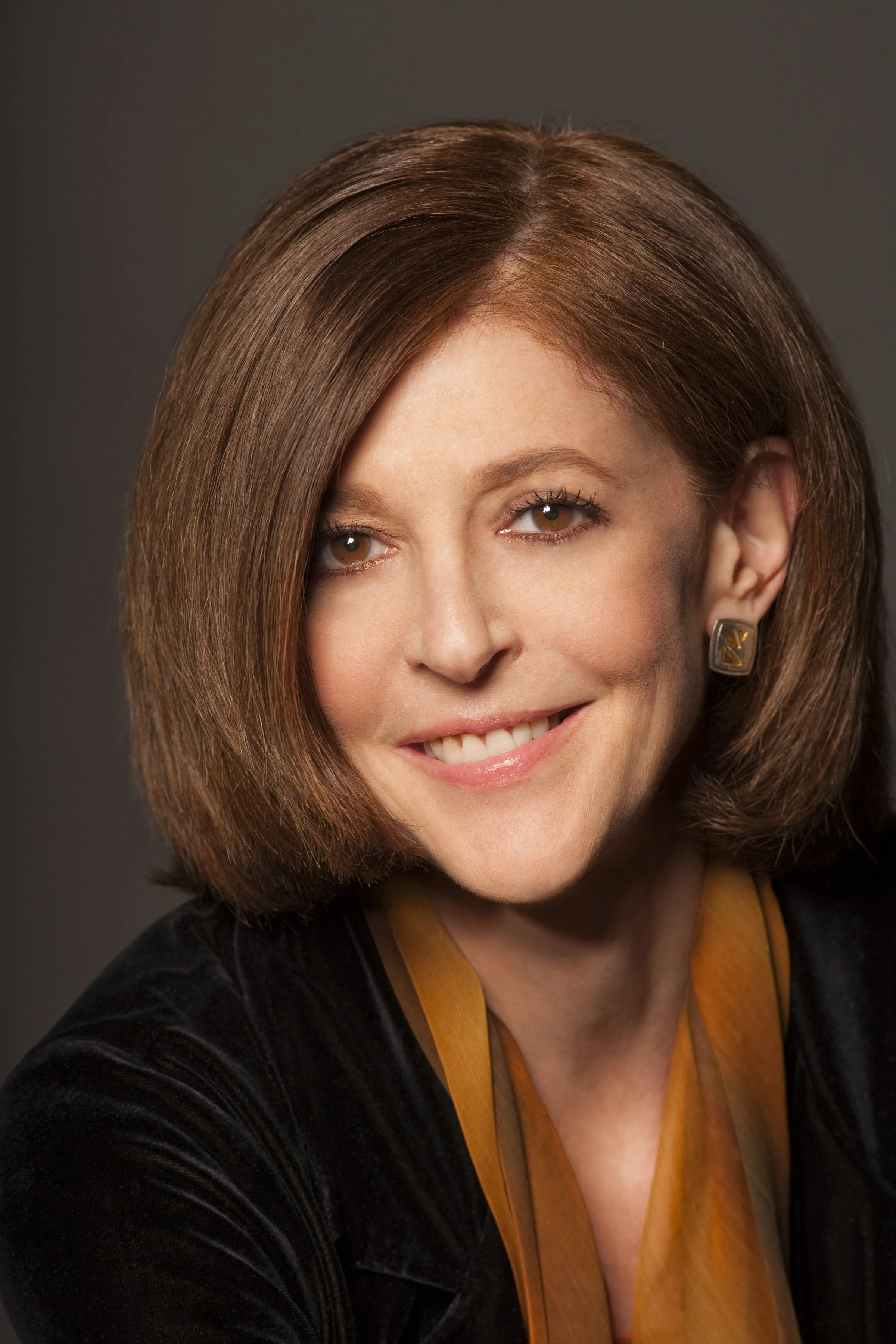
“What we used to think was a deception epidemic has now hardened into a much more significant trust crisis.”
Summary
On this week's episode of Leadership Matters, I sat down with my friend Pamela Meyer, the founder and chief executive of Calibrate, a Washington, D.C. firm that trains businesses and government agencies in deception detection. Pamela is well-known for her work on deception: her TED Talk on how to spot a liar has been watched more than 30 million times.
While deception detection is still a major part of her work, Pamela has just released a new book that argues catching lies is but one piece of a larger social observation toolset. Titled How to Read the Room: The Art and Science of Social Observation, the book explains the importance of social undercurrents in conversation and the ways effective leaders can make use of them.
Over the course of the episode, Pam and I explored why what we once understood as a deception epidemic may have hardened into something more consequential, a crisis of trust, and why overcoming our own assumptions is the first step toward seeing others clearly. We also talked about the limitations of AI in socially grounded contexts and what changes inside an organization when leaders make verification part of the culture.
At a moment when so much of what reaches us is summarized by a machine, Pamela makes a case for something deceptively simple: the ability to slow down, observe carefully, and understand the people in front of us. In a world increasingly mediated by technology, that is a critical responsibility no leader can afford to outsource.
Mentions & Resources in this Episode
How to Read the Room: The Art and Science of Social Observation, by Pamela Meyer
Liespotting: Proven Techniques to Detect Deception, by Pamela Meyer
Guest Bio
Pamela Meyer is a leading authority on deception detection, social observation, and trust, and the founder and chief executive of Calibrate, a Washington, DC-based firm that helps organizations better understand human behavior. Her work grew out of a longstanding interest in how people communicate what they believe through what they say and do, which led to her bestselling first book, Liespotting: Proven Techniques to Detect Deception. Her 2011 TED Talk, “How to Spot a Liar,” has been viewed more than 30 million times and remains one of TED’s most-watched talks. Her new book, How to Read the Room: The Art and Science of Social Observation, extends that work beyond deception to examine how context, behavior, and beliefs can help us understand what is happening beneath the surface of a conversation.
Before turning to the study of deception and social observation, Meyer spent more than two decades working at the intersection of media, technology, and business, experiences that shaped her interest in how people make decisions and navigate complex environments. She has founded several media and technology ventures and held senior leadership roles across the nonprofit and private sectors. Her work has been featured in The Wall Street Journal, The New York Times, Harvard Business Review, The Washington Post, Forbes, CNN, NPR, and ABC News. Meyer holds an MBA from Harvard Business School, a master’s in public policy from Claremont Graduate University, and a bachelor’s degree in psychology and political science from Washington University in St. Louis.
Episode Transcript
Alan Fleischmann
Welcome to Leadership Matters on SiriusXM and at LeadershipMattersShow.com. I'm your host, Alan Fleischmann. I'm joined today by the person often described as the country's best-known expert on lying — and who has spent the last 15 years arguing that the real skill is not catching liars, but reading people well.
Pamela Meyer is the founder and chief executive of Calibrate, a Washington, D.C.-based firm that trains businesses and government agencies in deception detection, and the author of the best-selling book Liespotting. A Harvard MBA and a Certified Fraud Examiner, Pam spent two decades as a media and technology executive and founded two companies on her own before turning to the study of deception. Her 2011 TED Talk, "How to Spot a Liar," has been watched more than 30 million times and translated into dozens of languages, making it one of the most viewed talks in TED's history.
On September 8, St. Martin's Press publishes her new book, How to Read the Room: The Art and Science of Social Observation. It sets aside common misunderstandings about social cues and draws instead on behavioral science and intelligence agency tradecraft to explain how power, trust, emotion, and status actually move through a room in ways you can see in real time.
Today we explore Pamela's early life in Washington, her years as an operator and entrepreneur, her new book, and the many lessons in leadership she's learned along the way.
Pamela, it is such a pleasure. I should put up a little disclaimer here: we're good friends, and I am such an admirer of this extraordinary leader. And honestly, what a fabulous person to have at dinner parties at your home — because everyone sits up a little straighter, they lean in a little more, they want to be a little bit more open and truthful when they're around you. So it is such a pleasure to have you here. Leadership Matters as a show has been looking forward to having you on for so long.
Pamela Meyer
Alan, thank you so much. Likewise, I'm thrilled to be here.
Alan Fleischmann
Well, let's start with the Washington, D.C. background. Where were you born and raised? Tell us a little bit about the household you grew up in, a little bit about your parents, any siblings, and the people who actually had the greatest influences on your early life.
Pamela Meyer
Thank you for that question. I grew up in Washington, D.C., and there were four of us — an older sister and two parents. My family upbringing is a little different, because my mother's brother married my father's sister. So each of my parents had one sibling of the opposite sex who also married each other, and also raised three children in Washington, D.C.
Alan Fleischmann
So your cousins are like siblings.
Pamela Meyer
They're double cousins. There's never been any fights over who's going where for Thanksgiving, because everyone's going to the same relatives. So, a very close family.
My father was entrepreneurial. He was one of the owners of the D.C. group of stores — Casual Corner stores, retail stores in the D.C. area — which they sold. And my mother was actually a reporter at one time for the Washington Star, back in the day.
Alan Fleischmann
What's your mom's name?
Pamela Meyer
Natalie Meyer. Natalie Pizer, in the very early days. In those days, if you were a female reporter, you were on the style page.
Anyway, I grew up in D.C. I went to Sidwell Friends School. My sister went there. My mother went there. All my cousins went there. And what's interesting is that by the time I went off to college, my parents had decided they were done with D.C. A lot of their friends were getting divorced. It was a different time. They wanted to do something totally different, so they moved to Marco Island, Florida, in the very early 1980s, when there was just a 7-Eleven there and nothing else — and ended up changing their careers completely. My father ended up becoming a home builder. My mother developed her own real estate brokerage.
So I learned from them: you can do what you want. If you want to change your mind about what you're doing in the world, you can do that — because that's what they did, and they did it really successfully.
Alan Fleischmann
That's so cool. And looking back, was there a mentor? When you think about what you've done for a living and your expertise, were there any moments in your young years where you realized you had a gift? Or are these skills something you curated, cultivated over the years?
Pamela Meyer
Well, I beat everybody in high school in poker, so I knew I had a gift, because I could tell who was bluffing early on. That's how I paid for everyone's great Christmas presents and Hanukkah presents.
But I didn't have one singular mentor. I had a lot of bosses that I loved. When I was in college, I interned for the local public broadcasting station. There was a guy there who really took a liking to me and supported me.
Alan Fleischmann
Washington University, right?
Pamela Meyer
That was Washington University, yeah. I made up my own major there in psychology and political science, and just really took my own path.
After WashU, I took a year and I was a Coro Fellow. I don't know if you know about Coro Fellows in Public Affairs. I will tell you, that was probably the most profound educational experience of my life. It shaped me more than anything. It's a leadership training program in public affairs, and it's still going on today. Coro Fellows — it's a small but almost cult-like collection of individuals. We all know each other. C-O-R-O.
Alan Fleischmann
Oh, I have heard of it. Of course I've heard of it.
Pamela Meyer
They take 12 people who aren't going to agree, from different backgrounds, and put them in a room for a year and have them work with the top leaders of every institution in a city — whether it's corporate, labor, media, government. It's just a brilliant training program, very strong on conflict resolution and understanding other people's points of view. I think that had a big influence on my interest in finding the middle ground, and figuring out what's really true and what's not.
Alan Fleischmann
That's very cool. So you create your own major, and it sounds like you loved your college experience enough — I guess, for you to go after your PhD and your MBA, you must have loved college.
Pamela Meyer
Well, when I graduated college, I did the Coro thing, and then I got a master's as well, in public policy, through that at Claremont. And then I just loved California, and I moved to Berkeley, California where I lived for several years. I loved it. I loved the combination of best food in the country, most progressive town, coolest people. I had a group house with a balcony overlooking the bay. I paid $130 a month for my room. It was just a fantastic life. I would say that was one of the best times in my life.
And it was there that I started a nonprofit organization with a colleague called the California Community TV Network. What we did was — we realized there was all this vacant broadcast frequency that was kind of being left on the table. It was public broadcasting frequency that wasn't being used, and so we applied for a bunch of broadcast frequencies and were able to obtain them. At the time, that was an unusual thing for a bunch of kids to do.
And this dates me, but we were looking at the value proposition there. Inside the broadcast frequencies was something called the vertical blanking interval. You have to be of a certain age to remember the discussion about that. But that was when they first talked about using frequencies for data transmission as well. So we knew we had some assets, and I built that up. And then I ended up selling that to a Yale School of Management graduate who kept it going, and I went off to business school from there.
Alan Fleischmann
That's very cool. And then business school was at Harvard.
Pamela Meyer
Went to Harvard Business School. I arrived, and I was a kid from Berkeley who had never seen a spreadsheet, and I was in a room full of people who had spent their last two years at Goldman Sachs and Morgan Stanley. I didn't even speak their language. I was the last one in the room the first day. I was thrown onto what's known as the worm deck. It was trial by fire for me.
Alan Fleischmann
Did you like it?
Pamela Meyer
I loved it. Loved it. Thought it was fascinating. Loved the challenge. Loved the people. Some of my best friends still, from that time.
Alan Fleischmann
And how long did you live in the Boston area, in Cambridge?
Pamela Meyer
I went to business school for two years, and then I was recruited for my first job out of business school to a small film company called Vestron, which in the day was sort of like Miramax. It was the first real independent film company that had been born of that era. Our big hit was Dirty Dancing, but the company made a bunch of low-end video hits as well, because you could do that at that time. So I would have private showings of movies like Chopping Mall 2 — that's C-H-O-P-P-I-N-G, where shopping will cost you an arm and a leg — and other low-end but highly profitable video hits.
That was my first business experience, and it was huge fun, because despite all that, I still got to go to the Cannes Film Festival and film markets and so forth.
Alan Fleischmann
So you spent a good deal of time — you did Vestron, you did National Geographic, Electronic Arts, the Ford Foundation. It's amazing when you think about that. And then you did the California Community TV Network. That's a pretty diverse group of interesting places.
Pamela Meyer
Yeah, I've always been like you, Alan. I've always been very interested in this intersection of media and politics, and that's been really something driving me the entire time.
At the Ford Foundation, I was funding all their media stuff. Even when I was working at Electronic Arts, where I was their first producer ever that was female — it was very early days — I was trying to figure out ways to make video games relevant and interesting and political, and did a lot of stuff for kids. First Sesame Street video games ever, that kind of thing.
So I've always had a very strong sense of social justice and how to make a difference in the world, but I've never shied away from the institutions that have a little bit of power, because I feel like we have to play on both.
Alan Fleischmann
That's amazing. And along the way in those journeys, among those different places, these very different organizations — did you become a student of how decisions were being made as well? Were there things that you can look back on now and see how they became the ingredients of what became your great purpose and passion later?
Pamela Meyer
That's interesting. One thing that I was able to observe across all these different experiences — I want to tell you, the environment at the Ford Foundation is meetings about how long the meeting should go, spreadsheets that you get in trouble for changing, lots of administrative work, and an enormous amount of very important work, but an enormous amount of deference and formality and thoughtfulness. Versus Vestron, which was very seat-of-the-pants, go as fast as you can. And hedge funds that I train all the time, where they need 15 minutes of your time and you're in and out of the room.
The one thing that I have seen across all these organizations is that the real driver of leadership is social awareness. One of the things you see is that teams consistently fail socially before they fail intellectually. You can have the smartest people in the room, but if they can't get together socially, they're not going to succeed. And the highest-performing teams across any institution are the ones that are the most attuned. They're not the smartest — because if it's really emotionally expensive for someone to be in the room, burnout creeps in, and eventually they stop doing their best work.
I think that travels. That notion that we need this kind of social awareness travels across teams. And the notion that "oh, I'm just good with people" is too generic. It's actually a skill that you can train.
Alan Fleischmann
Which people don't realize. A lot would dismiss it through, I guess, societal messaging — that I'm either good at this or I'm not. I wrote recently about how you have to have five Qs in the age of AI, not just EQ or IQ. You need to have vision Q and trust Q and work ethic.
And people need to understand that it's all learnable. It's what you're saying too, right? A lot of the things that people think are innate — there are some people who are wired well, through their own wiring but also through circumstances of life, to be more in tune. And I think your message is that even if you don't have the right environment, even if you're not naturally wired in a certain way, you can develop these skills, or at least identify things that should be forefront in the way you look at the world and look at people.
Pamela Meyer
Yeah, for sure. If you think about it, doctors are taught to observe before they're taught to diagnose. They're taught observation. And intelligence operatives are taught to walk into a room, look around, have situational awareness, walk out — and then they have to tell you who wore red, who wore blue, who was sneezing, who was leaning toward the door, where there's a secret alliance. They're taught to notice all the stuff that we don't notice when we walk in the room. Those little micro signals are things that you can pick up if you train yourself to pause and look hard enough.
Alan Fleischmann
That's amazing. Let's talk a little bit about you. Are there parts along this journey — I mean, I think of all these extraordinary things you've done, and it's really hard to zero in on any one of them. But are there any things you want to highlight among the different parts of the journey? The Manhattan Studios that you were involved in, investing with Simpatico Networks. There are so many things you've done that were epiphany moments for you as you went along the journey, that led to the moment when you broke out in 2010 with your TED Talk.
I'm just curious — were there moments where you were like, "Well, I was the poker girl," and you said, "You know, I can do this. This is an area of expertise"? Because it's a lonely journey too, I would argue.
Pamela Meyer
Yeah. So I had created a bunch of social networks — Simpatico Networks — and I had sold them to Spark Networks, which is a big dating company, and I was trying to figure out what to do next.
I went to my Harvard Business School reunion, and in these reunions the professors get up and they talk about their work. So you'll have an auditorium of 500 people, because you're bringing people from many different classes together. A professor gets up and talks about what he's doing for 15, 20 minutes, and then they go on to the next room.
I remember sitting in this room with Ellen Gadera, my roommate from business school, and we're listening to this professor from Harvard give his research about what people do when they're being deceptive. He starts talking about what they do with their eyes, what they do with their posture, how their language changes, how you can observe signs of deception.
And I remember — this was the heyday. Drexel was ascendant. Investment banking was doing great. The bubble hadn't popped yet. A really, really frothy time. My business school colleagues were on boards and private jets, country clubs, third homes — the whole thing. Nothing was new for them. And I remember looking across this room, and all of a sudden, for this group of people for whom nothing is new, their eyes are up, they're paying attention. This was new.
I think that was the revelation, where I realized: no matter what you're doing, you have to solve a problem for somebody. If you don't know what problem you're solving, you don't really have anything. And people had a problem. They could not figure out what was real and what wasn't. They knew that they were being lied to. They knew they were being lied to in negotiations. They knew they were buying companies and being lied to. They knew their employees were lying to them. Not that it was everywhere, but that they couldn't actually tell — and there actually was a science to it.
When I left that reunion, I came back, and then I turned around and I got on a plane. I flew back up to Harvard, and I talked to the professor, and I was like, "How do I learn this stuff?" And he said, "You can't learn it. There's nowhere to learn it. There's no school in this."
And so I decided to train myself. I went and I trained with people who do kidnapping extractions. I trained with people who do emotional training in this. I trained with Paul Ekman's people, who were kind of first in on facial micro expressions. I trained with Erika Rosenberg, who taught a very complex anatomy of facial expressions. I did all this training, and I essentially figured it out myself — because it turns out that there's a whole lot of stuff we know that are soft skills in the intelligence and law enforcement worlds that just aren't brought to the popular world, but can be.
Alan Fleischmann
How did you decide who to train with? How did you even know who to go to to train?
Pamela Meyer
I used the internet, and I searched and searched and searched, and I found the experts and called them up and asked and signed up. I did police training. I pretended — essentially, I wasn't a trained journalist, but I pretended I was like an investigative journalist. I didn't know what I was going to do with it all, but I wanted to learn it. And it became a book. And the book then ended up becoming a TED Talk.
Alan Fleischmann
That's what's so cool. My father taught me that when I was living in Europe years ago, as a young kid in his 20s. When I got into some adverse situations and called him, he said, "Switch your brain from being you to being a journalist. Ask questions and start to observe." You're married to a journalist who's done great things as an entrepreneur and CEO. I thought that was the greatest advice he ever could give me, because it changed the way I look at the world.
Your ego goes away. You don't make it to be about you. You make it to be about the others. And it allowed me to be the great observer, and any fear dissipated, because it wasn't about me anymore. It was about what was happening around me. I always think about what a critical moment that phone call was.
Pamela Meyer
Well, it's so interesting that you say that about the ego, because one of the first steps to reading the room is a form of ego annihilation. You really have to get rid of the ego for exactly that reason.
If you don't want to be the quote-unquote journalist, and that's a role that doesn't match your personality, I always say consider yourself an explorer. You're going to a new planet, and you're looking. And one of the first things you need to do is get yourself out of the way — and that's very hard to do. It's not a simple thing to do.
But that critical step of understanding yourself — self-awareness, understanding how your needs may distort themselves in the moment, understanding what your biases might be, what your blind spots might be, asking everybody around you, or the people closest to you, to give you that hard feedback, and then actually listening to it — all that's really hard to do. But there's a lot of science around this, and we do know that your actual accuracy with observation will increase substantially if you have that level of self-awareness. That's important to do.
Alan Fleischmann
I always say that the best strategies are the ones where you look at the chessboard and you're moving pieces. We do that in my firm, and we make sure that the pieces are not us. Because it's so easy for people to worry about how do I sound in a meeting. You said earlier about people worrying about the process rather than the purpose. There's that element. If you take the ego away — which is hard to do, but you have to literally lift your pieces off the board — it does make a difference in how you not only substantively give strategy, but also how you don't fall into traps of bias.
Which I think is a kind of undercurrent in both your books, honestly: the ego removal, to let your eyes be wide open and not be distracted or persuaded elsewhere.
Tell us a little bit about that first book, then, that led to the TED Talk — and the idea that you could spot a liar. Because it is true, no joke, that when people meet you after that book and after that TED Talk, they tell you the truth. They're afraid.
Pamela Meyer
Yeah, I had a hard time hiring babysitters in the day. "Do you smoke weed?" "Oh no, I don't smoke weed." "Okay."
I'm trying to do with this next book what I did with Liespotting. I felt at the time — everyone thought I was crazy, but it turned out I wasn't — I felt at the time that we were on the cusp of a deception epidemic, that it was much worse than we realized, and we had to have a conversation about that. That was really the point of the TED Talk.
And I feel right now that we've gone way beyond that. What we used to think was a deception epidemic has now hardened into a much more significant trust crisis. Trust is down across institutions for the first time in 26 years. I'm sure you remember this — you go to Davos, and every year at Davos the data on polarization comes up, right? People are polarized. Well, that polarization now is bitterness. It's different. And we're going to have to find our way back to much more meaningful connections. And AI, of course, plays a role in that.
But one of the things that I found is that if you teach people to pause, and you teach them to observe — a small percentage of people cannot do this that well — then they can start to spot misalignment, and not all of a sudden call it distrust, and not all of a sudden tell you the person across the table from them has a set of values that they don't agree with, and instead try to find the common ground.
I really feel very strongly that we do need to have a national conversation about this, because there's a lot of finger pointing going on. What's going to happen with the election? Are we going to have a constitutional crisis? Well, we're already in a trust crisis. It's a crisis of our own making, and we need to have real open eyes about that. It's a hard conversation to have, but it's important.
Just in our neighborhood — you and I live very close to each other — you go to the dog park, and you'll hear someone say, "I don't want to let my dog play with that other dog. That dog's a MAGA dog." I mean, are you kidding? Maybe that's a very Washington story, but that's where we're at. That's a bit of an overcorrection, don't you think?
Alan Fleischmann
I'm always humbled. I'm on the board of the Museum of the American Revolution. I've been studying like crazy for the 250th. I often feel a certain amount of belief that we've been through troubled times — obviously civil wars, and lots of civil rights issues along the way that have been pretty rough. When you look at our founding fathers and mothers, they weren't exactly always civil to one another. But I do feel like we trusted the institutions that were created to figure it out, with all the mudslinging that may have occurred.
What we're finding now, I think, is that people aren't picking up the mud and throwing it. It's more like they're walking away from one another. There's no dialogue. There's no debate. There's no discourse. There's no disruption that comes from people coming up with things together. And I think that's the big deal — the thing that's a big indicator that the trust that you're talking about has just eroded how we deliberate, not just whether we deliberate.
Pamela Meyer
What you're saying is so important, because I would use the word cynicism to describe what you just described. When somebody's walking away, what they're saying is, "I can't make a dent in this."
And the perfect storm is that level of cynicism — which we don't need to have — with the situation we have now, where we're having many fewer social interactions, so our observational skills are weakened. And the leaders I interviewed — I interviewed hundreds of them for the book — they're drowning. They're making 70 percent more decisions in a day. They've got huge amounts of data. There's more noise than they can process. They are turning to AI for its sycophancy when they need affirmation.
And what happens then? You get this vicious cycle: skepticism drops, critical thinking softens, and then they walk in and they're weakened. And so that person who's a leader, who could make a huge difference and instead be the one that says, "Look, I'm going to be a broker of trust here," is exhausted, potentially somewhat cynical — not always, but sometimes — and is kind of saying, the room is full of so many synthetic signals and so much polished material that I don't even want to cut through it. I'll just walk away. And I think it's dangerous.
Alan Fleischmann
Yeah — the idea that it's a self-proclaimed indifference of some sort. As you said, cynicism is so important. It may not be truly indifference, because you have opinions, and you might be frustrated, you may be upset, you may not trust. But by the very fact that you're walking out of the arena and not willing to engage, it creates a climate of indifference, honestly. Of acceptance.
Pamela Meyer
Absolutely. I think so. I really do.
Alan Fleischmann
Tell us a little bit about that moment, the TED Talk moment, and the book. Did you expect it? I imagine the reaction — what's his name, Madoff. I can't remember the time.
Pamela Meyer
Yeah, it was post-Madoff. I think the TED Talk was right after Madoff.
No, I didn't expect it. What happened with the TED Talk was, I had a friend that was putting together a TEDx in Chicago, and she asked me to come. It was three weeks after the book had come out, and I was busy, and I didn't want to do a TED Talk. I'd been to TED many times, but I didn't want to do a TED Talk. And she says, "Please, come. I've got too many National Geographic-type talks. I need something like this."
So I put it together fairly quickly, and I went and gave the talk in Chicago, and the TED people were there scouting, and they then asked me to give the talk on the main stage. So I had a little bit of experience — the audience there was very into it, so it was kind of pretested.
But Chris Anderson called me up the day the talk was released. I was outside walking around, and he said, "Go to your computer. It's at the top of Reddit." And he said, "We've never had a talk do this."
Because what happened was, my talk, I think, was the first of the kind of pop talks. Since then there's been Amy Cuddy and a whole bunch of really pop talks that are kind of like social science, but also cut across many different categories and disciplines in a more popular way. The talks before them were a little bit more academic and geeky. So I think my talk was kind of a leader in that particular genre.
Alan Fleischmann
That's amazing. And what was life like after the TED Talk?
Pamela Meyer
I've been so lucky, because I have not aggressively marketed myself at all. The TED Talk went quite viral, and I've been really lucky to develop — I do a lot of speaking, a lot of training. And we've taken the work that I do in insider threat detection and deception detection and information elicitation, and we've turned it into very targeted master classes, so that professionals can get continuing education credits. So we have a whole back end on my website where we sell courses to HR people, psychologists, lawyers, financial executives, and they, through their associations, get credit for our courses. That's been a really interesting and fun secondary business.
Alan Fleischmann
You totally could have stayed a speaker and an author, but you just had to build Calibrate. Tell us a little bit more about the projects. It sounds like — whether you're now with the new book, whether you've also added on different kinds of ways in which you're training institutions and working with private, public, and I think civil society. You're doing banks, you're doing insurers, you do the FBI, you work with Navy, law firms.
What is the most common misconception about deception that people hold, and what makes it hard to spot? Because I think Malcolm Gladwell wrote a book a few years ago trying to understand how we have some of these people out there who manage, through great persuasive skills, to create blindness among people who become followers of them.
Pamela Meyer
Yeah. I can be very disappointing to people. They call me up and they're like, "Will you come in and teach everybody how to spot a liar?" And I'm like, "Yes and no." Because yes, I can do that, and we will do that. But you're not going to like the answer, which is that it's complex. There's no one single tell. You can't say "liar, liar, pants on fire." It doesn't matter that someone's eyebrow twitched.
Because the TED Talk was condensed into 15 minutes, a lot got lost in terms of the art and science of doing it well. So when I train people, we actually go through all the body language myths, and I teach them a method that is designed to make sure that you don't just ascribe to a false narrative based on one particular tell in the room.
One of the things that we spend a lot of time doing is teaching people how to background check other people in the room — how to look at their background, their behavior, their beliefs, how to deeply understand what might be driving them, so that you come in prepared. Which I can tell you, every single manager that I deal with thanks me profusely for, because people know when you walk into a meeting unprepared. They know. And so they love that that message is part of how you do it well.
But then I teach people to come in, and they have to baseline. If you want to do it well, when you're being interviewed by an FBI interrogator, they're like, "Hey, Alan, how are you? How was the weekend? Did you go shopping? How are the kids?" They're actually baselining you. They don't really care what you did with the kids. They're trying to get a sense of your posture, your cadence, your vocal tics. They're trying to get a reliable reference point for measuring changes when they're going to ask you those hard questions later.
It's the same thing with reading rooms. You need to get a baseline. You need to understand what people's rhythm is so that you can actually observe the change later. That's one thing. And then —
Alan Fleischmann
Is that the BBB method that you were talking about?
Pamela Meyer
So the BBB is background, behavior, and beliefs, and that's really how you understand someone, and background check them and profile them. Not the political term "profile," but you profile them in order to get a background on them.
So, for example, I walked into this meeting. I've known you a long time. I still researched you. I didn't know, Alan Fleischmann, that you were both president and valedictorian of your class in college. Like, wow, that's amazing. I didn't know you thought of running for Congress at one point. I know a bunch of stuff about you that I didn't know, just because I did a little bit of a deep dive and listened to a few of your interviews. I wouldn't walk in unprepared and waste your time. And we train people not to do that.
So that's the triple B. And particularly understanding people's beliefs, because beliefs are quite stable over time. They don't change, and they can predict somewhat, or explain somewhat, puzzling behavior sometimes. And so we teach them to do that.
Then the B for baseline is just getting a norm on someone's behavior, so you can see when they change. Then we teach them to look for clusters — not just one tell, but two or three that point in the same direction. And then to test their hypotheses. Trust but verify.
Alan Fleischmann
And is that one of those things where, once you go through this a few times, it becomes kind of automatic?
Pamela Meyer
Absolutely. I can train people to baseline through repetition.
Alan Fleischmann
So every time they walk into a room, they can spot. They can talk to people one on one. They can spot, and then they can go through the mental process, and then ask questions. What you're saying actually goes back to that journalistic way of life, which is to know what to ask, but also to want to ask.
Pamela Meyer
Yeah. And the thing that's so interesting is, when you're dealing with a fraud case or deception — what most people don't understand, but all fraud interrogators know this: people love to talk. They want to unburden themselves on an unconscious level. So you can get them to come forth, usually.
Alan Fleischmann
That's interesting too. When you look back at some of the great deceptive people in the world — and there have been several, some you probably can look closely at, and others you've studied — would you have spotted them based on what you know? Would you have actually said there's something wrong?
And then the question I always had for myself, as I've gotten life journey behind me: I have actually followed my gut, and it's proved to be really, really successful. Meaning, there are many people that deliver you everything, they want to offer you the world, and I have the luxury to say no in my life. Often I will just say it's my instinct, it's a gut feeling, I shouldn't do this — even though all the things in front of me say I should. And whether it's money or opportunity or access or whatever you want to call it that would lure somebody in, when I say no, often it has nothing to do with the spreadsheet, like you were talking about, and every bit about the feeling and the intuition, or the gut feeling.
And I would say that more often than not, I proved right — where two years, three years later, that person got in trouble or something happened, and I'm like, "Gosh, I'm so lucky that I didn't do it." And I felt the other way too in life, especially when I was younger, where I might have just sucked it up — didn't love that guy, didn't like her, didn't feel the right feeling, but maybe we should still do something together — and I regretted it too.
Pamela Meyer
You're describing two things at once that are really important. One is, it's ego annihilation again, because you have the courage to turn stuff down. Your ego is not saying, "I need that job, I need that client, I need this, I need that." You have the courage. That's ego courage. That's saying, I know what's right and wrong, I'm not going to let my ego needs get in the way.
But the intuition that you're describing, I would argue, can be trained. Some people we just say, "Ugh, I don't trust them, and I don't know why." There's actually something going on there. And what's usually going on is that their channels of communication — their face, their voice, their words, their timing — are not all telling the same story. People can create distance when something feels mismatched, right? A smile comes too late. Words are friendly, but the tone is really controlling. Their interest feels strategic.
So if you've done your research, and you know what's motivating them to begin with, and you start to observe these channels carefully — what you have instinctively, because you're a professional and you're good at what you do, I can train someone else to do.
Alan Fleischmann
That's the thing that I always wish, and this is why your book and what you do is so powerful to me. How do you walk in other people's shoes is something that I've always had to struggle with, and helping people do that. How do you actually translate that into someone else's journey? To me, I feel like it's innate. It probably has to do with training and life experiences that I don't necessarily realize. But I try to help other people do it too, and it's so hard.
It sounds like you have the ability to do that, because it's not just understanding other people and spotting things. It's that you actually can transform yourself into seeing the world through their eyes, which makes it a lot easier — a lot more effective, maybe that's a better word — to actually understand them, be cautious about them, or actually embrace what we're saying.
Pamela Meyer
Well, I do all-day workshops just on what we call the triple B method — how to background check people. And what you're talking about, this walking in other people's shoes — let me just tell you what happens in that workshop.
We go through background, we go through behavior, we go through beliefs. But when I'm talking about background, I put something up on the wall, and I'm like, okay, let's talk about formative experiences. And I'll put like 15 of them up on the wall. Ostracized in high school. Had an incredible mentor. Witnessed a social injustice early. Moved to a new country when they didn't speak the language. Won a huge award in high school. Was bullied. Was socially rejected in some way. I'll put all of these potentially formative experiences up on the wall.
I'll have a room full of people, and I will tell you, 100 percent of the time, it derails the conversation, because everybody has had a formative experience that really turned their life in some way, and people want to talk about it. When you understand that about someone, you're walking in their shoes. You're seeing their lens, and it makes a huge difference.
Alan Fleischmann
Because you're also taking the time. And I would imagine, in the age of rapid-fire information, disinformation, misinformation, information overload — so many things that people are running around trying to keep track of, all their different social media platforms — they think they're learning, they think they're observing, but in many ways they're cluttering. They're not actually pausing, like you just described, laying it all out, bringing it up to the forefront, or even just going through the exercises that you go through when you meet people, or even observe people. We're just looking down at our phones.
So in some ways, your book — and obviously Calibrate, the expertise you bring forward — has never been more urgent, because we're at a place and time right now, generationally, but more than even generationally, I see it among all ages, where people aren't looking up. So what is that going to mean? And if AI is going to become more unlimited in what it does, this is not just an urgent thing about how do you succeed in the world of business or life. This is actually: how do we build community, or not?
Pamela Meyer
I agree with you completely, and I think AI really muddies the waters. What's happening right now is we're becoming so dependent on summaries and screens that, while the most valuable thing a leader can do is ask what's the room actually telling us, a lot of them are walking around with this illusion of social knowledge, because AI just told them something that's probably wrong.
AI doesn't know what silence means. It doesn't know if silence is compliance, or silence is anger, or silence is someone has a stomachache, right? Signals in the room are really, really messy, and AI can't read context, and it can really mess with our view of what we think is going on, and give you a sense of false confidence.
Alan Fleischmann
And do you feel like the demand for what you're doing, the purpose for what you're doing, is even more important now than ever because of all that?
Pamela Meyer
Yeah. I think the source of the demand from leaders is that they absolutely know there's too much complexity in the workplace, and they don't have a framework to help people navigate it.
It's not just AI, and the room's blurred by a lot of disinformation, AI, and bad signals. But that's not really what's going on. What's going on is that there are arguments over who can work virtually and who can come in. There are generational issues. The C-suite is full of people of all different ages now. And of course we've got huge political issues, and we do have polarization.
So I think, from a leadership standpoint, they really just need someone to come in and help people navigate to a point where they're actually going to trust each other again — which is profound, because you're going to be much more productive as a leader in any institution if people have more trust.
Alan Fleischmann
That's right. What would be, like, right now — we've got so many corporate leaders and CEOs in our listening audience. What are the practical lessons in your book that our listeners can take to the boardroom or to the C-suite, if they're working with the C-suite, or they're working in the C-suite, or the CEOs relying on their C-suite and their boards too? What would you say were the practical lessons they would get from your book that would allow them to actually springboard into action?
Pamela Meyer
Well, I think they can read the book and get a framework and really understand both the science and the art of how to read people, how to understand intent, how to figure out who's got influence in the room, and how to behave in such a way that you're actually going to let the room breathe.
You can walk into a room, and if you can't figure out what's going on, just ask yourself: is this room contracting or expanding? You want an expanding room, even if there's a big fight. If it's a hot fight, you're better off than if there's silence and everyone's looking down and no one's speaking and they're leaning toward the exit and the voices have lowered. So teaching leaders how to navigate all that, I think, is important.
But I think more importantly, there are a number of steps leaders can take to just create organizations that are trusting, but are also clean and verified — with a kind of trust that's actually what I call tempered trust, where you're not a high-trusting organization or a low-trusting organization. You go up and down that spectrum of trust as the situation requires.
One thing I think is really important — and this is many times an unpopular point when I bring it up, but I feel very strongly about it — is that leaders need to make verification very culturally acceptable. They're the ones that set the rules on whether questioning is seen as disloyalty or diligence. But we're in such a woke world right now that it's very hard for people to ask, "Hey, wait, where did you get that information from? Wait, I'm not sure." But that doesn't necessarily mean you're being skeptical, if you have a culture of trust. It means that you're making sure the culture of trust stays trusting, because you're keeping the environment clean.
So they need to be rewarding the person that says, "How do we know that?" And they need to be requiring sourcing for important claims, and building a healthy organization where it's safe to challenge information, even if the information is coming from your boss.
And we are in such a complicated world right now that I think many leaders have been cowed from asking these hard questions, because they're so terrified of being canceled. So there's a certain courage leaders have to take, I think, to step up and say, "I'm going to have a transparent, fair organization. I'm going to verify, because we're in a world where we need to."
Alan Fleischmann
One hundred percent. And the world of deception that you talk about is so real, and it's damaging. One crisis that may appear small could become a huge crisis that could end someone's career.
And when you think about how do we identify a voice, a video call, a document — you're not just telling people how to spot human to human. You're actually, in essence, giving people training that will make them question things for the whole supply chain of information, and everything else that comes with it. Ultimately it's the human-to-human part, but you're going to be questioning everything to make sure that it's legit. Is that true?
Pamela Meyer
Yeah. I think it's the work you do. What Laurel Strategies does is you help leaders basically become effective distributors of information, among other things. That's the responsibility of a leader. The credibility is their responsibility. That's what you all do.
And so if leadership then means that you have to slow down a bit before you amplify something, or you have to check something before you endorse it, or you have to refuse to outsource your judgment to someone else — that's a responsibility leaders have to take. I think part of what you all do is you hold leaders to that when you advise them. You're saying, it's a world flooded with falsehoods, and you as a leader are going to become the distributor of information that's trusted.
Alan Fleischmann
That's really well put. What I love about this is that we all love technology and innovation, and it's coming at us at full speed, but technology alone cannot detect intent or truth. And what I love about everything you're doing is that you're reminding us of human ingenuity, human judgment, and human responsibility — and that you're going to give the tools to allow humans to stand a little taller and sit up a little straighter and lean in a little more, and be held accountable a lot more, by giving them certain tools so they can take that responsibility. Which was so refreshing, frankly, to hear: that we the humans can lead here a little more aggressively, and can't just do it the way they've been doing it.
Pamela Meyer
Well, the smart ones — the really sophisticated leaders. We all are going to have AI in our world. It's a matter of knowing when to use it, right? It's fine to use it to do a second pass on complexity, or to organize something that's really complex into a summary that you have, or if you need to speed read about somebody before a conversation. Fine, use AI in the bathroom. No problem with that.
It's just that you don't want it to read who has the power, or who you need to build trust with, or whether people agree. You just have to know when to use it, and it'll be your friend.
Alan Fleischmann
Is the book meant for the boardroom, the kitchen table, the campaign trail? My take on the book is it's meant for all of them. If you're the community leader, anytime you're actually organizing, or even working for those who have to navigate, and you want to be the competence of the room — this book is for you. It's certainly a book for leaders, no question, but it's not just for the CEO.
Pamela Meyer
Yeah. The last third of the book is 30 of what we call cheat sheets, for 30 situations that you can use this framework in, with a huge amount of research for each one. So it's everything from reading a funeral, reading a wedding, reading a dinner party, how to get a second date, how to deliver bad news, how to fire somebody, what to do if you've been put on a PIP, the boardroom, public speaking, and so on.
My researchers and I basically looked at all the research, and then we went deep situationally for people, so that you can snapshot on your phone a bunch of power moves and a bunch of tips and a bunch of research for each of those situations before you walk into them.
Alan Fleischmann
I think about all the things where, no matter what, it becomes a recurring challenge, and luck becomes the issue. And you're saying it doesn't have to be luck.
The job interview, for example. There are two sides of that coin. There's the person who needs to show their authentic self in a nerve-wracking environment, as the interviewee. But more importantly, where it usually falls short is: how often does someone interview somebody and then walk away because they're just filled with their own biases — what they're looking for, or what they're looking away from, why they rejected that person or why they embraced that person? I imagine this book can be so helpful in that as well.
Pamela Meyer
Absolutely. The other part of the book talks about how you don't have to ask people direct questions if you're background checking them. You can be better at doing references.
If you're the hiring manager, and you think you might be biased, and you have a bad experience with somebody, and you don't know if you should hire them — when you call for the reference check, don't say, "Hey, would you hire this person again?" Ask them: How do they handle feedback? What are their interruption patterns? Are they a blame shifter? Are they a social chameleon? Are they a yes person? Do they overshare?
Find out about how they behave, as opposed to just what they've accomplished. If you can't figure it out in a dinner, or over three martinis, or in an interview, ask the people who work with them, and you'll get much better intelligence than if you just say, "Hey, did they ever sue your company?"
Alan Fleischmann
And you also get a better sense of what you want in the person by asking those questions as well.
Pamela Meyer
Exactly.
Alan Fleischmann
There could be some cultural things that just say, that doesn't work here. And let me ask you this as well: what are the things that you wish people asked you, but they don't?
Pamela Meyer
So here's the interesting thing. It's not what questions did someone ask that they didn't ask. It's what information did they fail to uncover. There are many different ways to ask a question. But what you want to uncover is when someone's holding back something that's really a huge gripe, or a huge potential problem, that is either going to show up downstream in a Slack channel or in a deal that blows up.
So ask them: hey, what's the pettiest thing that's bothering you about this deal? What's the pettiest thing that's bothering you about this move? I ask my husband this at the end of every weekend: what's the pettiest thing that bothered you about the weekend?
When you ask it in that way, they're not going to tell you something petty, because you're giving them permission. You're saying, "Hey, I'm not going to judge you. You can tell me anything." And they'll tell you, "Oh, we spent too much money," or "Oh, you know, I really think the CFO is corrupt." They'll tell you something that's significant that they wouldn't have told you before, because they thought it was too consequential to tell you.
So find a way to uncover the resistance. Any question — it doesn't really matter what it is. Ask at the end of a meeting, "What am I missing? What haven't we asked here?" Leave enough time to figure that out.
It's especially important on Zoom, because on Zoom there's a lot of false compliance going on. People are all nodding their head. Great meeting, great meeting. They get off the meeting, and nobody made a decision, because nobody wants to be on camera objecting. So you need to let decisions breathe, essentially, and ask those hard questions.
Alan Fleischmann
You know what I love? I'm actually curious to have you and your husband, Fred Kempe, actually — some private conversations at home. Because I consider him to be one of these insatiably curious people. Obviously he was an esteemed journalist before he was CEO of the Atlantic Council, but I think of Fred as being amazingly curious and humble. I think of you as being incredibly curious and humble, and I've got to think that that's got to be a bedrock of all this.
If you're interested, you can lean in. If you're not interested, you can learn all the skills in the world, but you're not actually going to utilize them fully. And if you're not humble — it goes back to the ego thing — you're going to end up being distracted from what you can learn and observe and hear, and then ascertain, to make a decision, and to change the course of your observations in action.
Pamela Meyer
Yeah, I agree with you completely. But I actually think what we do at home is — we need these skills in the business world, because we're not in romantic relationships that intimate with everybody in the business world. We need these skills to mitigate whatever potential problems we may have.
My husband and I are like 12-year-olds at home. I think that's what makes it work. I always say I married the person for whom there was no age he wouldn't drop to.
Alan Fleischmann
You can laugh, and I think that's the most important thing. That's the biggest sign of joy in life. Even in the most stressful environments, even when you're raising a kid. That's actually probably the most powerful thing of all.
After everything that you've learned about people, and you've now written two extraordinary books — and I would urge everyone who's listening to buy both books, actually, because they do so well together — is there a third book? I always hate that, to ask someone who's just exhausted themselves through the process of writing a book. But is there a third book, a topic that you want to complement the first two?
Pamela Meyer
Thank you for asking that. I don't have an answer yet. I don't know. I'm working on an app right now that's probably going to come out in December, that helps you figure out what your blind spots are, because I want to help people get to that. But I don't have another book yet.
I really want to have this national conversation about our trust issues. I think they're significant, and you've led the way with a lot of what you've written on this subject.
Alan Fleischmann
Well, I'd love to have that conversation with you here on this show. I'd love to hear ways that we can convene together, and also author some things together — because the issue of trust, as we get into these moments that could either drive us apart or build coalitions together…
You saw in The Wall Street Journal today, there are some interesting articles about uncommon tables that are coming together, people who are coming together on certain topics that would normally politically never see the light of day together. There is opportunity to build uncommon tables and coalitions, but they're not going to happen organically. It's going to happen inorganically, through this kind of skills testing, the tools making, and the capabilities-driving methods that you at Calibrate, and you in these books, put forward.
I would love to be a co-catalyst with you in order to do that, because you're right. The trust issue is enormous, and we can overcome it. But it's not going to happen on its own.
Pamela Meyer
That would be great. I'd love that. This has been so much fun.
Alan Fleischmann
Well, you've been listening to Leadership Matters on SiriusXM and at LeadershipMattersShow.com. I'm your host, Alan Fleischmann. We just spent the last hour with Pamela Meyer, founder and chief executive of Calibrate, and author of How to Read the Room: The Art and Science of Social Observation.
We discussed her Washington childhood, the years she spent as a media and technology executive, the research that turned her into the country's best-known authority on lying, what her new book teaches us about power and trust and moving through a room, and the many lessons in leadership that Pamela has learned along the way.
This has been such a pleasure. I hope, on this journey — maybe when your app comes out — we can come back on together as well. It would be really terrific to continue this conversation. It's urgently needed among all the folks that listen to the show, and I hope we can make it a movement.
Pamela Meyer
Thank you so much. That would be a blast. Thanks so much for this.