Ron Johnson
Businessman, Apple Store Creator
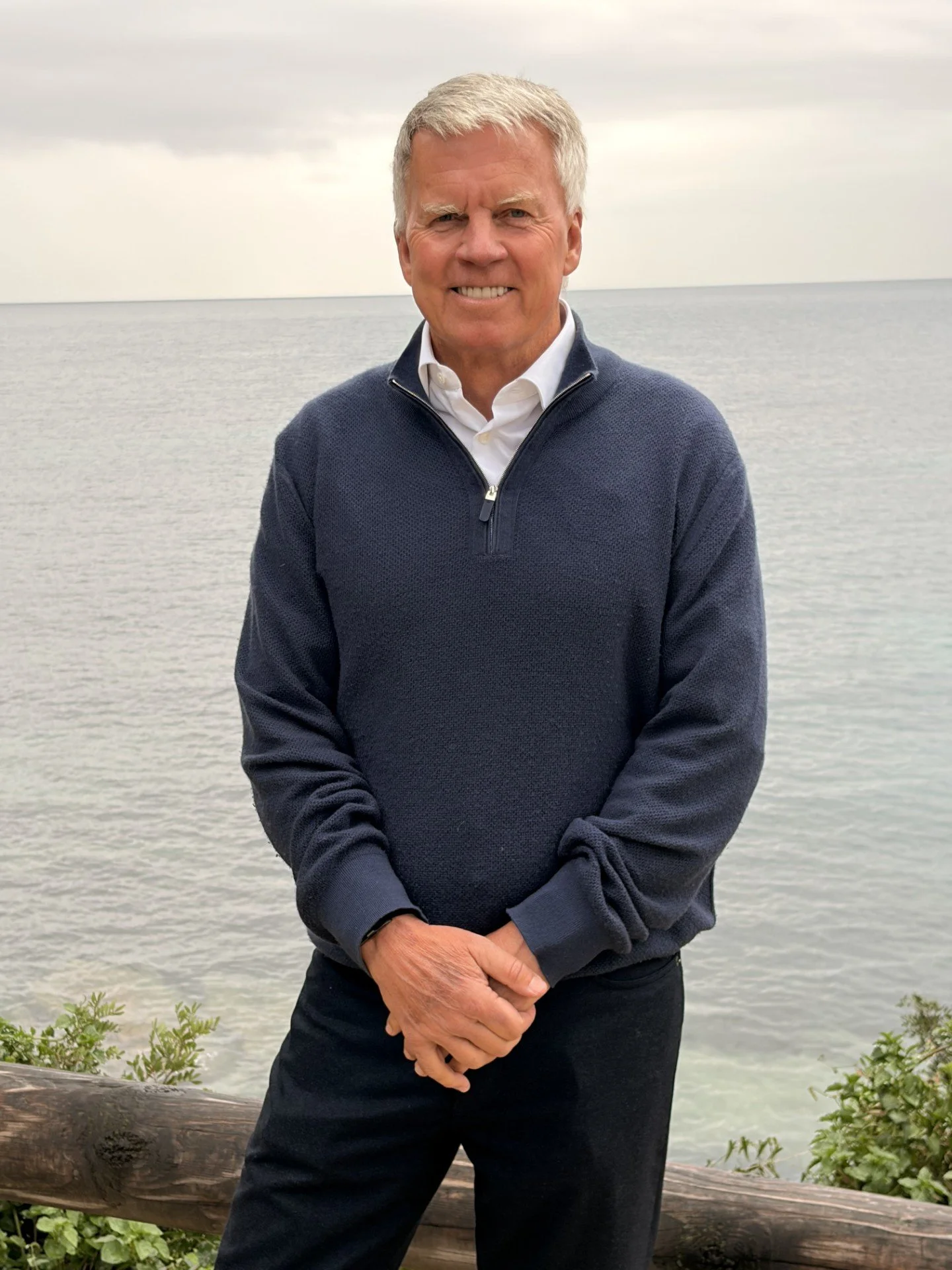
“Innovation is when you do something that truly has never been done before.”
Summary
What does it take to reinvent an industry while staying grounded in the human experiences that make it meaningful? For Ron Johnson, leadership has always been about challenging conventional wisdom and creating something people could not yet imagine. From transforming Target through design to working alongside Steve Jobs to build the Apple Store from the ground up, Ron has built a career around turning bold ideas into experiences that reshape how people connect with brands.
In this episode of Leadership Matters, Ron reflects on the lessons behind his most consequential decisions, from choosing retail over Wall Street to distinguishing true innovation from simple improvement. Our conversation explores how leaders can trust their instincts, build cultures around human connection, and create experiences that endure. Looking ahead to the age of AI, Ron argues that as technology makes information increasingly accessible, creativity, empathy, and lived experience will become even more important to how leaders innovate and connect with people.
Mentions & Resources in this Episode
Guest Bio
Apple Store creator Ron Johnson is a sought-after speaker, board member, and author of Shop Different: How Retail Revealed Apple’s Genius (September 22, 2026 / Harper Collins). He also founded Enjoy, the first mobile retail store, and served as the CEO of J.C. Penney. He is best known for creating the Apple Stores, working directly for Steve Jobs while serving as a member of Apple’s executive team. Prior to his time at Apple, Ron was highly regarded for the work he did with Michael Graves to bring good design to all as a merchant leader at Target; their collaboration set the stage for the brand’s hundreds of later design partnerships and cemented Target as America’s premier upscale discount retailer. Ron lives in the San Francisco Bay Area.
Episode Transcript
Alan Fleischmann
Welcome to Leadership Matters on SiriusXM and at leadershipmattersshow.com. I'm your host, Alan Fleischmann. I'm joined today by Ron Johnson, the visionary retailer who created the Apple Store as Apple's senior vice president of retail.
Ron worked alongside Steve Jobs to open the first Apple stores in 2001, at a moment when conventional wisdom said that the internet would put brick-and-mortar stores out of business. Under his leadership, Apple retail grew to more than 350 stores, welcomed a million visitors a day, became the most productive retail business in the world, and also introduced innovations like the Genius Bar.
Ron's book, Shop Different: How Retail Revealed Apple's Genius, shares timeless lessons on innovation, design, and building winning cultures rooted in kindness and human connection. Through his book, Ron makes the contrarian case that physical retail is becoming more important than ever.
Today, we'll explore Ron's early life, his career journey, his book, and his vision for the future of retail. Ron, welcome to Leadership Matters. I have been looking forward to this interview. It's such a pleasure to have you on the show.
Ron Johnson
Well, Alan, the pleasure is truly mine, and I'm here to answer any questions your listeners would love to get answered.
Alan Fleischmann
Let's do it. Let's start with your childhood in Minnesota. Tell us a little bit about what life was like — a little bit about your parents, any siblings, family life. Tell us about those early days.
Ron Johnson
It's interesting, and I'm glad you asked, because when you write a book, you're forced to reflect on what really influenced the decisions you made in your career and how you led. So much was impacted by my childhood.
I grew up outside of Minneapolis in a little suburb called Edina. It happened to be, coincidentally, two miles from the first enclosed shopping mall in the world. So the mall was invented two miles — a bike ride — from my home, and opened two years before I was born.
I grew up in the Midwest, lived in a neighborhood that was just filled with simplicity. I'd ride my bike to school or walk to school, play at the playgrounds, knew every neighbor. Our neighborhoods would play games against the other neighborhoods. The bell would ring when it was time to come home for dinner.
Just a great family — lovely mom, lovely dad, brother and a sister. I was a middle child. Just had a great experience. I went to public schools. I became a pretty serious athlete, and I was captain of my high school baseball and soccer teams. And from there, went on to Stanford and Harvard Business School. But it all started in Edina, Minnesota.
Alan Fleischmann
I love that. Was it a big family — a big extended family as well?
Ron Johnson
Not super big. My dad had two siblings. My mom had one, and not a lot of kids, so it was pretty much us plus some cousins. But we had a lot of friends that had big families.
It's so interesting how the world's changed. When I went to that school, it was all white, and we had a program called A Better Chance where we would bring in like 10 people from disadvantaged areas to go to the schools. But when I was back there doing a talk about five years ago, my elementary school speaks 38 unique languages. Isn't that amazing, how the world's changed in just a few years? That's for the better. But it's just changed.
Alan Fleischmann
Do you ever go back to Minnesota?
Ron Johnson
I do. I do. I was back last summer. I love the Twin Cities. Right now, I just don't get there as much. Both my parents passed away. Neither of my siblings live there, so I'll go to see friends, but it's not as frequent.
Alan Fleischmann
I just saw that the big house that Mary Richards lived in on the Mary Tyler Moore Show was on the market or something like that. And for anyone who was a little kid, as I was, we grew up always looking at Minnesota and the Twin Cities through Mary's eyes.
Ron Johnson
It's so funny — you just reminded me. I was on the board of Minnesota Public Radio for a while, and had a chance to go to Garrison Keillor's house. It's just a great city.
But Mary Tyler Moore — you never fear walking out. She could turn the world on with her smile, or whatever. Exactly. Kind of the theme for the Apple Store. I never thought of that.
Alan Fleischmann
There you go. See, that might be the subconscious signals of your life coming through.
Tell us a little bit — your dad worked as an executive at General Mills, right? I'm curious whether his role and his position at a brand that was such a household name influenced your thinking a little bit. And your mom?
Ron Johnson
My dad, believe it or not, didn't love business. He was a legislator at age 25 in the Minnesota legislature, chief of staff for a congressman. He loved politics. But back then in Minnesota, everyone volunteered. All the corporate leaders volunteered on the nonprofit boards, and someone at General Mills thought my dad was very strategic. So at just under 40, they asked him if he'd like to be the head of strategic planning — vice president of strategic planning for General Mills. And they were acquiring a lot of companies back then. So he went to work there, and he worked there for about 15 years.
But he will tell you, he did that more so he could get enough money to send the kids to college. That wasn't his first love.
However, I did admire some of the people I met. My parents would throw these parties, and we'd get to bartend and meet the folks. That was my first exposure to business. And I did decide, coming out of college, to go to business school and pursue a business career. So it probably had some impact. But my dad wasn't a lifelong business leader in any way, shape, or form.
Alan Fleischmann
You've got to go into business — you've got to do it.
Ron Johnson
Yeah, he was good at it. But it wasn't his passion.
Alan Fleischmann
And what about your mom?
Ron Johnson
My mom was a stay-at-home mom. She had been a nurse, and was a very active volunteer. She just kind of was super active. She'd wake up early and go to bed late, and she ran all day long — taking care of the kids, volunteering, taking care of the family. Just a wonderful woman.
Both my parents lived into their 80s, which isn't bad, and I was able to be with them both when they passed away, which was a gift. My dad and I would chat on the phone twice a day the last decade of his life. On the way to work and on the way home, I'd give him a call, and we'd chat for 20 minutes each way. It was fun.
Alan Fleischmann
That's amazing. So you said before that you grew up just a couple miles away from the country's first indoor shopping center.
Ron Johnson
Yeah, the first indoor mall, where you had a big common area, skylights, a couple department store anchors, specialty stores. It was called Southdale Mall, and it was the original one. It was formed by one of the Dayton family. Dayton's was the department store, and somehow one of the Daytons had an imagination that wanted to build — because Minnesota had really cold weather, and someone did a study which said there were only like 172 great shopping days a year. So his idea was, what if you could shop year-round? And so they put an indoor mall together.
There were a lot of outdoor malls coming on. Most shopping then was on streets and in cities. People were aggregating, doing outdoor malls. Chicago still has a lot of beautiful outdoor shopping malls. Parts of New York have that. But this was the first enclosed center, and we used to go there all the time. Shopping was a big part of my life. I just loved being in stores, and so many of my first memories were in stores.
Alan Fleischmann
That's so cool. And did you ever work at the mall?
Ron Johnson
I didn't work at the mall, but I worked at a sporting goods store that was off-mall when I was in high school, and I loved doing that. I got to help with ice skates in the winter and baseball gloves in the summer. I liked the baseball gloves better.
Alan Fleischmann
I bet. That's very cool. Any mentors in high school?
Ron Johnson
I wouldn't say so. I don't think mentoring was a huge deal back then. It seemed to me, as I recall, even getting into college — I applied to two colleges. I applied to Duke and Stanford. Now, the admissions rates were a lot easier back then. I think Stanford was one in 10. Duke was probably similar; I don't know that. So there wasn't the pressure to get started on your career. I didn't have mentor programs at that time at all.
But I did develop some mentors when I came out of business school, and they had a big impact on my life. It wasn't until my mid-20s that I had mentors.
Alan Fleischmann
But even at Stanford, you didn't?
Ron Johnson
Advisors, and academics. But I was playing sports, doing stuff. I wasn't one of the super serious students.
Alan Fleischmann
Did you like —
Ron Johnson
Stanford, like a lot of the Ivies, especially today, had high grade inflation, so it was easy to graduate with a 3.7, nearly a 4.0. I was an economics major; that came pretty easy for me. But I don't think I was a real serious student. I studied, but it wasn't like I was there to learn. I was just there for the experience.
Alan Fleischmann
That's cool. And did you like Stanford?
Ron Johnson
I did. I loved it. I was a trustee for 10 years. I've been a volunteer at Stanford for years, and vice chair of the healthcare system.
One of the great things I got to do is, in 2008, we decided we had to build a new hospital. They actually called Steve Jobs — because I'd worked for Steve — and said, "We love the stores. Could you help us design the hospital?" And Steve goes, "You've got the wrong guy, but maybe Ron will."
So they called me, and I got a chance to get involved very early on, help pick the architect, Rafael Viñoly from New York. You might know Viñoly. He's done a lot of beautiful buildings. I worked with him, and I got the chance to work on that. I probably spent 10 hours a day for many years helping create that hospital, which was really a thrill. So I'm very connected to Stanford still.
Alan Fleischmann
I think that's very cool. The incubator of entrepreneurship, I'm sure, got into you, because I always think of Stanford among most universities as the most entrepreneurial.
Ron Johnson
It absolutely is, and it was when I was there — but it wasn't near what it has become.
Alan Fleischmann
Did you go right from Stanford to Harvard? Because they're very different.
Ron Johnson
No, I worked for two years back in Minneapolis in a consulting firm, and then I went to Harvard Business School. But it was kind of expected back then. I think a very high percentage of the undergrads would go into grad school — either law school or business school — and that was kind of your educational roadmap. It wasn't even a question. It was just sort of which school you might go to. We were deferring our career decisions until after our professional school or graduate school back then.
Alan Fleischmann
That's cool. So tell us a little bit about any highlights from Stanford that, when you look back, were such a big part of your great success at Apple.
Ron Johnson
I'd say it was a failure.
I was a high school All-American soccer player, believe it or not, and I went up to Stanford, and we had a very good team — not as good as it is today, but we were a good team. I started every game my freshman year as a forward, and I loved it. But then after my sophomore year, I decided to quit playing soccer. I just lost interest. And I was a good college player. I wasn't a great college player.
One of the lessons — I wish I had stuck with it. A lot of my friends: I'm going on a bike trip next week with a lot of friends from my team, and they stuck with it. Some played professional soccer. It was one of the first times I just walked away from something I had a certain skill for, and I wish I had pushed harder.
That was one of the lessons. When I went to Stanford, I realized there are all these really talented people, but people focused, and they were really good at something. And I was kind of a generalist going through Stanford. I was volunteering as a resident advisor in freshman dorms, I was in student government, and I was just kind of all over the map.
The lesson I learned is, if you want to be really good at something, you've got to focus, and you've got to go all in. Quitting the soccer team after two years was kind of a lesson in: you've got to be more resilient, you've got to work harder. I think that was a big takeaway.
Alan Fleischmann
That's very cool. And then the whole time you were at the consulting firm — tell us a little bit about that. Was that like your way station?
Ron Johnson
It was a great experience, and I learned a lot. I did a lot of financial feasibility studies for companies. That's what my practice did, and we did that for healthcare, for hospitals, for a couple retailers. Some new startup retailers was really fun. So I had a very good experience. But I knew it was a two-year limited experience.
I got promoted really quickly. I was good at it because I worked my tail off. I was pretty smart, but more importantly, I just worked really hard.
But I'll never forget one night — I'd just got promoted after a year. I was up at four in the morning in the tallest skyscraper in downtown Minneapolis, the IDS building, looking out and thinking, "I've made it." And I felt so on top of the world. Then I realized: what have I made? All I did was get promoted.
It was kind of an eye-opener where I said, I haven't done anything yet. I just went to Stanford, I got a summer job, a job for a couple years, I've worked my tail off, and I got promoted. That's not an accomplishment.
It's funny how you have these moments where you realize there's something more significant in the world than a promotion. It's really what you spend your lifetime doing.
Alan Fleischmann
I love that. And as you were going along, after all these experiences, were you starting to realize that there was something that you knew you wanted to do?
Ron Johnson
It came to a head at Harvard Business School. At Harvard Business School, I went to Salomon Brothers in the summer.
Alan Fleischmann
Okay.
Ron Johnson
Then it was time to get serious. What do I do for a career? I interviewed with the investment banks. Had an offer in Goldman's M&A group. Back then, it was kind of a hot job.
But I decided the people I admired most — mainly these CEOs that would come through Harvard Business School and sit in the classroom — they had spent their entire career in a single industry, and they had become kind of experts. They had become really good at it. And I looked at the people I admired, whether it was painters, athletes, musicians. They were all really good at something.
And so I decided that I would pick the retail industry, because I love stores. I would go out and put my head down, and I would start at the bottom and work my way up, and I would then know exactly what it felt like to work in a store and serve a customer.
So my first job out of Harvard Business School, instead of going to Goldman, was at a little West Coast retailer called Mervyn's, which was really good at the time. I got to unload trucks and stock the stockroom, and then I got promoted to organize the men's floor and move the merch, and I got to be in charge of the cash wraps. It was kind of fun. And then I went to headquarters and did distribution, and then I got to be a buyer. That eventually was the beginning of my retail career.
But the beauty is, I just thought retail is a young person's business. It's a meritocracy compared to almost any industry. If you have stores — if a company like Target has 2,000 stores today, the one that's running the biggest increase to last year, that leader is probably doing a pretty good job. Same with an Apple store. There's a report card every day. It's kind of like playing sports. You get a sales report, and you can move stuff around. You can change how your people interact with customers.
I just felt like, if I put my head down, that's an industry I could love for a lifetime. And I did.
Alan Fleischmann
I just wrote an op-ed where I referenced for the first time that I sold cheese from the age of 15 to 25 — in between high school and college and graduate school. So much of what I learned in life was selling things and figuring out the best way to authentically position, remessage. Things like that you just don't get unless you have a love of people and a love of retail.
Ron Johnson
There's an art to it.
Alan Fleischmann
There's nothing to it, and there is —
Ron Johnson
You walk by all these stores, and some — no one's in them, and some are packed. And what's the difference?
Alan Fleischmann
Or you walk into a store and someone says, "Just let me know if you need anything," versus overly engaging with you, so you feel spooked enough to leave. Or you walk in and someone starts to tell you a story as they watch you admire something — and then tells you a story that makes you feel, I've got to buy this, or I've got to buy this from them, because I've invested too much time with them, I've got to do it. But with that person, you just walk away with that sense of not only the what, but the who.
Ron Johnson
Well, that's one of the messages I share with people. We're in a largely digital-first world now. Most of our first shopping happens digitally, whether it's online or Instagram or TikTok or whatever. But rarely do we make a memory out of the digital experience. Those moments when we're scrolling or doom-scrolling — ah, we just did that for an hour. But there's no memories.
Whereas when you go to a physical store, a great salesperson, a great store, turns a moment into a memory that becomes a brand-building experience. That's really the power of stores. We've yet to find any online experience that can come close to matching the magic of an in-store experience. That's part of why stores have survived and thrived with the onset of online shopping.
Alan Fleischmann
People also want to see something. You don't get the ideas as easily when you're looking online. But if you're walking into a food market, or you're walking into a Costco or a Target or you name it, you're walking through those with the idea: oh, I didn't think — maybe I do want to buy that. I didn't know they offered that. We should do it.
Ron Johnson
Couldn't agree more. I was in New York this weekend, going through a great summer market at Union Square, and we were looking for tomatoes to make BLTs. The number of choices of tomatoes was just magical. The heirloom tomatoes were in season, so we were looking for those. And then you get down to yellow, red, yellow, red.
I'm not even a big tomato shopper, but it was so much fun to explore that environment — and to give that up to just order some tomatoes online and have them dropped at the house. Now, some people like to do that. There are a lot of people that just prefer to shop that way. But for most of us, there's something special about that in-person experience.
Alan Fleischmann
Well, you went to work with the Dayton family for a while. But when Target — before Target was a phenomenon that was supernational — when you went from, I guess, Dayton Hudson acquired Mervyn's, but that wasn't why you went to Target.
Ron Johnson
No, no. I went to Target — I'd been at Mervyn's for five years, and at that point in time, it was really clear Target was going to be their growth vehicle. And I'd grown up in Minneapolis, so it was pretty easy to say, "Let's go there."
It was a really great decade. I started in 1990 as a toy buyer. That was when the discount industry was 20 years old. Target, Walmart, and Kmart all opened the same year, 1961. There were 10 regional discounters, but it was really clear it was coming down to two. It was going to be Target and Walmart, and they were heading into a big battle, because Walmart was going from rural locations to suburban. So they were coming head-on for Target, and I just thought it'd be really fun to help Target try to compete with Walmart.
A lot of people have thought of Amazon as a pretty good retailer for the last 20 years — like everyone's got to try to compete with Amazon. Walmart was that in the '80s and '90s. They were by far the world's low-price, low-cost, efficient supply chain, lowest-price retailer, with dominant assortments and a really good service model. People loved Sam Walton. They loved the culture of a Walmart store. So I went to Target when Target was in this really head-to-head matchup with Walmart.
Alan Fleischmann
Did I lose you?
Ron Johnson
No, I'm here. Can you hear me?
Alan Fleischmann
Yeah, I hear you. The Target versus Walmart. Good.
Ron Johnson
That was the start of the real decade when Target and Walmart went head to head in every market.
Alan Fleischmann
And then you became the vice president for merchandising at Target.
Ron Johnson
I was one of the leading — I wasn't the head of merchandising, but I had big areas of the store. At one point, I had most of the home area. And that's when I had this big idea.
Alan Fleischmann
The Michael Graves idea, which was huge.
Ron Johnson
That was my idea. I was in London one day, and I kept thinking about how Target could move from just being different to being the best, preferred by everybody.
The home area was trending. In the malls in the '80s, they were dominated by apparel retailers like the Gap and the Limited. In the '90s, it was Pottery Barn and Crate and Barrel and Williams-Sonoma. So home was trending. And I had this idea: what if good design didn't have to be expensive?
It was just funny. On a trip to London, it was raining. I walked into a little store during a rainstorm, and I saw this tea kettle with a whistle on it, and it made me smile. It was 100 pounds — almost $150. And it was made by a company called Alessi, but designed by an architect named Michael Graves.
I just asked, why does good design have to be so expensive? Tea kettles are $10; this is $150. And then I realized, it's just sort of positioning. What if Target won on design? What if we got a real designer to design a product that we then sourced or had manufactured for Target?
That became the first-ever collaboration. Michael Graves said yes, and we did 140 products at the time, and it worked. Target really reinforced the idea of “Tarjay” as a pretty cool place to shop.
Alan Fleischmann
I remember when that happened.
Ron Johnson
You remember when that came out?
Alan Fleischmann
So vividly, because it was such a big deal. It really made everyone think, you can do the cutting-edge creative and be proud of your design and what you were buying, because of that Michael Graves partnership. It was a big deal. Really big deal.
Ron Johnson
It shows the power of innovation. It was such a novel idea at the time. I think we forget. It's kind of like the Apple stores when they came out — they kind of broke through. What is it? It's so open. But the Graves thing was so unexpected. What's a discount store waiting on design for?
And then when they walked in and they saw the presentation, the packaging, and the storytelling — and the products were really high quality. There were no shortcuts on those products. I think people were blown away that you could do that. It had a huge impact on Target, but it had a huge impact on the world, because today these collaborations happen every day. You walk by, there's a new collaboration, so-and-so with so-and-so. It's a big way that retailers compete and manufacturers compete.
Alan Fleischmann
That's wonderful. And I think 100 percent, when you think about all the things you did later, I can totally see what you did here. I can see how that became — it was the first ever. That's a really cool first ever.
So the Graves collection became a template for many, many other designer partnerships that you did.
Ron Johnson
Yeah. Target has a book, 25 Years of Design. I think they've had well over 200 collaborations now. The Graves one, though, is different. It wasn't a temporary pop-up. It was a permanent collection, and it lasted for a good decade. And then, for whatever reason, the Target people — Michael passed away, unfortunately. Maybe that had an impact.
Target doesn't do the Graves stuff anymore. You can still buy it at MichaelGraves.com, and a lot of the items are there. But it was the right thing at the right time for Target.
Alan Fleischmann
Right. Polish and luster that it would never have had, had you not done that. And this idea that you can make something elegant, affordable.
Ron Johnson
Exactly. That was the whole idea.
Alan Fleischmann
Very cool. And then I guess that led to — now we're in 2000, and you joined Apple. Tell us a little bit how that happened.
Ron Johnson
Steve had come back to Apple in '97, and he launched a great product working with Jony and others at Apple: the iMac, which became a cult hit. It was the cover of Time magazine, but it didn't change the game for Apple.
Steve realized their weakness was their go-to-market. They had these beautiful products, and it was the ease of use that would happen from the software, but no one understood it. And he thought if Apple's going to win, it had to control the buying experience. So he wanted to open stores.
But this was running up into 2000, when Dell's winning, selling PCs custom-configured online. Gateway's closing its stores that serve the PC. So the Apple board was pretty split on whether it was a good idea. One of the board members left because Steve wanted to open stores.
But he wanted to talk to me because I had done design at Target, and he loved design. So I met Steve, and we spent three hours the first night just chatting about life and retail. Two weeks later, he offered me the job. And after a lot of thinking, I made the decision to join Apple to open the stores with him.
No one thought it was a good idea when I did it. "Why are you going to Apple? That company is not going to make it. Why would you want to work for Steve? He fires people in the elevator." All that stuff. But I had spent three hours with him. I felt like I knew him well, and it turned out to be the best decision of my career, where I took a chance on a company, on a person, and was given the chance to do something really original, which I loved doing. I loved doing that at Target, and the Apple Store was a chance to invent a retail strategy from the ground up.
Alan Fleischmann
And you really like being a salmon swimming upstream — because it wasn't the thought of the day. It was the opposite. This idea that you were opening up retail was just not —
Ron Johnson
No one thought it was a good idea.
Alan Fleischmann
Especially internally. They didn't think it was necessarily smart either.
Ron Johnson
No. Well, there were a lot of people that trusted Steve, but they thought, Apple's just got out of almost being bankrupt. Retail takes a lot of capital. If we can continue to create great products, we'll get our way out of this.
And a lot of people didn't understand what a retail store could be. They saw technology retail as a little store on a strip mall. They didn't have the vision that we ended up delivering. Once they saw that, they understood: wow, this could be game-changing. But until you created it, no one knew.
Alan Fleischmann
You had to see it to believe it and understand it. And if I'm not mistaken, the first stores were 25 years ago, literally.
Ron Johnson
It's exactly 25 years ago, last May 19th.
Alan Fleischmann
I'm in Washington. Tysons Corner was number one.
Ron Johnson
In many ways, that was number one. It opened three hours before the Glendale store, which opened the same day in L.A. But both those stores opened the same day.
Once they opened, I knew the stores had the chance to be great, because customers loved the experience of being in the store. It was like something they'd never done before.
That first day, I'll never forget. I called Steve about a half hour before the store was opening. I said, "Steve, I think I blew it. Nobody's here. There's 30 people in line." I didn't want to advertise. He figured they'd come — be patient. And a half hour later, there were over 1,000 people in line. People just figured, I'd come when the store opens. No one expected the line, but there were a lot of people that had the same idea. That first day, I think we saw 7,000 visitors at each store.
Alan Fleischmann
Were you physically at one?
Ron Johnson
Physically at Glendale. I was at Glendale. Some other members of my team were at Tysons, so I knew Tysons was busy. But that's one off. I'm now in Glendale. Very few people are there — and then they came out of the woodwork, and they came from all over the world. We had people that flew over from places in Europe to be at the first Apple opening. It was a great moment. One of those great days.
Alan Fleischmann
The Genius Bar started because that was something that Steve didn't think was a great idea, if I recall.
Ron Johnson
Well, he loved the idea of delivering service from a bar. The idea was, if I go to a great hotel and I'm from out of town, a bartender is a friendly person. It's a comfortable place to be, and they can dispense any drink you want. And we were trying to demystify technology. So imagine if getting help with technology, which creates a lot of fear, could be as enjoyable as getting a drink at a bar — but we would dispense advice. That was the idea behind the bar.
Steve loved the bar. He didn't like the name Genius Bar, because he thought that a genius —
Alan Fleischmann
That distance made people intimidated.
Ron Johnson
A little intimidated. But he also didn't think we could find people that could talk to people. He said, "If you want to call it the Geek Bar —" He goes, "All tech people, they're really geeky, and they're not going to be funny."
Alan Fleischmann
But you didn't pick tech people, if I recall. You picked people who were from bookstores and hotels.
Ron Johnson
Bookstores, hotels, grandparents.
Alan Fleischmann
Hospitality. Interesting. You chose not to do the tech people.
Ron Johnson
No, I didn't want that, because the technology you can learn. You can't learn to make a personal connection with somebody. That's a gift. You can't train that.
You either love being on your feet all day serving people — and I knew that from working in stores — or you don't. We had to find people that love people and were interested in technology, and then we would teach them the technology. That was kind of counterintuitive, but something I wanted to do.
And I knew we didn't want salespeople either. I didn't want a culture that was like someone's trying to get in my pocket, trying to hurry me to make a purchase. I figured it's going to be a long pull to get someone to buy a Mac. It might take three, four, five visits. So don't be in a hurry. Just create a great experience. They'll come back. We're in the mall. And eventually they will buy. And they did.
Alan Fleischmann
You had this other brilliant idea, which I love — I just experienced it the other day — where you don't have cash registers. You eliminated that. You had mobile checkout, which may have been among the first in this country. And the idea that the employee can create this relationship with the person at the store and stay with them from start to finish.
Ron Johnson
Yeah, we did that, I'd say, about a decade ahead of the retail industry, because we had portable devices like the iPod Touch we used. So we had a device we could do that with. We were the first to do it in a retail store.
But I remember, when I would rent my cars when I was commuting or traveling for Apple, a lot of times there was this device that the rental car companies used. It was a Symbol device at the time. It was kind of clunky, but you didn't have to go to a counter to rent a car. It was mainly checking in — you'd come back and they'd check you in with it. And I thought, wow, maybe we could do that. So we figured out, after a couple years, how to do that, and it was a breakthrough for Apple.
Apple couldn't have managed the phone and the iPad launches without mobile checkout. Think about it. When we launched these products, we'd have, like in New York, thousands of people in line, and if they had to go through a checkout line, it would have never worked. But when we launched the iPad, we basically had 300 employees working that day, each with their own checkout device, and we were ringing 300 iPads a minute.
Alan Fleischmann
Wow!
Ron Johnson
Imagine a store with that much checkout capacity. Even today, you go buy some of these Whole Foods with like 40 counters. We had 300 people checking out simultaneously a $1,000 device at an Apple store. Isn't that amazing?
Alan Fleischmann
That's amazing. So you were there and did this, and you were like — you were the CEO of a major part. I would argue. It wasn't your title, I know, but a major part of Apple. In many ways you were the CEO of your division, of your world, but you also were the entrepreneur within it. This idea of creating and recreating, designing and redesigning, was a big part of your leadership DNA, I imagine.
Ron Johnson
It was. But the way Apple was run, Steve was the CEO, and all of us were privileged to work with him. I never thought of myself as a CEO within Apple. I was kind of the head of retail, and I was the guy Steve would look to when he counted on someone to lead the stores. I got to create that with my team, to build the team.
When I left, we had 60,000 retail employees, and so many of them are still there. It's really a delight. I was over in the Williamsburg store Sunday, yesterday, and I've probably met in the two days there five, six employees who worked there when I worked there. And I'll be in stores in the south of France, and there'll be 15 people who worked in different stores when I was there.
So at Apple, I led the retail group, but I wouldn't consider myself the CEO. I mean, I was responsible, but there was one CEO at Apple when I was there. That was Steve.
Alan Fleischmann
When you left for J.C. Penney, Steve had already passed away, though, right?
Ron Johnson
Steve had passed away literally a month before. On October 5. I started November 1.
Alan Fleischmann
Was that part of your thinking to leave?
Ron Johnson
What happened was, I had been at Apple a dozen years. I was turning 50. It had just become too easy. Every store we opened was bigger and better than the last. It was like a hobby. And I figured, if I was going to do something again — I really love creating things — it'd probably take a decade. I should think about doing something. And so I ended up picking J.C. Penney, and we can talk about that if you like.
But when I was going to be announced, Steve called me in to say, "Ron, when are they announcing?" I said, "In three days." And he said, "Well, then I'm going to tell you — I've got six months to live, and I'd love it if you could stay till I pass." And I said, "Oh, I can do that, of course."
And so then they announced that I was coming, but I wouldn't start for six months, and that created its own complexity. But that's what happened there.
Alan Fleischmann
Well, devotion and loyalty there as well.
Anything about the J.C. Penney experience? Because you had such a triumphant moment at Target for that long breadth of period. Then you had an amazing invention there. You took on a pretty tough cause.
Ron Johnson
I think I did. If I had just treated it like most people would, just run J.C. Penney, it would have been —
Alan Fleischmann
Easier.
Ron Johnson
It would have been an easy non-event.
I kind of had the attitude that the department stores are on the way out. There had been 60. There were now four. Nobody was shopping them. They're going down every year. Market caps are going down. But they had real low-cost leases. If we were willing to transform and rethink the whole buying experience to get younger families to again want to shop department stores, maybe we could create a model that would work for the next 100 years, because Penney's was 100 years old.
So I went to try to reimagine the experience of shopping at a department store in the U.S., especially at Penney's. And it turns out I was kind of alone in wanting that. That was where I got a little misled by the board and by the CEO who was there. They said the team really wants to win and change. They didn't.
Alan Fleischmann
A 100-year-old culture to change, more than anything else.
Ron Johnson
The culture needed to change first, before we transformed the stores, and I didn't have the wherewithal to really see that. Because I'd worked at Target — it's a big company, but we loved innovating on the product side. And Apple loved innovating. Steve wanted to do what's next, and the bigger the idea, the better.
But at Penney's, they were pretty comfortable with how they competed, and they didn't see a need to change. And so, who's this guy? No one saw me as a retailer. I spent more time in apparel retailing than technology retailing, but they thought I was the Apple guy.
And then the big surprise to me, Alan, is that I thought it'd be under the radar no matter what I did, because no one was thinking about Penney's and Kohl's, those kind of companies. But it somehow became a big story: the Apple guy going to J.C. Penney.
Alan Fleischmann
Well, it looks like the transformation of what Apple represented and the innovation that Apple represented was going to be, I guess, the ticket for ordinary, old-fashioned retail.
Ron Johnson
That was the hope. I didn't anticipate that, but I can see where the Penney's board knows: I've got to replace this. I've got this tired retail. The Apple Store is the darling of the mall, of world retail, and that guy wants to come help us. That sounds like a pretty good recruiting job by the Penney's people.
But they didn't really know what they were getting into, because I don't think they understood how much change I would have the courage to do. It was way more than they expected.
Alan Fleischmann
Sometimes people want to believe that they're part of the change, but they're not.
Ron Johnson
It's just hard. One of the big things I've learned in life is there's a big difference between improvement and innovation.
Innovation is when you do something that truly has never been done before. It's like when Steve and the team at Apple reinvented the smartphone. That was an innovation. The iPhone was an innovation. To redo J.C. Penney — the pricing, the layout, the merchandise, whatever, to create a whole new buying experience — was an innovation.
But most companies improve. And what improvement is, is you see something someone else has done, you bring it to your company, you deliver it, and you feel like I'm innovating, but I'm basically competing. I'm improving. And that's a good thing to do, but to most companies, that's what they think innovation is. Like bringing mobile checkout to a store 10 years after Apple — that's a good idea.
Alan Fleischmann
But it took 10 years for others to do it.
Ron Johnson
Ten years later, and you're just improving.
Alan Fleischmann
The idea of improvement versus innovation — I've never thought of it that way. But there are lots of things one can do in the improvement lane. But if you're really trying to seek and adapt and adopt transformation, that's true-blue innovation, and that's not going to be led by information or by traditional improvements.
Ron Johnson
It's not going to show up in ChatGPT. So the example is like the Michael Graves thing you brought up at the beginning. You remember when it happened?
Alan Fleischmann
I remember exactly when I first went. I can still vividly remember being in the store for the first time and being so excited. It made me proud to be able to buy these things. I was young in my relationship with my wife — not married yet. Actually, I don't believe we were; if we were, then we were early married. But we were able to buy some beautiful things, and it was such a cool thing to do.
Ron Johnson
And that moment you experienced there is what I wanted to do for the Penney's customer. I wanted people to rediscover the fun, the thrill of shopping again, and discovering these beautiful things that they didn't know they had access to. That was going to be the innovation there.
Alan Fleischmann
That's the thing that I'm going to get into with your book now — because you talk in your book about something you just mentioned, which is, I've always believed, you said that you shouldn't just be in places to buy something. Spaces where people can learn, connect, and have positive emotional experiences are the ones that actually can be more than just bland kind of improvement experiences, but actually transformational experiences. Innovation.
Ron Johnson
And we see them. We see them in restaurants — the restaurants you go to where you feel different. You find it in hotels. You find it in some great retail stores. But that's the goal: to do something more than a store.
Alan Fleischmann
Tell us a little bit about that book — the origin of the book, the timing. I guess it's the 25th anniversary.
Ron Johnson
It is the 25th anniversary of our first stores, which to me was a great reason to write it now. I also wanted to get away from it enough that the real lessons would settle in, and there'd be no emotion. It's more just telling, from a real deep reflective perspective, what happened, what made the story special from my perspective.
And I loved writing the book. It was really fun. I wrote it with a co-author, a young kid named Zander, who I met at age 28, and he wanted to help. And I said, "Let's go do this." He'd never written a book. I'd never written a book.
He reached out to me and said, "Hey, I wrote a post on Medium." He was a sales guy at a business. He said, "I love writing. I think you've got a story to tell. I'd love to work with you on it." So I ended up playing a round of golf with him, because we both love golf. And I said, "Let's just try a chapter."
So we worked together for like a month and wrote a chapter, and it was pretty good. And I said, "You really want to do this?" He said, "Yeah." I said, "Okay, let's go do it." And then I got an agent, we did a proposal, and we got a publisher, HarperCollins.
Alan Fleischmann
Did you do the proposal and get to HarperCollins after you wrote the book, or as you were writing?
Ron Johnson
No, no, early on. Because the reality is, the proposal outlined a chapter outline, a sample chapter, but that's about it. Because we didn't want to go through all that effort if there’d be no interest in the book. Because you can self-publish, but those books rarely do very well. So the perfect way to go to market is to get one of the big publishing houses, like a Simon & Schuster, HarperCollins, to say, "I'll get behind that book," and so you have a chance for it to get read by people.
Alan Fleischmann
It's an amazing time to be running this book. People keep talking about how AI is going to automate more of our experience, and that brick-and-mortar will suffer — retail won't be the one it is.
I actually agree with your argument, which is because of trust and empathy. I just recently wrote about the five Qs — trust quotient, work ethic quotient, EQ and IQ, but also vision quotient. Those five Qs are going to matter more in this new age of AI. And I think the biggest beneficiaries of that are going to be people like you, who understand the importance of trust, empathy, understanding, but also that the human-to-human connection is going to become so much more important.
Ron Johnson
I agree with you, Alan. I agree completely.
I think what people don't realize — they feel like online shopping's still new. We've been shopping online for 30 years.
Alan Fleischmann
And the catalog business before that, right? I mean, the Sears catalog was online shopping of sorts, too, right?
Ron Johnson
Right, right. But we all kind of figure out, each of us individually, what I like to buy online, what I like to go to stores for.
So AI is going to improve the online experience and the physical experience, but I don't think it's going to change one iota where we shop. It'll change how we shop. You'll have an agent that'll help make the website easier to navigate. That's a great thing. But if I love to go to stores to pick up, to try on something, I'll continue to do that.
I think it's a settled question, the whole online-physical omnichannel thing. And it's very clear all the smart money is betting on stores and not digital shopping. Today all the capital is going behind stores. Think of all these VCs doing all these DTC brands and all the activewear brands, and Kim Kardashian's Skims. It's all about retail.
Alan Fleischmann
I went yesterday — my daughter's going back to college, and my wife and she were going to go to Costco and Target, and they didn't expect me to want to go. And I said, "I'll go with you." And I went, and they were laughing, because I was running around Costco and Target, filling up the baskets with things for me.
I was so struck by the fact that, if I hadn't physically been in the store, I wouldn't have known those things existed, or that those products — and looking at the ingredients — were like, this is pretty amazing. I'm buying things I normally would have bought, but not at the level that I would have bought there. It was fun, and it was filled with diversity and people, and everyone was so nice.
And I kept thinking about our interview today, and I was thinking about what this might do — AI might even make people be more like what you invented in 2001, which is, you hired people who had empathy, you trained people to lean in personally. And it might create a whole new level of sales, of people coming in with an idea that the human-to-human transformational experience is going to be more important than ever.
Ron Johnson
Well, that's my sincere belief. Basically what AI has done is, it's made the common knowledge in the world — whatever is knowledge is a query away, right? So we've all democratized common knowledge. You don't need a college degree to get the answer to any question you want.
So what you bring to the world is your own lived experience, your own inner voice. And that's the magic. But it's always been the magic. It was my inner voice that brought design to Target. It was my inner voice combined with Steve's inner voice that created the Apple stores. That's where the world lives.
But now we should have more time to connect, to listen to our inner voice, to bring new ideas to life — because it's so easy to get to the common knowledge. So I think it's going to usher in a period of unmatched creativity, unmatched human connection. And the demographics are already moving that way, because we've hit peak screen time. I really believe we've hit peak screen time on our phones, and that's starting to go down.
Alan Fleischmann
So when you see malls in America where they've had big anchor stores disappear, you're thinking that those malls will fill up again?
Ron Johnson
Yes. Good malls are filled. So for example, the biggest operator in the U.S., Simon Property Group — they just released their earnings. They had 96 percent occupancy, an all-time high. Their rental rates are at an all-time high. Their average lease is five years. Well, that means 20 percent of the stores turn over every five years.
Retail's like that. It's got a heartbeat. Tired retailers go away. New retailers come in. But the malls are occupied. There's more food, there's more this — but it's a dynamic business that keeps surviving.
Now, the big tired malls: we had so many extra malls built in the '90s that a lot of those are being repurposed. You're seeing big fitness things, apartments, different things to repurpose the physical retail. But it's not that retail doesn't work; it's that we were overstored. Now we're back to the right number of stores in most markets.
There'll be changes in stores, but if I were a betting person, I would bet on more. I'd bet on physical retail before I'd bet on online retail today.
Alan Fleischmann
I love to hear this. It's so funny to me. You have no idea. And I really want people to read your book.
I just want to remind people about the book, because it's not just telling a story in a biographical sense. There's so many lessons learned in this about the courage and curiosity experience, and that innovation is not just about information or improvement, as you describe, but actually how you use your vision to curate — not just create, but both. So it's called Shop Different: How Retail Revealed Apple's Genius.
And Ron, as we're closing this up — and I'm upset that we're closing this up, so we may have to do a part two — but after a lifetime of loving retail and being an inventor of retail, which gives you such joy, you can hear it on this interview: what advice would you give to young people who are hoping to follow your career path, and what kind of skill set do you believe that retail needs today? As someone who's just young in their career, in particular, and is looking at options — you chose not to go to Wall Street. You chose to do something that was much more focused on what you became a leader in. I'm just curious: what would be your last bit of advice to a young person embarking on their career?
Ron Johnson
I'd say retail is hard. It's a lot of detail. To deliver a great experience, you've got to get the location right. You've got to get the store design right. You've got to get the merchandise right. You've got to flow merchandise right. You've got to understand how to price merchandise. You've got to know how to hire people, select people, keep them in stock, trained, and loving their work. You've got to know how to take care of customers.
But that's kind of the fun of it — that there's a lot of detail you have to do.
So I would recommend, if you want to do retail, spend a lot of time in stores. Become a student of stores. Now they're all in front of you. I still do it. If I get to London, I'll walk four or five miles through the same path I used to do when I was working, just walking through the stores, looking at them, seeing how they've changed. It's all out in front of you. You can learn it.
And then trust your instincts. Just like I always did in my career. Kind of understand what it takes, but trust your instincts, and create something that people would love. Imagine what you would love and deliver that for somebody else, and the odds are you'll find a pretty big market for it.
Alan Fleischmann
That's so cool. Well, with that in mind — you've been listening to Leadership Matters on SiriusXM and at leadershipmattersshow.com. I'm your host, Alan Fleischmann.
We just spent the last hour with Ron Johnson, creator of the Apple Stores and author of Shop Different: How Retail Revealed Apple's Genius, on the 25th anniversary of the opening of the first Apple stores. We discussed his early influences and remarkable career — but not enough. I hope we'll have you back on, Ron, so we can talk more about the future of retail, especially in this age where we're being overwhelmed a little bit by the non-human-to-human connectivity, so that we can learn even more about the many lessons in leadership that you've learned along the way.
But this has been a great hour, and I hope it's part one, and part two is coming as well.
Ron Johnson
I'll come back, Alan. Thank you very much. I enjoyed it.
Alan Fleischmann
Me too.