Rex Geveden
President and CEO, BWX Technologies
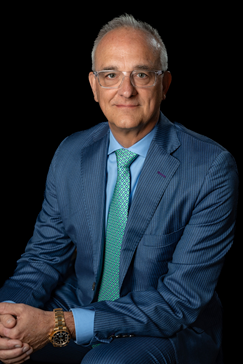
If you don’t win AI, you don’t win the future. And if you don’t win energy, you don’t win AI.
Summary
In this episode of Leadership Matters, Alan sits down with Rex Geveden, President and CEO of BWX Technologies and former Chief Engineer and Associate Administrator of NASA, to explore a leadership journey rooted in technical mastery and shaped by high-stakes decision-making. Rex’s career spans missile defense, space exploration, and nuclear energy — and at every stage, he has led at scale.
Rex reflects on his upbringing in Kentucky, the mentors who influenced his early development, and the intellectual spark that led him to physics. He shares lessons from leading NASA’s Gravity Probe B mission – a decades-long test of Einstein’s theory of relativity – and explains how cultivating an “underdog culture” helped his team achieve what many believed was impossible. The conversation moves from space to energy, as Rex outlines why nuclear power is essential to America’s economic competitiveness, decarbonization goals, and AI-driven future.
Throughout the episode, Rex offers insights on risk management, innovation within compliance-driven industries, talent erosion in public institutions, and the leadership discipline of maintaining conviction under pressure.
Mentions & Resources
Range: Why Generalists Triumph in a Specialized Worldby David Epstein
The Sports Gene: Inside the Science of Extraordinary Athletic Performanceby David Epstein
Guest Bio
Rex D. Geveden is president and chief executive officer of BWXT, a $3.1B nuclear technology and manufacturing company headquartered in Lynchburg, Virginia. As CEO, Mr. Geveden directs all business operations and leads strategic planning, capital allocation and leadership succession.
BWXT manufactures nuclear reactors, fuel and components for the U.S. Navy; provides nuclear technical services at contractor-operated Department of Energy and other government laboratories and facilities; develops and manufactures microreactors for national security and space applications; and processes special nuclear materials and advanced nuclear fuels. BWXT also manufactures medical radioisotopes and supplies precision manufactured components, engineering services and fuel for the commercial nuclear power industry.
With about 10,000 employees, BWXT has 20 major operating sites in the U.S., Canada and the U.K., comprising over four million square feet of manufacturing space. In addition, BWXT joint ventures operate at more than a dozen U.S. Department of Energy and Canadian Nuclear Laboratory sites.
Mr. Geveden joined BWXT in 2015 as chief operating officer (COO) before advancing to CEO in 2017. Previously, he advanced to the position of executive vice president at Teledyne Technologies over an eight-year period, ultimately leading the Digital Imaging and Engineered Systems segments of the business.
He spent 17 years at NASA, including service as the agency’s COO responsible for a $16 billion portfolio of work in NASA’s mission areas of science, aeronautics, space operations and exploration, along with oversight of NASA’s 10 field centers.
Mr. Geveden chairs the board of TTM Technologies, Inc., a global electronics manufacturing company. He is also on the Board of Trustees of the Universities Research Association and is a member of the Wall Street Journal CEO Council. He holds bachelor’s and master’s degrees in physics from Murray State University.
Episode Transcript
Alan Fleischmann
Welcome to Leadership Matters on SiriusXM and at leadershipmattersshow.com. I’m your host, Alan Fleischmann. I’m joined today by a proven leader across the public and private sectors and one of the most influential voices on energy security, industrial capacity, and global nuclear competitiveness.
Rex Geveden is the president and chief executive officer of BWXT, one of the nation’s largest and most significant nuclear technology and manufacturing companies. BWXT works closely with the federal government on national security and energy operations, playing an integral role for partners including the U.S. Navy and the Department of Energy.
Rex began his career as an engineer at Teledyne Brown before joining NASA, where he spent 17 years serving in top leadership positions before returning to the private sector. From his early engineering roots to his tenure at NASA to his stewardship of a major nuclear company, Rex’s trajectory underscores deep technical expertise, cross-sector leadership, and sustained influence on both government and commercial technology initiatives.
Today, we’ll explore Rex’s early life, highlights of his remarkable career, hear his thoughts on the direction and future of the nuclear energy industry, and the lessons in leadership he’s learned along the way.
Rex, welcome to Leadership Matters. I’m so glad that you’re joining us today.
Rex Geveden
Yeah, thank you, Alan. Super pleased to be here. Honored to have been invited.
Alan Fleischmann
Well, I’m very excited.
Let’s start at the beginning. Tell us a little bit about your childhood in Kentucky, what family was like, the influences and role models that shaped your early values and leadership mindset. I’m just looking back and curious about the people that stand out.
Rex Geveden
Yeah, thank you.
Starting at the beginning, I was born in Paducah, Kentucky, right up on the Ohio River in extreme western Kentucky. I grew up in a family with three brothers and sisters — four children all together — with my mom and dad. Their parents were both from Western Kentucky also. So I had four grandparents, all of whom lived a long time around me in that area.
So I was blessed with a very stable and very solid family. No divorces in the family. Lots of cousins and family around all the time. So it was a nice upbringing.
Alan Fleischmann
Any mentors? Any teachers or anybody that kind of sparked your imagination, that you look back on, or who saw something in Rex?
Rex Geveden
It’s so hard to say looking back on that. I mean, I can tell you who influenced me. I don’t know if they saw anything in me.
My father was just a tower of self-reliance. He was working in the telephone company as a plant manager when I was a kid. But he was a really capable person. For example, he bought a carpentry book from Sears when we were kids and decided to figure out how to build houses. So we were building houses as a side hustle when he was working full-time with the telephone company for Southern Bell. So my brother, my father, and I started building houses from the time I was about nine. But he was very self-reliant, hard-working, and ambitious in his own way. So he was a role model for me. He was a tough dude, tough dad, but quite a role model for me.
My paternal grandfather, his father, was essentially an itinerant evangelist. He traveled around the country, did Bible conferences and things. He was very upright, almost always in a suit and tie with a fedora hat — a gray straw Fedora in the summertime and a dark gray felt one in the wintertime. Everybody called him Brother Paul. Paul Geveden was his name. And he was very mannerly, very scholarly, and a model of propriety. I think he influenced me in some really good ways. I feel like I inherited or learned manners and propriety from him.
Then my maternal grandfather was a laborer, worked in a lamp factory. Hard-working, religious, patriotic, and just utterly decent. He carried himself with a lot of dignity, even though he didn’t have a high station in life. So he modeled that behavior for me, and it influenced me in a good way.
Alan Fleischmann
Did the grandfathers know each other well? Were they friendly?
Rex Geveden
They knew each other pretty well. They lived maybe 15 miles apart and obviously were connected through my parents. Now, they wouldn’t have known each other prior to my parents becoming romantically involved.
Alan Fleischmann
That’s great. What are your siblings doing today?
Rex Geveden
So I’ve got a brother out in California. He runs an industrial electric company and owns a couple of restaurants. I have two sisters. They’re both back in Western Kentucky still, and both retired.
Alan Fleischmann
That’s great.
You studied physics. Was there anything in high school that led you to say, “I want to go to Murray State University. I want to study physics”? Because you earned both a master’s and a bachelor’s in physics, if I’m not mistaken.
Rex Geveden
Yeah, that’s right. I would say, Alan, there were a couple of things that, looking back on it, influenced me to be interested in science and eventually get into physics.
One was, my dad was a technically minded person. IHe worked in the telephone company on the technical side, the hands-on side of it. He had a two-year degree from a school in Memphis called William R. Moore Tech — which still exists, by the way; I went by there a few years ago. He studied to be an electrician, essentially, one of those two-year trade school things after high school.
Interestingly, it’s part of the family lore that he was there from 1955 to 1957. Now, William R. Moore is about five blocks from Sun Studios. So he was there when Elvis Presley, Carl Perkins, Jerry Lee Lewis, Johnny Cash were there and he saw them around town all the time. So my dad was sort of growing up with Elvis in Memphis.
So he went to technical school down there and then came back to Kentucky. He was in Missouri briefly, but came back to Kentucky and got involved with the telephone company. He did things like repair and service teletypes and switch gear — the technical side of telephonics. So because he was that way and interested in those things, he would do things with my brother and me to help us develop our electrical intuition. We would wrap a coated conductor around a nail and hook it up to a dry-cell battery and make an artificial magnet. We built electric motors from kits and things like that. So I think my brother and I were fascinated with the physical things of the world, how things worked, because of my dad to some extent. They gave us Lincoln Logs, Erector sets, and all that kind of stuff. We had those kinds of toys that were geared towards how the world works.
And then my mother, I think, influenced me in a different way. She was a great homemaker kind of mom. So she took us to the library all the time when we were kids, to the Graves County Public Library in Mayfield, Kentucky, down where I grew up. There was a big, beautiful stone mansion that somebody had given to the county for the purpose of making a public library. It had rooms and compartments all over the place. It was cool and musty, like libraries ought to be. So I’d be there for hours, just sitting on the floor and reading books.
Somewhere along the way, probably about seventh or eighth grade, I ran into a book on special relativity, a book about Einstein’s special relativity — Relativity for the Layman, or one of those things. I learned about time dilation, the paradox of the twins, how mass increases with velocity, how there’s length dilation with velocity — all these counterintuitive things were massively fascinating to me. I think reading that sort of pulp popular science book kind of set me on fire for physics and changed the course of my life.
In fact, I came back later in my life — we can talk about this later if you wish — but I worked on a program for NASA for years called Gravity Probe B, which is a test of Einstein’s general theory of relativity. So I came back to Einstein later in life.
Alan Fleischmann
That’s amazing. Did you know you wanted to go to Murray State?
Rex Geveden
No. Neither of my parents were college-educated, apart from that technical school I mentioned. So I didn’t really know what to do, didn’t have any guideposts there.
I applied at a lot of places and got accepted to a lot of good places. But Murray, probably because it was local, was less intimidating to me. And they offered me a full-ride academic scholarship, which meant a lot to me at the time. They were also one of two schools in the nation at the time that had programs in engineering physics. There was one at the University of Illinois and one at Murray State. The way those programs were designed was: let’s do physics, but let’s add some practical aspects to it so you can make a career out of it and not have to go down the academic path. So you’d get computer programming, for example, along with electricity, light, magnetism, modern physics, thermodynamics, and all of that. So you’d get some engineering and computer content around it. That was really attractive to me.
So I had a full-ride scholarship for tuition and for books. And then I covered room and board by teaching physics lab. So probably, the best situation I could have landed in. I was a big fish in a small pond, coming from a country school with grades one to 12; I graduated with 58 people, four of us went on to four-year schools right away. It was the right step for me.
Alan Fleischmann
And you got to do your bachelor’s and your master’s there.
Rex Geveden
I did a bachelor’s there, did a master’s there, worked in a co-op with Argonne National Lab along the way. It was a lovely experience for me.
Alan Fleischmann
Any mentors there? Any teachers that stand out?
Rex Geveden
Yeah, there were. It was super interesting; they were building that program in engineering physics, which was a relatively new idea at the time. There was a professor named Bill Taylor that took a particular liking to me and really helped me a lot. And he was the kind of professor that would take you out for beers, which was a thing in those days.
The department chairman, Robert Etherton, looked after me. Gene Maddox, Lou Beyer — I can name them all; Don Duncan, Buford Anderson, Porter Bridwell — they looked after the kids and tried to set up an environment that was conducive to learning and conducive to social safety, let me call it.
So I really felt looked after, and I felt like I was going home when I went back for the next semester. It feels remarkable to hear that, I think, because universities can be large and impersonal. But man, I felt close to those professors, and I think they really cared about the outcome of my life.
Alan Fleischmann
Did you stay in touch with them for a while? Did they get to see some of your great success over the years?
Rex Geveden
Yes, I kept up with a number of them. I was recognized as a Distinguished Alumnus, probably, gosh, i15 years ago now. Then I became, in that same cycle, an Outstanding Alumnus of the state of Kentucky, which is conferred by the governor. So I kept up with them and invited all those guys to the dinner when I was honored as Distinguished Alumnus, and they all came.
Alan Fleischmann
That’s so great. Did you know what you wanted to do? Did you debate between engineering and physics, or was it always physics?
Rex Geveden
No, I always wanted a flavor of physics in it. As I said, I got caught up with Einstein there and it just intrigued me. Yeah, I wanted that flavor.
Alan Fleischmann
No regrets there, obviously. Then what did you do after the master’s?
Rex Geveden
So I went down to Huntsville, Alabama, to work in missile defense.
What got me interested in that, Alan, was, I was interested in current events, news, politics from an early age. I subscribed to things like Newsweek and Time Magazine when I was a kid — sixth, seventh, eighth grade. There was an article about President Reagan’s Strategic Defense Initiative that really caught my attention when I was close to graduating. I think it was in Newsweek. The media’s sort of pejorative nickname for it was Star Wars, as you will know. But I thought, “Wow, is it possible to construct a defensive shield for the U.S.?” I got intrigued about that.
So I went down to work in the missile defense industry down in Huntsville, Alabama, with Teledyne Brown, as you cited in my biography. I went down there right after graduate school and started doing computer codes, modeling, simulation to figure out the trajectories of missiles, how sensors worked, and how you might defend the nation.
Alan Fleischmann
Oh, that’s great. And did you do a lot of writing of papers at that point?
Rex Geveden
Oh, no. I was writing a lot of computer codes, doing phenomenological modeling of missiles and sensors, that sort of thing. So it was intensive computer and physics work.
Alan Fleischmann
That’s great. How did you decide what you wanted to do after that? How did the next professional step to Teledyne happen? Is that something that came to you, or you went to it?
Rex Geveden
How I went to Teledyne? It was a pretty natural path, because that engineering physics degree turned out to be pretty attractive academic background for certain types of industry. We were being hired by the semiconductor industry for process control type jobs, and the Strategic Defense Initiative couldn’t get enough of it. So there was a natural pipeline from Murray State down to Huntsville and other places that needed people with physics minds and computer coding capabilities to do things like complex modeling and simulation.
Alan Fleischmann
That’s cool. And you were president across a number of divisions there, right? You did Teledyne Scientific?
Rex Geveden
Oh, that’s the next chapter of Teledyne. So I did two years at Teledyne Brown, and then 17 years at NASA, and then, almost by a crazy happenstance, I ended up back at Teledyne after that. So Teledyne bracketed my NASA career.
Alan Fleischmann
Oh, I got it. Okay.
Let’s go back to NASA then. So you were there two years at Teledyne Brown, you then joined NASA. I mean, NASA must have been a dream at that point.
Rex Geveden
Yeah, it was a bit of a dream for me.
I was doing that missile defense work for a couple of years. I did like it, but I had a colleague that went over to NASA. He made the transition from writing computer codes and modeling missiles to putting hardware on the space station, flying spaceflight experiments. He loved what he was doing, and I got very interested in that.
So I applied for a job at NASA and went there to work on scientific payload, scientific spacecraft. To move into the space industry, to be doing more tangible things with my life, was probably the right thing to do at the time.
And I will say that the work that I was doing in missile defense with Teledyne Brown was a technical audit role. We were supporting the government in a systems engineering and technical assistance kind of role. Ultimately, I found it a bit unsatisfying to be technically auditing other people’s work instead of performing it.
Alan Fleischmann
Yeah. I can imagine that too. And were you living in Washington when you were doing NASA?
Rex Geveden
At the tail end of my career. I started in Huntsville at the Marshall Space Flight Center and I was there for 14 years doing, as I said, scientific payload work largely.
Then I ended up in an institutional leadership position as the deputy director of that space flight center. There are 10 of them, as you likely know — the Kennedy Space Center, the Johnson Space Center, Jet Propulsion Lab — and the Marshall Center in Huntsville, named for George Marshall, of course, was one of those. It was the propulsion center for NASA, primarily. So I was there for 14 years.
At the tail end of my career, I was briefly the chief engineer of NASA, and then I was the associate administrator, which is the COO.
Alan Fleischmann
My God. That’s a pretty impressive position. You’re chief engineer and associate administrator.
Rex Geveden
The chief engineer first for a brief time, and then, yes, associate administrator, in which role all of those 10 field centers reported to me. Then all of the major missions of NASA — the Space Science Directorate, Space Operations and Human Spaceflight, all that stuff — reported through me to the NASA Administrator.
Alan Fleischmann
Those experiences you had there, the senior leadership roles, how did that affect you as you look back at your leadership style today and your risk management philosophy? How much impact did those two positions have?
Rex Geveden
Well, if you don’t mind, maybe I’ll turn the clock back a little bit to some earlier projects, if that’s all right, Alan.
I had some extraordinary opportunities inside of NASA. There was a thing going on at NASA at the time under Administrator Dan Goldin. He was trying to do something that he called “faster, better, cheaper.” I mean, it’s pretty obvious what the plan was. I think he felt that NASA had become calcified and bureaucratically bloated, and he wasn’t wrong. So there was a thing called “faster, better, cheaper,” to try to do all these things with higher decision velocity and on shorter schedules and at lower costs. There was a lot of institutional cynicism around that idea, I got to tell you. People would say, “Faster, better, cheaper — pick any two, Administrator Goldin.” I don’t agree with that, by the way. I think those were false alternatives.
So I was charged with leading something called the Optical Transient Detector, and we were trying to get a scientific instrument designed, built, qualified, tested, and flown in space in nine months. Seven months, actually — we did it in nine months — and demonstrated that we could move at pace. That was very influential on me, because I had to figure out how to hack through the bureaucracy, which rules to break, which rules to honor, how to drive the culture to a sense of urgency. It made a huge influence on how I thought about my entire future. As I said, it kind of deepened my suspicion of false alternatives. When people offer me the choice between speed and quality, I say, “Look, it’s not a choice. I want both.” And that influences how I think about nuclear too.
Alan Fleischmann
That’s cool. In other words, greatness and quality — I need both.
Rex Geveden
Yeah. No choice here. We’ve got to go fast, and we have to have it good.
Then I worked on Gravity Probe B, I mentioned that. That was a test of general relativity, Einstein’s general relativity. Two components of it: one’s called geodetic precession, and the other one’s called the Lense-Thirring effect, or frame dragging. I won’t go into the nuances there. That one was an exquisitely difficult experiment to do. We had to invent technologies to be able to do the measurement.
There was a ton of institutional skepticism about that program. It had been sold by the principal investigator to Congress over NASA’s head, so there were no natural advocates for the program inside of NASA and it was given to me for whatever reason. And there were people who thought it’s never going to fly — a lot of people — and if it does fly, it’s never going to work.
So what did that teach me? It taught me a couple of things. It taught me the power of an underdog culture. Because I could say to our team, “Look, nobody believes in this project. Nobody believes it’s going to fly or even work.” I could recruit people with the line, “How’d you like to work on an experiment that people think is impossible? How’d you like to work with a team of people that are going to do something that no one believes can be done?” You flip it around, and that’s a pretty powerful cultural component. We did fly it, it did work, and we had a gigantic “how do you like me now” moment. So I think the power of culture really showed up on that program, a particular kind of culture — that underdog culture.
I think one of the things I really learned there, Alan… I was growing up as a leader in that process of that program, which went for a decade, by the way. I also learned the importance of controlling the storyline when you’re a leader. The storyline when you’re leading, by the way, had better be “we’re winning” or “we are going to figure out how to win if we’re not winning today.” I think it was so important to establish a vision for that team of “we’re going to get it across the finish line, it is going to work, you’re going to follow me to that point, and we’re going to show the world that we’re capable of doing this.” That storyline mattered all the way through the program.
Alan Fleischmann
Making the impossible happen — make the impossible possible.
Rex Geveden
It’s absolutely true. It’s utterly true.
I mean, we had to take a scientific measurement that was precise to half of a milli-arcsecond per year. Now, to give you a sense of the scale of that angle — we used to use this analogy all the time — if you were looking at a dime from San Francisco that was at the Empire State Building, half a milli-arcsecond is the angle subtended by being one side of the dime to the other. That super-narrow slice, that measurement precision is what we were trying to achieve for Gravity Probe B.
And we did it. I won’t offer scientific details, but it was exquisitely difficult.
Alan Fleischmann
How long did it take to get to that point?
Rex Geveden
Well — this is one of the reasons why there was so much institutional cynicism — the idea was conceived by a guy named Leonard Schiff, a Stanford professor, in 1960 — the year before my birth. I used to jokingly say that Gravity Probe B and I were conceived in the same year. It had gone through a bunch of research phases and then some hardware test-in-the-loop kind of phases.
So it took forever. It did fly eventually in 2004; it was a 40-something-year journey to get it flown.
Alan Fleischmann
Talk about perseverance, determination, and grit.
Rex Geveden
It is the story of grit, let me tell you.
Alan Fleischmann
That’s amazing. So from the Space Race — you talked about the 1960s — to landing rovers on Mars, NASA’s leadership when it comes to space science, physics, or exploration has been the inspiration to so many young people in this country and around the world; those who want to go into science, engineering, those who want to go into physics. What does that legacy mean to you? How relevant is it today, as somebody who’s no longer in NASA but obviously spent a lot of years there?
Is there anything we should do to ensure the viability of NASA? Do you believe in that, how it needs to play a role in the next generation?
Rex Geveden
Yeah, I do. I think it matters a lot. NASA is still an iconic brand, along the lines of Coca-Cola and Disney. There’s so much brand equity there.
What worries me about NASA is, I do think there’s been a pretty significant erosion of talent over the years, because the gap between the private sector and the government sector is just so large now economically. So it’s hard to hold talent, particularly mid-career talent that’s rising. It was about the time I left NASA, as it happens.
So I am worried about the erosion of capability inside the institution. That said, I think there are some smart ways to address that. I heard this first from the mouth of one of my great mentors at NASA, Mike Griffin, who was a NASA administrator when I was the chief engineer and the associate administrator. He used to say, “Look, what is the purpose of your government?” There’s a lot of different ways to answer that question, but one answer is that it exists to do the things that your nation needs to do for which there is no business case. No business case for the Navy, right? There’s no business case for putting flags and footprints on the moon. But a nation might wish to do that so that it could accrue the geopolitical benefits that nations that are bold enough to do that would get.
So we need NASA for those reasons. We need it for the iconic leadership that it offers, the inspiration that it offers. And ultimately, I think, cislunar space will become contested, so we need it strategically. For it to succeed, we have to address the talent problem in NASA by doing something — making those field centers government-owned and contractor-operated or something. But NASA’s absolutely necessary for this nation’s image, for its inspiration, and for its strategic needs.
Alan Fleischmann
That’s great to hear.
Was it hard to leave when you went back to Teledyne? How did that happen? And tell us a little bit about that period, because I want to get into your BWXT experiences, nuclear energy, and the importance of it. But anything about the return to Teledyne — another iteration of life, where you were the president across a number of divisions?
Rex Geveden
Yeah, it was very tough to leave emotionally. I was very loyal to NASA, and my boss at the time, the Administrator, Mike Griffin, whom I mentioned. And I loved the mission. I loved the power that I had. I mean, I was a young man, really, looking back on it. I was 43 when I got that job and I had 17,000 civil servants reporting to me, ultimately, with 80,000 contractors or something like that, and a gigantic $16 billion budget. So it was a heady place to be and we were doing great things at the time. It was difficult to leave.
Now, the economics made it easy. Because, as you know, in industry, the pay for what I went into was literally whole number multiples of what I was making in NASA. So it was an economic decision and a family future decision for me. But yeah, very tough to leave. I loved what I was doing.
But let me offer one other thought on it. I had gone through a series of rapid promotions — five promotions in five years inside of NASA. That was partly a consequence of the aftermath of the Columbia accident, where there was a leadership vacuum, and I got swept up in it — in a good way, in my case. And I got to that place, Alan, where I was the associate Aaministrator. That’s the top civil servant position in NASA.
There’s no promotion from that position. The Administrator is presidentially appointed, Senate confirmed, as you know. Nobody gets promoted into that job, it comes in with the new president. So there was really no place for me to go from there, and I wasn’t going to sit in that job for 20 years, as much as I liked it. So that was part of it too. I just knew that there was a natural next step for me, and that would be industry — not to wait around for my career to bake out.
Alan Fleischmann
Was it a big transition to go from being in public life and government in such a great position at a young age to the private sector?
Rex Geveden
People ask me that a lot over the years. It was very natural for me, because I always wanted to go faster. I was always interested in economic outcomes and very interested in business, very interested in the free markets. I thought private industry would be a better expression of that — I had thrived in my early Teledyne days. So in some ways, I think it fits me better than government, although I had obviously had a lot of success in government.
But I was ready to do it. I was ready to drop into that. And it was a pretty natural fit.
Alan Fleischmann
And when you went to Teledyne the second time, did you think you’d be there for a while?
Rex Geveden
I did, yes. My return to it was a bit of a fluke. I met the CEO of Teledyne, a gentleman named Robert Mehrabian, who’s still the executive chairman. I met him in 2006, he got to know me, I had dinner with him and he said, “Hey, I’d like to get you into Teledyne in an executive position.”
Now, he didn’t know I had started my career there, so this was pure coincidence. He offered me a job to lead a segment of Teledyne which included Teledyne Brown Engineering, where I started my career. So I went back to the same building and went up into the corner office as president 17 years later. Sort of a remarkable homecoming for me. I got my old badge number back, 018809.
I thought I’d be there for the rest of my career. I ended up running two of the four operating segments. I aspired to become the CEO, but the timeline wasn’t right for that. So I eventually left.
Alan Fleischmann
How did it happen that you went to BWXT? How did that transition happen?
Rex Geveden
So what happened was, I was running a segment of Teledyne called Engineered Systems, that included Teledyne Brown, as I mentioned. Then I ended up taking on another segment of the business called Digital Imaging — high-performance cameras, frame grabbers, optical systems. The commercial headquarters for that was up in the Toronto area, Waterloo, Ontario. So I moved to Canada to go run that segment of the business and to be the day-to-day president of the largest subsidiary. It was called Teledyne DALSA.
I was up there just beavering away, and I got a cold call from a headhunter about an opportunity to go run a company that was spinning out of Babcock & Wilcox called BWXT. I was at the stage of my Teledyne career, eight years into it, where I was really eager to go see if I could be a public company CEO. So it was the right call at the right time for me.
Alan Fleischmann
Had you heard of the company before?
Rex Geveden
Yeah, I guess I knew of Babcock & Wilcox as an old-school industrial company. I had heard a little bit of their project called mPower, which was a small modular reactor they were developing to put into the market. So I had sort of vague familiarity with it, I guess I would say.
Alan Fleischmann
How was that transition there? I mean, that must have been exciting also. How much did you know about nuclear energy?
Rex Geveden
Well, I knew some. I had built a nuclear portfolio when I was at Teledyne Brown. We had some nuclear manufacturing credentials — they’re called N-stamps and NPT stamps — that basically certify you to make nuclear-qualified pressure vessels. We had those that were sort of laying around. so I built up a bit of a nuclear portfolio as part of my growth story down in Teledyne. I had some familiarity with it — not in the way that I have now, but a brushing familiarity, let me call it.
Alan Fleischmann
That’s cool. Tell us a little bit about the company.
Rex Geveden
About BWXT? Yeah, so BWXT — publicly traded company, New York Stock Exchange. These days, we’re a Fortune 1000 company. We have about 10,000 employees — 10,400 employees to be more precise. Mostly in North America, probably 70% in the U.S., 30% in Canada. We have a small business in the U.K. in Manchester.
We’re really two primary lines of business. One is in government nuclear systems, we call that Government Operations. That’s 70% of what we do — naval nuclear propulsion, microreactors, other such things. Then the other 30% is commercial. That’s what most people would be familiar with when they talk about nuclear — nuclear power plants, nuclear fuel, steam generators, the systems that convert nuclear heat into power. So about 30% of our business is around that.
Alan Fleischmann
Before we get deeper, educate our listenership here about the nuclear industry itself. What you want people to know and not assume, but understand?
I’m a big bullish person when it comes to this industry when it comes to all topics — scale, opportunity, growth, ingenuity, so many things can be captured and realized through the additional capacity of nuclear energy. And then also the cleanness of it, when you’re thinking more future and what it offers that other forms of energy don’t. What are the do’s and don’ts for those who think they know and those who should know?
Rex Geveden
Yeah, sure.
So nuclear power for the generation of electricity, which is the primary application, is really no different than any other power plant, except for the way that the heat is produced. If you’re burning coal, you’re producing heat with that coal, and you have to convert it to electricity with a steam generator, a turbine, and an electric generator. It’s the same thing here, right? The principle is: create some heat and then convert that heat into steam, and then turn something and generate electricity. You could be using coal, you could be using natural gas, you could be using nuclear.
So nuclear is different in this way. The way that it generates heat is not through a chemical reaction, not through burning something, but through a nuclear reaction, very obviously. We’re using uranium in this case and in most cases — a type of uranium that wants to split apart when you hit it with a neutron. The heat of all that neutronic action is what drives a nuclear reactor.
It’s a well-understood technology. I think there are misapprehensions around the safety of it; the record of safety for nuclear systems globally is extraordinary. We’ve got a fleet of 600 nuclear reactors operating around the world and they’ve been operating largely, safely, for decades. So it’s a very, very safe technology.
The new nuclear technologies are even safer. We have things like passively cooled reactors that are walk-away safe that use natural recirculation. We have fuels that are tolerant to accidents. We have coated fuels that capture the fission products. We have fuels that have negative reactivity coefficients above a certain temperature, meaning that they cannot continue to heat up; they become less efficient at certain temperatures.
So yeah, nuclear is extraordinarily safe. It’s also extraordinarily clean, which is the point that you made. So nuclear has no emissions associated with it. Now, we do leave behind nuclear waste; the spent reactor fuel is a waste, there’s waste to be managed. But I think there are big misapprehensions about that too.
Let me talk about it in terms of volume and let me talk about it in terms of management. So here’s, I think, sort of an unfortunate thing from our industry, Alan: Yucca Mountain was going to be the federal nuclear repository in Nevada, which was famously opposed by Harry Reid and others. So we never put any spent fuel into Yucca Mountain as a central repository. But I think the unfortunate thing was, the mountain invoked “mountains of waste,” when in truth, the volume of all the spent nuclear fuel in the history of the U.S. fleet — 60 years, 100 reactors operating for most of that time — would fit into a Super Walmart. All the spent nuclear fuel. So yes, it is radioactive; yes, it has to be shielded; yes, it has to be cooled and managed. But we know how to do all that and we’ve demonstrated that for decades.
So your choice is: for baseload power, do you want to spew your waste into the atmosphere, which I think is a poor choice? Or do you want to capture and contain 100% of it? That’s the promise of nuclear.
Alan Fleischmann
With all the conversations right now that people are having about data centers and the need to be ahead of things with the growth of artificial intelligence and AI, there’s such a widespread pressure on the energy sector. How do you see this trend playing out? How can we assure that the nuclear industry helps meet the needs of both the technology that is evolving so rapidly in AI, but also assuring that every man, every woman’s needs for energy are met?
The fact that the carbon footprint you’ve talked about here isn’t the albatross, it’s actually the benefit — it is pretty amazing.
Rex Geveden
Yeah, lots to say about that, Alan.
I’ve been describing the commercial demand in our business as a three-layer cake. The base layer is decarbonization. As we take these coal plants offline, the natural replacement for them is nuclear, so that you can have clean baseload and ultimately replace natural gas — which is better than coal, but still emitting hydrocarbons. So the base load is decarbonization.
The second layer on that cake is the electrification of everything, where transportation and industrial processes are moving from the gas pump to the meter, or from behind the meter to on the meter.
Then the third level is AI and data centers. Now, we’re not doing much nuclear there yet, that’s a future prospect. But I think we will be, and I think we would be for two reasons. First off, AI data center developers are very interested, very attracted to clean energy solutions. So nuclear has come right into the conversation on that. But I think there are some other interesting, subtle reasons for nuclear being a solution there. The business case is better with the rates that I think hyperscalers will pay, so nuclear becomes more viable economically. But the more important thing is this — I don’t think people have got this figured out yet. The infrastructure is not going to be able to keep up with the power need. The incremental demand from AI is expected to be about 100 gigawatts by the end of this decade. That is equal to the output of the entire U.S. nuclear fleet today. That’s how much incremental demand they’re seeing.
Now, that’s going to be fulfilled with natural gas and solar and battery and other things in the interim — ultimately nuclear. But here’s the problem, Alan: we can’t build the grid fast enough to accommodate that much increase in power demand. So if you can’t build the infrastructure to meet the data center need, then the solution to it is to decentralize power.
The way to decentralize power is with nuclear plants. You can put them anywhere. You don’t have to be sitting on a natural gas pipeline. You don’t have to be in some convenient place from an environmental perspective. You can put it anywhere, and you can bring in nuclear fuel and run that plant for years before you have to refuel it.
Alan Fleischmann
Is there anything quite like it? To go back to your earlier thing about quality and quickness, the speed you can do things with nuclear — once you get the infrastructure built up, you can really meet and exceed scale and speed.
Rex Geveden
Well, I think that’s the challenge that the industry has before it. Most of these nuclear plants are kind of stick-built. As the guy that used to run the Loans Program Office, Jigar Shah, described it, we were building airports instead of airplanes. That was our production mentality. I think that’s right. None of these nuclear plants are the same. They were all kind of bespoke.
We have to get to an industrial model, sort of a Tesla Gigafactory model, for making small modular reactors or whatever it is we’re going to build. We have to optimize those production processes, make these things cheaper and more reliable, and be able to deliver them more consistently and faster.
I think we can do all that, but that’s the challenge for nuclear.
Alan Fleischmann
What do you worry about the most? Then talk a little bit about the positioning of your company, because it really is an extraordinary company, unique in its own way. It has an extraordinary reputation — as do you as its CEO. Tell us a little bit about the culture and the company, a little bit more about its relationships, obviously, across the sectors, and how it’s uniquely positioned for the future.
Rex Geveden
Let’s start with commercial nuclear power, which was the last subject.
We aren’t supplying a technology to the market. Those reactor designs, those technologies are being offered by Westinghouse and General Electric and a bunch of new players — TerraPower, Bill Gates’s company is doing that. We are facing the market as a merchant supplier. So we make steam generators, reactor pressure vessels, fuel and control rod drive mechanisms — all the things that a nuclear plant needs. We have the industrial capacity to do that.
So we’re in a — it’s the picks-and-shovels strategy, is fundamentally what it is. I don’t know who’s going to win of all these 60 companies that are trying to make small modular reactors a reality, but I know we’re going to win because we’re supplying the picks and shovels for a lot of those players. That’s how we’re facing the market there. We do have our own technology for microreactors that are below grid scale, for special applications, military applications. There’s some special commercial applications you can imagine for that. But that’s how we’re positioned.
On the government side of the business — you alluded to this before — we’ve got a very interesting national security portfolio. We do all the reactors for the nuclear Navy. We make the fuel, the reactors, the reactor pressure vessels, the steam generators, the control — the whole thing, other than pumps and valves. We’re the only company to do that. So literally, every aircraft carrier and submarine in the Navy fleet has a BWXT reactor in it. That’s the core business over there on the government side.
We do a lot of special nuclear materials processing on behalf of the government — uranium processing, downblending, high-purity depleted uranium, lots of those things. Then we do a ton of work for the Department of Energy, managing their sites on their behalf — management and operations contracts and environmental restoration for the Department of Energy. So a big federal portfolio in nuclear with a lot of staying power.
Alan Fleischmann
What kind of leaders are you trying to grow within BWXT, when you’re identifying talent? Especially right now when so much is looking into the future and growing the company to where it needs to be, what are you looking for? Beyond technical chops, the leadership qualities, I guess. That’d be good for us to hear, and a little bit about your own leadership philosophy, which is why you’re hiring these folks.
Rex Geveden
So, when you come into a place like BWXT, which is this derivative of Babcock & Wilcox, and you’ve been working with the nuclear Navy for decades, which of course is the Admiral Rickover culture. The cultural inheritance for me was compliance and control, which is necessary in a nuclear culture, but it’s not sufficient. So I’ve tried to create a strong appetite for innovation from the top, so that we got more innovation and more ideas into the company. That’s really, I think, breathed some life into it and created a lot of growth avenues for us. We’ve moved into nuclear medicine. We’ve moved into microreactors, these coated fuels, the special nuclear materials processing — all are new things for BWXT.
So I want that compliance and control — after all, we’re handling special nuclear materials for our government client. But I also want innovation. So I’m looking for those qualities in a leader. And of course, the typical things you would want: operational instincts, financial instincts, and strategic instincts. So it’s quite a combination, and it’s hard to find.
Alan Fleischmann
I imagine. Was there a failure or near miss in your career that you now see as essential to the leader you’ve become? How would you want someone ideally to describe you as the type of leader that you are?
Rex Geveden
Oh, I absolutely did have one of those back in my Gravity Probe B days.
We were testing that spacecraft in a thermal vacuum chamber, which is something that you do on the ground to simulate the environment of space — the thermal conditions and the vacuum conditions that you experience. Because it puts stresses on the materials, stresses on the electronics, thermal stresses on the cables, all that. So you put it in there for a few weeks to see how it’s going to do.
We got it in the thermal vacuum chamber, and we found that one of the electronics boxes was a little bit flaky. There was intense schedule pressure, intense financial pressure from NASA to just fly it, to just take the risk and use as-is. I stood my ground on that one and said, “Look, no, we’re going to crack this electronics box open and see what we have here.” We did, and we found that there were a number of problems with it and it almost certainly would have failed on orbit.
That one just about cost me my job, because my superiors were furious about the delay. But, you know, failure’s forever for a scientific mission like that. So that was a near miss. I think we would have absolutely failed had I buckled to the pressure. By the way, there’s a guy named David Epstein that wrote a book called Range about how generalists are increasingly thriving in — or how generalists are thriving in an increasingly specialized world. He also wrote, famously, The Sports Gene. He’s great. But anyway, there’s a chapter in that book that talks about that decision that I made. It was a real learning experience for me. There was so much pressure, I can’t even describe the pressure, just to go on and launch.
Alan Fleischmann
If you look out 10 years, what’s something you hope BWXT will have done that makes you say, “Well, this is why our company matters, and why it mattered”?
Rex Geveden
Well, I’d say there’s a specific thing that’s interesting to me and a general thing.
The specific thing is, we make all these reactors for the Navy, but those are really the Navy laboratories’ design, so we’re a built-to-print operation. We’re very skilled at design for manufacturability and all that, but those essentially belong to the client. We service commercial reactors, the designs of which belong to other technology providers. I’d like to put the BWXT reactor out there. We will be doing that with our microreactors that we’re developing right now. So it’s pretty important to me to have the BWXT logo on the side of some reactors.
But more generally, I would certainly like BWXT to be seen as the company, or one of the companies, that enabled the nuclear revolution to really occur, the nuclear renaissance to really occur. Because we need it. We need it for our power needs. We need it for clean energy. We need it for energy security. We need it for the nation. We need it for AI.
Alan Fleischmann
When you think about it… It’s called nuclear energy, we can’t shy away from it, nor should we. But sometimes, I feel like if it was called something else, it might be easier, considering the Three Mile Island world and all these things. It’s so wrong to associate then with now on so many levels.
But: how would you, in a positive way — doing what you said earlier, where you flip something into inspiration — when people bring up the more cynical, the negative, or the naïveté about the safety of nuclear energy, how do you actually assure them? How do you actually inspire them that this is the way to focus, the way to go?
Rex Geveden
Interestingly — and I’ll address that specifically, but as a preamble, I will say that the support for nuclear is far stronger than people realize. We had the Nuclear Energy Institute, an industry trade group, commission a study by a very fascinating guy named David Marshall, who runs an organization called Potential Energy. He surveyed nuclear attitudes from nations around the globe and found that the support-to-oppose ratio is high just about everywhere. In the best cases, in Eastern and Central Europe, it’s 10:1 in favor. Now, they’re taking out the middle-neutral. But 10:1, favor to oppose. The worst case nations were Japan and Germany. It was 2:1 in favor of nuclear. U.S. and Canada, about 5:1, 6:1.
So the public is strongly supportive of nuclear. The opponents to nuclear are very vocal, but he also found that they’re aging out. It’s the crowd that have the “No Nukes” t-shirt from the Springsteen concert, literally, in 1978. They’re unmovable; there’s an anti-nuke component that will not be moved by more information, by safer designs, or anything. So there’s that context. There is actually quite a lot of support for nuclear — and bipartisan and bicameral in our government.
So first off, nuclear attitudes are shifting favorably for the industry, and I find that gratifying. But in terms of safety and waste — the things that people worry about — I did the waste discussion earlier, the waste problem is very manageable, and I think much preferable to the alternative. From the standpoint of safety, we’re just going to have to demonstrate with our track record, and we’re going to have to talk about it a lot. But these things that I mentioned — these technologies around reactors that can survive loss of coolant, which was the problem at places like Three Mile Island and Fukushima… These new reactor designs operate off of natural recirculation. The water condenses, and then it drips back down and it cools the reactor core. If the pump goes out, they can cool themselves. So we have these fundamental, simple designs that are revolutionizing the safety of these reactors.
One other thing I will say, Alan — almost no one is moved by this, but it has the merit of being true — in Fukushima, one person was killed by nuclear radiation, and that death occurred maybe a year later. 20,000 people were killed in the flood. That was not a nuclear accident. It was a natural disaster. There was a nuclear component to it, but people see that as a large-scale nuclear disaster. Now, it melted down, it made a mess, and they had to clean it up. But it didn’t kill people, largely.
In the history in the U.S., the history of all of our nuclear operations — I think there are three or four fatalities that are directly related to exposure to radiation. Now, there have been people killed in nuclear plants — electrocutions and things like that — but not many. So the nuclear safety record, globally, is extraordinary. It’s an extraordinarily safe technology, and the record shows that. It doesn’t move people because there’s some irrational fears around it, but it is safe.
Alan Fleischmann
When you look at when you’re looking at the industry now… You’ve been an active voice in energy, you’ve been an active voice in manufacturing, you’ve been an active voice in research, even beyond your role as CEO, including board service and sector leadership in organizations. Tell us a little bit about the messages you share and why that’s so important.
Then — as we’re thinking about closing, which unfortunately we are — what keeps you optimistic for the future? I imagine, with all the boards you’re on and all the places you go, people are inspired by the work that you do; the future is tangible to BWXT and what it does. But for the future of the industry in general — what advice would you give out to those who are either challenging it or looking at it for the first time? What conversations are you hoping to have?
Rex Geveden
Sure. So, I do a lot of speaking. My representational duties are heavier and heavier. I’ve been talking a lot lately… I’ve been using sort of a geopolitical theme around the relationship between the geopolitics of nuclear and AI. It kind of goes like this, Alan: that if you don’t win AI, you don’t win the future. And if you don’t win energy, you don’t win AI, because AI is so computationally intensive, energy hungry.
If you want to pit the U.S. against China here in this context — and I think that’s the way we have to think about it, because I think national security is at stake in addition to economic outcomes — then my view of it is the U.S. has got AI figured out. The whole technology stack originates here. All the innovation originates here, for reasons we could go into. Fom the programming languages like Python to the computer chips that NVIDIA makes, the input/output systems, data storage, data mapping, data labeling — all of it. Historically, it all originated here — expert systems to machine learning to large language models and chatbots. It’s all here. I think we are going to have to try to maintain that leadership. Now, China’s coming up from the bottom with DeepSeek and more commodity-oriented large language models — computationally more efficient, but not as accurate. But I think we’ve got it figured out.
I don’t think we have energy figured out, because of the patchwork of state regulations. I think it’s unfortunate, but true, that the environment became the property of fanatics over a period of some decades. We have to get that in balance. We have to manage the environment carefully, and we need to do things that we need to do, like build nuclear plants.
I think it’s the opposite in China. I think China’s got energy figured out, but not AI. They’re putting 10 gigawatts of nuclear power on their grid this year and they’re putting 24 gigawatts on their grid in total this year. That’s just sort of by fiat, right? They just decide to do things, and they do them.
So that’s where I think we are right now. And so the U.S. has got to figure out energy fast. Nuclear, I think, is the solution to it. We are, by the way, running fast. We can innovate like no other nation on Earth, as you know, because of access to risk capital and other things that are unique to this nation.
So that’s what I’ve been talking about lately — the importance of nuclear as it relates to AI.
Alan Fleischmann
So it sounds like, if we want — from a national security point of view, from an economic development point of view — to create scale that also creates employment for others, space to be entrepreneurial and to share the human ingenuity, it needs the nuclear industry that steps up, as it wants to do.
Rex Geveden
That’s exactly right. We’ve got this opportunity around nuclear and AI, and they come together in a powerful way here. This intersection is extraordinary.
Alan Fleischmann
Yeah. And as you said earlier in the conversation, it’s also uniquely nonpartisan. There are people who are partisan on either side, but less to do with politics and more to do with — it sounds to me, from what I understand — a lack of knowledge.
Educating is part of it. I’m so relieved to hear you say you’re out there speaking up about this, because you’re highly credible. You can speak the language of public and private sector as well. That also matters right now, these trusted partnerships that you’re forging in the public sector and scaling in the private sector — that’s what’s going to bring that authenticity and that credibility to the conversation. So kudos.
This is exciting. We want to have you back on again, Rex, because we want to hear how this continues to drive opportunity and inspiration for what can be, what should be, and what already is, but can only continue to be if we actually manage to bring nuclear energy into the conversation.
You’re listening to Leadership Matters on SiriusXM and at leadershipmattersshow.com. I’m your host, Alan Fleischmann. We spent the last hour with Rex Geveden, the president and CEO of the nuclear technology and manufacturing company BWXT. We discussed his early influences, his leadership roles in the public sector at NASA and across the private sector, his insights on the nuclear energy and energy security globally, and his lessons that he’s learned throughout his exceptional career.
One last thing, Rex. If there’s one bit of advice from one CEO to an aspiring CEO you’d like to share in our final second, what would it be?
Rex Geveden
Wow, you’ve caught me flat-footed there. Advice from one CEO to another?
I’ll offer this. In the early years — and I’ve been doing this for 10 years now, I’m in my 10th year as a CEO — I invested so heavily in this business early on, and that depresses returns on invested capital and free cash flow. Investors hate that, and boards hate it, but all those flowers are blooming now. So if you’re in your early years, make your investments and just bear the weight of it.
Alan Fleischmann
I love that. In other words, take the risk of having a vision, having a strategy, and then hold true to it so that you can ultimately have the durability to keep going.
Rex Geveden
That’s it. I resisted the temptation to buy back shares and do those things. I mean, we did a little bit of that, but that wasn’t the strategy, right? It was about investing and growing this incredible business that we have.
Alan Fleischmann
Let’s stay closely tethered with you on the show, and let’s keep talking about something that is so promising and so needed. So thank you for all your leadership.
Rex Geveden
Thanks, Alan. Thanks for having me on. It was nice.
This transcript has been edited and condensed for clarity.