Jeff Williams
President and CEO, Graham Associates
Author, The Unity Blueprint
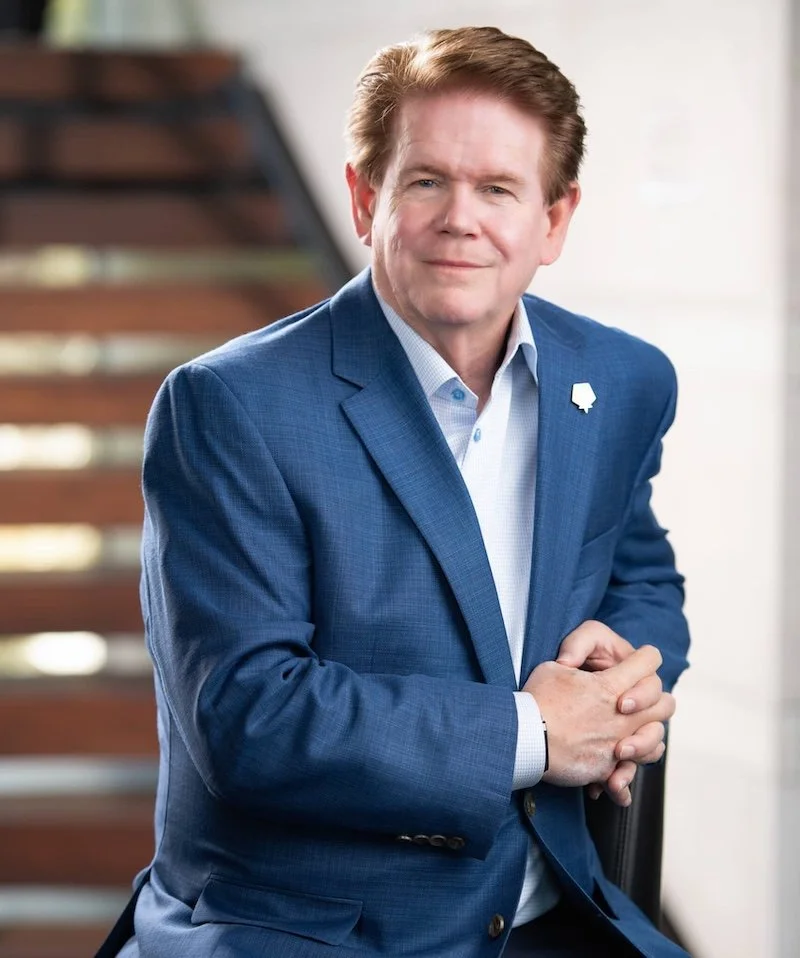
Unity is not something that just happens. We have to work at it. It’s a journey.
Summary
In this episode of Leadership Matters, Alan Fleischmann sits down with Jeff Williams, President and CEO of Graham Associates, former Mayor of Arlington, Texas, and author of The Unity Blueprint. Jeff shares his journey from growing up in a small Texas town to leading major civic and infrastructure projects that shaped one of America’s fastest-growing cities.
Drawing on his experience as a civil engineer and public servant, Jeff discusses how unity, trust and character drive sustainable leadership. He reflects on building world-class developments like AT&T Stadium and Texas Live!, guiding Arlington through the COVID-19 pandemic, and helping bring the National Medal of Honor Museum to life. Throughout the conversation, Jeff offers practical insights on aligning people with purpose, valuing diverse perspectives, and leading through division with integrity.
Mentions & Resources
The Unity Blueprint: Aligning People & Purpose for Lifelong Success by Jeff Williams
Guest Bio
A CEO, engineer and former mayor who puts unity first, Jeff Williams has spent his life designing places and strategies that bring people together and create a sense of belonging, whether it’s a park, a stadium or an entire city. He is responsible for transforming Arlington into the largest entertainment hub between Orlando and Vegas and making it the “sports capital of the nation,” attracting more than 15 million visitors every year.
In his career as a civil engineer, CEO of Graham Associates and former mayor, he successfully fought for the bid to bring the National Medal of Honor Museum to Arlington, secured buy-in from Fortune 500 businesses and executives to develop the Texas Live! District, kept the Texas Rangers in town when they threatened to leave, built the largest e-sports arena in the U.S. and developed an entertainment hub that is going to host more games in the 2026 FIFA World Cup than any other city.
At the heart of it all, Jeff says there is one principle worthy of the credit: unity. Now, in his first book, The Unity Blueprint, Jeff shares real-world stories and actionable strategies that prove unity isn’t just an ideal, it’s a powerful leadership tool. Whether you’re leading in business, government or a community organization, Jeff’s message is clear: unity is always worth the investment.
Episode Transcript
Alan Fleischmann
Welcome to Leadership Matters on SiriusXM and at leadershipmattersshow.com. I’m your host, Alan Fleischmann. Today I’m joined by a leader whose career spans engineering, entrepreneurship, public service, and authorship, Jeff Williams. Jeff is the President and CEO of Graham Associates, a respected civil engineering firm known for its commitment to technical excellence, community impact, and people-centered leadership. Under Jeff’s leadership, the firm received the Arlington, Texas Small Business of the Year Award, the State of Texas Outstanding Civil Engineering Achievement Award, and was inducted into the Civil Engineering Academy for Engineering Excellence at his alma mater, Texas Tech University. Beyond the private sector, Jeff has also served in public office as the mayor of Arlington, where he brought a builder’s mindset—an engineer’s mindset—to civic leadership, balancing growth, infrastructure, and community trust. He’s also the author of the Amazon best-selling book The Unity Blueprint: Aligning People and Purpose for Lifelong Success, which explores how leaders can bring people together across differences to build stronger organizations and communities, especially in a time of division. Throughout his career as an engineer, CEO, mayor, volunteer, and author, Jeff has focused on leadership rooted in service, accountability, and unity. I’m looking forward to exploring his perspectives, his career journey, the mentors he’s had along the way, and the lessons in leadership he’s written about and lives by, that he might teach us a little bit about today. Jeff, it’s such a pleasure to have you on Leadership Matters. I’m looking forward to diving deep on your journey, your wisdom, your humility, and the bright light that you bring into the room. So thank you.
Jeff Williams
Thank you, Alan. I’m looking forward to visiting with you.
Alan Fleischmann
I’m really excited. Let’s start at the beginning. Tell us a little bit about where you’re from, your family dynamic—brothers, sisters, mother, father—any influences or outside mentors, even a grandparent or two. Is there anybody you see as someone who saw something special in Jeff Williams and helped you nurture it? And there’s also the reality that sometimes we are what we overcome. There may have been some adversity in your youth that you had to overcome and that helped make you who you are today. So tell us a little bit about your home, your parents, any brothers and sisters, and anything special you’d want to share with us.
Jeff Williams
Well, I grew up in North Texas, and with this accent you can certainly tell that I’m a Texan. My small community was very tight-knit, and we needed to be, because when you’re in a small community, you have to do everything. It was also a real foundation for realizing that we needed to get along with the people we had. In our community we had a lot of different kinds of people, but we learned to work together. My parents and grandparents were great role models. They dug in and did community service, served on the school board and the local Chamber of Commerce, and were very active in their church.
We also had roots in raising steers and cattle. I had the opportunity to show steers, and I think that really taught me a lot about discipline and being able to take care of something that is totally dependent upon you. I saw so many people rise up and do the things necessary to make our community move forward, even though we only had about 2,000 people in the whole community.
Alan Fleischmann
And tell us a little about brothers and sisters and the family dynamics, cousins, and so on.
Jeff Williams
I have a wonderful sister and two brothers—there were four of us. My mother took us to so many things growing up. We lived about three miles from the core of the city, and that was purposeful. We had a little bit of land, but my parents kept us very engaged. They enabled us to participate in sports and a lot of activities because they were willing to take us.
My brothers and sister and I shared a lot together, and we are still very close. My mom and dad worked hard to make sure we had unity in the family, even though as brothers and sisters we argued all the time. There was love there. It was more debate than hate-filled arguing. They really instilled in us that you can disagree, but that doesn’t mean you throw somebody away or stop valuing them.
Alan Fleischmann
I love that. And I think we’re missing that in our world right now. The best university presidents I know—like Sian Beilock from Dartmouth, Michael Crow from Arizona State University, Daniel Diermeier at Vanderbilt—are leaders who really promote disagreement, discourse, and debate. It’s okay not even to like the people you’re sitting across the table from, but there has to be a level of civil discourse and respect for the fact that the other person has a point of view. We don’t have enough of that, but that is actually how this country was formed.
When you think about it, many of the people who started this country 250 years ago were rivals of the highest order, but they managed to create together and managed to compromise and deliberate. So the very fact that your parents taught you how to unify through deliberation, debate, and real discourse is powerful.
Jeff Williams
Without a doubt, Alan. They were very much in favor of that. My best friends in high school and I debated all the time, and we loved it. We often say that if we were growing up in today’s world, we probably wouldn’t have been friends because we argued so much. We might have cut each other off, cancel culture would have taken over, and we would have missed out on our best friendships. It’s all about trying to respect people as you have your civil discourse and move forward so you can get things done, rather than occupying your mind with conflict that keeps you from being productive.
Alan Fleischmann
That’s right. Are there any mentors you’d want to highlight from your early years? Any teachers that come to mind?
Jeff Williams
I had a whole high school full of incredible teachers. I had a math teacher who actually appeared in a lot of movies and TV shows. He was in Terms of Endearment with Shirley MacLaine and was frequently on local TV shows like Chuck Norris’s Walker, Texas Ranger. He was an entertainer, but he was also a math teacher, and that combination is so rare. It inspired us.
I also had an incredible speech and drama teacher. In my freshman year she came to me and said, “I think you should go into persuasive speaking and debate.” I don’t know what she saw in me, but it was life-changing. Most engineers don’t care much about speaking, but she developed that in me as a freshman in high school.
When I got to Texas Tech, I served in student government. I became the student lobbyist, served in the student senate, and traveled all over the United States working with other student governments. I was in Washington, DC, and Austin as a student lobbyist. It was an eye-opening experience and gave me a sense of responsibility to step up and lead. Interestingly, most of the leaders at my university came from small towns, which really tied back to my early years.
Alan Fleischmann
I love that. Did you stay in touch with any of the people you worked with in those early student government days?
Jeff Williams
Oh yes. Senator Lloyd Bentsen and John Tower were our two Texas senators then. Lloyd Bentsen gave me some great advice because I was very disenchanted with a lot of what I saw in Washington, DC. He told me, “Jeff, the best thing you can do is go start a family, get into business, and then, if you still have that yearning, come back and run for office. There is so much temptation here, and so many people here don’t have life experience or business experience, which we desperately need.” I took that advice and moved on.
We also had Governor John Connally, who had already finished serving as governor. He was such a statesman in decorum and professionalism. And there was a congressman named Ken Hance, an icon in West Texas. To win his office, he ran against a young man named George W. Bush. They both laugh about it now—Ken Hance beat him for Congress, and Bush has said, “If I had won that race, I might have ended up president of Texas Tech like Ken Hance, and Ken Hance would have been president of the United States.”
Later, George W. Bush came up early in my career. He was managing general partner of the Texas Rangers, and I was a civil engineer on the Ballpark in Arlington. I worked on the civil engineering under George W. Bush before he was governor and before he became president of the United States.
Alan Fleischmann
Let’s talk a little bit about the civil engineer in you. When I think of civil engineers—which translates so much into your civil society leadership role and public life leadership role—I think of people who like to fix things. You identify opportunities and problems and say, “Okay, I’m going to fix it,” or you find the gap that needs to be filled. I write about that. I’m curious what drew you into civil engineering. You mentioned that math teacher sounded inspirational. You went to Texas Tech and got your bachelor’s in civil engineering. What made you want to get into that discipline? And am I right that there’s that problem-solving element to it?
Jeff Williams
You’re exactly right. Solving problems is a big part of being a good civil engineer, but at the core, we build communities, and I love that. Civil engineers touch all the building blocks of a community—churches, schools, sports facilities, parks, transportation, and public infrastructure—and we deal with the public. There’s nothing better than working on a beautiful park or a town center and then taking your friends and family there to experience it with them, and seeing the joy it brings people when they go to these special places.
Alan Fleischmann
I love that. Anything from college you want to expand on? You became a leader in student government, so the CEO in you and the mayor in you were born there a little bit, I bet. Anything else you want to share?
Jeff Williams
My university has a reputation for turning out well-rounded people, and that’s what I experienced. Even in engineering, we had technical presentation classes and senior projects that pulled everything together. I credit that with helping me get a good start in life. We didn’t just learn how to work math problems; we got a well-rounded education.
Serving in student government, I met international students from all over the world. Their cultures enriched my life. I learned about their countries and the importance of the melting pot we have here. I learned to walk up to people who didn’t look like me and find out about them, and I made many friends that way. That has been key for me in engineering and later when I served as mayor. Those experiences started at Texas Tech, alongside learning how to solve problems and build communities.
Alan Fleischmann
Yeah, building communities is what we need more than ever today. I’m glad you’re still in the arena. Any jobs or part-time experiences around your college years that were important?
Jeff Williams
Oh my goodness, yes. My great-grandfather, grandfather, and dad were all in construction. They built roads, utilities, lakes, and parks—the kinds of things we’ve been talking about. My summers were pretty tough. I started out as a laborer when I was 13 years old. Later I got to run heavy equipment—dozers and scrapers—and I did surveying. It was very important to my grandfather that we learn how to work hard and value the dollars we made.
There were times he would have me do things just to keep me busy and working hard. I used to get mad at him, but now I look back and see how smart he was. No matter what job you have, there’s a reason it’s called a job—you have to work. There’s no substitute for hard work. I ran into that message with several mentors: to be the leader you need to be, there are times when you just have to dig in and work hard yourself.
Alan Fleischmann
Love that. So the work ethic was there already.
Jeff Williams
Yes. Conversely, though, I did not like all the weather delays, equipment breakdowns, and other issues you have in construction. I wanted to go into the design side because I love visioning, creating, and planning. That led me into engineering. My dad and granddad understood when I told them I didn’t want to take over the family business. That was pretty amazing. I dreaded telling them, but they saw that vision in me and were very accepting.
Alan Fleischmann
So this was a multigenerational business? They were all in one business together?
Jeff Williams
Yes, the whole family.
Alan Fleischmann
Wow, that’s amazing. That is a hard thing to say no to. Did any of your brothers or sisters go into it?
Jeff Williams
No, and that’s really surprising. My other brother is in plant engineering; he works on glass factories and manages or troubleshoots glass operations, again in a technical role. My youngest brother was totally different—he was a semi-pro baseball and softball player, and now he does vehicle calibration and coaches all the time. We all ended up in different occupations.
Alan Fleischmann
That’s great. So from university, how did you decide the next step of your life?
Jeff Williams
I fell in love my senior year. I had thought I would go into law school, but by then I knew I wasn’t going into politics at that point, and I was really enjoying my engineering classes. We decided I would practice engineering and see if I liked it. I loved it—fell in love with building communities.
We ended up in Arlington, Texas, because the north Dallas–Fort Worth metroplex was booming. There was all kinds of building going on. If you want to build things, you go somewhere that’s growing. I’d grown up going to Texas Rangers baseball games, and there was a major amusement park—Six Flags—there. I had an aunt and uncle who lived in Arlington and always seemed to have fun and lots of friends. My wife and I chose Arlington to raise our family.
Alan Fleischmann
That’s great. And where was she from originally?
Jeff Williams
She was originally from Lubbock, West Texas, but her father was an amazing man and a big influence on my life. He retired from the Air Force as a colonel and then became head of the FAA for the Dallas–Fort Worth region. They moved to south Dallas when she was in sixth grade, so she grew up in the Metroplex.
Alan Fleischmann
That’s great. Tell us a little about your early career and how you got into it—the decision-making that went beyond just liking your classes.
Jeff Williams
One of the exciting things early on was that my firm won the competition to be the civil engineers for the Ballpark in Arlington, the home of the Texas Rangers. We were working on it in the early 1990s. I got to see George W. Bush in action, and he was such a down-to-earth guy, remarkable in how he treated people. He hired an attorney and businessman, Tom Schieffer, who later became ambassador to Australia and Japan. He also hired Jack Hill as the owner’s representative. Jack has led the development of many major sports facilities—AT&T Stadium, the Dallas Mavericks arena, and stadiums in San Francisco and Milwaukee.
I got to learn from an incredible group of people about how to treat and motivate people. I was amazed because these men were not yellers and screamers. They were logical, presented strong arguments, and inspired you. At that time, it was still common to have managers who thought yelling was how you got things done. These guys were different, and they were better. Now there’s no chance for a type-A screamer to be successful. You’ve got to value people, and I learned that early from them. We also had a remarkable mayor in Arlington, Richard Greene, who helped attract that group of owners and later headed the EPA region here. He foreshadowed the kind of mayor I wanted to be when I eventually decided to run.
Alan Fleischmann
I love that. How long did those first jobs and that first big project go on?
Jeff Williams
We had three years to design and build that first major league ballpark. In the very first meeting, they told us Major League Baseball would not wait on opening day—we had to be finished by April 1, three years from then. We knew our design team and the contractors had to work together, or we wouldn’t succeed. We literally worked day and night together for those three years.
A remarkable thing happened: we bonded and came together as a team. We ended up working on many projects together afterward, including coming together again about ten or eleven years later to design the Cowboys’ AT&T Stadium. When you develop relationships and perform together, you never know when those relationships will come back into play. It taught me the value of building teams and relationships.
Alan Fleischmann
It must be so fun, because the great thing about being involved in the design and building of something is that you can see and experience it. It becomes part of the landscape.
Jeff Williams
I never walk into AT&T Stadium without being in awe of the place and thinking I had a hand in it. I sit there with my children and grandkids and friends experiencing it. It’s also great when a project is sustainable and lasts. That stadium has been a remarkable place. We call it the greatest special event center in America because so many different events happen there. Of course, it’s going to be the site of FIFA World Cup matches soon.
Alan Fleischmann
I forgot about that. That’s exactly right. That’s exciting. When you designed it, did you have to think about 21st-century needs—future-proofing it?
Jeff Williams
Yes, we had to. After working on the Ballpark in Arlington, we knew that the expected life of a stadium had gone from around 50 years to as little as 20 or 25 if you don’t think ahead and innovate. I’ve got a funny story from the Ballpark in Arlington. We traveled to Baltimore to look at their new ballpark and asked what they would change. They said they would build more phone booths. That sounds ridiculous now, because phone booths have disappeared with the rise of cell phones, but this was the mid-1990s, and that shift hadn’t fully happened yet. We researched and knew cell phones were coming, so we didn’t take that advice. We didn’t build a bunch of phone booths inside our ballpark.
Alan Fleischmann
That’s very funny. What a weird thing to think about now—if you had built them.
Jeff Williams
What a waste that would have been.
Alan Fleischmann
I love that. So then what happened after this? The stadium’s built, you’ve got this incredible, permanent life legacy.
Jeff Williams
After that, I went on a run of incredible projects. We worked on Southlake Town Square, which is probably the most award-winning town center in America. It’s a phenomenal mixed-use development with retail, restaurants, City Hall, and housing. It was very rewarding and a great learning experience, and people responded incredibly well to it.
We then had an opportunity to work on a Warren Buffett development: the third Nebraska Furniture Mart, plus a large surrounding development of retail and housing—400 acres total. Working for Warren Buffett and seeing his thinking, strategy, and warmth in how he treated people was a wonderful experience.
We also had a major disappointment. I was working on an eight-mile-long greenway connecting the southern part of Arlington to the entertainment district around the stadiums. We planned a riverwalk and had a contract with the Smithsonian for a branch museum. We finished the planning and won awards, but when it came time for a sales tax election to fund it, the wrong political decisions were made. Arts funding was attached to the measure, and the referendum was voted down by a few hundred votes.
That changed my life. We had depended on political consultants, and I said, “I’m never going to let one of my projects go down like this again.” We lost the Smithsonian branch and the riverwalk because of that decision. I learned about the politics of it, which later helped when I was approached to run for mayor.
Working with others on that project, we picked each other up after the loss. Most of the people who worked on it later became council members and committee members and got heavily involved in the community. The loss had a purpose. We learned from it, and later I led both school bond and city bond elections over the next ten years—and we never lost another one. That was an important lesson.
Alan Fleischmann
It’s crazy. So public life became part of your life, and you obviously embraced it. Tell us a little bit about that calling.
Jeff Williams
We had AT&T Stadium built and were excited, but we were never able to build much around the stadiums. We had the Rangers and the Cowboys, but we lacked the surrounding hotels and restaurants we needed. Then something major happened: a lot of cities around Arlington, including Dallas, wanted to lure the Texas Rangers away. The lease on the Ballpark in Arlington was running out. There are only 30 cities with Major League ballparks, so many cities wanted the Rangers.
Twelve community leaders approached me and said, “Jeff, you’ve been recruiting businesses as an engineer. You understand how to create jobs. We need to keep the Texas Rangers here and create more jobs. Will you run for mayor? We’ll support you.” My engineering practice was going well, so it was a hard decision. But a lot of things pointed us in that direction, and my wife said we needed to take it seriously. We had turned it down at first, but we reconsidered. We prayed, we planned, and ultimately we said yes. We had to beat a 12-year incumbent, but the people stayed with us, and we were successful.
Here’s where it gets really important for leaders. I was taking on a monumental task—keeping the Rangers, bringing in jobs. My wife and I knew we needed an army and we needed a plan. A lot of leaders get promoted or elected and don’t have a plan. Before running for office, I spent time studying, researching, and developing a vision and plan for how we would accomplish it.
Then I took that plan to citizens and key experts to get their opinions. We took their ideas and molded them into our plan. It wasn’t my plan—it was our plan. That gave me thousands of people willing to work with me and help move our city forward. In my first week in office, I met with Ray Davis, the owner of the Rangers, and asked what it would take for them to stay. He said they were polling fans and players and believed they would need a retractable-roof ballpark because of the hot North Texas weather, to attract players and improve the fan experience.
As part of my plan, I asked if we could talk with the Cordish family, who had developed many “Live” projects next to stadiums—like in Kansas City and Philadelphia. I told him we needed that kind of development worse than ever. Even if the Rangers left, the development would still be next to AT&T Stadium and would make money. Ray Davis agreed, and two weeks later we were in Baltimore talking to the Cordish family. They had been studying Arlington and quickly agreed to build Texas Live, which would be the largest entertainment complex outside Las Vegas and the largest in Texas.
We asked them if they would build a hotel. They initially said no, and I was disappointed. A week later they called back and said they had researched it and believed Arlington would be a great regional destination. They wanted to announce Texas Live so hotel companies could see that entertainment anchor. We then pursued a luxury hotel. At first we couldn’t get one; once Texas Live was confirmed, everyone wanted to come.
Alan Fleischmann
I love that. Let’s talk about your book. People don’t know this because we’re audio-only, but right behind you you’ve got your book The Unity Blueprint. I love the title and what you wrote in it. Tell us a little about what inspired you—the former mayor, the CEO, the civil engineer, the community-builder. What made you write the book? I imagine it’s built on what you’ve seen and that, as a mentor to many, you wanted others to have access to that mentorship.
Jeff Williams
It’s an interesting story. I am passionate about bringing people together and building unity, because it’s amazing what you can get done when you build unity—whether in a business, a nonprofit, or a city. That was our secret to success. Arlington has been nicknamed “the can-do city” because we’re willing to make things happen, which is why we’ve recruited so many businesses and sports facilities to our community.
During the pandemic, New York University studied Arlington closely. The Washington Post had called us the sports capital of the nation, so NYU was already analyzing us. They noticed that we were coming out of the pandemic quicker than anyone and concluded the reason was that we were working together. We mobilized our local medical community and experts, our business community, and our faith-based community. We had a strategy and a plan, and we reduced unemployment from 20% in May 2020 to 6% by August 2020, while the nation was at 16% in August.
We also created the environment to safely hold events. We hosted the neutral-site World Series in 2020, the only neutral World Series. We hosted the National Finals Rodeo when Las Vegas couldn’t, and we hosted the Rose Bowl when Pasadena couldn’t. NYU told me, “Jeff, you need to write a book about unity. That’s been the secret to your personal, business, and city success—bringing people together. You ought to tell your story.”
I was busy back in my engineering firm, enjoying my work as we enter a technology revolution and constant societal changes. To be a successful leader now, you have to be a lifelong learner. NYU contacted Forbes and told them they needed to talk to me. Forbes said Americans want unity, but they’re not doing anything to create it. They encouraged me to write the book and get it done in a year. I was impressed, and we worked hard over that year telling stories and making it a leadership book. I wanted to document stories of people coming together while also giving real leadership principles to help people create unity.
Alan Fleischmann
That’s right. And is the book serving as that blueprint?
Jeff Williams
It is. The title The Unity Blueprint is fitting. Engineers know we don’t use blue-line prints much anymore, but “blueprint” has come to mean a plan. I love the tagline: “Aligning people with purpose.” I think that’s a key thing leaders need to do—align people with a purpose they can be passionate about and then empower them to make things happen.
Alan Fleischmann
I love that. Anything more you’d say about the book to urge people to pick it up? Give us a little tease.
Jeff Williams
Absolutely. There’s a story in the book about how Arlington entered a 20-city competition to bring the National Medal of Honor Museum to our community. It was one of the greatest experiences I’ve ever had. You might ask why it didn’t go to Washington, DC. The reason is that it would have taken 20 years to build there, and the Medal of Honor recipients wanted to take this museum to the people.
We had a six-month competition and had to build quite an army of people and partnerships across our state to make it happen. Our museum has now been built. USA Today named it the outstanding new museum in the United States. It’s a 280 million dollar museum, and we’ve raised the money for it. Its mission is to inspire Americans to adopt the character values of integrity, sacrifice, courage, commitment, citizenship, and patriotism. That message crosses all boundaries. Everyone knows we need those values, and they can equate to unity and success.
In the book, you’ll see the importance of character values and how each of us can make choices—no matter who we are now—to become successful leaders.
Alan Fleischmann
We talked before the show about how we’re celebrating our 250th year as a country. It’s really a time to reflect on what matters most. We’re also in quite a divisive time. We’ve seen division before and we can overcome it. I’m curious whether you think the book—and your experience running a firm, being a civil engineer, and serving as mayor—can help someone listening become an ambassador or active advocate for unity. What would you want them to do?
Jeff Williams
It starts with the person. You’ve got to evaluate yourself and be willing to adopt character values so that you have integrity. Trust is number one—employees and followers want to be able to trust you. Next, you’ve got to value people. Valuing people has served me so well because people then come to you with great ideas and are willing to help. You never know where a great idea might come from.
One of the best ideas I had as mayor came from a fifth-grader. He said, “Mayor, we’ve got a big General Motors plant that turns out all these full-sized SUVs. You ought to put a GPS monitor in every one and have it direct you away from potholes, and send the location of those potholes to the mayor’s office so you can get them fixed.” We laughed at first, but I thought he was onto something. We had our staff create an app, because we’re all carrying GPS locators in our phones. Our citizens can now push a button when they hit a pothole, and it sends the location directly to our pothole repair crews. As a result, we’re getting potholes repaired within three days. That improves the morale of our city and extends the life of our streets.
Telling that story has inspired others to come forward with ideas. There is nothing greater than when people come to you wanting to help. One of those people was Thasunda Duckett, one of our most famous citizens. She grew up in Arlington and is regularly listed among the 50 most powerful people in the United States. She is a force of nature and has been an incredible help to us. When you start asking for help as a leader and valuing people, amazing things happen.
So look at yourself and your character values. Work on developing trust, showing that you value people, listening to understand rather than listening to respond, and being a lifelong learner. Leadership starts with the leader becoming the right kind of person.
We’ve heard two key things from Medal of Honor recipients. One is that leadership is not sustainable without character values—that is absolutely true. The second, which I think is humorous but profound, is this: “As bad as you think things can get, you can always make them worse.” When things get tough, you need to slow down and be methodical and thoughtful, because you don’t want to make a wrong move. One bad move can lead to another. Involve other people in your decisions. Those are great pieces of advice.
Alan Fleischmann
I love that. In our remaining moments, what would you like people to know—beyond the book, beyond your roles as mayor, civil engineer, and CEO? Maybe bring all of that together. As a statesman who cares deeply about building community, what would you want our listeners to know and specifically to do?
Jeff Williams
Unity is not something that just happens. We have to work at it. It’s a journey, and it’s very important that we change the cycle we’re in. As you mentioned, throughout history we’ve seen cycles of division, and right now we’re in a very divisive time. I see signs that people want unity, and surveys show Americans want it. Now we have to start taking action.
Let’s value people. Let’s build trust. Let’s create teams and actually listen to each other. We also have to incorporate a key core value: forgiveness. We’ve got to be willing to forgive people and understand we’re all going to make mistakes. The value of unity is phenomenal, because then our minds are not occupied with conflict.
When we wake up in the morning and we’re not consumed by conflict, we can focus on being productive. We want to go to work, look at our teammates, and when we come home we’re excited to tell our families about the great things we did rather than complaining about how a colleague treated us. Every CEO in America is thinking about this: we must build cohesive teams so we’re not spending all our time on conflict resolution.
Alan Fleischmann
And anything specific you’d want people to do?
Jeff Williams
I keep coming back to valuing people. I believe God made us to live in community. Most people are happiest when they’ve done something to help someone else and to do good. That is so rewarding. We need to find what we’re passionate about that can help someone else—and then reach out to help. It’s amazing how that, in itself, can change the world.
Alan Fleischmann
I love that. Are there good examples of that happening right now? Give us a little bit of hope.
Jeff Williams
Without a doubt. I have to compliment my profession. Engineers can’t succeed without working in teams. In the business community, you see a real effort to create teams across America. However, in our personal and social lives, we’re not seeing that as much. In our universities, though, we’re seeing young people say, “We’ve got to come together.”
I often reference the 1960s, when we had flags being burned, rampant drugs, and the deterioration of the family. But in the 1970s we started coming together and righting the ship, and we had a good run until roughly the last decade. We can change the cycle again. Let’s work hard to understand each other, be willing to forgive, and create an environment where we can come together and work together.
Alan Fleischmann
That’s great. What’s your next project? What’s next in your future?
Jeff Williams
Besides my engineering work, I’m going to be joining, hopefully, hundreds of others in the leadership field who are focused on combating divisiveness and building unity. The mission of the National Medal of Honor Museum, as I shared, is to inspire Americans to adopt character values, which fits perfectly with this message. I’m going to be teaching and speaking at the Museum, going to universities to share this message of unity, and speaking to many businesses about the importance of how you treat your employees.
It’s interesting: we’ve always treated volunteers in nonprofits incredibly well, inspiring and empowering them. That’s what we need to do in our businesses too—treat employees incredibly well so they know they’re valued, and then we can really move ahead. I’ll also be doing podcasts like yours, which are such an influence on people. I appreciate the opportunity today to talk about unity, which Americans are yearning for, and which I believe is a key to creating bridges for people to find their purpose.
Alan Fleischmann
It’s never been more important, in this country or anywhere. If we’re going to have a democracy that works—and even a capitalism that works so that democracy can work—we need people to care about each other and want to forge circles of unity and bring people together. You’ve been listening to Leadership Matters on SiriusXM and leadershipmattersshow.com. I’m your host, Alan Fleischmann. We’ve just spent the last hour with Jeff Williams, President and CEO of Graham Associates, former mayor of Arlington, Texas, and author of The Unity Blueprint. We discussed his early influences, his rise in professional life, his tenure as mayor, and how he has been building bridges across different stakeholders, building uncommon tables for the good of the community. His new book tells you how, with many lessons so that we all can share in that common mission to bring people together. Thank you very much, Jeff. This has been wonderful.
Jeff Williams
Thank you, Alan. I really appreciate the opportunity. Remember, let’s work to build unity, and it’s amazing the success we can all achieve.
Alan Fleischmann
I look forward to joining that mission with you. I’ve been on that mission already, but together we’ll be even more so. I appreciate you, your leadership, and how you bring people in as allies and build great alliances. Thank you.