Dr. Eric Topol
Executive Vice President, Scripps Research
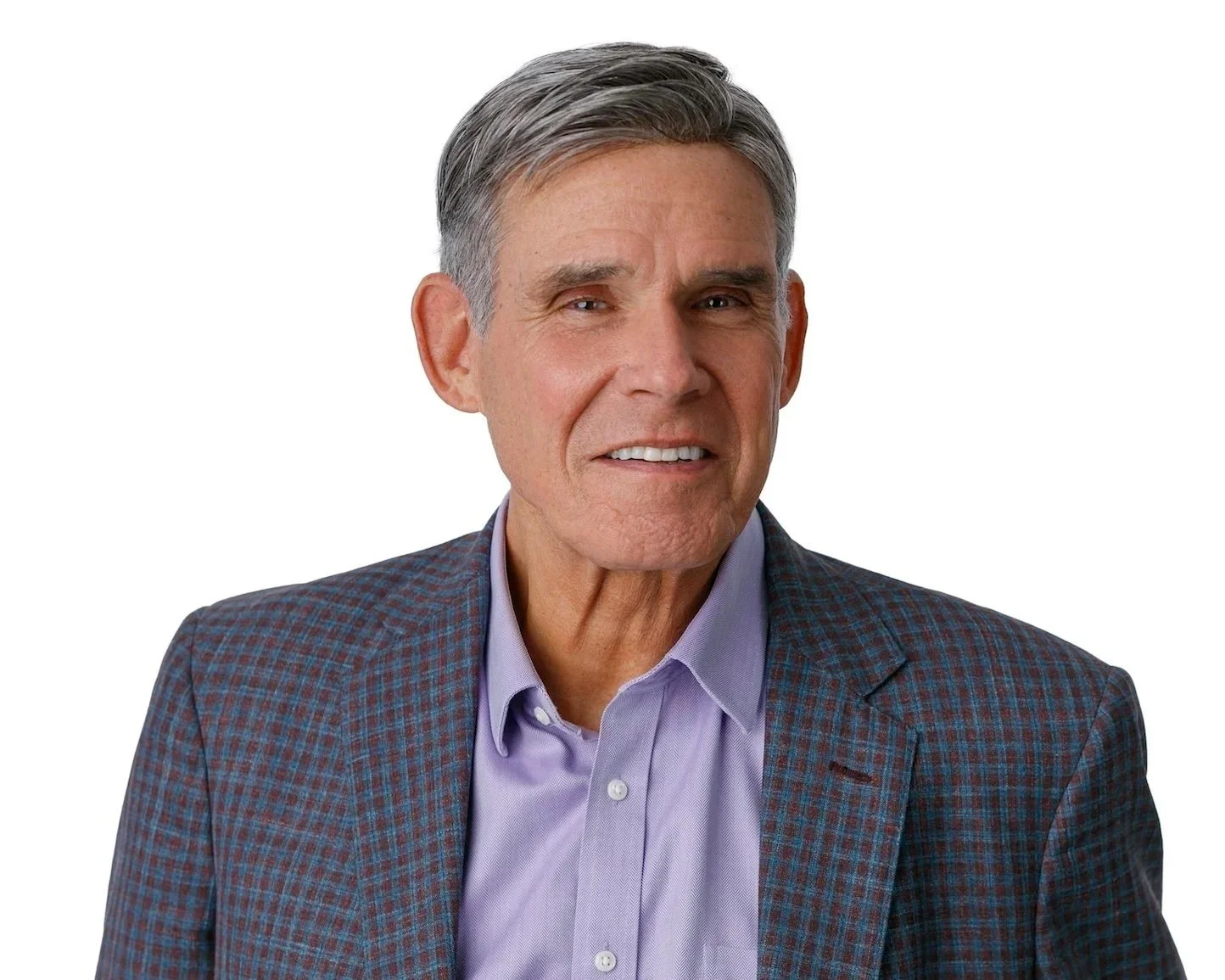
When you challenge dogma, you’re considered irreverent. But that’s an important trait we need – to not just accept things and be complacent in medicine, but always ask: are these sacred cows worthy?
Summary
In this episode of Leadership Matters, Alan Fleischmann sits down with Dr. Eric Topol — cardiologist, scientist, best-selling author, and founder of the Scripps Research Translational Institute — for a wide-ranging conversation on leadership, medicine, and the future of human-centered innovation.
Eric reflects on the mentors who shaped his values, his willingness to challenge the medical status quo, and the next era of medicine. From pioneering digital medicine to advising the UK’s National Health Service on artificial intelligence, he shares lessons on courage, humility, and long-term thinking. Eric also explores how AI can transform healthcare by shifting from treatment to prevention, predicting disease decades in advance, and empowering patients.
Mentions & Resources
Super Agers: An Evidence-Based Approach to Longevity by Eric Topol
The Creative Destruction of Medicine by Eric Topol
The Patient Will See You Now by Eric Topol
Deep Medicine: How Artificial Intelligence Can Make Healthcare Human Again by Eric Topol
Guest Bio
Eric Topol is the Executive Vice-President of Scripps Research, the largest non-profit biomedical research in the United States, where he is founder and director of the Scripps Research Translational Institute in 2007. Clinically active as a cardiologist, he previously led Cleveland Clinic cardiology to become the leading heart center in the US. He was the founder of a new medical school at Cleveland Clinic (Lerner College of Medicine), was commissioned by the UK government to lead a review of their National Health Service. Topol is a principal investigator of two large NIH grants for innovations to promote human health. He has published over 1,300 peer-reviewed articles, with more than 380,000 citations, elected to the National Academy of Medicine, and is one of the top 10 most cited researchers in medicine. In 2024, Topol was featured in the inaugural TIME100 Health list of most influential people in health in the world. In 2025, he was voted as one of the 25 Best Leaders in the United States (US News).
He has authored four best-selling books on the future of medicine: The Creative Destruction of Medicine, The Patient Will See You Now, and Deep Medicine: How Artificial Intelligence Can Make Healthcare Human Again. and his new book, Super Agers: An Evidence-Based Approach to Longevity. At Substack, he publishes Ground Truths, a weekly newsletter and podcast on cutting-edge biomedical advances.
Episode Transcript
Alan Fleischmann
Welcome to Leadership Matters on SiriusXM and LeadershipMattersShow.com. I’m your host, Alan Fleischmann. Today I’m joined by one of the most influential voices in modern medicine, science, and health innovation, Dr. Eric Topol. Eric is a cardiologist, scientist, and author who has spent his career at the intersection of patient care, research, and technology. He is the founder and director of the Scripps Research Translational Institute, where he has helped pioneer new models for integrating digital medicine, genomics, and data‑driven care into clinical practice.
Earlier in his career, Eric held senior leadership roles at the Cleveland Clinic, where he helped build what became the nation’s top‑ranked cardiovascular program, and he taught academic medicine at the University of Michigan, shaping generations of physicians and researchers. Eric’s leadership extends well beyond U.S. institutions. He led the landmark Topol Review for the United Kingdom’s National Health Service, advising the NHS on how artificial intelligence and emerging technologies will reshape the health workforce and the future of care.
He is also a prolific, four‑time best‑selling author and public intellectual. His books, including Deep Medicine, The Patient Will See You Now, and most recently Super Age, have challenged conventional thinking and helped shape global conversations about medicine, longevity, and the human role in an increasingly digital world. Eric has been elected to the National Academy of Medicine, is widely published in leading scientific journals with over 340,000 citations, and is a trusted voice in moments when science, leadership, and public trust intersect. I’m looking forward to exploring Eric’s career, his leadership journey, and the lessons in leadership he’s learned along the way. Eric, welcome to Leadership Matters. It is truly an honor to have you on today.
Dr. Eric Topol
Well, Alan, good to be with you. Thanks so much for your very kind introduction.
Alan Fleischmann
I’ve got your books upstairs; I should have grabbed them so I could quote from them. Let’s start, if we could, with the formative years in your life – where you’re from, your upbringing, any mentors. I’ve got to imagine your home life with your parents, and I’m curious how many siblings you have, and how that shaped this sense of purpose and insatiable curiosity that I imagine began at an early age.
Dr. Eric Topol
I guess so, Alan. I’ve always been kind of an info‑hound, always interested in a lot of reading and information. I remember when I did my training in medicine at UC San Francisco, we didn’t have PDFs then, only Xerox copies. I amassed, I don’t know, 50 boxes of Xerox copies of articles that I tried to ingest. Of course, many of them I could only scan, but moving them was a big expense across the country in my next phase of training. I’ve always had a lot of curiosity and a real affinity for trying to ingest as much information as possible.
The other thing is I love to write. I remember when I was a little kid, instead of talking to my parents about something, I might write a note and leave it under their door. That’s always been a preferred form of communication.
Alan Fleischmann
How many brothers and sisters did you have?
Dr. Eric Topol
I have a younger sister and a younger brother.
Alan Fleischmann
And are they similar to you? Are they in the sciences at all?
Dr. Eric Topol
No. My sister is an accountant, like my father was, and my brother is in retail. They didn’t go into this. I was actually the first physician in the extended family – a large family, with both my parents having many siblings, but there had never been a physician.
Alan Fleischmann
So that means when anybody needed something about anything medical, they called you.
Dr. Eric Topol
Yeah. And the other funny thing, Alan, is that I didn’t intend to go into medicine from the outset. It happened when I was in college at the University of Virginia. I needed work to help pay expenses and got a job in the UVA hospital as a respiratory technician on the night shift. I worked in the intensive care unit changing the equipment, and I thought it was amazing that people I thought were going to die – they were getting last rites – would come back and heal. That really changed my whole career course, because I was so amazed that even back then, in the 1970s, we could turn a person from dying to being highly viable.
Alan Fleischmann
That’s amazing. So you actually did not initially think you’d go into medicine. What did you think you’d study when you were at UVA?
Dr. Eric Topol
The thing that most excited me was genetics. I did a whole thesis called “Prospects for Gene Therapy in Man.” That was in 1975, and it took 40 years to come about – a little ahead of things there. But that’s what I thought was fascinating. That was in the very early days of genetics and the idea that someday we would be able to decode the human genome and make recombinant‑based drugs and so on. Those things were just being discussed, and it got me excited about what we would eventually be doing. Now we’ve got genome editing and all sorts of ways that hold lots of promise for approaching diseases that were previously not treatable and now can even be curable.
Alan Fleischmann
That’s amazing. So UVA was where all this began. Then you went to the University of Rochester School of Medicine, right? Was that right after UVA?
Dr. Eric Topol
Exactly. I spent four years there in the “tundra” of Rochester. It was a very good, solid medical school – nice and small, with a class size of less than 100. That was a good phase, and I had a good mentor there. That was my first foray into cardiology, with a real legend named Art Moss. I had him for a month as a mentor on a rotation, and that was the beginning of me thinking cardiology might be a good thing to do.
That was cemented when I went to UC San Francisco. There was a fellow named Kanu Chatterjee who became my hero. Even though I still hadn’t decided to be a cardiologist, he told me unequivocally, “Eric, you must be a cardiologist.” And I said, “Okay, I will.” Those two mentors, especially Chatterjee, really changed my course within medicine.
Alan Fleischmann
They were legendary figures, both of them, honestly. In the world of cardiology in particular, they were considered forces of new discovery.
Dr. Eric Topol
Absolutely. They’re people I have the highest regard for. The other thing about Art Moss, back to that info‑hound theme, is that we would meet for rounds every day, for that month’s rotation, in the library and spend an hour reading journals. That was when libraries were different and journals were hard copies. That reinforced something throughout my life: I still spend a couple of hours, usually in the mornings, reading journal articles about the latest advances in medicine.
Alan Fleischmann
And he was known for being a mentor, if I’m not mistaken. Did that change the way you became a mentor? You’re known for being a mentor for so many. I’m curious whether that paved the way.
Dr. Eric Topol
No question that these two heroes inspired me. I wanted to be like them – to inspire others and be a really good teacher, to help future generations get excited about what they’re doing. Whether they wind up in medicine or not, or in cardiology or not, doesn’t matter, as long as they’re inspired and get a sense of how exciting and transformative our work can be.
Alan Fleischmann
That’s amazing. Did you ever collaborate with either of them later on?
Dr. Eric Topol
The funny thing is I didn’t collaborate much with Art. My very first publication was a New England Journal paper with Art Moss and a patient I helped care for, which I’ll never forget because your first paper is in the New England Journal – wow. That was the only collaboration I had with him.
With Kanu, I did write an important paper, but here’s a story you’ll love. I was at Michigan and then at the Cleveland Clinic for about 14 years. Around the 10‑year mark at Cleveland Clinic, I kept up with Kanu. We’d frequently be on the phone or email, and he became a really good friend, not just a previous mentor. He told me that even though he had the Gallo Chair at UCSF, he wasn’t being treated well. I tried to recruit him to Cleveland Clinic, and he was very interested. His wife Dari was from Iowa, and ultimately they decided to go to the University of Iowa so they’d be close to her home. He could have gone anywhere in the country, and that’s where he wound up.
What’s fascinating is that a few years after he died of pancreatic cancer, tragically, his wife sent me a pad on which he had written, after his trip to Cleveland, why he thought it would be wise to join me at Cleveland Clinic. I just sobbed. The chance to work with him side by side would have been amazing. He had an indelible, profound impact on my career. Beyond our collaboration, trying to recruit him was something I never imagined when I was training under him.
Alan Fleischmann
That’s amazing. He got a lot of awards and recognition for his research as well.
Dr. Eric Topol
Oh, absolutely. We even formed a society on his behalf called the K. C. Chatterjee Society, and we had gatherings of literally thousands of physicians he inspired. Many went into cardiology, and many didn’t, but he had an amazing impact. What set him apart, beyond the fact that with just his stethoscope he could say what the pressure was in any chamber of the heart, or with his hand on the chest, was his depth of humanism.
On rounds every day, at least a couple of hours, sometimes three, in the cardiac care unit, if a patient died, he would cry when we heard about it on the morning report. The way he interacted with patients was exemplary. He was a great humanist who not only provided extraordinary care but also deeply cared about his patients. You just don’t see enough of that in the busy world of medicine.
Alan Fleischmann
And you can get so hardened by the circumstances of your daily life. For him to remain human, as you said, and vulnerable – what a bright light to be that courageous, to be that vulnerable.
Dr. Eric Topol
On rounds, everything would stop because we were all in the room. He was like the Pied Piper. There’d be 20–25 people outside a room, and he would be inside, crying, and we would just stand there in silence and take it in. I don’t remember another attending I trained under who was like that.
Alan Fleischmann
That’s incredible. I love that, because so much of what we talk about on the show is that we are who we are because of those extraordinary people who played mentoring and role‑model roles. Sometimes the greatest mentors are the ones who show you the way rather than preach the way. It sounds like, in this case, you got both directional mentoring and example.
Dr. Eric Topol
Yeah. There’s another funny thing I’ll never forget. We had seen four patients with right ventricular infarct, which isn’t common, but we put in pacemakers and helped them survive. Kanu and I wrote up a paper. All of a sudden there were four patients and nine authors. I said to Kanu, “This is crazy. You and I did all the work. Who are these other seven authors – freeloaders?” And he said, “Eric, welcome to academics.” I’ll never forget that, because it’s not right.
People wanted credit because they did the echo on a patient or were involved in care of one patient or another, but they never thought of the work involved in pulling it all together. I have deep respect for authorship and the integrity, honesty, and authenticity of it. I’ve even written about this – the “drafter” and the “draftees.” That’s one of the problems in medicine: everybody wants more papers. That’s not a good goal. The goal should be that you really did the work and were instrumental in the report, paper, or study. We’ve never had enough of that.
Alan Fleischmann
And was Kanu ever at Hopkins? You did a fellowship at Hopkins too, right?
Dr. Eric Topol
Yes, I did a cardiology fellowship at Hopkins for three years, or about two and a half, because I left early to go to Michigan. I was really interested in intervention with angioplasty, opening up arteries and dissolving clots with clot‑dissolving medicine. They weren’t really doing that at Hopkins.
Alan Fleischmann
Hopkins has been known for being on the conservative side of things, always very conservative.
Dr. Eric Topol
Very conservative. I needed to go to a place where I could let loose. They weren’t even going to let me train to do angioplasty there; there was a line of several people ahead of me. So I did angioplasty training during my cardiology fellowship at San Francisco, and then left for Michigan early to be a leader in their interventional program. That worked out really well, because we were able to make the University of Michigan the leading heart‑attack treatment center in the country for a stretch, using balloons and clot‑dissolving medicines to stop damage to the heart.
There’s one interesting story from Johns Hopkins. In February 1984 – about 42 years ago – we treated the first heart attack with clot‑dissolving TPA medicine. The Chief of Cardiology decided to have a press conference. Hopkins wasn’t known for that sort of thing. At the press conference, the journalist who normally covered the health beat in Baltimore was sick, so they sent another guy. I was asked to describe the procedure, cardiac catheterization. I said we numb up the groin area and float the catheter up the arteries of the heart. The front page of the Baltimore Sun read that Dr. Topol said the catheter was inserted into the “genital tract” and snaked into the heart without pain. That was the beginning of the field of “uro‑cardiology,” not something I’d learned.
You don’t put the catheter in the penis; you put it into the artery in the thigh. I learned that you have to be really careful with the media. That was an early lesson that they’re going to get things wrong. Assume they’ll get it wrong even when they’re nodding and have it recorded. That was a learning experience for me. Bernadine Healy was there, as well as Mike Weisfeldt and many other real leaders.
Alan Fleischmann
Amazing, because she went off to head the NIH.
Dr. Eric Topol
Yes. I intersected with her again at Cleveland Clinic, where she was the head of research when I got there, and shortly after she left to go to the NIH.
Alan Fleischmann
I’m a Baltimore boy, so a lot of these names are big to my family, which was very involved with Hopkins – Dr. Weisfeldt, and I think there was a Richard Ross and a few others.
Dr. Eric Topol
Oh yeah. Hopkins has a long history in cardiology, which is one of the reasons I decided to train there.
Alan Fleischmann
Then Cleveland Clinic, even then, was considered to have perhaps the opposite culture of Hopkins. It was all about pushing the envelope, especially in cancer and cardiology. It was known for not being status quo, but really pushing the envelope. Am I right?
Dr. Eric Topol
Yes. When I was looking at the job in 1990 – I went there in ’91 – Cleveland Clinic was known for open‑heart surgery, bypass surgery. They were perhaps the largest in the country and did innovative work with the mammary artery, which Fred Loop innovated. But in cardiology, which is everything but surgery, they hadn’t made major lasting contributions for a number of years, because the surgeons were hyper‑dominant.
Alan Fleischmann
We know that in the ’60s they were the avant‑garde surgeons for open‑heart surgery and all that. For that era, it really was Hopkins, right?
Dr. Eric Topol
Yeah, Hopkins surgery – congenital heart disease and so many other things. Cleveland Clinic had a much narrower identity. My mission, when Loop recruited me, was to bring in real depth of talent and make major contributions to advance cardiology and work side by side with cardiac surgeons. That was a great challenge, but we were able to do it. It took lots of recruitment and a lot of great people, and eventually we really made our mark.
Alan Fleischmann
That’s so exciting. So you were the generation that came in to transform the Clinic into what it’s known as today – much more about pushing the envelope and thinking differently.
Dr. Eric Topol
It’s great that I left 18 years ago, and they’ve kept it going. I’m very happy about that. The other thing I did before I left, starting in 2002 and opening in 2004, was a medical school at Cleveland Clinic, which I initiated and founded. When we first brought it up in 2001 to the large staff of Clinic physicians at a town hall, I’ll never forget: it was repudiated. All the doctors said, “We don’t want these medical students. They’ll slow us down. They’ll ruin our practice,” and so on, because there was no school of any kind at Cleveland Clinic – no undergraduate medical education at all.
It was a great addition because it made the place truly academic. Now it’s one of the leading medical schools in the country. Some of those students have come out here to Scripps and trained with me. I’ll always remember that as something that got completely turned around. Now the physicians are proud of having the medical school.
Alan Fleischmann
And the West Health Institute, which you also worked on, that’s out your way now, isn’t it?
Dr. Eric Topol
Yeah. Shortly after I came to San Diego, I met Gary and Mary West, an incredible philanthropic couple. They asked what was new in medicine and how they could help. We talked about digital medicine – this was the same year the iPhone came out, 2007 – and sensors on watches, continuous glucose monitors, and so on. They got behind that and formed what was then called the West Wireless Health Institute, now the West Health Institute. They’ve been big supporters of advances in health for the last 17 years through that institute.
Alan Fleischmann
You were talking about AI and digital health when you started that there. That wasn’t the conversation then.
Dr. Eric Topol
Right. We set up at Scripps the first academic digital medicine program ever, because we could see that with the iPhone and sensors this was going to be a big deal – everything connected to the internet. Then, about six years ago, I wrote a book called Deep Medicine, which you mentioned. I wrote it in 2018. That book tried to lay the groundwork for how AI would transform medicine, and we’re starting to see that. It’s still a work in progress, but the four books I’ve written are all, eventually, accurate; the timing is just way off. I keep projecting, but I’m way off on when we’ll actually see things.
Alan Fleischmann
Real pioneering work, when you think about it. You were using terminology like “digital health” and “artificial intelligence” when those words weren’t being talked about, even in the private sector outside of medicine. People “in the know” knew, but it was a narrow field.
Dr. Eric Topol
I think it was a logical sequence. First, we started getting more data in medicine and health than we’d ever imagined, and we had no way to deal with it. Then we had democratization, where patients could – and should – have their records and data. They could also get involved in things like diagnosis of non‑serious conditions such as skin rashes, ear infections, and urinary tract infections.
Then things evolved further: we had a way to work with all this data, and that was incredible. That’s how the field progressed. The next phase, which I’m even more excited about, is the ability to predict diseases decades ahead and prevent them from ever occurring, particularly age‑related diseases such as heart disease, cancer, and neurodegeneration. That’s the subject of Super Age, which I think will wind up being AI’s biggest contribution in medicine.
Alan Fleischmann
Was that the main mission – solving those gaps – when you started the Scripps Research Translational Institute?
Dr. Eric Topol
Yes. It was to individualize medicine. Some people call it “precision,” but I think that’s a bad term because it has to be accurate, not just precise. Being precise means you can make the same mistake over and over again. We have lots of mistakes in medicine. Individualized medicine is about getting the full stack of data for each human being, making them unique, and using that data to promote health and prevent disease. That was the founding mission in late 2006 when I got here, and we keep trying to chip away at it.
Alan Fleischmann
The idea is to really identify what you’re seeing – like a strategy of looking well beyond today’s horizon to what will exist tomorrow.
Dr. Eric Topol
We’ve got to always look around the corner and figure out what’s important. I really enjoy that. It doesn’t happen by accident; it takes scouring the literature frequently. Old age helps because you have more experience.
Alan Fleischmann
I wonder if the mentoring you had also shaped your leadership challenges. Now it’s probably easier to recruit, but you were probably in a challenging time when established organizations you might have wanted to recruit from didn’t see innovation and technology at the forefront, while you did. That must have been hard and critical to scaling what you were trying to achieve.
Dr. Eric Topol
Each time you start something new or change the main objectives, it’s hard at first, and then you get over the hump. I’ve basically had three jobs – Michigan, Cleveland Clinic, and here at Scripps Research – and each time it was the same phenomenon: at first it’s hard, then it gets easier.
Alan Fleischmann
And then the NHS part – that was another job.
Dr. Eric Topol
Yeah, and that was crazy. I really enjoyed it. Jeremy Hunt, who was then the Secretary of Health in the UK, contacted me and asked if I’d do this review. I felt honored to be asked, but I didn’t know what it would turn out to be like. It was exhilarating. They assigned me about 50 people from all over the country. I was the only non‑UK person. These were experts in every domain – AI, sensors, robotics, genomics, economics, and more.
I met with this team frequently, making multiple trips to London, and we produced a review after two years of work. What’s amazing is that they’re still using that review as their blueprint. They’ve had over 50 fellows in the program; they call them Topol Fellows. I was so honored by that. I didn’t ask them to name the review after me. They were amazing and very supportive, and we came up with a lot of great ideas. I think the UK is going to lead in this space of AI going forward, because they’re set up, unlike the U.S., to look after their population and invest in AI to prevent unnecessary expense and health‑workforce burden. Eventually, I think they’ll get it right. The NHS isn’t doing so well at the moment, but I think they’ll pivot and make it exemplary again.
Alan Fleischmann
Are you still involved?
Dr. Eric Topol
Yes. They contact me not infrequently – some people I met during the review and some who are still in charge. I continue to have Zoom calls with them every couple of months. I also interact with many of the fellows in the program for career guidance.
Alan Fleischmann
That’s amazing. Do the fellows go back and forth between Scripps and where they are in the UK?
Dr. Eric Topol
No, they pretty much stay there. Some have done work in Europe. A couple have come to visit, but none have spent any length of time here.
Alan Fleischmann
What I like is that you create these colonies of collaboration because you’ve had so many jobs at the same time. It goes horizontal, not just vertical. You don’t just create lanes; you crisscross important areas you’re focusing on.
Dr. Eric Topol
I’ve been very lucky to do that. I’m not one to travel, but that was worth every mile. Such great people. Some have become close friends and collaborators on separate research initiatives. It’s really one of the high points for me.
Alan Fleischmann
When I think of you, I think of someone who is extraordinarily courageous but also humble. It’s an unusual combination: someone challenging long‑standing assumptions and questioning orthodoxy and tradition, yet doing it with curiosity and humility. That’s unusual in your field, where people who buck the system are usually quite arrogant.
Dr. Eric Topol
There’s a lot of that. People who know me well know I don’t tolerate it. There’s a lot of hyper‑confidence, superiority, and assertiveness, and we don’t need that. The problem, as you can imagine, is that when you challenge dogma, you’re considered irreverent. But that’s an important trait we need – to not just accept things and be complacent in medicine, but always ask: are these sacred cows worthy?
We should never be afraid to speak out and speak the truth. The hardest time I ever went through was the whole Vioxx debacle, standing up for the fact that Merck wasn’t telling the truth.
Alan Fleischmann
Tell us a little bit about that.
Dr. Eric Topol
It was a really painful ordeal. A fellow who worked with me when I was chairing cardiology at Cleveland Clinic, named Deb Mukherjee, came to me with his own discovery. He was going through the bowels of the FDA website and found that Vioxx looked like it was tied to a big increase in heart attacks. When he first came to me, I said, “Oh, Deb, are you kidding? That can’t be.” Then I started looking at the data with him, which I always enjoy, especially with a trainee. I said, “Wow, Deb, you’re right. There’s something wrong here.”
We wrote it up as a paper, knowing that if we checked with Merck, they wouldn’t own up to it. I think we did check with them, and they denied our concerns. The paper was published in 2001 in JAMA. Merck tried to pressure the JAMA editor, Kathy DeAngelis, threatening to sue if they published our paper. Fortunately, they weren’t successful.
Three years to the day after publication, Merck abruptly withdrew Vioxx. The CEO, Ray Gilmartin, held a press conference and said they took Vioxx off the market the first time they saw a heart‑attack signal. I thought, “Wait a minute. What about three years ago when you sent your henchmen to challenge our effort and call it data‑dredging, rookie work, and so on?” I couldn’t stand for that. I should have just shut up, but that’s not me.
I wrote an op‑ed for The New York Times in 2004. I’d never done that before. The op‑ed tried to get the truth out about Vioxx – that we knew about it, Merck didn’t want it out, and now they were making false claims, which were later substantiated by emails and other proof that they knew and didn’t act. That set off a horrible experience. Merck went after me, and I didn’t know that at my own institution the Chairman of the Board of Trustees, Mal Mixon, was close friends with Ray Gilmartin. So my own institution was trying to destroy me, and I received death threats and all kinds of bad things.
Eventually, Merck never paid any real price for that lapse. Before it happened, they were considered the pinnacle ethical pharma company. Standing up for the truth can be hazardous, as I learned. Were I faced with that again, I might be reluctant because pharma companies don’t have real accountability. If they do something knowingly wrong like that, they should pay a price, and they didn’t. They’re basically immune, which isn’t right.
Alan Fleischmann
When did you start using the terminology “artificial intelligence” and “AI”? We talked earlier about some of your great mentors being human, empathetic people. We don’t always think of that with AI, although I’ve had some empathetic interactions with chatbots. When you look at the future, do you see it dominated by technology and innovation, or do you see it as collaboration? Will human ingenuity lead, or are you worried that the next generation of breakthroughs, likely to come through AI, will carry risks that outweigh the rewards?
Dr. Eric Topol
I think that over the longer term, the benefit is overriding. But there’s definitely a trade‑off we have to keep in mind all the time. I got into AI when deep learning – supervised deep learning with medical images – was taking off. I could see that if you put in 100,000 or a million images and trained an AI to see what radiologists or other specialists see, it would exceed their capabilities, spotting things human eyes couldn’t see. That triggered me to think, “This deep learning is something.”
This was really Geoffrey Hinton’s work, recognized by the Turing Award. I’ve gotten to know Geoff; he’s amazing. Demis Hassabis is one of my heroes. Some of the leaders in AI are extraordinary because they still respect human intelligence. Jensen Huang is another one. These great minds in tech inspire me, but they also recognize that this is a big work in progress. The objective is clear, but how and when we’ll get there requires lots of effort, human oversight, and maintained oversight. We can’t ever let this go. We can’t be complacent and assume AI is going to get it right. It’s always going to be an interaction requiring us to be involved in medicine and healthcare.
Alan Fleischmann
So you’re not worried about all the negativity people fear about AI. You see it more as augmenting speed and quality – an efficient tool rather than a dominating tool.
Dr. Eric Topol
Yeah. In the short term, we’ve got worries. Over time, we won’t even talk about it anymore. It’ll be embedded to make practice more accurate, more humanistic, more predictive – just better across the board. I see it democratizing care and giving patients empowerment. Those goals will be achieved over time, but we’re not there yet.
Before we had dinner‑table AI with large language models, deep learning only was being worked on. LLMs were under development in 2017 but only unleashed to the public at the end of 2022 with ChatGPT. We’ll keep building on that, and I think this will accelerate. Eventually I’m not worried about super‑intelligence. I’m just worried about getting better medical care for patients.
Alan Fleischmann
That makes a lot of sense. What kinds of breakthroughs do you envision? Tell us a little about your latest book, why it has become such a phenomenon, and why people see it as more of a constant bible than a book that quickly becomes outdated, as often happens in innovation and technology.
Dr. Eric Topol
That’s very kind. I wrote it to try to see around a corner. AI is part of it, but it isn’t featured in the title or subtitle. We’re going to have data we never envisioned. An example would be having a clock on every organ in your body this year, in fact, where I could say your brain’s pace of aging is healthy – you’re younger than your chronological age – but your heart is aging too quickly. Every organ, including the immune system, which we’ve never been able to gauge. That’s beyond high‑throughput proteomics and a much more enhanced understanding of our genomics, biomarkers like p‑tau217 for Alzheimer’s, and more – layers or stacks of data for each individual.
Knowing that age‑related diseases take 20 years to incubate, we’ve got 20 years to get ahead of them, and we will. That’s what I’m excited about, and that’s why I wrote Super Age. We can accept that we’re going to age, but we don’t have to accept being burdened with the three big age‑related diseases – heart disease, cancer, and Alzheimer’s or neurodegeneration. We can prevent them if we identify people at high risk.
The other big thing AI does for us is not just tell us if a person is at high risk but when. We never had that before. We never had a 51‑year‑old and could say, “When you’re 67 you’re going to have mild cognitive impairment, pre‑Alzheimer’s, plus or minus a year. Here’s what we can do to push that to age 82.” That’s a whole new dimension AI is introducing right now. We’re building on it; even since the book was published last May, there have been new predictive models that are incredible. One example: your sleep data could predict 130 subsequent diseases accurately. Predictive prevention – that pivot – is going to be huge in the years ahead.
Alan Fleischmann
That’s so cool. What do you hope people get out of the book? It’s not only a book for laypeople; scientists read it, technologists and investors read it, people looking to see around the corner read it. Were those the audiences you were looking for?
Dr. Eric Topol
I would have liked it to be suitable for the whole public, but even though I struggle – and my editor helps – to eliminate medical and scientific jargon, I still could have done better. I try to be a good explainer for everyone. The real intent was to lay out the groundwork for tremendous optimism at a time when many of us are not especially optimistic about science and medicine. On the horizon, and even now, there are extraordinary developments: across our immune system, infectious disease approaches, genome editing, and so on. All of these intersect with AI, including off‑the‑shelf cells to cure autoimmune diseases.
The book was meant to enlighten people that we’re entering a new phase of medicine. We used to think treatment, treatment, treatment. We’re going to talk about prevent, prevent, and even cure. That’s why I remain optimistic at a challenging time, especially in American medicine and science.
Alan Fleischmann
Is there another book in you right now? Are you writing another book?
Dr. Eric Topol
I’m thinking about it. I usually need a few years to recover. That one had almost 1,800 papers to cite, and to really do it right is a big effort. I’m thinking that the next one, if I do it, I’ll avoid citations and just talk like we’re talking now, in very simple terms. If I do another one, it may have a different emphasis – more informal conversation rather than too many citations.
Alan Fleischmann
Do you use AI for your books now?
Dr. Eric Topol
No, I’ve never used AI in the books. I do a Substack called Ground Truth, and sometimes, depending on the topic, I’ll use an AI tool for deep research to see what comes up. I don’t use it in my writing, but I use it to find out if I’m missing something. I also like NotebookLM. It can generate very cool infographics that are sometimes useful. I use these tools sparingly, but I’m impressed with them.
Alan Fleischmann
That’s cool. You’re optimistic, which I love. We don’t get a lot of optimism right now in the world. Hearing you be optimistic is important. What are you most optimistic about, and how bullish are you about the future and breakthroughs we’ll see in the next few years?
Dr. Eric Topol
We’re starting a prevention‑of‑Alzheimer’s randomized clinical trial this month. I think it’s here and now. These are proof‑of‑concept studies showing you can change brain aging and p‑tau217 and other markers, whether with lifestyle or with drugs that have strong promise. I believe we’ll have the capability of preventing these three diseases over time. If we were smart, we’d invest big right now to accelerate that, because the time is now. All the tools are here, as I lay out in Super Age, but we’re not doing it here.
Part of the problem is that we don’t have the right health system to support such investment. Insurance companies rule, and they only care about patients on a one‑year basis to renew their contracts. It’s going to be other countries, like the UK and other high‑income nations with universal healthcare, that have a better shot. Any investment they make can pay off by reducing both health and economic burdens. We’re not well‑equipped. My optimism about doing this in the U.S. is far less than for other countries that have a better framework, though I’d love to see it happen here. There doesn’t appear to be any interest at all.
Alan Fleischmann
When you think about how you prioritize – you’re a very principled leader – how you make decisions today, what are your guiding principles? Are there practices you live by in how you organize yourself? Have those principles changed over your career?
Dr. Eric Topol
I’m always thinking about the future – that old Wayne Gretzky idea of skating to where the puck is going. You have to anticipate where the puck is going in medicine. You may be wrong, but that’s where you want to be, ideally working. Don’t put too much energy into things that won’t move the needle in a major way. You may fail, but it’s better to take a big shot than do something that’s a tiny baby step with zero impact.
When you fail, put it out there so others know why and how you failed. Be transparent. Those are some guiding principles. I probably put undue emphasis on trying to anticipate what’s next. I’ve always done that – my crazy college thesis decades before there was any sign it was real shows that.
Alan Fleischmann
Have those guiding principles changed in the last few years with the broader knowledge about what you’re doing in AI?
Dr. Eric Topol
The velocity of what’s happening in AI is unimaginable. It’s inconceivable how fast it’s moving. Over the weekend there were 10,000 agents talking to each other on their own social media, talking about consciousness. This is moving at a clip I’ve never seen in my 40 years in medicine. That makes it more daunting to anticipate what’s next, but that’s fun.
Alan Fleischmann
I love that. I think that’s the big challenge – and the big opportunity.
Dr. Eric Topol
Exactly. We were talking in our Monday morning faculty meeting about how we can be creative with this power, this agentic AI. What if you had 10,000 doctors to consult on any patient? Things like that.
Alan Fleischmann
I love that. How much are you using your influence beyond Scripps, drawing in experts from other places?
Dr. Eric Topol
We collaborate with many places – companies like Google and Microsoft and others, and academic institutions like Stanford, University of Florida, Harvard, and many more. This is so big that you can’t do it at one institution or with one team. You need big groups and big talent together. Not just a single group, but many – companies, universities, institutes – and not just in the U.S. We collaborate internationally with friends from the NHS review and elsewhere. Getting the team together – wisdom, talent, creativity, all these human qualities – is how we’ll make advances, and we constantly push on that.
Alan Fleischmann
How much will capital deployment matter? You’re inspiring a lot of folks doing innovative things in private investment. Where do they deploy capital and know‑how to support breakthroughs and big shots you imagine?
Dr. Eric Topol
Smart investment is crucial. There’s no shortage of capital as best I can tell. AI investment in data centers has been in the trillions of dollars. But is it smart investment relative to what we could be doing in medicine? If you have X amount and apportion it to scaling data centers, would it be better spent helping us be healthier and avoid the three disease areas that account for 85% of our compromised healthspan?
Alan Fleischmann
It’s amazing when you think that we assume we need so many shots, interventions, and things we have to do, and what you’re saying is we can simplify that with the right medicine so we have a lifetime of health and longevity.
Dr. Eric Topol
They should be matched. There shouldn’t be a 15‑year gap between when healthspan ends – at an average of 64 – and when lifespan ends at 79. In those last 15 years, most people, the vast majority, have a major chronic age‑related disease.
Alan Fleischmann
What do you worry about most that could prevent your vision from becoming reality? What’s the big obstacle?
Dr. Eric Topol
It’s going to take investment to do the trials and get proof – compelling evidence. That takes funding and investment, not just from one group but from the whole academic‑corporate convergence of interest. I think the time is now to invest in prevention. We’ve never been able to before, aside from a minor amount in heart disease, and even that was small relative to what we can do.
I don’t think people realize this will be AI’s big bang in medicine yet. When they do, maybe we’ll see major investments. So far our investment, for example in the Alzheimer’s trial, had to come from philanthropy. We wouldn’t be able to get that funded through a government agency at this point.
Alan Fleischmann
So in the world we live in right now, it’s not going to come from NIH. But it could come from the private sector as a bridge until we have a different environment at scale from government, and it might even replace it.
Dr. Eric Topol
Yes. We can’t let great ideas be held up by a government that’s not conducive to this investment. We won’t let that happen. We’ll just find benefactors – whatever it takes to keep pushing forward. But it definitely slows us down to some degree.
Alan Fleischmann
It must be very disappointing for you at a time when all your work on AI and technology innovation ought to lead to resources flowing, but they’re not.
Dr. Eric Topol
Right. This is the most extraordinary opportunity right now. If we all got behind it, we could make huge dents in the big three age‑related diseases that are just waiting for that to happen.
Alan Fleischmann
Those are cardiac issues, Alzheimer’s, and cancer.
Dr. Eric Topol
Yes. And with cancer, the idea is no longer about individual cancers but about creating an immune response that allows cancers to be part of the past. As we get older, we get a senescent immune system; it starts to lose integrity and becomes dysfunctional. It varies a lot between people of the same age. One person could have a totally intact immune system; another could have one that’s really malfunctioning.
For example, we learned from the shingles vaccine – which reduces Alzheimer’s by 20‑some percent – that its effect isn’t just against herpes zoster. As best we can tell, it’s through the immune system, bringing people whose immune system is starting to lose function back up with a vaccine that’s meant for a virus, but actually helps prevent Alzheimer’s. These revelations are important because the immune system is the basis of those three diseases. If we can keep it sharp – not overactive and attacking ourselves, and not underperforming – that’s a big way we’ll prevent them.
Step one is measuring immune system function in a person. Up until now, we didn’t have a way to do that. It’s amazing that in 2026 we have no immune system lab test, but that’s going to change. First with a clock: the pace of aging of our immune system. I could know if your immune system is 10 years older than you are; watch out for cancer, because that’s when cancer strikes – when your immune system isn’t keeping it in check.
The more your immune system is dysfunctional, the more you get inflammation, and that inflammation drives these three diseases. It’s the immune system–inflammation interaction that underpins age‑related diseases.
Alan Fleischmann
I know we’re wrapping up, which means we have to have you back on. Do you adhere to a certain diet yourself? Are you vegan, a meat eater, a grass‑fed meat eater? What do you do?
Dr. Eric Topol
I’m a pescatarian – a lot of fish and vegetables, not a vegan. I haven’t had red meat in over 40 years, but I try to keep an anti‑inflammatory diet, akin to a Mediterranean diet. I love things like nuts and salads. I’m also an exercise nut – I always have been. The thing I wasn’t good at, which was sleep quality, I’ve worked on a lot.
There are other lifestyle factors people don’t appreciate as much: social engagement, being out in nature, hobbies, purpose, and so on. What’s written in Super Age about all that is now really substantiated. It’s not just diet and exercise; there’s much more we can do to achieve healthy aging and extend our healthspan by many years. The sooner we do it, the longer the impact.
Alan Fleischmann
We’re almost ending where we started – with the human qualities necessary in the midst of innovation and technology. They’re going to be even more important: how we create and participate in community; how we preserve our earth so we’re part of that system; how we create contact with others that improves communication and collaboration, and creates a more loving community, like your mentors showed you.
Dr. Eric Topol
I really learned from them. Now mentorship is recognized as a big deal, but when I was training it was by happenstance. You found somebody you looked up to, and they weren’t being graded as mentors. They were just naturally great mentors.
Alan Fleischmann
Now they’re role models for those who know that mentorship is such an important part.
Dr. Eric Topol
So true.
Alan Fleischmann
This has been amazing. You’ve been listening to Leadership Matters on SiriusXM and LeadershipMattersShow.com. I’m your host, Alan Fleischmann. We just spent a fascinating hour with one of the great leaders in medicine, Dr. Eric Topol, the founder and director of the Scripps Research Translational Institute and the author of a book I hope each and every one of you will pick up, Super Age. We’ve discussed his early career and journey through medicine, how we can marry technology and innovation with humanity, and where human ingenuity still leads. We expect AI to help us transform the healthcare industry, but not necessarily take it over, and the lesson in leadership is to use these tools for breakthroughs and advances in a way that is human‑first. This has been a very inspiring hour, Eric.
Dr. Eric Topol
What a great summary. I’ve really enjoyed the conversation with you, Alan. I hope we’ll have a chance to convene again.
Alan Fleischmann
Let’s make sure we do it in person. Have you back on as you start to identify breakthroughs or potential breakthroughs on the horizon – they don’t have to be tomorrow. Let’s have these conversations, because people are looking to understand how AI and technology innovation are on our side if led by people like you and the colleagues you bring together. That’s very exciting. Thank you for all that you do, and please don’t stop.
Dr. Eric Topol
Thank you. You too. Take care now.
Alan Fleischmann
Thank you. Talk to you soon.