Ezekiel Emanuel
Bioethicist and health policy expert
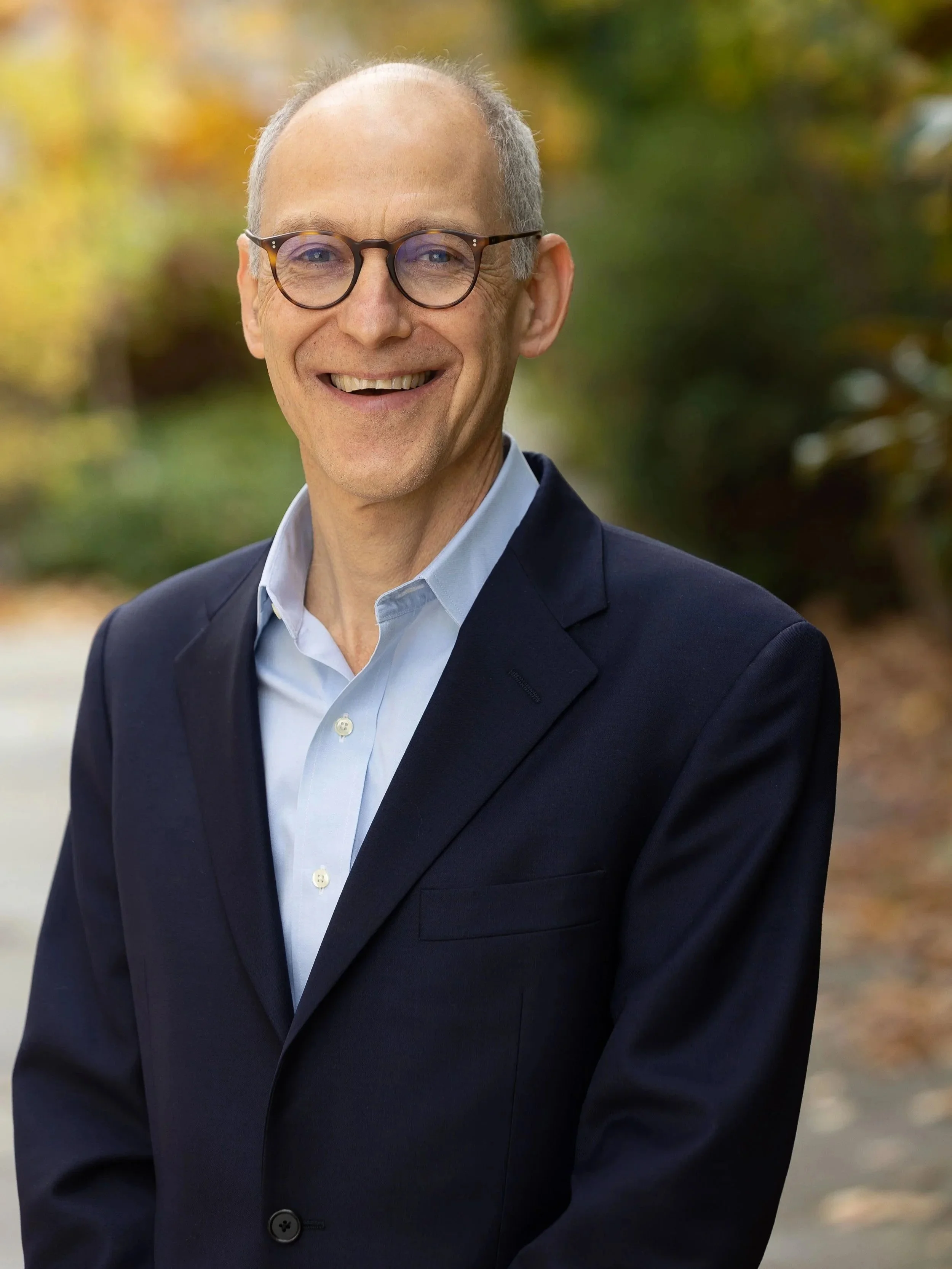
Wellness is a lifestyle, and you’re going to have to continue it for decades. If all you’re doing is punishing yourself, it ain’t going to stick.
Summary
In this episode of “Leadership Matters,” Alan Fleischmann sits down with Dr. Ezekiel Emanuel, one of the nation's most influential voices in bioethics and health policy. The world’s most cited bioethicist and a professor at the University of Pennsylvania, Zeke brings a rare combination of medical expertise, philosophical rigor, and policy experience to conversations about how Americans can live longer, healthier, and more meaningful lives.
Over the course of their conversation, Alan and Zeke discuss his upbringing in a high-achieving Chicago family, the many mentors who shaped his journey through both an MD and PhD, and his tenure as the founding chair of the Department of Bioethics at the National Institutes of Health. The two also spend substantial time discussing Zeke’s latest book, Eat Your Ice Cream: Six Simple Rules for a Long and Healthy Life. In the book, Zeke makes a compelling case against perfectionism, self-deprivation, and biohacking extremes when it comes to wellness, arguing instead for a balanced approach grounded in a few practical rules. The episode also touches on the state of American healthcare, the remarkable advances in biomedicine over the last few decades, and Zeke's concerns about the future of American medical innovation. Throughout, Alan and Zeke explore a philosophy of wellness that recognizes its integration with the rest of life and prioritizes the well enough over the pursuit of perfection.
Mentions & Resources
Guest Bio
Ezekiel J. Emanuel, MD, PhD, is the Vice Provost for Global Initiatives, the Co-Director of the Healthcare Transformation Institute, and the Diane v.S. Levy and Robert M. Levy University Professor at the University of Pennsylvania Perelman School of Medicine.
Emanuel is an oncologist and world leader in health policy and bioethics. He is a Special Advisor to the Director General of the World Health Organization, Senior Fellow at the Center for American Progress, and member of the Council on Foreign Relations. He was the founding chair of the Department of Bioethics at the National Institutes of Health and held that position until August of 2011. From 2009 to 2011, he served as a Special Advisor on Health Policy to the Director of the Office of Management and Budget and National Economic Council. In this role, he was instrumental in drafting the Affordable Care Act (ACA). Emanuel also served on the Biden-Harris Transition Covid Advisory Board.
Dr. Emanuel is the most widely cited bioethicist in history. He has over 350 publications and has authored or edited 15 books. His recent publications include the books Which Country Has the World’s Best Health Care (2020), Prescription for the Future (2017), Reinventing American Health Care: How the Affordable Care Act Will Improve our Terribly Complex, Blatantly Unjust, Outrageously Expensive, Grossly Inefficient, Error Prone System (2014) and Brothers Emanuel: A Memoir of an American Family (2013). In 2008, he published Healthcare, Guaranteed: A Simple, Secure Solution for America, which included his own recommendations for health care reform.
Dr. Emanuel regularly contributes to the New York Times, the Washington Post, the Wall Street Journal, The Atlantic, and often appears on BBC, NPR, CNN, MSNBC and other media outlets.
He has received numerous awards including election to the National Academy of Medicine, the American Academy of Arts and Sciences, the Association of American Physicians, and the Royal College of Medicine (UK). He has been named a Dan David Prize Laureate in Bioethics, and is a recipient of the AMA-Burroughs Wellcome Leadership Award, the Public Service Award from the American Society of Clinical Oncology, Lifetime Achievement Award from the American Society of Bioethics and Humanities, the Robert Wood Johnson Foundation David E. Rogers Award, President's Medal for Social Justice Roosevelt University, and the John Mendelsohn Award from the MD Anderson Cancer Center. Dr. Emanuel has received honorary degrees from Icahn School of Medicine at Mount Sinai, Union Graduate College, the Medical College of Wisconsin, and Macalester College. In 2023, he became a Guggenheim Fellow.
Dr. Emanuel is a graduate of Amherst College. He holds a M.Sc. from Oxford University in Biochemistry, and received his M.D. from Harvard Medical School and his Ph.D. in political philosophy from Harvard University.
Episode Transcript
Alan Fleischmann
Welcome to Leadership Matters on SiriusXM and at leadershipmattersshow.com. I'm your host, Alan Fleischmann. I'm joined today by a pioneering medical leader and one of the most sought-after, influential voices in American health.
Dr. Ezekiel Emanuel — Zeke — is an entrepreneur, world leader in bioethics, who currently serves as the Diane V.S. Levy and Robert M. Levy University Professor at the University of Pennsylvania. In addition to his remarkable academic work, Zeke has a long history of public service. He served as the founding chair of the Department of Bioethics at the NIH, helping lead the organization for more than a decade. As a special adviser to the Office of Management and Budget in the White House from 2009 to 2011, he was instrumental in drafting the Affordable Care Act. Zeke also served on the Biden-Harris Transition COVID Advisory Board.
Zeke is also an accomplished author who has written or edited more than a dozen books. His most recent book, Eat Your Ice Cream, is a thoughtful, provocative guide to living a full and healthy life without falling for unrealistic promises.
Today we'll explore Zeke's early life, some highlights of his remarkable career, and the lessons in leadership he's learned along the way.
Welcome to Leadership Matters, Zeke. It is such a pleasure to have you on the show.
Ezekiel Emanuel
Oh, it's my great honor. Thank you for having me.
Alan Fleischmann
Well, you've written so many books, so I can't wait to get into this book. And I've watched some of your interviews that you've had, and they're just so real. What I love about you is we search for authenticity in our lives — who we hang out with, who we admire, who we want to emulate, but just who we want to have a dinner and a drink with — and you serve all those criteria. So this is going to be fun for us today for the next hour.
Let's talk a little bit about — you were born and raised in Chicago. You have two remarkable parents. Your father was an immigrant from Israel. Your mother marched in the civil rights movement. Tell us a little bit about their stories and a little bit about your mom and dad in general, who I know were a big influence in your life.
Ezekiel Emanuel
Yeah, my father was born in Palestine, when the British ruled it, and then right after World War II, went to Switzerland to medical school. And he went to the French part of Switzerland, to Lausanne, knowing zero French. And in six weeks, he taught himself French, and taught himself sufficient French to pass the first-year test, because he came partway through the semester because he just couldn't get an exit visa. And then he finished medical school in Switzerland.
He came to the United States, first to Cincinnati Children's Hospital to train as a pediatrician, and then to Chicago, where he met my mom and got married. And then they went back to Israel.
Alan Fleischmann
Jonathan Alter, I imagine, too, right? And there's a Chicago family of his that was pretty amazing. I always wondered whether you guys were connected there as well. But people who are doing great things in the world got involved in community life. And it just seems like there's something in Chicago that was special also, honestly.
And then when you look back and you see the young Zeke, the young Ari, the young Rahm — do you see yourselves? I mean, actually say, "Oh my gosh, yeah, I had to be in the medical world and the health and wellness world. I wanted to be on the public side as well as the medical side." You look at your brother and say, "Oh, yeah, he was going to be involved in politics," and "my other brother was going to be in LA."
Ezekiel Emanuel
Absolutely not. So one of the things I like to say to parents who ask me, "How do you raise kids?" — I said, one of the most important things about the Emanuel Brothers is we are late bloomers. No one said when we left high school, for example, or even college for sure, "Oh, you got to watch them. They're all going to be stars." That was not at all the case. We were not standouts.
None of us — like Ari was the athlete. He didn't win state. He didn't beat anyone. He got injured in his wrestling match, and he never competed at state. I didn't win state in debate. It just didn't happen. We did a lot of things, so we weren't necessarily as focused.
And then, even once we graduated college. Yes, we did well, but we were not — no one was saying, "Wow, these guys are going to burn up the country, all three of them together."
And it took a while to find exactly the right groove. I was a reluctant medical student. I tried to leave medical training twice, unsuccessfully. And I had to sort of make medical training work for me. It wasn't the way — what I did was very unusual. I got an MD and then I got a PhD in political science. No one got an MD and a PhD in political science when I did it. Literally, no one. And then I became a cancer doctor. And certainly, there's not a single cancer doctor in the world who had my combination of training.
And we figured out where our niche was. But it took a long time. It was into the late 20s, early 30s, before all of us were sort of — "this is the groove, and now we just had to make a success of the groove."
Alan Fleischmann
I love that. And that's a great message for parents, but also a great message for — I'm a father of a 21-year-old senior in college and an 18-year-old freshman in college. And they put so much pressure on themselves. I try to relax it and say, "Believe in the serendipity of life as well."
Ezekiel Emanuel
Oh, 100%. And I would say the other thing is parents now think, "You got to train on golf or train on soccer. They're not going to succeed if they don't." And all the evidence is very different. All the evidence is kids who just do one thing over and over to become really great — they burn out. And all the great athletes actually pursue a multitude of things, and maybe they're not succeeding, and they're sort of — they're not succeeding in that, and then they figure it out.
And I think it's really important for parents to give their kids a lot of room. And who knows what they're going to be great at. And what they're great at when they're nine or 10 doesn't mean it's going to be what they're great at at 35.
Alan Fleischmann
Tell us a little bit more about your journey. Then you went to Amherst and you went to Harvard.
Ezekiel Emanuel
I went to Oxford in between. So I graduated Amherst with a degree in chemistry and philosophy. I went to Oxford to work in the lab to see if I liked lab work. And the short answer is, I was pretty successful, but I didn't like it. It wasn't the kind of thing where spending more time in the lab — I felt really good, or what they call, you're in the flow.
I had a roommate in a place called Cold Spring Harbor, which is a lab in Long Island and has a number of Nobel Prize winners. They had a summer program for college students. And my roommate, who's a very prominent researcher at Johns Hopkins — he would say that the lab is his temple. It was where he sort of lost himself, just in the work. I just never felt that in the lab. And so I came back to the United States — I'm not working in the lab. That's just not the kind of doctor I'm going to be. So it was very helpful.
And then I went to Harvard Medical School for three years. And truth be told, I didn't like it. It was very hierarchical, lots of memorization, not a lot of creativity. I did find a few people who were incredibly creative and encouraged my creativity. One of them even said, "Come see me in the office on Saturday morning for three hours. We're just going to talk about neurology" — a very prominent neurologist named Norman Geschwind. It was one of the best things that ever happened to me. I can't tell you exactly what I learned, but I learned a way of thinking about how the brain and the body works.
And then there's another — actually very prominent head of medicine at Children's, head of the Dana-Farber Cancer Institute — a guy named David Nathan, who's still alive and in Nantucket. And he's in his 90s. And he would look at a slide and just talk about what he was seeing and how to think about what the patient's condition was from what he was seeing in the slide. And again, it was a fantastic learning experience. And those people were incredibly kind and generous to me. And David Nathan — he's a hardcore oncologist, hematologist — but was always supportive of bioethics and very wonderful. And saying, "Look, what you're doing is the right thing, and just keep doing it."
Alan Fleischmann
And they encouraged you to be your own original too.
Ezekiel Emanuel
Yes.
Alan Fleischmann
Yeah, which is also powerful.
Ezekiel Emanuel
100%. Yeah.
Alan Fleischmann
We don't realize that in life — that the conformity part in life is the biggest mistake people can make. The idea that we want to fit in, we want to be part of something, but don't make it so much you lose your will, you lose your voice, you lose your original thinking. And I think your journey has definitely been original, but it sounds like your great role models from home to the circles you worked in, the professors, the mentors, the influencers — there was nothing passive-aggressive about them, I guess.
Ezekiel Emanuel
Well, that was in med school. And then I went and did my PhD. And there, probably, I had a lot of very, very, very important mentors. I was an odd duck from the PhD part too, because here's this doctor coming in and doing a regular PhD. But my two — my three — dissertation advisors were all incredibly encouraging of an academic career, not in political science, but in academic medicine. And Dennis Thompson and Michael Sandel and a woman named Judith Shklar — giants in political philosophy — were constantly pushing me and constantly supporting me in that very unique way of "you can do more, and you can think better," and helping me with my writing and helping me try to clarify the issues I was facing. It was really, really a great four years of training in the PhD.
Alan Fleischmann
And it was the same time, right? It took you how long?
Ezekiel Emanuel
I did three years of medical school, and then I stopped doing medical school. Did four years of the PhD, and then went and became an intern and resident.
Alan Fleischmann
So, a lot of years you built in this journey you've been on, which is obviously the seeds — work hard, they do bloom, but it is an investment of time.
Ezekiel Emanuel
Yeah. But by the time I finished my training as a cancer doctor, I had about 20 papers and a book coming out. And so, it wasn't like I had a lot of publications.
Alan Fleischmann
Yeah, I love that. Well, let's talk about that early career after finishing your degrees. What — that must have been hard, because again, you didn't have examples that have the duality of the medical and the philosophy and the PhD. So, you know, what do I do now with this, right? What were you looking at? What were you debating between?
Ezekiel Emanuel
Well, one of the first things I will say is that when I was at the Dana-Farber Cancer Institute, they were actually quite open. I was the odd duck, but they were willing to have the odd duck. And they allowed me to do things like we made something called Ethics Grand Rounds, where we brought the whole institute together, presented a very complicated case that we had related to ethics — whether it was end of life or allocation or other issues. And I was able to take that and publish it. They also allowed me to set up my teeny, tiny research team.
But one of the things that it allowed me to do is to just work hard and publish a lot. And in academia, publishing is really important. And I happen to be at the right time with, I hope, the right ideas. And we really were able to do a lot of great publications in the top-tier journals — New England Journal, JAMA, Lancet, and others — and that really set me off.
And one of the things I learned there — and I'll tell a story — is the importance of putting your nose to the grindstone and being left alone. So, after I finished my clinical training, I had to get out of the office. And the Farber had a regular building. But spaces, as you know, in academia — the currency of the realm is space. Do you have room for an office?
And across the parking lot was this little, tiny building in the shadow of the Harvard Medical Area power plant. And they took me and walked me over there, and they said, "Here's your office." And it's like no one else is there. Only people they want to get rid of. The basement was filled with unused iron lungs from the polio era. And we had a small suite up on the third floor. And it basically felt like, "This is Siberia. You're out of the flow."
It turned out to be the best blessing in disguise, because I just worked. I was out of the politics, I was out of the nonsense, and I could just have ideas and work. And it was really, really wonderful. So, and again, I was lucky enough that the American Cancer Society realized I was doing important work for cancer patients in terms of improving end-of-life care, improving allocation. And they supported me. And it turned out to be a pretty amazing experience. And again, you don't have to be the favorite from the first moment. Keep your eye on the long game.
Alan Fleischmann
And were you okay, though, with not being — I can't tell — it was kind of an isolating, a little solo world too.
Ezekiel Emanuel
Yes. Yeah. You learn how to like yourself a little bit, I guess, early on.
Alan Fleischmann
Yeah.
Ezekiel Emanuel
And I had a teeny, tiny research team. I had three people, and we got an incredible amount done. We were focused on let's get important things done.
Alan Fleischmann
I mean, honestly, you didn't have to be part of a larger thing in order for you to realize you were the curious, experimenting guy that you were. And you didn't have to be constantly with people, which is also an important thing. It's a big part of your life's thesis — to build community — but it's also to have confidence and to find your destiny through your own original work. It's not an ego thing, but a — what is my destiny? What is my real purpose?
Ezekiel Emanuel
Well, one of the — look, social life is important, don't get me wrong. But also having time to work out your own thoughts and to therefore be your own person is incredibly important. And it's incredibly important as, I think, as a young rising star, not to be influenced — we're all tremendously influenced by our environment, which is both good and bad. But to find that inner voice and to be able to understand and have your own position, I think, is incredibly important.
And it's not like I was totally — I had my research group. I was always presenting. We always ran things like Ethics Grand Rounds and other things, so that there were a lot of opportunities. But it also did give me a chance to be who I wanted to become, and that turned out to be really important.
Alan Fleischmann
And tell us a little bit about — you switched, and you left there, and that's when you went to NIH.
Ezekiel Emanuel
Yes. Yeah. And so the NIH — the NIH had a new director — not the whole NIH, the hospital there, which is called the Clinical Center. And one of the things he did — and unfortunately he passed away very recently — but he decided he is going to set up a whole department on ethics because the cases they dealt with are so complicated from an ethical standpoint, not just the clinical standpoint. I can't tell you exactly what the psychology — what in his background — I know his wife was pushing him to do this. But he decided that I was the guy to lead it.
And it was — I have to say — I am so devoted to him because he took a flyer on me. The NIH is a research institution, 100% research. You can't be a patient there unless you're on a research study. And I had not published in research — it's not I had, just hadn't said what's ethical, what's not ethical in terms of research. So he took a bit of a flyer on me. I had a name, but I was very young. I was just under 40. To make me — "All right, you're going to found this department, you're going to build it, and you're going to make it work." And he gave us the resources, and he totally believed in us.
And I'll tell you again about — I think the first year, some kid, his name is Neil Dicker, he's now a cardiologist at Emory — he calls up. He's a senior at Dartmouth, and he calls up and he says, "Your bioethics program, do you have training for kids who just left college, a fellowship program or summer internship program or anything?"
And I looked at my deputy, and there were just three of us in the department, and I looked at her, and I said, "Do we have a program?" And she said, "I don't know. We haven't set one up. Why don't we go up and talk to the director of the hospital?"
So, I basically took down the kid's number and said, "I'll call you back." Went up, and the first thing he said is, "Absolutely. One of the most important things we can do is to train the future generations. Go ahead and do it if you think you can manage it."
And overnight, literally overnight, we created an internship program, which I think is still the finest in the country. And this kid was the catalyst and came and worked with us. And he had an unbelievable two years. He published in every major journal. He had an article in the New England Journal. He had an article in JAMA. He changed my opinion about is it ethical to pay people who participate in research. And I would venture to say he changed the entire field by thinking.
And we had many people like that who I still keep in touch with, and just a huge privilege to work with them. Incredibly talented. And I will say kids right out of college — I had no problem putting them in front of seasoned doctors to give major lectures and to publish major studies. They were incredibly productive.
Alan Fleischmann
Hiring the right talent or bringing forward the right talent — is that a skill of yours?
Ezekiel Emanuel
Say again.
Alan Fleischmann
Identifying the great talent when you know — is that — is that a skill of yours?
Ezekiel Emanuel
Oh yeah, we would spend a whole day with all the applicants. And one of my other leadership things is this isn't going to be just the faculty that decide. We opened it up to all of our fellows, our postdoc fellows, our fellows just out of college to help read and ferret out and interview people who made the shortlist. I thought it was very important to hear other people's reactions.
And it's funny, when I asked the head of the hospital — at the NIH I said, "So what do you think the hit rate is? What do you think — if one out of every three people you get turns out to really be great, you are incredible." Just like baseball — you're batting .333, .350, you're really good, right?
I think we batted around .700. Just an amazing number of people. And a lot of them populating major positions all over. I'm the old guy, and they are now in the leadership of the entire field of bioethics. So — it was great.
Alan Fleischmann
Are these people you're in touch with still?
Ezekiel Emanuel
Absolutely. We're having a meeting. So, Christine Grady ran the department after me, and unfortunately got summarily dismissed. And we're having a fester for her to honor all her career and contributions, and everyone's coming together. We're having more than 100 people of those trainees come and talk about their experiences.
Alan Fleischmann
Great. I love that, actually. I love the fact that you've got this colony of people that are partly in your life forever, and all that.
Anything you want to share at the NIH experiences that you had. You had some major breakthroughs in many ways when you were there. I mean, to share a little bit of what those are, because the value of NIH and how critically important it is, actually.
Ezekiel Emanuel
One of the great things about being at the NIH is they gave you free rein, and they evaluated you based upon your results. They didn't say, "All right, give us an idea, and we'll approve it." If you produced, right, and you made major contributions, you got rewarded. That was their way. And we could thrive in that. We had stability, and what we were judged on was the quality of our ideas.
And again, when I left the NIH, they gave me a framed knife because they said that the model of my leadership time was "collaborative, combative collegiality" — so that you would take other people's ideas seriously, but you were very collegial, and so it was never an ad hominem attack. It was trying to figure out what the truth was, and to just discuss and tear apart the ideas to get at what the best thinking was. And again, it didn't matter who it was — could be a kid who had just graduated college could come up with the ideas. And that happened many times.
Some of my best papers have been with people who just left college and just — you just let them loose, you support them, you train them in how to write up a paper, how to think it through. It's a great experience. I'm still doing the same thing now.
And I think one of the great things about the NIH is they said, "We're just going to evaluate your productivity, and if you really make brilliant insights" — and it was a situation in which you could thrive. And again, one of — I think I'm good entrepreneurially and being able to build things. And I think we built — we went from zero, having nothing, to one of the top three departments in the world in about five years.
Alan Fleischmann
When you think of NIH, I mean, obviously it's — I do think it's so essential. It's one of the great experiments, obviously, in the medical world, that thrives and leads the world, not just in this country. And I think we don't appreciate it as much, but you had great breakthroughs there too. And you together — is there one message you'd want people to have about NIH in general?
And also, AI — I mean, of course you got to bring up AI somewhere. Does AI, artificial intelligence, change the future of an NIH and other places? Because the skill sets will be different. I mean, how bullish are you on human ingenuity versus AI? Is it augmented, complementary, replacing?
Ezekiel Emanuel
I think actually, in terms of creative academic output, AI augments. But I think in terms of creativity, it's going to be very hard for AI to out-create — at least at this point in time, from what I see. The novel ideas are still going to be ones that are largely going to come from humans. They're not just going to be putting in another word at the end of a sentence or scouring the world for ideas, because I think that those are ideas which exist. And part of progress is about ideas that don't exist, that the human mind comes up with — combinations that wouldn't have been predicted just on what happened.
Alan Fleischmann
Bill Gates' big criticism of MBA students always was they do these case studies, and they admire them, and they say, "I want to do that." And the reality is, he said, "If there had been anybody that did that, I wouldn't have created what I did."
Ezekiel Emanuel
Right. Exactly. I think that's 100% true. And nonetheless, they have a role in helping augment that process and speeding it up to the extent that we can see that.
But again, I can't say enough. My time at the NIH was incredibly wonderful. The people were fantastic. The collaboration, second to none. You could walk down the hall and talk to someone and come up with an idea, and the next thing you know, you're writing it, and you're working together, and you got a whole program of ideas that are flowing. Happened over and over to me when I was there.
Alan Fleischmann
And how did University of Pennsylvania become your next institutional home?
Ezekiel Emanuel
So in some sense, I went into the Obama administration to work on health care reform, although I worked on a number of things, including global health, the food plate and nutrition. And when I was ready to leave, the University of Pennsylvania was creating also a department of bioethics. They had a center, but they wanted a department of bioethics combined with health policy. And there are very few people — I don't, again, want to pat myself on the back — but very few people who'd worked both in bioethics at a high level and in health policy at a high level.
And it gave me another opportunity to build something from nothing. And that is, I think, if I have a talent, that's probably my best talent — to build something from nothing and come up with new ideas about how to make progress. And we went from a couple of professors that were around on the bioethics side to — I think we have 27 professors now. And incredibly successful.
One of the ways you measure your success in academia is how many of your faculty people are trying to steal. Harvard's coming to try to steal. Stanford trying to offer your faculty jobs. Duke, Emory. And I can say that on that standard, we're very successful.
Alan Fleischmann
I love that. Hopefully they're not leaving where they're being —
Ezekiel Emanuel
No, no. That's also another important —
Alan Fleischmann
Yes, it's important to make people realize that this environment is a generative environment.
Ezekiel Emanuel
Yeah.
Alan Fleischmann
And that — let me get to the book really quickly. But I want to ask you another question, which is — we talked about AI just a minute. But one of the people that you acknowledge in your book is someone that you're friends with, is a mutual friend of mine, Mark Hyman. He's also been close to the Health and Human Services team right now that's there. And I'm just curious — they just came out with their health and wellness pyramid, or their version of it, the guidelines. Do you agree with those guidelines? I mean, there's certain things I'm sure you do, but are there certain things that you find like, "Oh my gosh, we can't do that"?
Ezekiel Emanuel
So I would say, first of all, the place I endorse the sort of change in food approach that they've got is no ultra-processed food, no sugar, artificial sweeteners bad, decrease your salt. Plant proteins are good. Cooking at home is good for nutrition, not only eating out.
The main place I disagree with them are two. One is this emphasis on red meat and beef tallow — no. And the other one is their sort of suspicion of seed oils, canola oil, sunflower oils — wrong. So those — I definitely — those are the two negatives that I see.
And the positives — a very big shift in orientation. And I think being pretty blunt about, you know, ultra-processed foods are not good for you. They're not good for your health and not good for your brain. And it's one of the reasons we have an obesity epidemic, epidemic of diabetes. And it impacts our mental function. There's a good study out of Brazil showing that higher consumption of ultra-processed food is higher rate of cognitive impairment early in life.
So I think their direction mainly is good, but there are very particular things. And if you look at that inverted food pyramid — problems, because at the top is red meat. Nuts and fruits and vegetables look like they're at the bottom. And it's unclear whether that means you should eat a lot of them or not a lot of them. And by the way, for your listeners, nuts are great for you. Eat a lot. They're good for protein. They're good for fiber. And fruits and vegetables — if there's a single thing they didn't emphasize that I think we need more emphasis in America — almost all Americans get enough protein. This idea of protein, the obsession today, is wrong. Where you've got it in coffee and you've got it in drinks and beer — nonsense.
Almost all Americans get enough protein. What we don't get enough of is fiber. Over 90% of the American public does not get enough fiber. And the reason is we're not eating fruits and vegetables. And the reason is they're expensive. And the reason for that is we subsidize all the ultra-processed foods. We subsidize wheat and corn and soybeans and rice, but we don't subsidize fruits and vegetables. Fruits and vegetables way more important than the ingredients for ultra-processed foods.
So that's, again, a place where I disagree, or I think — it's not so much I disagree — their upside-down pyramid is very confusing. It's not clarifying.
Alan Fleischmann
And do you yourself eat red meat? Will you eat red meat? Grass-fed meat? Do you do any of that?
Ezekiel Emanuel
So I am an 80% vegetarian. My wife is 100% vegetarian. Has never had a bit of meat in her entire life. She was born a vegetarian. We are vegetarians. I do eat meat. I like the taste, but it's a small portion.
So one of the things I say in the book, as you know, Alan, is on average, Americans eat 12 ounces of meat a day. I probably eat four ounces or five ounces a week of meat. So every so often, especially when I'm traveling and I'm all alone, I might have a burger. I might have a nice steak. I love lamb. And every so often — I am a Chicago boy — I just have to have a Chicago dog. And they're definitely not on any wellness menu. But it tastes so good occasionally.
I'm flying to Chicago in a couple of days, but I don't need a lot of it. And it's very limited. I'm — again, about if I have six ounces a week, it's probably very high. And I can feel it in my body, and I'm not eager to have more.
Alan Fleischmann
Yeah, the idea is to try to create minimal inflammation in your body. And I guess —
Ezekiel Emanuel
Exactly. That's the deal.
Alan Fleischmann
And a lot of the breads and grains that we have right now are so processed that it does that, that's interesting. But you find you're able to get your protein. The protein obsession is —
Ezekiel Emanuel
Oh, it's — look, dairy, right? I love yogurt. If there's a food in the world, I love yogurt. Yogurt's got a lot of dairy, right? You've got — so one portion of my breakfast is I have two eggs, or an egg and a half, if I'm making an omelet that I'm sharing with my wife. Right there, you've got a lot of protein. I then have a bowl of berries, which I put yogurt on. Hemp hearts, right? Hemp hearts have protein, and yogurt has protein. You're getting — the berries got the fiber, you got plenty of protein in that meal. Probably a quarter to a third of all the protein you need is right there. And you haven't broken a sweat in the morning. Yeah, it's not hard. It's not hard to get the protein. You don't need to eat the meat. I mean, there are plenty of people who don't eat meat, like my wife — you got beans, you got nuts, you got dairy.
Alan Fleischmann
Yeah. Well, that's great, because when you talk in your book, which is a great book — I want to explain to our audience here the title — Eat Your Ice Cream: Rules for a Long and Healthy Life. And it's great because it gets into the full parts of life. And I love one of the things you say when one of the people in the book said — or you quoted in the book, I think she was talking about maybe their diet soda or sugar soda, I can't remember — and you were horrified that they knew they couldn't quit. And I think your response was that you're an academic, and 90% is an A, and even a B is good. You can live your life.
And I guess that's the theme of the book. It's okay to have ice cream. And the idea is you won't be obsessed. And I've heard you criticize some of the folks out there who are so — who create anxiety, in a sense, because they — either it's all or nothing. I know Peter Attia is one of the people out there who talks about Outlive. This idea of either you're going to live long because you do it black and white and you stick by the rules, or you're not, you're going to die tomorrow. And your point is there are lots you can do to live a long life, but don't forget to live a long, healthy, qualitative life as well.
Ezekiel Emanuel
Yes. Yeah. So look, part of the reason I wrote this book is I'm very upset with the wellness — what I call the wellness industrial complex. We spend in the United States between $1 trillion and $2 trillion, depending on who you fit into the wellness complex, on wellness. It's a huge amount of money.
And one of the things I'm upset by is the values that they're trying to propagate are, I think, just wrong. One is a lot of this is self-deprivation. Okay, you got to deprive yourself. You got to push yourself to the limits and over the limits. Wrong. Wellness is a lifestyle, and you're going to have to continue it for decades. If all you're doing is punishing yourself, it ain't going to stick. You're not going to be able to do that for decades.
The second is, they've got this perfectionism. You get it 100% right, or you're not getting any benefit. Wrong. Untrue. And I'll just tell you a little story on that.
I was at a meeting in June of this year, and there's this guy who works in longevity and animals, and he says, "I can put everyone on a longevity diet, and you'll get five or 10 extra years of your life if you stick to the longevity diet." And then next day, literally next day, I'm in line with him, and he's getting breakfast at the buffet, and he's heaping on all the bacon. And I said, "Hey, you told me about the longevity diet, and here you are eating the bacon." He says, "Yeah, there's more to life than just the diet." I said, "Okay, that's right, there's more to life than just the diet."
And the last thing that drives me nuts in the wellness industrial complex is this idea of biohacking — like you know better than evolution what's good for people, that you go to extremes. No, that's not good. The body is actually quite important on a middle ground between too much inflammation and not enough inflammation, not enough immune response. We have a careful balance of too much of something or not enough of a nutrient, but you can have toxicity with too much nutrients.
Alan Fleischmann
You make a really good point, though, Richard — because the fight-and-flight part that we seem to abhor right now is what you said. I think you said it once, or whether — we have cancer in our bodies all the time. The issue is your body actually attacking the right thing at the right time. I never heard we say that that way, but you say that you can either have too much inflammation or not enough. And you need the response to keep going. I just love what you just said.
Ezekiel Emanuel
So this idea of — it's biohacking. We got to go to an extreme. We find something really important. We just have to do more of it. No, that's wrong. And by the way, we know the same thing in exercise. You can exercise, and it's important to get vigorous exercise, but you get past about 150 minutes a week of vigorous exercise, it actually plateaus — no added benefit in terms of longevity. And you increase your risk of repetitive motion injuries, whether knee problems or tennis elbow or what have you. In addition, you're spending all that time doing something, and it could be spending time doing something more meaningful to your life, enriching it.
And so part of the book is about — wellness is about enrichment. And the most important thing — again, this is another thing that drives me nuts — every one of the wellness influencers or gurus out there is like it's eating well, it's exercise, it's sleeping. And they all pick one particular thing. For Attia, it's exercise. For someone else, it's eating. For someone else, like Matt —
Alan Fleischmann
Walker.
Ezekiel Emanuel
Walker, Sleeping. Yeah.
Yeah. All those are important, don't get me wrong. But the most important thing is social interaction. We are social beings. We thrive by interacting with other people. What makes us happy is interacting with other people. What calms down the stress is interacting with other people. And none of them really emphasize it.
And so, part of my book is, look, the social — it's for wellness, it's for health, it's for longevity, and it's for happiness. And most importantly, you get the benefits today and long into the future. You don't have to wait years and years for those benefits to accrue to you. They happen immediately.
Alan Fleischmann
Can you list the six rules? Because I love them. And I love them because part of them is your dad, your father, who we talked about in the beginning, Benjamin. I just — the idea of this — I would just love you to mention the six rules.
Ezekiel Emanuel
Yeah, so the first one is — my dad used to hit us on the back of the head and say, "Don't be a schmuck," which basically meant don't do stupid things. Okay? Don't take unnecessary risks, right? Don't smoke, don't vape, right? Don't own a gun loaded in the house, right? Don't climb Mount Everest. Don't avoid your vaccines. Don't avoid your cancer screening tests. Do the sensible things that really aren't complicated to reduce your risk in life.
The second thing is meet people, socialize with people, make that a core part of your life, because we know that has the biggest impact on your wellness — interacting with other people. It's good for the brain. You secrete oxytocin when you are with people. You secrete dopamine and serotonin. But as I mentioned, it also decreases your stress hormones in your body. So, interacting with people is actually good for the body and good for health.
The third one is stay mentally sharp. There are things you can do early in life. Get more education as you grow older, right? Exercise. Sleep your seven or eight hours. Take up new challenges so your brain makes new connections. Don't retire, and certainly don't retire early. All of those are important for mental acuity and postponing cognitive decline.
And then there's eating well. In my view, the most important parts of eating well are stop eating the junk. Stop drinking sugary beverages like sodas. Stop with the packaged cakes and cookies and snacks and frozen tacos and all of that, the ultra-processed foods. You got to stop. Over the last 30 years, we've dramatically increased how much we eat from packaged cakes and cookies. Those packaged snacks are now 500 calories a day for people. That's a pound a week you're eating of packaged cookies, which aren't really nutritious.
And then the positive — I say if there's one positive you're going to do, the really important one is fermented food, good for your microbiome. Whether it's yogurt or aged cheeses or kimchi or sauerkraut or what have you, fermented food is really, really vitally important.
Then there's exercise. You got to do the three kinds of exercise. You got to do aerobic for your heart, lungs, and vascular system. You got to do strength training so you're not frail. And you've got to do balance and flexibility — yoga.
And the last one is sleep. And the important thing about sleep — the three important things about sleep to recognize: First, you can't will yourself to do it. You can will yourself to exercise. You can will yourself to eat well. You can will yourself to not retire. But you can't will yourself to bed. You get into bed and you try to will yourself; you're not going to sleep.
The second thing is, we like quick fixes. The American population all has trouble with sleeping. We like quick fixes. We reach for whether melatonin, magnesium, Halcion, whatever your pill is — wrong. The American Academy of Sleep Medicine says none of those work. The only thing that works is cognitive behavioral therapy for insomnia, CBT-I. You can set your bed, make the room cool, keep the lights — keep it dark. Cover up all those — the red light, green light on this and that. Not have your phone near you when you go to bed. Don't have coffee or alcohol within seven hours of going to sleep. But you can't will yourself to bed. But sleep is critical.
You know how we know it? We still do it. Evolution preserved sleep, which means it's critical. So those are the six rules.
Alan Fleischmann
And so many of the things you bring up are evolution sounding. They sound like these are the things that our grandfathers and grandmothers would have said to us back in the day. They cooked well; they didn't do processed food. They walked more. I mean, because they died younger, but they also died younger because we didn't have the vaccines. We had infections —
Ezekiel Emanuel
Exactly.
Alan Fleischmann
We had things like that. But I'm curious, the fermented foods, I don't think could have existed back in those days as easily.
Ezekiel Emanuel
Oh, actually, they did. You would bottle — you would bottle and jar things. 100%. Kimchi wasn't invented yesterday. It's thousands of years old. The Koreans knew all about it. We had a lot of — how did you survive over the winter, right? When you couldn't farm, right? You survived over the winter because in the summer, you jarred or canned these vegetables, and that's fermented.
Alan Fleischmann
Yogurts and pickles —
Ezekiel Emanuel
Exactly.
Alan Fleischmann
And then I guess even cottage cheese in some form or fashion is also —
Ezekiel Emanuel
You got it.
Alan Fleischmann
Amazing. So, for me personally, you know, in our session — I struggle because I overproduce cortisol. And I struggled for the longest time trying to figure out what is the thing. So ,I just went to taking your blueprint here. I went to "if you understand the ingredients, and you can read them, eat them. If you can't, don't." And then I started eating fermented vegetables and sauerkraut and kimchi and yogurt. And it's been remarkably successful. And it's sleep. So, it is what you're saying is pretty remarkable.
I would be remiss if I didn't, in the next couple of minutes before we stop — you are truly one of the great health leaders that has been committed to transformation with an urgency. We're living in a time where there's a lot of divides. I mean, there's just — and it is black and white, and either those who believe in vaccines or don't, they'll praise the Affordable Care Act, or they'll say it's the demonizing way where government's controlling.
Take a step back from politics, and your book is not political in any way. It's practical and it's inspiring. What message do you want people to believe when it comes to — I believe science wins. I believe that science, the reason why we are living to — we're talking about the Blue Zones, people living to be 100 — and you've been pointing out with your stats in the book, that if you do your own analysis and you take into account those who are living a long time, it's a bigger number than people think. It's not — oh yeah. We're getting to the 90s and hundreds already. It's pretty amazing.
What are you optimistic about? Number one. And number two, what do you want people to understand? Because we got to get some truths out there when it comes to science and medicine. And what is the big truth you want people to understand?
Ezekiel Emanuel
Well, I think, first of all, I think the big truths are that we can make the system better, and we can make the system focus more on keeping people healthy. One of the frustrations I think many Americans have, is the health care system does not seem to be focused on keeping people healthy, but repairing them once they have illness. And that is a problem. We have to change our incentive structure. Right now, we pay — you go to the hospital, you get paid, rather than hospital prevent someone from coming in, then they get paid. And so, we have to change that. And I think that's vitally important.
We are making amazing advances. I like to say that since the end of 2000, roughly when the genome was sequenced, we've had five major advances in this country, and every one of them has been a home run.
Gene therapy, where you can insert a gene into some blind person's eye, and they can suddenly see — what?
Sometimes we have CAR T therapy. You have people who've gone through every chemotherapy, literally on death's door. They're going to die in three, four, or five days. And you can give them CAR T therapy and they're cured. I mean, it's totally amazing.
We have CRISPR. You can change one little base pair in a gene and make it functional again and not defective, giving people genetic defects.
We have these new anti-obesity drugs, GLP-1s, which are way more amazing than anyone had predicted, not only because of diabetes and obesity, but they also seem to affect the reward system of the brain, which no one predicted, so that we can maybe begin treating effectively addictions.
And then we have mRNA. In 10 months, you go from a sequence of a virus to a vaccine that saves millions and millions of lives, and now probably going to have a bigger impact in the fight against cancer — amazing.
I mean, we're — and I haven't talked about any of the new drugs — just amazing advances. And we can't throw that out. And one of the things I think, with the cutbacks at NIH and all of the shenanigans that are happening, you have to worry that we're going to lose a lot, and we're going to lose our advantage as the most innovative country when it comes to biomedicine. And not just biomedicine — we've been the most innovative country in the 20th century when it comes to physics, when it comes to semiconductors, when it comes to biomedicine, chemistry. We have to continue that. And there's no substitute for investment in smart people.
Alan Fleischmann
And it's so true. And I think there's a lot — this is just practical common sense, but the ingenuity. I mean, even you didn't bring up Alzheimer's, but I know they're happening right now in that as well, which is another thing that people worry about. They worry about living a long life, but not being really independent, which is important.
Well, we're going to need to do a part two with you, by the way. We said that at the beginning. Because you do inspire, you do challenge. I would urge everybody to read your book. Your book is so practical, it's so easy to absorb. It's simple rules, and it's important ones.
And I just want to give one quote from Jonathan Sacks you have in there. It says, "We defeat death not by living forever, but by living by values that live forever." And this whole idea of wellness and community and loving life and finding ways in which you can find your way is all understood in this extraordinary book, and it's one of the best books I've read. And I urge people to buy it.
So, you've been listening to Leadership Matters on SiriusXM and at leadershipmattersshow.com. I'm your host, Alan Fleischmann, and we just spent the last hour with Zeke Emanuel, a bioethicist, a health policy expert, a leading medical doctor, practitioner, and philosopher who gets involved in the arena in every stage of our health and well-being. He's at the University of Pennsylvania. He served in our country. We discussed his early influences, his incredible career that crisscrosses academia and public life, his new book, Eat Your Ice Cream, is his thoughts on training the next generation, the many lessons that he has learned along the way, and how he wants others to do and follow and lead and be originals that we all are.
It's a great book. You are a great leader and you're a great friend. And I'm just very grateful for your courage to speak up and speak out in the way that I bet your dad and your mom always adhered to. So, thank you.
Ezekiel Emanuel
Thank you, Alan. It's been a great pleasure to talk to you.
Alan Fleischmann
Me too. I look forward to our next one too. Thank you.
This transcript has been edited and condensed for clarity.