Dane Butswinkas
Partner, Williams & Connolly LLP
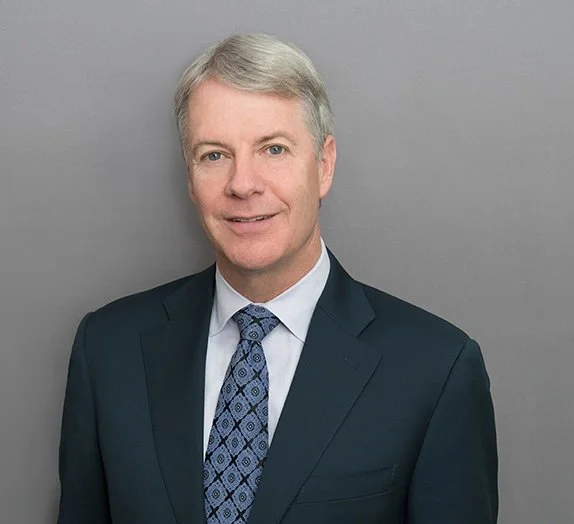
The most important characteristic of a lawyer – and a leader – is listening.
Summary
In this episode of “Leadership Matters,” Alan Fleischmann is joined by Dane Butswinkas, one of the nation’s most respected trial lawyers and a longtime partner at Williams & Connolly. Dane reflects on a career defined by high-stakes courtroom advocacy, principled leadership, and deep loyalty to people and institutions.
The conversation explores Dane’s early influences growing up in a Navy family, the mentors who shaped his values, and the cases that tested his judgment under intense public scrutiny. Dane offers rare insight into the art of persuasion, the importance of listening, and the human dimension of law that technology can never replace. Alan and Dane also discuss mentorship, firm culture, courage in moments of consequence, and what it means to lead in an increasingly polarized world.
Mentions & Resources
Guest Bio
Dane Butswinkas focuses his practice on trial and arbitration work. Based on his extensive experience trying cases throughout the United States in both state and federal courts, Law360 named him one of the top fifty "Trial Aces" in the nation. Benchmark Litigation recognized Dane as "National Commercial Lawyer of the Year" in February 2016.
Chambers USA reported that clients describe Dane as “‘[a]n extraordinary trial lawyer’ who is known for his ‘fantastic courtroom presence.’” Benchmark Litigation emphasized Dane’s “celebrated trial acumen,” noting that he is “recommended by his peers and clients alike for his ‘absolute trial-ready preparedness.’” The Legal 500 reported that clients single Dane out as a “once in a lifetime generation trial lawyer.”
A truly versatile commercial litigator, Dane has developed insight and experience in numerous sectors at the heart of the global economy. Dane’s experience in the financial services sector includes defending financial institutions, directors, officers, and countries in civil and criminal litigation involving securitizations, hedge funds, bond and mortgage markets, investment vehicle structuring, and corporate governance. He also defends corporations, directors and officers in actions arising under securities laws, deceptive trade practice statutes, RICO, ERISA, and the Clayton and Sherman Acts, as well as in grand jury investigations.
Dane’s diverse experience also includes defending corporations and individuals in product liability actions, including pharmaceutical companies in trials such as the Nexium, Baycol, Vioxx, and Seroquel litigations; in medical malpractice trials; and in the most significant defamation case to go to trial in many years.
In other sectors, Dane has defended companies in the food, telecommunications, technology, and power industries in commercial litigation throughout the United States as well as in Latin America, Europe, Asia, and Australia.
Dane also has a significant track record representing corporations in domestic and international arbitrations before the AAA and the ICC.
Dane joined the firm in 1989. He served on the firm's Hiring Committee from 1992-2004 and four terms on the firm's Executive Committee, including having served as the firm’s Chairperson. He was appointed by the Virginia Supreme Court to serve on the faculty of the Virginia State Bar Professionalism Course (2004-2007). Dane is a fellow in the American College of Trial Lawyers, and Benchmark Litigation identified Dane as one of the Top 100 Trial Lawyers in America.
Episode Transcript
Alan Fleischmann
Welcome to “Leadership Matters” on SiriusXM and leadershipmattersshow.com. I’m your host, Alan Fleischmann. Today I’m joined by a leader whose career has helped define modern trial practice and corporate counsel at the highest levels. Dane Butswinkas is a leading partner at Williams & Connolly, where he has spent more than three decades trying complex commercial, financial, securities, product liability, and antitrust cases in courtrooms across the country. His work has included high‑profile matters such as HBO defamation litigation, the Bear Stearns criminal acquittal, and the landmark Nexium antitrust trial, earning him a reputation as one of the nation’s leading trial attorneys. Beyond the courtroom, Dane stepped into corporate leadership as General Counsel of Tesla, helping guide the company through a period of rapid growth and intense innovation—albeit a short period of time, but an important one in the company’s history. Across his career, Dane has navigated cases at the intersection of law, public trust, and institutional legitimacy, representing companies and leaders whose decisions ripple through markets and society. We’ll explore Dane’s early life, intellectual foundation, defining career moments, his time in corporate leadership, and the lessons in leadership he has learned along the way.
Dane, welcome to “Leadership Matters.” It’s such a pleasure to have you on the show.
Dane Butswinkas
Thanks for having me, Alan. I really appreciate it, and I appreciate the wonderful introduction.
Alan Fleischmann
I could go even further because I know you so well. You’ve been a great friend and advisor. I think you’re one of the best attorneys I’ve ever known. Forget all the labels about corporate or trial work—you’re just a damn good lawyer. You’re very smart, you’re not afraid to give advice, and you’re extremely loyal.
Dane Butswinkas
Coming from someone who knows all the lawyers in the nation’s capital, that’s a high compliment.
Alan Fleischmann
You also come from a firm that is one‑of‑a‑kind, which I’ve always found so elegant about Williams & Connolly. There are many firms in Washington that are the D.C. office of a global or national firm. You are very international and certainly national in strength and muscle, but what I’ve always liked is the elegance of being truly D.C.‑based and headquartered, with power that goes far beyond the geography.
Dane Butswinkas
Our practice certainly spans the world and the country, but we do have a one‑office mentality that starts with actually having a single office. A lot of our culture is derived from that.
Alan Fleischmann
Right on the Potomac River in Washington, in the beautiful Wharf area, which is a real stake in the ground in the nation’s capital.
Dane Butswinkas
We were proud to move to a new area that was being developed in Washington, just like we did in 1992 when we moved to what is now Metro Center. We’re very excited to be here.
Alan Fleischmann
That’s beautiful. Let’s start a bit at the beginning. You were raised in Virginia. Share a little about your early experiences—your parents, any brothers and sisters, family influences, mentors, or anything about the community that influenced you when you look back at your earliest perspective on life.
Dane Butswinkas
My earliest and most important influences, like a lot of people, were my mother and father. My mom dropped out of high school in 11th grade to have me. Four or five years later, she met a naval sailor, and they married when I was four or five. My father became my biggest role model. He spent 25 years in the Navy. He graduated from college the same year I did. He rose to the highest rank you can as an enlisted man in the Navy. He, like my mother, is buried in Arlington National Cemetery. From him, I learned discipline, hard work, patriotism, a sense of public service—and two rules which he wrote prominently on my mom’s kitchen wallpaper: “No bragging” and “No bullying.”
Alan Fleischmann
That’s wonderful—no bragging, no bullying. Brilliant.
Dane Butswinkas
Maybe we can write that on the ballroom wall at the White House.
Alan Fleischmann
Exactly. I love that—no bragging, no bullying. Be confident, show your humility, but never get self‑absorbed; never get too big for yourself.
Dane Butswinkas
He wasn’t an outspoken person, but he always led by example. He got himself out of a tiny, poor coal town in the middle of Pennsylvania and went on to do great things. That said to me, “I can do great things. I can get out of the Navy housing and accomplish something.” I was going along pretty well until junior high school, when we took the PSATs and my guidance counselor asked what I wanted to do. Since I’d been eight, I wanted to be a lawyer—mostly from watching TV. He said, “I’m looking at your scores, and that’s not in the cards for you.”
My mom asked me what was wrong when I got home. I told her what the guidance counselor—ironically named Mr. Wright—had said. She called Mr. Wright, the principal, the assistant principal, and probably the people who worked in the cafeteria to express her displeasure.
Alan Fleischmann
Mr. Wright was wrong. That’s cool. She made sure you didn’t get detoured.
Dane Butswinkas
I think she said something like, “Mr. Wright is a terrible guidance counselor at a terrible high school.”
Alan Fleischmann
You stayed focused. Does that go back to your dad a bit—this idea of justice and fairness and speaking up for others? Is that what drew you to law?
Dane Butswinkas
In part. As an only child watching a lot of TV, I was really drawn to shows like “Perry Mason” and another one most people don’t remember, “Petrocelli.” I would see these ordinary people who had become lawyers going into court and doing really important things—usually exonerating someone falsely accused. That was mesmerizing to me. It still is. I love legal shows even now.
Alan Fleischmann
Me too. There’s one with Kathy Bates right now, the new “Matlock.”
Dane Butswinkas
I watch it too. It’s very different from the old “Matlock.”
Alan Fleischmann
“Perry Mason” was always great. I grew up in a house where my dad was a lawyer, and I always felt like justice was headquartered in our home. I can totally see your dad’s service to the country making you look at those shows and say, “I can do that.”
Dane Butswinkas
Yes. When you grow up on Navy bases, you have a sense of patriotism and justice and a good feeling for your country. Being part of the justice system, at some level, puts that good feeling into practice.
Alan Fleischmann
Did you have mentors along the way—beyond Mr. Wright, who wasn’t so great? Or was it mainly your mom and dad?
Dane Butswinkas
Primarily my mom and dad, but also a couple of teachers. My junior and senior‑year English teacher was a wonderful mentor—a great writer and a very decent person. In college, I was on the debate team. Our two debate coaches, Dr. Morello and Dr. Sangson—Dr. Sangson is still at James Madison after 50 years—were wonderful mentors. They didn’t preach; they led by example. You’d see them being decent to others, rolling up their sleeves, really digging in. You see the success that comes from that, and it’s a powerful example.
So I had great mentors, but not in the sense of “Here’s today’s lesson.” My dad wasn’t that type, but you’d see him get up at five o’clock in the morning in his white uniform and go to work. He was leading by example.
Alan Fleischmann
I love that. What made you choose James Madison?
Dane Butswinkas
I didn’t get into the University of Virginia.
Alan Fleischmann
That was your first choice?
Dane Butswinkas
Yes. I wanted to go to UVA and didn’t get in. James Madison was great, and a couple of people from my high school were going there. I chose it, and it was the best thing that ever happened to me. As you know, I worked my way back to the University of Virginia for law school.
Alan Fleischmann
When you talk about where you studied, UVA is clearly a big deal.
Dane Butswinkas
Going to UVA Law was a watershed three years. I learned from the best, studied with the best, and saw a collective of people who didn’t feel they were competing against one another, but all striving to do something important. I’m still friends with many classmates. We have a wonderful group of people, all of whom have, in their own way, done incredible things.
Alan Fleischmann
Do you all get together for reunions?
Dane Butswinkas
We do as much as we can. A number of my classmates have retired and moved back to Charlottesville—that’s how much they treasured their time there.
Alan Fleischmann
And you love Charlottesville too?
Dane Butswinkas
I do, and my love has been rejuvenated because my oldest son is in graduate school there now.
Alan Fleischmann
Not too far from D.C., so you visit.
Dane Butswinkas
He thinks that’s a blessing and a curse.
Alan Fleischmann
I’m sure. When you were in law school, did you get drawn into public policy, or did you always know exactly what you wanted to do in law?
Dane Butswinkas
I’d wanted to be a lawyer pretty continuously since I was eight. After James Madison, I got an invitation to help coach the debate team at George Mason and to teach classes in the Communication Department. It seemed like a cool thing to do. I thought I could save a little money for law school. I didn’t save any money, but I did get a free graduate degree in public policy, which was super interesting. A lot of the lecturers were real policymakers from D.C., so it was a great experience—but a bit of a detour.
Alan Fleischmann
Then law school was the necessary step for what you ultimately did. How did Williams & Connolly come into your life?
Dane Butswinkas
I was thinking small: you go to law school, become a lawyer, go back to your hometown, and hang out a shingle. Not that there’s anything wrong with that, but it’s a small way of seeing the world. I thought, “Let me go to a city one summer and see how that is.”
I went to New York City and interviewed at four firms. You do half‑day interviews at two firms, spend the night, then two the next day. On the way back to the hotel after my first day, I heard a screeching sound above me as I walked down the sidewalk. I looked up, and a window washer had stumbled on his platform and spilled probably 30 gallons of dirty water, which hit me like a “Poseidon Adventure” wave in my suit. I took that as a message from God that New York was not the place for me.
So I tried Washington. I was lucky to get a summer offer at Williams & Connolly, and it was just made for me.
Alan Fleischmann
So your career was essentially born there, and you’ve flourished there since. Did someone come to campus, or did you just apply?
Dane Butswinkas
Back then—very different from today with Zoom—a lawyer or two from Williams & Connolly, and all the firms, would come on campus and interview a long slate of people, then offer jobs to a couple. I think they offered two jobs; I got one of them. At that time—and hopefully still today—if you got an offer from Williams & Connolly, you just took it.
Alan Fleischmann
They’re one of the best firms in the world. Did you already know you wanted to be in the courtroom?
Dane Butswinkas
Yes. That’s what I’d seen on TV, and it seemed important. Early on I’d read about John Adams representing the British soldiers after the Boston Massacre and how courageous that was. It really touched me: this is an important job you can have. You don’t have to be a genius, you don’t have to know science. You just have to work hard, have a moral compass, and be dedicated to your clients, regardless of whether they’re popular.
Alan Fleischmann
And you knew there was an element that was both intellectual and physical: the drama of it—what you loved watching on TV.
Dane Butswinkas
Persuasion is truly an art form. Jurors are smart people. They have their own expertise; it may not be the subject of your case that you’ve spent five years learning, but they’re watching everything. Choreographing how to best communicate with them is an important part of the job.
Alan Fleischmann
How would you describe Williams & Connolly—beyond what I said earlier about being the one‑and‑only D.C.‑based powerhouse? Are there certain elements that distinguish it culturally, even today?
Dane Butswinkas
When I went there in the summer of 1988, Edward Bennett Williams was still running the firm. All of us as law students had read his biography. He was probably, if not certainly, the greatest trial lawyer of the 20th century. So the idea of being anywhere in the building with someone like that, for someone who wanted to be a trial lawyer, was tremendous.
Williams & Connolly was really small at the time. Ed was surrounded by equally talented lawyers who, after he passed away, led the firm into the next decades—people like Brendan Sullivan, Jack Vardaman, Bill McDaniels, Bob Barnett, who just passed away. They took the values Ed set and carried them on, passing them to us.
Alan Fleischmann
Growing up in Baltimore, I recall Edward Bennett Williams was also involved with the Orioles, right?
Dane Butswinkas
Yes. He owned the Redskins and also, I think, the Orioles with Jack Kent Cooke. They didn’t care for each other. Ultimately, Ed took the Orioles and Jack Kent Cooke kept the Redskins. There’s a wonderful story about them being at a dinner of sports‑team owners. Jack Kent Cooke was going on and on about himself. Ed was looking down at the table. Jack got up to get a drink, and someone at the table said, “Sometimes Jack can be his own worst enemy.” Ed responded immediately, “Not while I’m alive, he can’t be.”
Alan Fleischmann
When you think back, how early in your career did you get to be that “Perry Mason”—the lead lawyer in the courtroom?
Dane Butswinkas
When you come to a firm, you get the assignments you get. My first assignment was working with Brendan Sullivan and Barry Simon on the Oliver North case. My dad, who was in the Navy, was super proud that I was working on a case representing someone in the military.
You’re not the person at the podium, but you get a buffet of the best lawyers in the world to learn from and develop your own style. The beauty of Williams & Connolly was that, while I was part of that team, I also had a number of my own smaller cases.
One of them was a drug case in D.C. Superior Court. I still have my first exhibit from that jury trial on my wall. That was my early “Perry Mason” moment: the case was dismissed in the middle of trial.
Alan Fleischmann
Was that your first big case?
Dane Butswinkas
Not big in the public sense, but big for me.
Alan Fleischmann
What was your first truly big case?
Dane Butswinkas
I had a bunch of trials for Southeast Toyota, a legacy client, and those were decent‑sized. But my first real front‑page case was the Bear Stearns “Cioffi” case in 2009 after the 2008 financial crisis—the first major criminal prosecution arising from the crisis. We had a six‑week jury trial in the Eastern District of New York in Brooklyn and won a complete acquittal.
Alan Fleischmann
That was huge.
Dane Butswinkas
Huge not just because we believed the clients were innocent, but because you had 25 family members sitting in the audience every day watching you and depending on you, and newspapers every day saying you were losing.
Alan Fleischmann
What about the HBO defamation case?
Dane Butswinkas
That was a few years later, a case for the show “Real Sports with Bryant Gumbel.” They had done a long series on children stitching soccer balls in India and cited a number of companies, including Mitre, then a leading producer of soccer balls. We had a five‑week trial in New York. We got to go to India and investigate. It was wonderful.
It was one of those cases you think about in law school—helping expose child labor in India and protecting journalists who spent two or three years investigating for a 40‑minute story. A great case.
Alan Fleischmann
Is that your favorite case?
Dane Butswinkas
They all have favorite elements, but I probably have two favorites no one’s heard of. I went to Kandahar, Afghanistan, and represented a battalion commander in a manslaughter court‑martial. I flew over with one other lawyer. They built a plywood courtroom. It was very stressful; who knew what would happen? We won and got an acquittal. I love that case—two lawyers, in the middle of a war zone, doing a trial.
Another was an early case representing a college student arrested for selling LSD. Because of how the sentencing guidelines worked then, your sentence was determined largely by the weight of the drugs. He was selling a few drops of LSD on a very heavy carrier medium; the carrier’s weight counted, which gave him a 25‑year sentence.
His mom, an accountant, essentially quit her job and went to work lobbying Congress and the Sentencing Commission to change the rules, which she accomplished, and to make them retroactive to get her son out of prison. I helped in the background, but she was her son’s true hero.
Alan Fleischmann
So she was there as your co‑counsel.
Dane Butswinkas
I’d say I was her associate.
Alan Fleischmann
Amazing. A big part of your love of law has been mentoring other lawyers. You described those who came before you; I also know, from others, that you’ve been a great mentor. How important is that to the culture at the firm?
Dane Butswinkas
Law is an apprentice business. You learn by being around others who do the job well. You learn your moral compass, your dedication, the cultural glue that holds the firm together by being around others. Remote work has put a dent in that, so we need to work harder.
I really enjoy working with young lawyers—sitting down to talk about their approach to an examination, an argument, strategy. It’s one of the most fun parts of the job. When you watch a young lawyer you’ve coached knock it out of the park, get compliments from a judge, a note from a client, or a big win, it’s at least as rewarding, if not more, than winning your own case.
Alan Fleischmann
With AI and everything looming or already here, is that changing?
Dane Butswinkas
Law firms are starting to experiment and figure out the best uses of AI. In the shorter term—five or ten years—AI will help get rid of some drudgery. A lot of lawyering is sweat equity: rolling up your sleeves, reading documents, marking them up. AI tools can help with chronologies, organizing documents, and some time‑intensive tasks.
But there’s an enormous human element to being a successful lawyer that, during my lifetime, AI will not replace.
Alan Fleischmann
The discernment, the judgment.
Dane Butswinkas
I’m happy to go toe‑to‑toe in a trial against AI. I like my odds.
Alan Fleischmann
I love that. During your journey you emerged as such a leader, and I think of you and the firm as intertwined. There was a brief moment when you considered leaving, and then you came back.
Dane Butswinkas
I had represented Elon Musk for a couple of years in securities cases, had success, and developed a relationship with him. He asked if I would come be General Counsel. At the time, I had just finished four or five trials almost back‑to‑back. I thought this would be a nice several‑year sojourn from Williams & Connolly; several partners had done similar things.
So I went to Tesla. I sold my house and moved to California, but I never left the partnership; I kept my partnership. I was at Tesla just under two months. At a high level, it was not the best fit for me—for many reasons you could guess, and you’d score highly.
Alan Fleischmann
We share that perspective on fit.
Dane Butswinkas
I wouldn’t undo it. It was an interesting, exciting experience. I learned a lot about myself and about others.
Alan Fleischmann
Did you miss being in D.C.?
Dane Butswinkas
I wasn’t gone long enough to miss it. I’ve had trials longer than my stint at Tesla, and I’ve tried cases in almost 30 states; many lasted longer than that.
Alan Fleischmann
Did it give you perspective on the corporate side? You’ve dealt with many general counsels. Did you come away thinking, “I like being at the firm more than being in‑house”?
Dane Butswinkas
It was such a flicker in time that I didn’t have a good test to compare. I liked the idea of electric cars. What they’re doing is incredibly exciting. But, as I said, it wasn’t a good fit.
Alan Fleischmann
How do you describe the future? Is the legal profession changing, and is it in a good way—or do you worry?
Dane Butswinkas
I do worry. At the level I practice, law has become a large business. I’ve always liked my firm as part of a profession. I’ve never loved the business of law. Firms are gobbling up other firms and growing. Without criticizing them—they’re terrific—you sacrifice, at some level, the relationships that are the essence of why you’re satisfied being a lawyer.
Remote work also dents that. You have to work harder to get people together to think about cases, strategize, work together, counsel and coach each other. It’s hard to work on a case with a partner you’ve never met who is 3,500 miles away.
Money is a weak glue for law firms. If a collective is held together by money, they’re not in it for the long haul. If you make 500 today and someone offers 1,000 across the street, and money is your glue, you’re gone. You see that a lot—lawyers moving to the next‑highest price, like in sports.
I like that my best friends—the people I see after work, on vacations, socially—are also my colleagues. Not everyone has that luxury.
Alan Fleischmann
How many lawyers now?
Dane Butswinkas
We’re about 350.
Alan Fleischmann
That’s amazing—you actually know your people. I’m sure you still meet some you don’t know, but still.
Dane Butswinkas
Yes, I’m always disappointed to get in the elevator and see someone whose name I don’t know or don’t remember. We have a wonderful woman, Sharon Brown, our longtime receptionist—about three decades. She knows the name of every single person at the firm. People are amazed when they come in and she says, “Hi, Mr. Taylor,” or “Hi, Sharon,” or “Hi, Dane.” She’s a savant and the wonderful face of our firm.
Alan Fleischmann
How many days a week is the firm in the office?
Dane Butswinkas
We don’t really have a formal remote policy. We’d like people to come in where possible, and people have their own schedules. As with everyone, you have days when a contractor is coming, or a parent or child is sick, or a spouse needs help. We want everyone to have that flexibility. Even before remote work existed, we had that sense.
I think people probably come in three or four days a week, for the most part. Fridays might be a little different. I’m always amused that the basis for remote work is life issues you have to deal with—and an inordinate number of them seem to happen on Friday.
Alan Fleischmann
What a coincidence. When you think about your family—your boys—do either of them want to be lawyers?
Dane Butswinkas
Their mom is a lawyer. Their grandparents on their mom’s side are lawyers. They both want to go into business.
Alan Fleischmann
Similar stuff, or different?
Dane Butswinkas
Similar in broad strokes, but not law. I hope that’s not a commentary on what they think about lawyers—but it might be.
Alan Fleischmann
Often you don’t want to do what your parents did. That’s common.
Dane Butswinkas
Yes, and I’m happy for them. They’re going in great directions.
Alan Fleischmann
When you think about careers now, exposed as you are to so many different paths, if you were talking to young people, would you still recommend the legal profession—if they feel that same passion for justice and advocacy?
Dane Butswinkas
I think a regular person who works hard can become a lawyer and do big things—public service, helping indigent clients, doing criminal cases for people accused of crimes they didn’t commit, counseling people. You can do enormously important things as a lawyer. I still think it’s a great profession.
There are many others like teaching, which is probably the most underappreciated, underfunded profession in the world, but incredibly important.
Alan Fleischmann
When you’re not lawyering or doing family stuff, what are your big passions?
Dane Butswinkas
I don’t have a great answer. I’m pretty busy. I play a little golf—I’m not very good. Until very recently, I was on an ice‑hockey team—I’m not very good at that either. I like to read, but often after a five‑week trial, that’s plenty of reading. I’m hoping to take a cooking class, so when you invite me back I can say I’m a great chef.
Alan Fleischmann
You can create your own cooking video blog. Do you like to cook?
Dane Butswinkas
I like to cook, but I can probably only make three things. I’ve heard about you, so I don’t want to talk about cooking too long—I’ve heard how great you are in the kitchen.
Alan Fleischmann
I’ve got good PR, but no way. I aspire. Many of the greatest “extroverts” I know are actually introverts. For you to do what you do, and be among the very best, you have to be an extrovert in one sense—performing, persuading, walking into the courtroom. But I also know there’s another side of you—the reflective, introverted side that gets energy from peace and quiet. What do you do for that, and do you recommend it?
Dane Butswinkas
It’s a great question and an incredibly keen observation. My wife says that, in my field, I have to be the most successful introvert who ever was a trial lawyer. If you see me at a dinner party, I’m the person over on the side until I warm up to the crowd.
You work with what you have. Some introverts have to do extra to be able to go into the well of the courtroom and speak, and they make their style work for them. Some extroverts need to dial it down in the well of the courtroom.
I am, in many ways, an introvert and also a contradiction, because my field is very extroverted. I’m aware of that and amused by it, because labels aren’t all that meaningful. There is no magic personality to be good at almost any job. Leadership is a perfect example. We talk about “natural born leaders,” but you can learn to lead and manage people. It’s part intuitive, part hard work, part hoping to inspire, and part recognizing that you have to lead everyone differently—like Chuck Daly said about coaching the Pistons. I’ve always taken that with me when I manage trial teams.
You don’t need to know anything about leadership to begin; you can learn and become really good at it.
Alan Fleischmann
When you go to trial, do you have the same team each time, or different ones?
Dane Butswinkas
Different. There are some people I have on my teams more often than not because I’ve worked with them a lot. They’re super close friends and wildly talented—my American Express cards: I don’t leave home without them.
Alan Fleischmann
Are there times when something didn’t go your way, the outcome wasn’t what you wanted, that changed how you do your job?
Dane Butswinkas
Trials of the kind we do—three, four, five, six weeks or several months—are roller‑coaster rides. They all have ups and downs, failures and successes, even in cases you win, and certainly in those you lose. If you do enough, you’re not going to win them all. You always walk away with something—an “aha” moment for next time.
Lawyers, especially at the highest levels, are their own worst critics. Every time you do something—an argument, a cross, an exchange with a judge, colleagues, or opposing counsel—you go home thinking, “I wish I’d said this instead.”
Alan Fleischmann
And that changes the way you do the next trial. You’re very competitive in a good way. What would you advise companies: go to trial, or avoid it? You love the courtroom, but surely you help many clients avoid it.
Dane Butswinkas
About 95% of cases settle; only about 5% go to trial. We probably get more than our fair share of that 5%. Sometimes your job is to put the case in the best position for the best settlement. Having us—or other talented trial lawyers—helps with that. If the other side knows your client is serious about going to trial, and part of showing that is having real trial lawyers who actually try cases, you’re more likely to get a better settlement.
I like trying cases and encourage clients with great cases to try them. But a lot of those cases also end in settlement.
The stakes now are enormous—hundreds of millions, billions. The antitrust case I tried for AstraZeneca—the Nexium case—involved about $60 billion. Talk about the courage of a board to take that to a jury.
Alan Fleischmann
What do you learn with a jury? Those trials have such human drama. Are those the ones you love most?
Dane Butswinkas
I really like jury cases. One of the most important jobs of a trial lawyer is translation. You have a complex topic you’ve learned over years, and you’re in front of regular people drawn from the community who have their own expertise. Your job is to translate complicated material in a way that makes sense to them, without being condescending or pretending to “dumb it down.”
I’m always disappointed when lawyers say, “The jury was a bunch of idiots; they didn’t know anything.” We know who we get: their jobs, ages, sex, other information. Your job as translator is to persuade them given what you know about them.
If you ask what I enjoy most, it’s that. I like imagining I’m in the grocery store coming up to you and saying, “Mr. Fleischmann, let me ask you about this,” and then explaining it.
Alan Fleischmann
That’s your genius—making it relatable. Even complex trial issues become understandable, so people can nod and think, “I want to be on that side—the side of good.”
Dane Butswinkas
You’d be surprised how often, when you interview a jury after trial, they understood incredibly complicated things that maybe took me a year to understand.
Alan Fleischmann
I’m obsessed with strategy and empathy. In our work, we walk in the shoes of clients. We can anticipate their thinking, know how they feel and how their stakeholders will react. It’s hard to teach. In your case, how did you cultivate that? And how do you teach it?
Dane Butswinkas
One of the most important messages I received early as a lawyer was a quote from Edward Bennett Williams. Asked for the most important characteristic of a lawyer, he said: “Listening.”
I’ve taken that to heart. In negotiations, the people doing the talking are usually the ones losing. When I’m with a client, I try to listen and think about it from their perspective. I approach everything that way, especially juries: What is that carpenter thinking about this patent issue? What is that nurse thinking about this fraud case?
You can start out doing it mechanically—making sure you’re listening, practicing active listening, asking, “What would Alan be thinking?” If you do it long enough, you start to do it naturally. It makes people a lot better as lawyers.
Alan Fleischmann
You’re a great listener, and also great at asking the right questions. Beyond curiosity, are there certain questions you always want to ask as you get to know someone—a new client?
Dane Butswinkas
There’s a lot to the journalist questions, but when I sit down with a new client, the first thing I want to learn is their background. Where did you grow up? What did your parents do? Do you have children? Are you married? What are your job responsibilities? I want a mental snapshot of the person before we talk about the case.
I want to build a relationship first. Jumping straight into the case feels wrong. I’m interested: if we’re at a coffee shop, I want to know what you did with your kids this weekend. It’s part curiosity, part journalism, and part good lawyering.
Alan Fleischmann
That also creates a feeling of being heard and known—not “Client #54.” It builds trust, and maybe exposes some vulnerability and understanding.
Dane Butswinkas
That makes sense. A good client‑lawyer relationship is built on trust. I want you to trust my advice and weigh it. I want to know enough about you to think whether you’re the type of person I’d trust and want to be in a relationship with.
There’s an enormous human dimension to being a good lawyer. That gets lost. Lawyering is stressful, and you’re not always dealing with people in person—you might be staring at a screen. I’d much rather be sitting in a room with you. The more technology and distance, the harder we have to work at what you’re talking about.
Alan Fleischmann
To win the cases you do, and be so persuasive, you become an expert in the field at issue—medicine, food, telecommunications, technology. You know the subject matter really well, not just the individuals. How do you do that?
Dane Butswinkas
I really enjoy it, and I may be a bit of a dying breed because I’m a generalist. I do trial work of all types, so I’ve tried many different kinds of cases and learned many different subjects. Each topic is a new challenge—banking, medicine, computers, cryptocurrency.
Early on, I tried a lot of medical‑malpractice cases for hospitals and doctors. Each time I got to learn a surgery. You wouldn’t hire me to do your surgery, but I know how it’s done. That was extraordinarily exciting. Then I’d move to the next case and learn something entirely different.
It’s hard. It takes time. You work at it. You talk to experts. But it’s a wonderful part of the job.
Alan Fleischmann
Can you imagine retiring one day?
Dane Butswinkas
I can imagine it.
Alan Fleischmann
I don’t see you doing it.
Dane Butswinkas
I have passion for what I do. I love my firm and colleagues. We have a courageous group of lawyers willing to stand up when standing up is important. It’s hard to leave that. But I envision new chapters in the future that will be equally exciting and that I’ll be equally passionate about.
Alan Fleischmann
Would you describe yourself, regarding what’s going on in the world right now, as worried, pessimistic, concerned, optimistic?
Dane Butswinkas
I’d like to say I’m optimistic. We’ve had a heavy slate of bad news. Even the greatest optimist can have some skepticism. Like you, I worry more for our children than for ourselves. I’m hopeful.
Alan Fleischmann
And always ready to persevere the next day. Elon Musk recently talked about seeing a two‑day workweek in the not‑too‑distant future. That startles people like me, who love purpose, mission, and hard work. The idea that we might live in a world where people don’t have that opportunity worries me.
Dane Butswinkas
It’s a great point and one of the many dimensions of technology. In many ways technology is a blessing; it’s also a curse. It widens gaps between rich and poor. It wipes out jobs. It also does amazing things in genetics, biotechnology, and more. Technology is something to be as wary about as we are optimistic about.
Alan Fleischmann
You can’t shut the door on it, but you also don’t want to lose personal ingenuity, purpose, and passion—what you do every day.
Dane Butswinkas
We go to Uncle Julio’s Mexican restaurant in Bethesda, around the corner. For the longest time, there was a gentleman at the garage entrance handing out tickets and taking payments. He was the nicest person you’d ever meet, clearly liked his job, and interacted with customers. One day he was gone, replaced by a little machine. I was really mad about it for a long time. I don’t know what happened to him. That, to me, is emblematic of the darker side of technology.
Alan Fleischmann
You see it at airports when someone directs you to self‑checkout. That’s their job. When they give it up, it might not be there anymore. That’s different from what you do every day, too. What advice would you give people right now when you look at what’s happening in public, private, and civil‑society life?
Dane Butswinkas
I don’t want to sound like a bumper sticker, but I’d say: think globally and act locally. There are little things all of us can do about situations we’re unhappy with. Be courageous. I heard a bishop in New York say something that resonated with me: “The risk of doing nothing is greater than the risk of doing something.”
In all walks of life—especially in one like yours, and certainly as a lawyer—we have countless opportunities to stand up, raise our hand, or sit down and fade into the crowd. I didn’t do this job for money, and I’d be embarrassed to hide in the crowd.
Alan Fleischmann
There aren’t as many people with courage as we need right now. When you look at law firms, Williams & Connolly stood out as a firm you couldn’t mess with.
Dane Butswinkas
One of the things I’m proudest of is that we’ve represented people on both sides of the political aisle—Democrats, Republicans, people in the middle, judges, former prosecutors, business leaders. We don’t choose based on our view of the world. We try to represent people who, but for us, might be in real trouble.
I’m proud that, in my trials, I’ve represented prominent Democrats and prominent Republicans. If you looked at my cases over my career, you probably wouldn’t know whether I’m a Republican or a Democrat. I like that.
Alan Fleischmann
That shows why people come to you without looking for your political stripes. They’re looking for your know‑how and ability to navigate and win. What didn’t I ask you that I should have?
Dane Butswinkas
Maybe you were going to ask me that at some point.
I’ve taken to these shows you do. I really enjoy listening to your guests, and I learn a lot, even at my age. One thing I’ve learned from watching Bob Iger and others is that you don’t have to be a braggart, a bully, or a jerk to be successful—as a lawyer, in business, or as a communicator.
Our society is trying hard to prove that wrong, because you see bullies, braggarts, and mean‑spirited people being successful. But our lives are marathons, not sprints. I think this will be a blip in time we recover from and learn from, and hopefully look back on as guidance for the future.
Alan Fleischmann
Sometimes periods seem long, but they’re blips in the journey. Your dad’s message—no bragging, no bullying—really resonates with me. If people lived by those two traits every day, the world would be so much better. They cut into the biggest ingredients for narcissism.
Dane Butswinkas
They really do. I say it all the time. My kids don’t want to hear it anymore.
Alan Fleischmann
It’s a wonderful message. It makes people look beyond themselves, put ego aside, ask the right questions, get to know people, build trust, and then help fight the fight. That’s what you do every day.
You’ve been listening to “Leadership Matters” on SiriusXM and at leadershipmattersshow.com. I’m your host, Alan Fleischmann. We just spent the last hour with Dane Butswinkas, a partner and leader at Williams & Connolly. He’s one of the most respected, sought‑after trial lawyers in the United States and beyond. I get to work with him every day and see up close a man of great character and leadership, and he’s been a great mentor to many. We’re lucky to have someone like you, Dane, in the arena every day.
Dane Butswinkas
Thank you so, so much, Alan. I greatly appreciate you having me on.