Hari Ravichandran
Founder and CEO, Aura
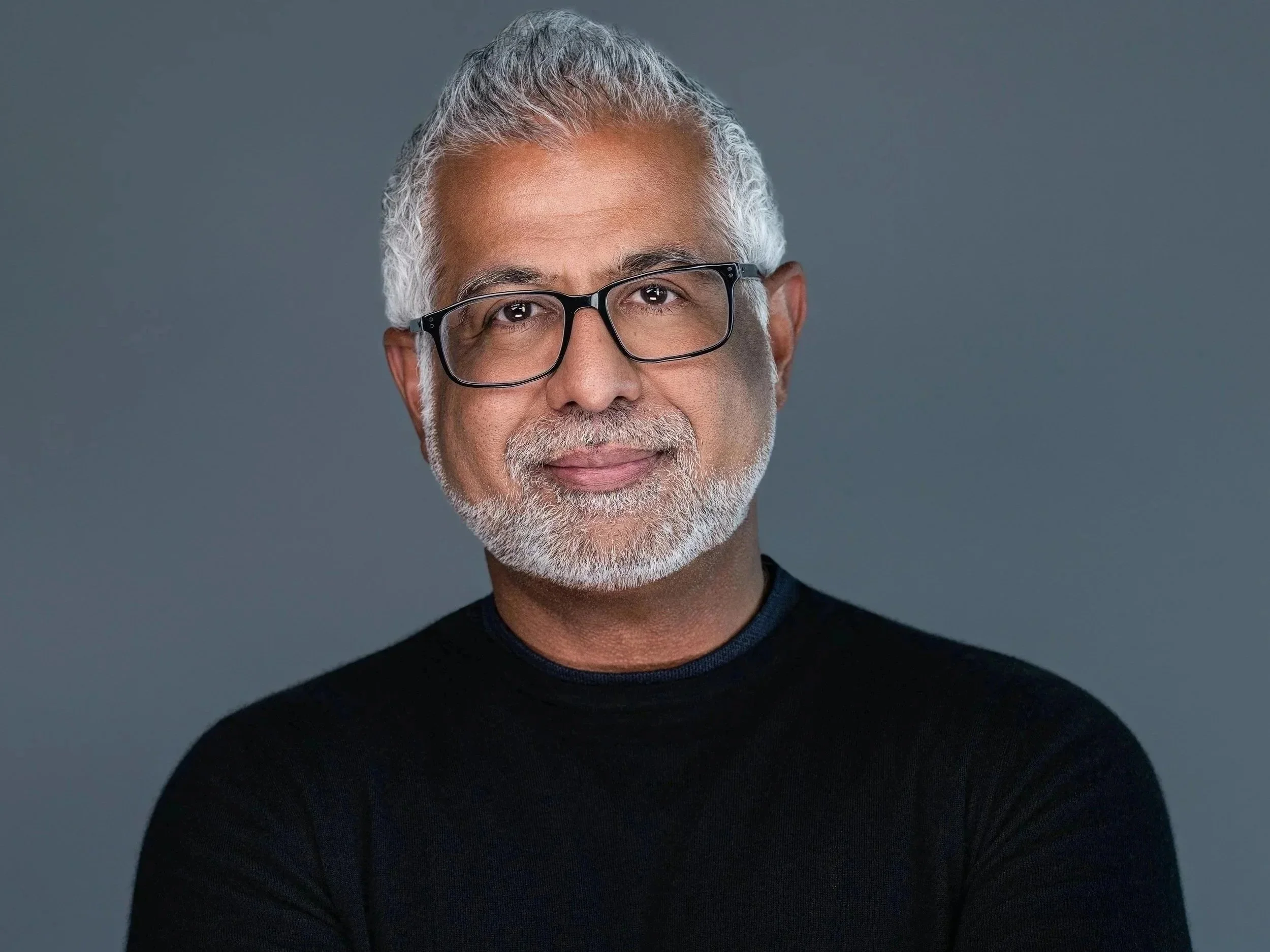
We take a lot of pride in the work. We care deeply about the products we put out in the world, and we want to make sure they have real impact for people.
Summary
If you follow the arc of Hari Ravichandran's career, you'll notice something of a throughline in the form of Ernest Shackleton. Hari's first company, Endurance International, was named for Shackleton's ship on his most famous Antarctic voyage. In addition to his day job running the cybersecurity firm Aura, Hari also captains a spinoff venture called Point Wild, an homage to the spot that Shackleton and his crew survived following the wreck of the Endurance.
While it might seem odd to tie his ventures to a famed disaster, following my conversation with Hari, I think the tie-ins became more clear. Survival following the wreck of the Endurance required enormous resilience and collaboration on the part of Shackleton and his crew, which are exactly the kinds of leadership traits that Hari values. As he tells it, mentorship and teamwork load-bearing parts of his story, with his success enabled by the remarkable mentors and teammates who have supported him along the way.
Hari is a repeated guest on Leadership Matters, who initially joined us alongside Jeffrey Katzenberg to discuss the amazing work he's doing at Aura for family safety online — you can check out that episode here. However, I wanted to have him back on once again to discuss the more personal elements of his story and his outlook on leadership. From his arrival in the United States to his heady years working in early Silicon Valley, Hari's journey has been one of tackling large, complex tasks one step at a time. He is a leader who knows the importance of vision, that most human of traits that is only set to become more important in an age of automation.
Mentions & Resources
Intelligent Safety: How to Protect Your Connected Family from Big Cybercrimes, by Hari Ravichandran
Guest Bio
Hari Ravichandran is the founder and CEO of Aura (soon to be publicly traded ASX: AXQ), a leading AI-powered online safety solution for individuals and families. An engineer by training and entrepreneur by nature, Hari has a track record of founding and investing in successful businesses in technology and security. After an experience with identity theft in 2014, Hari founded Aura in 2017 to simplify digital security for consumers. He has since grown Aura into a leading AI-centric digital safety platform dedicated to helping people of all ages stay safe and thrive online. Earlier this year, Aura announced its plans to acquire global schools and student online safety company Qoria, scheduled to close in Q3 2026, which will create a global industry leader in online safety and security with an implied combined valuation of approximately $2.1 billion.
In 2024, Aura separated into two companies, making Ravichandran the founder and Chairman of a second cybersecurity leader, Point Wild (formerly Pango Group), a leading global provider of AI-powered cybersecurity. Today, the company protects more than 25 million people globally through its core brands. Point Wild is expected to generate approximately $650 million in annual revenue, growing at more than 20 percent.
Prior to founding Aura, Hari founded Jump Ventures, a scalability infusion firm that strategically invests in bringing disruptive ideas to market. He is the founder and former CEO of Endurance International Group (now Newfold Digital), which he built from a start-up to a publicly traded global hosting and email marketing company with an enterprise value of approximately $3.5 billion dollars and more than 3,500 employees worldwide.
Hari is named on over 40 approved or pending technology patents, was named Ernst & Young’s 2012 Entrepreneur of the Year (New England), and was also named one of Forbes magazine’s most powerful CEOs 40 and Under in 2014 and 2015.
Hari holds an MBA from the Wharton School at University of Pennsylvania. He also earned a BS in computer engineering from Mississippi State University.
Episode Transcript
Alan Fleischmann
I'm joined today by a leader and friend of the show who has spent his career at the frontier of digital safety, building businesses and products that help families navigate an internet that grows more complicated by the day.
Hari Ravichandran is the founder and CEO of Aura, a leading AI-powered online safety platform for individuals and families. Hari is a pioneering leader in this space who has had an extraordinary entrepreneurial track record, having already built and sold a billion-dollar company before returning to the founder's chair to launch Aura in 2017. His career reflects a deep passion for innovation. He serves concurrently as the head of Point Wild, another innovative cybersecurity firm spun out of Aura in 2024, and has been named on over 40 approved or pending technology patents.
When we last had Hari on the show, he appeared alongside Jeffrey Katzenberg to discuss Aura's partnership with Wonder Co. and its broader mission to protect families online. Today, we will be expanding our conversation to cover his remarkable life story, his entrepreneurial philosophy, and the many lessons in leadership that he has learned along the way. Hari, welcome to Leadership Matters. It is such a pleasure to have you back on the show.
Hari Ravichandran
Thank you, Alan. I appreciate it. Looking forward to the chat.
Alan Fleischmann
Let's start by going back to the beginning — which we weren't able to do so much last time you were on. Tell us a little bit about the beginning of your own story. Your father was an academic, and I think you spent your early years in South India. Tell us about that period — what was life around the house like, your parents, any siblings, and a little about where you were growing up.
Hari Ravichandran
Sure. I grew up in India through about the time I was 14 years of age. It was a transient childhood because my parents were typically in a different city at times, and my sister and I would spend more time with my grandparents, and they traveled around quite a bit. I’d say about the time I was 13, or maybe I was about 10 or 11, my father got a Fulbright fellowship to go to the States. He's an academic — a botanist by training — and so he moved there to work on his postdoctoral research. Back then the rules were that you could spend two years working on your craft in the States on a Fulbright fellowship, but then you had to return to your home country, and for two years after, you couldn't come back to the US.
When he came back to India, both he and my mother had had such an incredible experience, and were so struck by the amount of opportunity available here, that they felt strongly that both my sister and I would fare a lot better if we could get the rest of our education in the US and make our way out here. So, he was fairly obsessed at that point with figuring out a way to get us both to the States. I was about 14 at the time, and the best entry point was through a Rotary exchange program, where they place you with a series of — at that point — four families over the course of a year.
That's how I ended up in the US when I was 14.
Alan Fleischmann
Wow. And when you came to the US at 14, did you think you were going to go back to India, or was it pretty clear?
Hari Ravichandran
It was pretty clear that I was not going back. I had literally never been anywhere — never been on a flight, none of it. My parents, I remember, drove me from Mangalore to Mumbai, which is about a three-day drive, to drop me off at the airport. On the way to the gate, my dad said, "Hey, figure out a way never to come back. Just go — figure it out." So it was pretty clear, boarding that flight, that this was job number one for me.
Alan Fleischmann
And your sister?
Hari Ravichandran
My sister was in college at the time, so she ended up moving here for graduate school. She now lives in Louisville, Kentucky, and has been there for almost 40 years. It's been a good ride for her as well.
Alan Fleischmann
And your parents got back to the States too, at some point?
Hari Ravichandran
They did. My father, unfortunately, passed away about four years ago after a challenging battle with glioblastoma. But in the interim — from the time he was in his 40s through his late 60s — we spent a lot of time together. He'd come out here for three, four, five months at a time, and then they would travel the rest of the time. So we spent a lot of time in the US as well.
Alan Fleischmann
Was he still in academia at that point, or —
Hari Ravichandran
He was, all the way until he retired. But he always had some sort of entrepreneurial venture going on the side. In the early days it was desktop publishing and then a printing press where they were printing books and academic journals. When computers were getting popular, he had a distribution center for PCs, and eventually he built an ISP. There was always some variant of entrepreneurship happening around the household.
Alan Fleischmann
Where did you live, and where did you study when you arrived at 14? And I'm curious how much of a role your parents — and your sister, though she was at college at the time — played once you were in the States — whether it was the program keeping you in touch, or letters, or calls. What kept you connected and did they continue to play that kind of mentoring role?
Hari Ravichandran
It's so strange now when I think about it compared to life with my own kids. With my kids, we're basically in touch 24/7 — if they're awake, there's some series of touchpoints. Back then, I don't think my parents had a telephone, so if they wanted to talk, they would have to go to one of the neighbors' houses at a certain time over the weekend when I would actually call, or they would call me. You could talk for a little window of time. And you wrote letters — but it took probably about 15 days for a letter to go each way, so about once a month you got a string of them.
It's difficult as a parent, when you're really far away, to have a lot of hands-on course correction and engagement. So, I would say a lot more of the mentoring was self-driven. If there were issues that felt overwhelming or frustrating, I'd talk about them during phone calls, or when I went home for the summer we'd have some time together. But in general, it was a more independent streak — you had to figure it out as you went along.
Alan Fleischmann
I remember when I first studied abroad in college — I was in Europe, and people don't believe this, but I would have to sit in a payphone at a post office for hours before my parents would call me back. It wasn't like today, where I'm FaceTiming my college-age kids all the time.
Hari Ravichandran
Which has huge benefits — but I do think you learn a lot when you're doing things on your own, and sometimes I wonder if we're shortchanging our kids by being continuously connected, always there, always giving guidance.
Alan Fleischmann
You get more time for reflection, for planning and thinking, without that constant connectivity. I think that's right.
Hari Ravichandran
I think kids have a lot more capability and ability than we give them credit for, but they have to self-discover it a little bit. Circumstantially, as a young person, you had to figure it out — so you started getting to know yourself better, understanding how your mind works. That journey seems much more delayed for younger people of this generation.
Alan Fleischmann
I agree. And how do you instill that dynamic of being supportive without driving everything for them, so they can find their own voice? But actually — let's go back to you. Where did you live and study during those early years? I know where you went to university, but those early years in the States — where were you, and who was around you?
Hari Ravichandran
I was in Martinsburg, West Virginia. That was my first entry point into the US. There were four different families I lived with in three-month stretches, and I attended the local high school. What I learned pretty early on was that the best way to continue my education in the US was to graduate from high school — that was literally the only way I could stay. So I worked through everything needed to graduate that year, compressing roughly three and a half years into one. The goal then was to find a college I could transition to once high school was done. So a year living among the good folks of West Virginia was my entry point.
Alan Fleischmann
And you were living with a family?
Hari Ravichandran
Four different families, in three-month stretches. They typically had kids who went to the same high school, so you'd be fully integrated into home life. The whole purpose of the program was cultural exchange — you could see how people in different parts of the world lived. Their kids would usually be in the same grade or somewhere around there.
Alan Fleischmann
Any mentors, anyone who stands out?
Hari Ravichandran
My fourth family — the Miller family. Their daughter Anne was a senior with me in high school, and John, the father, I became really close with, and still am, actually. It's been 35 years now. He was a good friend who taught me a lot about getting integrated into the culture. He was a well-read, very articulate person. Both he and his wife — who passed some years later — I grew quite close with. They were at my wedding, and we still see each other probably once a year. He's a bit older now, but still a good friend.
Alan Fleischmann
Is there anything about that experience with John and with them that became a permanent part of who you are today? Were there other teachers or mentors during those early years who shaped your thinking — even your approach to risk, to building culture? I imagine being that 14-year-old on your own had to have had a big impact on your wiring.
Hari Ravichandran
The big thing I learned through that process was having the sticktoitiveness to be gritty. You basically have to figure out a way to make something work. Sometimes you have to will it into existence when it just isn't there — figure out all the different pieces and get things moving. And you also learn that collaborating makes things a whole lot easier than being combative. How do you unify people and make them advocates for you? How do you build a community of supporters?
I would watch John and Jane — they had an interior design company called Miller Interiors. Because it was a small town, they weren't doing marketing or getting inbound business; they had to network and figure out how to get people to come to them. They would host these interior decoration events, people would show up, and I always found that fascinating. It felt like a network effect building in real time — people would tell other people, there'd be a continuous stream of phone calls, and the business would thrive. Collaboration was a big learning for me.
Alan Fleischmann
And any teachers who stood out during those high school years?
Hari Ravichandran
The AP English teacher — I loved her. She was amazing. In India, if you wanted to study in English, you typically went to a Catholic school, and a lot of the books and literature you were exposed to were very academic in nature. But during that year, this teacher was very encouraging about reading widely and expanding your mind. I must have read 100-plus books that year, because I just found this incredible world of things out there. I had a lot of conversations with her, because some of these concepts were new to me — how does this work, how does this fit — and she was quite amazing.
Alan Fleischmann
That's wonderful. Tell me a little bit more about how you chose your university.
Hari Ravichandran
It was a reasonably simple choice, because we had no money. As a foreign student, you're not allowed to work off-campus — you can only work on-campus, maximum 20 hours — and almost all scholarships and fellowships back then were earmarked for American kids. So your parents had to support you. The conversation with my family was, "What can we afford?" They said they could probably do about $2,000 a year.
Back then, without the internet, I went to the library, looked at the university catalog, and said, "For this price point, what's the best engineering school?" That brought me to Mississippi State. So I ended up in undergrad in Mississippi in the early '90s, which was a great and interesting experience.
Alan Fleischmann
Did you enjoy it?
Hari Ravichandran
I did. I wanted to study engineering, and there was something called the ERC — the Engineering Research Center — where a lot of federal funding came in. They had built this big, beautiful building, and they were working on parallel computers, which I found fascinating. Typically, only graduate students got jobs there. So I would go out there every morning. There was a professor of electrical engineering I thought was amazing, and I'd wait outside his office at 7 o'clock because he came in at 5 a.m. After he had gotten settled in, I asked him to give me a job at the center. He said he didn't have any grants for it. I said I'd work for free — I just wanted to learn.
Being plugged into that center was awesome, because they were doing cutting-edge work — building large parallel computers, figuring out how to do data visualization going through these big machines. I got myself a workstation, and it was a great three years. That ended up being a good entry point to meeting other professors and getting to know them better, which eventually led me out to California to go work at Sun.
Alan Fleischmann
You dropped out to go to Stanford — am I right?
Hari Ravichandran
No, I finished undergrad first. Then I went out to California, worked at Sun Microsystems, and was studying at Stanford at the same time. That came through a professor, Brian Flax, who had been at Mississippi State for a couple of years. He was very encouraging — he said I should go work for Mike Flynn, who was an amazing computer architecture professor at Stanford. That's how I ended up on the West Coast.
Alan Fleischmann
That must have been an amazing contrast.
Hari Ravichandran
In retrospect, I think the smartest 10 people in my class at Mississippi State were as smart as the smartest 10 people at Stanford. The difference was that out of a class of 100 at Stanford, maybe 95 of them were very, very smart. And the culture was different — at Mississippi State there was a lot more diversity in terms of the range of students. Stanford was a shocking experience. Things that used to be very easy suddenly weren't. You'd think you'd done well on a hard test, and then find out the average was a 92. That was a change of pace.
Alan Fleischmann
And out there in Silicon Valley, entrepreneurship is in the water, and you’re drinking it every day. The innovation side of you — which is a huge part of your DNA — had to be perfectly in sync with that culture.
Hari Ravichandran
It was incredible. This was the 1995–96 timeframe, the start of the dot-com internet era. Silicon Valley always had the entrepreneurial DNA, but this was on steroids — amplified, everywhere, so much excitement. It feels a lot, in some ways, like how the AI revolution is happening now. This was sort of the first version of that.
I still remember the first time I used Mosaic, the early internet browser. I remember sitting there thinking, "Wow, this is going to change everything." And it did. When you're there in that window of time, it's very hard not to catch an entrepreneurial bug. In some ways, I got lucky — being in Silicon Valley at the start of that fervor.
Alan Fleischmann
I know I want to get into how you founded your first company. I believe you dropped out of Stanford to do that, but before we get there — how would you compare Silicon Valley today to the Silicon Valley you're describing in the '90s?
Hari Ravichandran
The access to resources and the degree to which things are now institutionalized in Silicon Valley is significantly greater now than back then. A lot of young founders today can say, "If I get my product to this stage and do these three things, I can raise a Series A; if I do these three things, I can raise a Series B." It's much more codified now than it was back then. We were trying to figure stuff out — do we raise money? Do we not? Who do we go talk to?
The infrastructure and support system now feels significantly more advanced. But even relative to anywhere else in the US back then, Silicon Valley was still way out in front. The risk-taking mentality was much, much higher. If you failed at something, people would say, "Okay, well, you can always go find a job — that's a good learning." That's a great mindset, and I developed it early, which lets me take a lot more risk more comfortably.
Alan Fleischmann
And one of those risks was dropping out of Stanford to start Bizland. Tell us a little about that first company.
Hari Ravichandran
I mean, it was —
Alan Fleischmann
Dropping out of Stanford is kind of a badge of honor — some of the greatest entrepreneurs we know did it. But I bet that wasn't easy to explain back home.
Hari Ravichandran
Not at all. For many, many years after, my parents would still say, "If you go back, you can still finish." But it was very much the environment — you just saw these amazing companies starting up, and things were moving so fast. I started getting the sense that if I didn't move now, I was going to get left behind, and that feeling grew every day. I'd go to classes, go work at Sun, work on interesting engineering problems, and it just felt like I was so far removed from the action. I was getting the sense of, if I don’t do something, I am going to pass me by. Eventually it built to a crescendo where one morning I said, "I'm going to do it — make a clean break and start something new." That's how the first one came about.
Alan Fleischmann
And that was Bizland, which became Endurance International. If I'm not mistaken, it's also one of the few companies in this space that survived the dot-com bubble bursting. Tell us a little of that journey. How did you lead through that disruption, and how were you so successful?
Hari Ravichandran
When I started, the biggest sense I had was: I just need to go do something. I want to build. It doesn't matter what it is. I wasn't the kind of young founder who tells you, "I want to go change the world and do these specific things." I just had this sense of energy and urgency.
So the first thing I did was think: I know how to code, and everybody's trying to move from offline to online — maybe I can offer that as a set of services. I advertised in two or three magazines. I had maybe $7,000 or $8,000 in the bank, and I put $5,000 of it into three or four ads. Two weeks went by and nobody called. I thought, "Wow, this is the shortest startup in the history of time."
Then one afternoon, somebody called. They had a bookstore and wanted to get it online. I said, "Oh yeah, I can do that." They asked what it would cost. At that point I was simply trying to recoup my $5,000, so I said, "$6,000." They said, "No problem." I thought, "I should have charged more." That was my first client, and then we started getting more and more. It was a very consultative-style business for the first year, with a lot of learning from building things for people hands-on. After about a year it became clear that all these folks needed somewhere to host what we were building and get it served up to the internet. So that's how the first hosting platform within Endurance came to be.
Alan Fleischmann
And what made you change the name — was it a change of purpose as well, or just the brand?
Hari Ravichandran
It's an interesting story. Bizland was the brand we had organically launched, and as the business grew and ramped up, we had raised venture money. The model was free websites for small businesses, but you would pay $10 or $15 a month to get rid of the ads, since it was ad-subsidized.
That model ran until early 2000, and then the dot-com bust came along. It was very clear the model was no longer sustainable — the VCs were completely spooked and no more capital was coming in. So, at that point, I went back and bought most of the business back from the VCs. We did a full flush: the business went from free to paid, and we took staffing down quite a bit to get to break even. Then we started acquiring other brands, because we had taken all this money in to build big infrastructure on the back end, and we didn't have money to organically acquire new customers, so we started buying brands to fill up that infrastructure.
As we bought brands, now we had Bizland plus Brand A, Brand B, Brand C. At some point when people asked, "What does your company do?" we'd say, "Well, we have these eight brands" — and that clearly wasn't a sufficient answer. We needed a name for the umbrella. Around that time, there were probably about 20 of us total, and I had read the Ernest Shackleton book. I found it a quite amazing adventure and felt like there was a lot of parallelism — in a much smaller way — to what we were going through. So that's part of the reason we named it Endurance. The name stuck.
And now, funnily enough, Aura has split into Aura and Point Wild. Point Wild is also a reference from the Endurance book — it's one of the stopping points before Shackleton's crew reached safety. A lot of the old Endurance team is at Point Wild, and they came up with that name as a kind of homage to that time.
Alan Fleischmann
Anything about that team that was with you then that's still in your life today?
Hari Ravichandran
Quite a lot of them. I'd say probably the top 30 or 40 people at some point or another have transitioned over to Aura or Point Wild, and they're all here working with us. That makes my life a whole lot easier because we know how to work well with each other.
Alan Fleischmann
That continuity of culture, values, and value proposition must be huge.
Hari Ravichandran
It helps a lot. You don't have to go back and retrain, and people know how to behave with each other. That's meaningful.
Alan Fleischmann
Any early mentors from that period in your life as a CEO and founder? Any role models who stand out?
Hari Ravichandran
There were entrepreneurs of Indian origin who had actually made it, and Boston was a big hub at that time. Desh Deshpande was an entrepreneur who had built a company called Sycamore that went public, and before that Cascade, which was acquired by Ascend. He was this great successful entrepreneur, and I would go talk to him. I remember telling him I was thinking about raising money, and he would walk me through how to think about all these things. He held open hours on Sunday evenings at his house — if you didn't know anything, you could just show up, and he'd sit there for three hours giving you advice on how to build things. When I got a term sheet, I ran it over to him and said, "What do you think — do I need to get a lawyer? What do I need to do here?" Having folks like him, and others in that network who were helpful and impactful as a young entrepreneur, was really valuable.
Then, obviously, as we started growing, one of the transactions we did was sell a portion of the business to this private equity firm called Accel-KKR — Accel Ventures and KKR had put together a mid-market fund. The main partner there, Ben Bisconti, was a great friend and partner and investor in the company. I'm still close friends with him, and I learned a lot through that relationship as well.
I was lucky in a lot of ways that I got to start early, because you have the opportunity to make a lot of mistakes — and to correct them. If you're starting at 50, time feels a bit more compressed.
Alan Fleischmann
So what was your next moment? What were you thinking when you sold that first company — was there a gap at all?
Hari Ravichandran
At the time I left, the company had gotten so big that it felt like there was a lot of organizational design work and managing executives. I really missed startup. I missed being able to build from the bottom up. So when I transitioned out, three other people left with me — Blake, who's still with us, and Hamid, and Ryan, who was our CTO at Aura for a long time and transitioned out last year.
I still remember this: we rented a small office in Back Bay. This is 2017. I remember pulling into the parking lot — until then, we had I don't know, probably 450,000 square feet of space across lots of locations around the globe. Now there were five of us, and we had no idea what to build, no idea what we needed to go do. It was a complete reset.
In a lot of ways it's been such a blessing for me, because a lot of the things I learned I wished I could have done better in the first go-around — I got to correct many of them this time. I make new mistakes, but at least the ones I look back on and say, "I wish I had made that decision differently" — I had the opportunity to redo a lot of that in this journey.
Alan Fleischmann
Did you know you weren't done yet — that you wanted another journey?
Hari Ravichandran
Yeah. For me — and this has gotten much more crystallized over the last eight years — nothing else has the same appeal as building. Getting something off the ground, getting a group of really smart people together who can help support what you're building, and watching it grow — that's the greatest joy and the greatest high I get. Hanging out on the beach sounds really nice, but after two days you say, "This is really boring." You're not in the action, not in the energy. That's what drives and motivates me.
At the time of starting Aura, I definitely thought I wanted to do it. I had some doubts in the first six months — was I going down the right path? Now, eight years in, there's no question in my mind. This is what I was put on earth to do, and it would be a shame not to pursue it.
Alan Fleischmann
And Endurance International became publicly traded — the company was worth $3.5 billion at that point. You moved on, and Aura became your focus again. The builder, the founder coming back. Tell us a little about what inspired its creation, what Aura does, and about Point Wild as well, which I mentioned in the introduction.
Hari Ravichandran
When we were starting, there were a few guideposts I was using. One was: we want to build something over the next decade or two that ends up becoming something substantive and meaningful. Cybersecurity appealed to me for two reasons. First, it seemed like people are using technology more and more, and as they do, there's a lot of benefit but also a lot of negatives — and it felt like a hairy problem getting hairier. It wasn't going to get easier as people kept adopting more technology.
The second reason was personal. A couple of years prior, I'd had an identity theft incident that always stuck with me. My information leaked, someone stole my identity, and what I thought should be a fairly easy fix turned out to be quite a pain. The notion of helping families and consumers not have to make a trade-off between convenience and security was very appealing. Making the source of all information for all humans a bit safer was a compelling mission and felt like a big problem worth taking on. That's how Aura started.
As we went through that journey, after a couple of years, it also became clear that there were gaps inside enterprise security — gaps in point solutions that people were building for the market — that presented a good opportunity to build a platform by acquiring many of these companies. But doing that and building the Aura consumer product at the same time was very difficult. When you're building something organically, you're heavily investing in product and brand; when you're acquiring, you're using financial engineering and leverage. Those two models don't play well together. So in 2021 we decided to split them off operationally. Neil Feather, who was my classmate at Wharton and had helped me build a smaller company called SiteLock that he'd sold, came on board to run Point Wild.
Point Wild has ramped up pretty well — this year it will probably do mid-seven hundreds in revenue, and quarter-billion-plus in profits. And Aura is now in the process of going public. The deal is signed, and we're going through the work now to close and get public by Q3, which is the current plan.
Alan Fleischmann
By Q3 this year — wow.
Hari Ravichandran
Yes. With Aura, we built this product around family safety, and about two years ago we found that when we talked to families about what they worried about, many of them were telling us they were worried about their kids being online — their adolescents — in two ways: from a predator and cyberbullying angle, but also simply, "My kids are using these devices way too much and there seem to be all these knock-on effects. How do we manage that?"
So we started taking that problem on and built out a product called Balance, which we rolled out about a year and a half ago. It does more work around behavioral understanding of how teenagers are using devices — how to keep them safe and how to keep the family safe as a whole. Once we built that part of the product, we wanted to distribute it through schools as well. We found a company called Qoria — an ASX-listed company on the Australian Exchange — which we acquired, and as part of that we're making Aura public, both registered with the SEC and trading on the ASX, the Australian Stock Exchange.
Alan Fleischmann
That's so cool. I know from your book — Intelligent Safety: How to Protect Your Connected Family from Big Cybercrime — that the threat landscape is only becoming more dire, especially with generative AI. And you recently released a State of the Youth report with a new digital well-being index. Are you becoming more optimistic or more pessimistic? Do you think tools and awareness can protect us, or is it looking darker and darker?
Hari Ravichandran
I'm a hugely optimistic person. I believe very much that technology can make our lives better. But you have to think about it in terms of progression. When you go from using a computer, to the internet, to cloud systems, to AI systems, there's a lot of societal learning that has to happen — individually and collectively. If you think about our lives 10 or 15 years ago compared to how connected kids are these days, and how native they are on mobile and connected devices, it's something we've never learned how to navigate through. It's new, and we have to figure out how to navigate it, learn it, and pass that learning on to our kids. The same is true with AI systems.
In terms of the threat landscape, there are a lot more threats now that are much more easily created than even a year or two ago. But I think if we build systems and platforms that help us learn and get better at managing those threats, it drives a really positive societal benefit — and it also helps us build a very large business. So I'm quite excited about it.
Alan Fleischmann
You're listening to Leadership Matters on SiriusXM and LeadershipMattersShow.com. I'm your host, Alan Fleischmann, and we're here with extraordinary entrepreneur, CEO, and founder Hari Ravichandran — the founder and CEO of Aura. We're discussing his journey, his observations, and the critical leadership he provides.
On our last episode together, Hari, you spoke about the importance of getting your team to own the problem and take responsibility for change. What policies, protocols, or practices have been helpful in creating that culture of ownership at Aura?
Hari Ravichandran
The big learning for me is that teams and executives fit well within the zone of what they've actually done before. There are executives that are great at zero to $10 million in revenues, executives that are great at $10 million to $100 million, executives that are great above $100 million. To get people to own the problem, you have to start there.
And I'd go one layer above that: you have to start with a board and investors who believe — because it's really hard to build anything. You need people who will stick with you, who will support you when they see the vision and feel excited about it. Then you need teams that fit the problem really well, that are excited about that stage of the build, and that know how to work closely with each other.
Where we are now with Aura and Point Wild, there's a lot more collaboration — you can actually delegate quite a bit more to senior executives who will go figure out problems. But from zero to $100 million, you have to be in it a lot more. It's a player-coach dynamic: at different stages you're on the field working with the team, and at other stages you're stepping back to coach. If you get that balance right, people start to feel more ownership.
A specific example: at a company in that zero-to-$100-million zone, if I told the execs at the time, "Go figure out how to get 40% growth next year," they'd go try — but their makeup has more doing ability than strategic stair-stepping, so you have to be in there working the playbook with them. Now, at $360 million in revenues at Aura and $750 million at Point Wild, I can say, "I'd like the team to work on these particular problems with these parameters," and then let's sit down together. I don't need to give them ideas — they come back with a lot of really good ones, and they go work through it together.
Having people who believe either in the build — "I get to build this thing and that's really cool" — or in the mission, drives good unity. Either "I love what we're building and the benefit it creates" or "I love building companies from $100 million to a billion and I know exactly how to apply my skill set here." Both motivate, both create ownership.
Alan Fleischmann
You've now taken two companies to scale — maybe three, actually. Is there a Hari playbook at this point, or is it truly bespoke each time? And when does scale become the culture?
Hari Ravichandran
Two things I would say. First, you have to be able to operate in two gears: one where your fingers are in the details, working through it, and another where you're looking up above, seeing how all the pieces connect and how you drive the business to scale going forward. Being able to do both is very helpful.
The second thing I'm fairly obsessed about is speed and decisioning. A lot of times, people will think about something over and over and over again. By definition, when you're building something, there's a lot of information that isn't available — you just don't have it. Doing a whole lot of analysis and coming back weeks later with the conclusion that "it's 50/50, it could work or it couldn't" — you'd much rather make that decision early and try it out, fail fast, come back, and say, "Okay, different approach." That fast-twitch muscle in the early stages is quite critical.
If you don't have that action bias, you end up going very serial: first build a product, then figure out go-to-market, then look at M&A, and then, and then, and then. My view is you kind of have to do all of it together. It's a hard thing to convince people of — some will say, "You're completely crazy, we can't do seven things at once." But if you want to get to scale and stay relevant, you don't have time to first build a product and then figure out where it fits. Literally: you go to sleep one night, you wake up the next morning, and a business can be out of business because Anthropic or OpenAI came up with something very clever that now has an ability it didn't have before.
The fast-twitch action bias and that multilane mindset are critical, whether you're small or big. It gets harder to maintain as you grow — you have more people to convince, more people who need to come on board — but it remains necessary.
Alan Fleischmann
Tell us a little about the Boston part of you. Why is Aura Boston-based? You've made some great partnerships — I know Boston Children's Hospital is one of them, which is world-renowned. Is there something about being in Boston, rather than San Francisco, that's been an advantage?
Hari Ravichandran
I kind of drifted here when I first moved to the East Coast — I thought I'd be here a few years and then head back to the West Coast. And then life happens: got married, had kids, the company was doing well, it was all headquartered here.
I love the culture in Boston. It's a gritty culture — not flashy. Besides the sports teams, people are very engaged with the problem. There's access to a lot of talent. The local civic and business leaders are very pro-business. What Boston does not have that the Valley has is that big, broad, high-risk, high-reward risk-taking mindset. Boston is much more workmanlike: here's the thing, keep your head down, get the work done. Silicon Valley is very open to just big, broad ideas.
So what I've always tried to do is have that Silicon Valley mindset but in Boston — and that's how I've operated the last 30 years. Go out to the West Coast, talk to a lot of people, learn, come back, and implement. It would be a little easier if we were in San Francisco, especially with all the AI changes happening now, but we have an office out there, and we have execs and employees on the West Coast as well. We've figured out how to get the best of both worlds.
Alan Fleischmann
And you have offices in a lot of places.
Hari Ravichandran
We do. We have a big contingent on the West Coast in San Francisco, offices in Austin and New York, and a significant group in Eastern Europe. When the war in Ukraine started, we moved a lot of our people from Kyiv to Kraków in Poland. And through COVID, we had a lot more distribution happen to various spots as well.
Alan Fleischmann
Boston is a great place to live and work. What do you want people to know about you and your leadership team right now — that you're a trusted leader at a very critical and disruptive moment?
Hari Ravichandran
With Aura, the way I think about it is we have to operate in an AI-forward, AI-first manner. Not building engineering pillars and applying a smattering of AI on top — but building systems with AI at the center, so we can combat threats where bad actors are using AI to attack us. We're taking much more of a platform approach.
The way we're building now: if you're a family, rather than splitting the human into multiple parts — here's your identity protection, here's your credit monitoring, here's your device security — we're putting the human at the center, putting the entire family at the center, and then understanding all the things that person is doing throughout the day. Dropping kids off at school, going into work, being at home — how do you connect all these surfaces and use the platform to keep people safe wherever they are?
In the last year we've made a lot of strides in that direction. The next version of our product, which we hope to get to market in the latter part of this year, is a complete reimagining of security — how do you actually build security in an AI world for completely connected human beings? Everything from the bottom-up plumbing to the interfaces is being built for our time. It's been a big overhaul: team structures, the talent we're bringing in, the technology, the platform — everything is getting fully revamped.
On the personal side, we care about the things we build. The only thing we spend a lot of time on is, "I don't think we got that right — let's go back and fix it." Our entire team is like that. We take a lot of pride in the work, we care deeply about the products we put out in the world, and we want to make sure they have real impact for people as they go about their lives. The team is very aligned in that mission, with a lot of very smart, talented people who have built big companies before, and a lot of very smart technologists as well. I think, in general, we figured out how to connect these people and make live easier for those using it.
Alan Fleischmann
What advice would you offer to emerging and current leaders who are trying to launch transformative enterprises in fields where the rules are being written every day, and they have to either help write those rules or rapidly adapt to them?
Hari Ravichandran
I think about this for myself, for my kids, for the entirety of the world — because the whole world order is now changing.
The number one thing I would say is: if you're a curious person, you already have a superpower. What's happening now is that all these traditional lines — that's engineering's job, that's product's job, that's data science's job, that's go-to-market's job, that's finance's job — if you're a curious person leveraging the AI tools we already have, you can now cut through many of those lines and do a lot more than you could before.
The second thing is: you have to find a way to connect that curiosity and learning to action — to something that actually matters. Otherwise you're just building a 50th prototype that nobody will look at. It was a fun project to work on, but it doesn't matter. Curiosity plus action — that's where I'm spending almost all of my time. There's this huge wave of technology coming, and we have to get smart at it. For folks who have that kind of open, curious mindset, this is the greatest moment in time. If you have a more closed mindset — "nothing's going to change, I'm set in my ways" — it's harder now, because the change is already happening, and it's going to keep happening faster. Staying relevant as these things evolve is very critical.
Alan Fleischmann
Are you worried about AI taking over, or do you think that for people with curiosity and an entrepreneurial mindset there's room to lead — and AI is augmented help, not a replacement?
Hari Ravichandran
I'm much more in the latter camp. We've been working very closely with almost all the frontier models — pretty much any deep tech stuff out there we're either using or have figured out how to integrate. My observation is that there is a long, long way to go before any of this becomes truly threatening in that existential sense.
Even if you said, "We have AGI now" — because some of these models can pass the Turing test, and they have intellect and the ability to do a lot of things — they still lack an experiential core. It's almost like a hyper-smart person with no experience. What these systems are doing is largely semantic processing — guessing the next token, figuring out a lot with language. But as humans, we have many more senses. We can hear, see, feel — and it's not clear that simply throwing more compute at LLMs and generative AI models will ever replicate that. The quest of what makes us conscious is something nobody has solved. The bet is: keep adding compute and somehow consciousness will emerge, and then it decides it wants to take over. That's not how I think about it.
In the interim, we have the super tool, and we can make ourselves better with it, leverage it, and use it to make an impact in whatever chosen profession we have.
Alan Fleischmann
One last thought, and then we have to close. How old are your kids, and what would you say to them — and to all the young people in similar positions right now? I've got a graduating senior from college this week and a daughter who just finished her freshman year. And I think about all the young people who work at Laurel Strategies and other places — what's your last piece of advice for them?
Hari Ravichandran
I have four kids, spanning from 17 to four — my youngest just turned four over the weekend. The notion of origination is really where I've been trying to anchor them. The professions where you might have pushed a kid to go become a software engineer and build code — well, the coding part of that, I think, is becoming commoditized. Coming up with ideas about how to apply the code, that's still great. My older kids are more right-brained — they tend toward the artistic side, toward music and psychology, how the human mind works. So with all of them, the big push is: over the summers, go take courses on prompt engineering, use these tools, figure out how they work — and figure out how to apply them in a field you already care about.
Our schools are still very much in the mode of, "They're going to use this all for cheating, so let's contain it." There's a lot of logic to that. But as parents, in the summertime, you've got to make sure these kids get trained on how to use these systems and how to use them in a profession they're already excited about.
And for what it's worth: software engineering is not dead. Somebody still has to operate these machines and build a lot of code — and being that person is a lot better than not knowing how any of it works.
Alan Fleischmann
The idea that enterprise software is dead is just false.
Hari Ravichandran
I don't buy it. There's so much more to building a company than vibe-coding an app over a weekend and saying you're going to take down a big CRM company.
Alan Fleischmann
These AI platforms become catalytic — creating more effectiveness and efficiency.
Hari Ravichandran
I think it creates more surplus, ultimately. There'll be displacement and shift, but there's a lot more we can now do that we couldn't before, and that's got to have a positive impact on the economy. Long term, it could be quite positive. Along the way, there's going to be dislocation, displacement, and cultural things we have to work through — but that's the nature of progress.
Alan Fleischmann
You've been listening to Leadership Matters on SiriusXM and LeadershipMattersShow.com. I'm your host, Alan Fleischmann, and we spent the last hour with Hari Ravichandran, the founder and CEO of Aura, discussing his remarkable life and incredible career journey as a serial founder and entrepreneur, how Aura is taking on the challenge of AI-era online safety, the factors that make Aura such a special place to work, and the many lessons in leadership he's gathered along the way — with many more, I hope, still to share. It's been such a pleasure having you back on the show, Hari. Let's have you back again, and let's make sure people read your book and follow what you're doing at Aura — because it's pretty important, pretty essential, and certainly incredibly relevant to the moment.
Hari Ravichandran
Amazing. Thank you so much, Alan. I appreciate you having me on.
This transcript has been edited and condensed for clarity.