Brian Kreiter & Alex Karnal
Co-founders, Braidwell
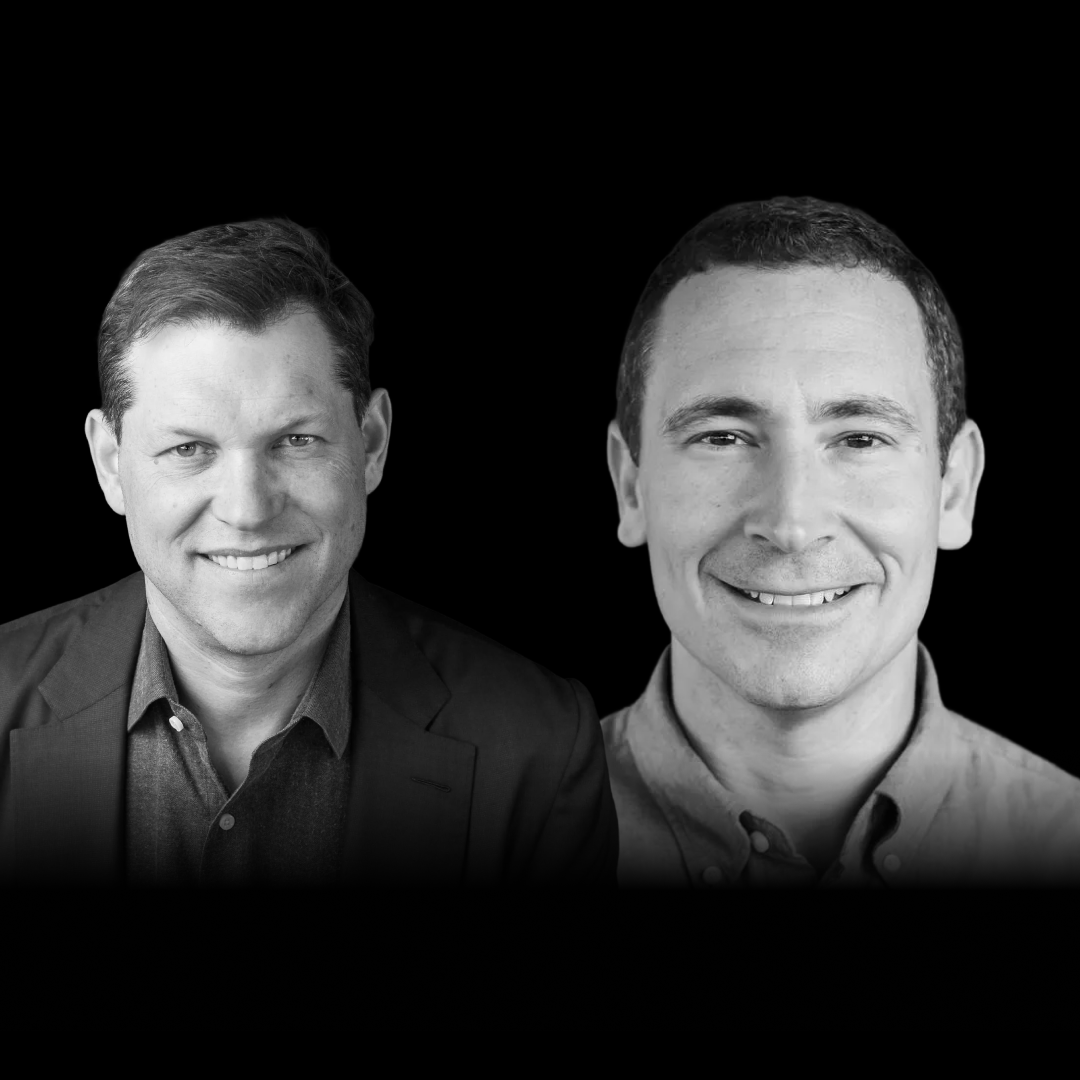
We have a shared, very clear common goal, which is: we want to help a billion people live a longer and better life.
Summary
Whenever I get to sit down with Alex and Brian, I inevitably walk away more optimistic than I was before: about the possibilities of science, our ability as a society to collaborate, and the likelihood that we are on the precipice of some major breakthroughs. The two of them have built Braidwell, a multi-billion dollar life sciences investment firm, on this kind of scientific optimism. It is not a blind faith that good things are bound to happen on their own, but a confidence that, with the right people and resources pointed at the right problems, we have the means (and increasingly powerful tools) to turn promising ideas into remarkable achievements.
There is a lot to unpack in this episode, but looking back, two bits of wisdom stand out in particular. The first, from Alex, has to do with the tremendous amount of work needed to achieve tremendous breakthroughs. While it may be the case that greatness cannot be planned, it is the product of a lot of time, dedication, and effort that is eventually visited by serendipity. A lot of this episode is dedicated to exploring the systems and institutions that have driven Braidwell’s remarkable success.
The second, from Brian, is to avoid partnerships unless you really need them. Braidwell is itself a fantastically successful partnership, but it is built on the deep investment both leaders have in its central project and a recognition of the natural entropy partnerships produce. Striking that balance requires hard work to make sure the partnership is more than the sum of its parts.
Mentions & Resources
Why Greatness Cannot be Planned: The Myth of the Objective, by Ken Stanley and Joel Lehman
Guest Bios
Alex Karnal, Chief Investment Officer, Partner, Co-Founder, Braidwell
Alex leads the Investment Team of Braidwell. Prior to Braidwell, Alex was a Partner, Managing Director and the Co-Portfolio Manager at Deerfield Management, from 2005 until 2021 where he helped create The Cure, Deerfield's healthcare innovation campus. He co-founded and previously served as chairman of The Institute for Life Changing Medicines, a nonprofit dedicated to developing medicines for people suffering from less common, life-threatening, diseases around the world. Alex previously served on the Board of the Biotechnology Innovation Organization, the Museum of Science, the Children's Health Fund as Vice Chairman, New York Academy of Medicine, Discovery Labs, and Recovery Centers of America, the latter two of which he co-founded. Earlier in his career, he was a member of Merrill Lynch's Global Equity Linked Products Group, as well as its Capital Markets team. He received a B.S. from the Massachusetts Institute of Technology and an M.S. from Johns Hopkins University.
Brian Kreiter, Chief Executive Officer, Partner, Co-Founder
Brian is the Chief Executive Officer of Braidwell. Previously, Brian served as the Chief Operating Officer of Bridgewater Associates, one of the largest investment managers for governments, central banks, pension funds, endowments, and foundations. At Bridgewater, he was a member of the Board of Directors, and held key leadership roles, including Chief of Staff to the firm's founder, Ray Dalio, Department Head of Client Service, and Department Head of Investment Research. Earlier in his career, he was a consultant at McKinsey & Company. Brian co-founded LIFT in 1998, a national organization that helps families break the cycle of poverty—an effort for which he and his co-founder received the 2004 National Jefferson Award for Public Service. In 2020, he co-founded NeighborShare, a technology-driven nonprofit that enables frontline heroes to identify and connect "neighboring" donors with families in need. Brian holds a B.A. from Yale University and an M.B.A. from Harvard Business School.
Episode Transcript
Alan Fleischmann
Welcome to Leadership Matters on SiriusXM and at leadershipmattersshow.com. I'm your host, Alan Fleischmann. I'm joined today by Alex Karnal and Brian Kreiter. Alex and Brian are the co-founders of Braidwell, a life sciences investment firm and innovation platform building and backing medicine companies and health solutions worldwide, working across technology, biotechnology, AI, pharmaceuticals, and diagnostics. Braidwell's mission is to find gaps in medicine and be the engine for the solutions that can transform human health.
Prior to founding Braidwell, Alex and Brian had separate successful careers as both finance leaders and, frankly, nonprofit founders. Alex was partner and managing director at Deerfield Management, and Brian was the chief operating officer at Bridgewater Associates. Today we're going to explore Alex and Brian's early lives, their careers, how they met, started Braidwell, and their insights on the future of life sciences.
Alex and Brian, welcome to Leadership Matters. It is such a joy to have you both on.
Alex Karnal
So great to be here. Thanks, Alan. We appreciate it.
Alan Fleischmann
We're going to get through your youth and all the extraordinary things that got you to be these remarkable people that you are. Let us do that, but I will say the one thing that I've been so excited — you both bring such incredible scientifically backed optimism that we can cure things in the world, at a time when sometimes people get so distracted or even despondent about where things go in the world, or with AI, which we'll get into.
I leave every conversation with the two of you with a sense of imminent optimism, if that's such a word — that there are things that are going to happen that are true blue breakthroughs at scale that will change the way we live and the way we relate to one another and our dreams. So the end, and all that in a minute — scientifically backed dreams, there we go.
But let's start at the beginning, with your childhoods. Tell us each a little bit about what family life was like around the house, and early influencers. Would love to hear about role models. It'd be interesting to see you both looking at each other while the other one's talking — that'll be fun to see how enchanted you are by each other's youth stories. Why don't we start with you, Alex? You go first. Tell us a little bit about where you're from, a little bit about family, any role models that pop out, and then we'll go to you, Brian.
Alex Karnal
Great, thanks so much, Alan. I had the best childhood. I grew up in Bricktown, New Jersey, and my role models growing up were my parents. They were both just remarkable in so many ways.
My dad was one of the hardest working entrepreneurs that I think I've ever seen in my life. He didn't find a ton of success, but that never stopped him. He just was always hard at it. He did all he could to support our family, and family was very much intertwined with all of his businesses, so he would always have myself and my brother out with him — whether it was being in the garage refinishing antique furniture that we would buy at flea markets and hope to sell to buyers, all the way through to his bread delivery business, where we would buy bread from bakeries and sell it to restaurants and convenience stores and flea markets on the weekends. We were just all in it together, and it was such an amazing way to both be together as a family but also to have the early seeds of business kind of intertwined into my DNA there.
Despite the fact that my dad didn't have much major success as an entrepreneur, what I really learned from him was resilience. I saw that no matter what the world sort of threw at him, he just kept on going. And that was a really great pairing with my mom. My mom, who's just this incredible person — she's an ever optimist, and no matter what challenges we might have been facing as a family, mom was always just standing right there with us, picking us up and making sure that we kept on going.
My mom taught me something that I really carry in my core, and as a big part of my values today, and my wife and I are trying real hard to share with our daughters, which is this idea that we never quit, we always commit, and if you do that, we can pretty much overcome everything. That fits remarkably well with innovation — medicines, devices, diagnostics, technology in general. I didn't know that because I was growing up, but I'm really grateful to both my parents — my dad for the resilience and my mom for the optimism to keep on going in the fight.
Alan Fleischmann
And big family — was it a big family growing up?
Alex Karnal
We had a pretty normal size family. Growing up, we were fortunate — my grandparents were pretty much always around on both sides of the family, some aunts and uncles, really a nuclear crew there. And it's been fun. Now, as we've gotten into this stage of life, it feels like family has really, really grown. I just spent this weekend with four of my nieces and nephews, and our three little ones, and they were all running around like the wild, wild little ones, having lots of fun together.
Alan Fleischmann
Nothing better than that. That's so cool. That's so great. How about you, Brian? Tell us a little bit about you and your growing up.
Brian Kreiter
For sure. I have to say, I just love — I've loved forever this image of Alex as a kid at the flea market, which I'm sure started very early. That's probably one of Alex's superpowers, which is both impressive and super annoying — that he starts his day at three o'clock in the morning every day, which is part of his pattern. And so there's this idea of you basically at the — which I heard this story relatively early in our friendship and partnership — of him, basically his dad kind of tapping him in. I have this image of him at the stand, or whatever — I have this very specific image of what this flea market looks like in my head, it's always the same flea market — hustling furniture, making sure that they got the best spot, kind of like that would help.
Alex Karnal
He would help me set up the perfect display cases.
Brian Kreiter
There are some metaphorical elements to it.
Alan Fleischmann
How cool is it that you also learn the art of selling? And so much in life is taking the complex and the complicated and having other people absorb and understand it. That is the gift you both have, honestly.
Alex Karnal
Selling bread in a flea market, you learn really quickly — people always love a two-for-one deal. That works every time, all the time.
Brian Kreiter
I do think part of — you kind of mentioned optimism. I do think we are both massive optimists. You have to be an optimist to be an entrepreneur, you definitely have to be an optimist to be an investor in innovation. But part of what I think we believe so much about business and just about life is that you have to have the ability and the interest to get other people excited about the thing you're excited about, and I think that's something we both do a lot of. We were both trained to do it. I think we actually both do that for each other quite a bit.
In some partnerships, we almost divide and conquer a lot, which is part of our strategy, but I think that actually can have a risk of pulling apart where folks are excited about different things. So I think partly what we're always trying to do is, how do we keep the other excited, pull the other person excited.
I was traveling Asia the last 10 days, and I got a call saying, "I gotta — I have a present for you when you get home," which basically means there's something that he's excited about that he's excited to tell me about. And I do think that's a big part of our energy, which hopefully helps with the team too.
Alex Karnal
It helps that we get to have a lot of fun together.
Alan Fleischmann
Work hard — you get to work hard and have fun hard, you know that.
Brian Kreiter
For sure.
Alan Fleischmann
That brings joy. I see it in both of you, honestly, all the time. And I see it across Braidwell, because of the way you guys interact with one another. You don't take each other so seriously, even though you take each other very seriously. I mean, you laugh a little bit — but I won't get you off the hook there.
Brian Kreiter
Yeah, so I grew up outside Chicago. I'm a very proud Chicagoan, and I try to bring it up in every conversation I can.
Alex Karnal
People are nicer from Chicago. Getting to know Brian, his family, his friends — it's a different ball game.
Brian Kreiter
I'm an only child. I think that probably had a big impact, just in the sense of I grew up very much in my parents' world. My parents were both professionals, worked hard. My dad is really a business person — started his career as an attorney, ended up going into business in the transportation world. I saw him, probably around the same time in life I did, sort of transition careers and really start building something, which I think was really impactful to me.
Both my parents had different impacts and were both heroes to me in different ways. I actually think we have that in common, where probably our biggest influences are our parents, and I think in some ways, as a result, being parents is a big part of our identity. It's connected to how we met.
My dad, very much at a personal level, is like my hero — the person who, just from an energy, the way he carries himself in the world, his impact on other people, is how I aspire to be, very much. And so I think that's been since I was very, very young, and I find myself — that's a big part of my life.
My mom, interestingly, probably is my biggest impact from a professional perspective. So, my mom was trained as an economist. She spent a couple of years as a banker, and really had the observation at the time of just watching what was happening at the bank, watching who got promoted, watching who got opportunities, caused her to start thinking a lot about that, and ended up really spending her career as an advocate and activist around equal employment. So worked on equal pay, sexual harassment, fair hiring, fair promotion. She did that in Chicago, but also at the federal level.
A big part of my childhood was about watching her try and make a dent in the world, and watching her fight big fights, so to speak — but she did it in an interesting way, where she both figured out when she needed to fight the system, but also how to understand the system deeply, work with lots of different types of people. That became a really driving force.
She particularly came from a family that was very focused on, what's your obligation to service and what's your obligation to others, and that really was a very deep part of her character. I think I've tried, at different times, and with different degrees of success at certain points more than others, really to try to emulate that.
Alan Fleischmann
I love that. And how involved are your respective parents in trying to understand the success of Braidwell, keeping up with all the things you're doing at Braidwell? I suspect, what I'm gathering here, is they probably are very engaged. Probably the first question is about the children, in both your cases, and the second question is, are you getting enough rest — because if they know what I know, which is your sleep habits are probably not the ideal. But then the third question probably is, catch me up on Braidwell.
Alex Karnal
I will say that Brian's mom is particularly impactful in any written materials that we do before they go out. There's no better author or reviewer than her. I always get a little bit of anxiety before we send it over to mom for the feedback.
Brian Kreiter
I typically have this tradition where anytime we have a new substantial document that we're publishing, I send it to my parents before it goes out. It's the last check.
Alan Fleischmann
As a reality check.
Brian Kreiter
I will say AI has helped narrow the scope of feedback, but the other day my mom caught — who is amongst her skills, and if you know my mother, this fits perfect, is a killer copy editor. And this thing had gone through multiple models. This thing had been sanded down — there shouldn't have been anything left. She caught some error, and it was perfect. I was like, you know what, the team better watch out.
Alex Karnal
Watch out, Claude. Mom's here.
Alan Fleischmann
What a great op-ed — because, I mean, I’m just obsessed with the things that AI can do, can't do, bits and all that, and I watch what it can't do still. But a great op-ed: "Mom is still better than AI" would probably go viral. I honestly think we should do it. I think that is the message.
Alex Karnal
I'm not sure it's all moms. I think it's Brian's mom.
Alan Fleischmann
“My mom is better than AI.”
Brian Kreiter
To answer your question: interestingly, my parents definitely have been along for the journey, in an interesting way, and actually almost in the exact way you just described. I'm 48 years old, so it's pretty amazing to still have that type of dynamic.
I also think this journey — there's a lot of ups and downs, and there's a lot of things to balance, and there's moments where you're trying to make sure your values and your business plan are aligned in the way you intended, or that you are taking the right amount of risk, or not, you know, not too much or too little, or that you just have the balance. You can't get enough points of balance and points of mirrors.
I think we're very lucky to have each other, but we also both have very strong marriages, which are a really key part of who we are, and we invest in that a lot, and our spouses have been key parts of this journey, both for each of us, respectively, but collectively, the four of us very much feel like we're on this journey together.
Our teammates — we have teammates who have been with us since the beginning, who are part of that. Some advisors. But our parents are also a big part of that. I would also include my wife's mom has been part of that — has lived with us since we started, and has been the first person I see when I come back from the road or from some big event. It's been amazing, amazing support.
Alan Fleischmann
It's not easy being an entrepreneur. I'm curious — both of you, when I look at both of you, even right now, I'm looking at both of you, and the way you're interacting, there is a truth and trust level that is probably an enormous obsession that you both have. High, high standard for being with people you trust. Life isn't worth it — your values are too strong. Maybe that goes back to the family dynamic you've seen.
I bet you, if we peeled the onion, had more time, you would share, maybe in your case, Alex more, your dad being the entrepreneur, how many times people did not come through who said they would. The word, the handshake — he may have had it, but others may not have. And I think when you look at each other, you both have been through careers where not everybody lives like that with those values. How do I live in a world where I have to look over my shoulder, but actually trust the people I work with? And that truth — that's something that's hard to get over, but I bet I know you have it now.
So I'm curious, looking back on that youth — it's always great to look back retrospectively and see things about yourself, but I gotta imagine young Brian and young Alex were essentially curious, and determined to get it right, didn't do gray very well. I don't mean black and white only, because gray is a lot of what you do on disease, the nuance of science, and finding the right partners to invest with. But it is also this idea of that perseverance, that drive that you both probably showed in different ways as you were young kids at school and outside of school. I'm curious whether you look back and see a little Brian, a little Alex with insatiable curiosity, and this grit of getting it right. Is that true?
Brian Kreiter
Probably more grit. I think it's more grit than getting it right. I think we both sort of believe that we never quite have it right, that we're always kind of moving.
I was just going to go back to the previous thing you said. I think something that we likely have in common, where you mentioned this thing about finding people you trust — certainly that's important in a partnership, but I also think we tend to be optimists about everyone we meet, and also about the institutions. We don't spend a lot of time sorting people or things, or regulatory bodies, into good or bad. We tend to have this sense of trying to find either the best of people or to find the things that overlap with what we're trying to do.
Part of that is we've ended up with lots of allies and lots of different types of folks we can work together with, and we kind of find where what they are doing intersects with what we're doing. Even when that doesn't work great first, or that doesn't seem totally obvious, I think we have this sense that there's commonality generally, and sometimes actually I think has to do with us just trying to be helpful to what other people are trying to do.
When you're an entrepreneur and you're building, and there's never enough time, there's never enough focus, it's tempting to be almost ruthless about your priorities, about saying, if this thing doesn't advance what we're doing specifically, if this company isn't something that's investable today, if this person turns out not to be someone we want to hire — whatever, there's a million examples — you kind of sort it. And I think you obviously have to do some of that, because time and resources aren't infinite.
But I think we try to practice being helpful to people, at least having a mentality of being helpful to people we come across. Whether that means that even if we find a company that we're not going to be their partner, how do we leave them feeling like they are better off, or at least that we tried to make them better off for having met us — and that's true of talent we need, that's true of potential partners and vendors. I can't say we always pull that off, but that comes from a value of just believing that we want to be successful. We obviously want to make our investors and our partners and our team successful, but also just want to help others down their road.
Alex Karnal
I think it's one of the wonderful aspects of the space that we're in, because we get to do work that matters. And because the work that we're doing is pointed squarely at our collective fight against disease, and sadly, there's a lot of disease out there, the ability to collaborate and the ability to try to use our value system to help everybody we meet and everyone we interact with — to leave that conversation or that moment with something more than where they found us — is something that we really care about.
Because we take an incredibly long-term perspective both in the formation of our partnership and in what we are trying to achieve, it allows us to stay focused on bringing service first, and figuring out what the opportunity is, or the return on that time is, slower and with a different timeline than maybe the increasingly more transactional world that we live in today.
Alan Fleischmann
No, it's amazing. Look, I think those who are consumed by the transaction, and those who are consumed by the transformation — the latter being so few when you think about it. But when I leave you guys, I'm always consumed by the possibility and promise of transformation.
I want to get into what you're doing now, too, but I want to get your academic background. When I think of you both — Alex, you in particular, I think of a scientist. I always forget that you're an investor. And in Brian's case, Brian's able to take and explain it also in a way that marries the finance and the operational side with the science. But both of you are so passionate about discovery and science and medicine and cure.
That's your common purpose about humanity, but it goes deeper — you have a deep understanding about the breakthroughs that you're exploring and building. Did you guys ever think, at one point — I'm curious, you both went to great universities, you did have great academic backgrounds — did you ever say to yourself, I want to be a scientist, I want to be a medical doctor, I want to be a researcher? It seems like it's such a part of who you are. When I look at you and hear you, I always forget that part.
Alex Karnal
Honestly, Alan, up until December of my senior year in college, I was still convinced I was going to get drafted by the 49ers as their starting quarterback.
Brian Kreiter
That’s true.
Alex Karnal
It was a very sobering moment.
Brian Kreiter
The only part that might not be true is that it stopped.
Alex Karnal
Every once in a while. I'm still in the gym, I'm still cranking. I'm ready for the Giants to call, just in case you're listening out there.
Brian Kreiter
You can imagine this "I was a quarterback" comes up occasionally. Starting for the mighty MIT Beavers. I'm sure they are powerful.
Alan Fleischmann
They are the best of the best. Just humble, they're humble.
Brian Kreiter
Humble. Yeah.
Alex Karnal
Listen, when you can simulate out your plays and don’t actually have to practice, it's a real advantage.
Alan Fleischmann
So you were the starting quarterback at MIT.
Alex Karnal
And once, even the third all-time leading passer, if we're going to get it on the record. No longer; they have built that program, and it’s led to other, much better athletes coming in.
Alan Fleischmann
That explains the dream — the dream that never died.
Alex Karnal
Kidding aside, no. Honestly, I had no idea I was going to fall in love with the space that we're in today. I was so fortunate — I was the first in my family to get to go to college, went to MIT. It was an incredible experience. I learned so much being there, both academically, but really more how to work together in pursuit of complex problems with the people around you.
How do you bring together people that have so many different skill sets and backgrounds to be able to do something that you probably couldn't do alone? I think MIT does an amazing job of setting you up and being in those situations and just doing it again and again and again, an amazing volume — that when you show up, you're like, I don't know how I'm going to do this, and when you're done, you're like, I can't believe I actually did that, I'm going to need a minute to get back to neutral. And you're really excited that you had the opportunity to do it.
Then, for me, I think the irony of what I so love today is that I ended up finding biotech and innovation and my passion to just absolutely crush disease because it was assigned to me at Merrill Lynch in my first job coming out of school. I'm grateful for that assignment. I never knew how it would progress, but it was a real pivot point for me.
I'm happy to both have had that foundational learning as a child, just sort of interest in business, and seeing that you can take risk, and even if it doesn't work out, you can keep on going. The more academic s around that, and all the amazing learners I had from my time at MIT, and then the incredible first opportunity at Merrill to actually go and test those skills and see how they're applied — and then all of a sudden, when the risk reward was not whether or not we sold the rocking chair that we bought for $20 for $200, but really life and death, all of a sudden the equation changed, and it became really inspiring and interesting. And then I just pushed all in.
Alan Fleischmann
Was Johns Hopkins also a big influence?
Alex Karnal
It was awesome. Yeah, sorry, I did not mean to leave that. Hopkins is where I finally got the chance to go to the level of depth that was required to deeply understand the science. I definitely needed some maturing over time. I think I was probably still a little bit on the immature zone when I was leaving college. But the combination of my time and the mentorship that I got from the folks at Merrill Lynch, my early days at Deerfield, and such an amazing academic environment that Jim Flynn had created there, led me to want to go back and pursue more knowledge and more depth. And then huge thanks to everything I was able to gain from my time at Hopkins — it really gave me the academic preparation to marry with all the real world experience that I was developing, going paper to paper and medicine to medicine.
Alan Fleischmann
That's great. And you, Brian, you also had a pretty formidable university background, both at Harvard Business School and then at Yale before that, even.
Brian Kreiter
Yeah. So my path to what we call the fight against disease is different, for sure. I come from a pretty medical family. My grandfather was an ophthalmologist. Two of his kids were ophthalmologists — not my mom. The other kid was a medical writer. In my generation, there's another ophthalmologist, somebody else who works in the industry. I had zero interest at all. I think it is a matter of immense comedy to my family that I spend my time talking about science and medicine.
I got to undergrad at Yale, and it was a phenomenal environment for me. I studied econ. I ultimately studied African American studies, and really my focus was trying to understand — I graduated in 2000, so it was really when the internet revolution was happening. I was really focused on how the opportunities of that moment might be distributed to different types of people, or who would have access to being the next set of entrepreneurs. I think that probably came from my mom, this concept of looking at opportunity.
But probably the biggest training ground for me was really this — during college, a partner and I started an organization called LIFT, which really focused on how to break intergenerational cycles of poverty. So how to really meet families who had young children who were struggling with economic mobility, trying to actually meet them and understand what the particular complex of needs might be — whether that be housing or healthcare or daycare or transportation — what combination of services somebody might need, and actually what might be available. It turned out that students were great market makers in terms of actually trying to figure out how to put that together.
We started that together, and really had this kernel of this idea that you could both change the world, so to speak, or at least try to change the country through entrepreneurship. We built this organization. I spent a huge amount of time in a car driving around the country and trying to get other students at other campuses engaged, trying to grow that organization. That organization has been around now for almost 30 years serving families.
But that really was my start in both totally falling in love with building, and also having this inkling that you could use that building to actually make positive change, and that you could bring those things together. Then, while I was in college and after, some mentors who were going back and forth between the nonprofit world and building companies — I love that construct, and I've tried to continue that construct.
Alex and I first started talking about health — it's really Alex who pulled me into the concept that one particular system that might be worth me spending some extra time staring at was the idea of health, and how do we help create health. Alex had this phrase, which he uses, which is this idea of health as a fundamental human right. I didn't take that at face value — I spent a lot of time thinking about that, actually, when he first described it. But ultimately — and we can talk a little bit about the story of how Braidwell came to be, and how we can share that a little bit together.
Alex Karnal
Sure. So, Braidwell started — we were friends. Interestingly, we didn't meet through professional circles. We met through our kids. We each have three kids, and really our wives — they set us up on that first double date.
It was super fun, because it was one of those times where we had tons together. When we first started building, we have six kids together under six, but we met years before that. When you're in the early days of learning what it means to be a parent, where there feels like there is no free time ever, and the last thing on your mind is, all right, we got to go out and be social — it was awesome.
We went to a tiny little Mexican restaurant, the four of us, and about two hours into it, the ladies were off focused on things related to our children, and the next thing I know, Brian and I found ourselves at a different table figuring out how we were going to go and save the world. I think that was kind of the most fun first date I've ever had with another couple, and we never looked back from there. And then Brian made all sorts of fun things happen, so I'll turn it back to you, Brian.
Brian Kreiter
So we started to get to know each other a little bit professionally through that — just conscious of what each other were doing. One of the things that we always talk about is, we were both in great positions that we worked hard to get to, and so there had to be a real motivation to do something different. We had to think that we could do something very special or unique, and I think we both got there in our own ways.
The first thing we started doing actually was in response to COVID. So we were both in our houses with our kids, like a lot of folks were when COVID hit.
Alex Karnal
A lot of Clorox.
Brian Kreiter
To make a long story short, essentially what had happened was Alex and his team wrote a white paper very quickly after COVID hit, basically saying, how do we think about who has COVID? How can we figure that out before some of the diagnostic technologies were really in place and available? And he sent me that white paper, and that white paper went a lot of different places. It ended up positioning Alex to be involved in helping the state we live in, Connecticut, get back to work.
But one of the things that happened was, I took that white paper and I had helped build a company off the side of Bridgewater, where I was working at the time, that was really focused on human-machine interaction. We had built a team largely off the leadership from IBM Watson, and we were really working on the idea, that has now become quite common, of how a human can dialog with a machine. When we saw this paper, it was the perfect test case for what we were doing. This question of, "How do I have COVID?" turned out to be a very good, simple front-end question, and a really complex back-end data science and machine learning question.
What ultimately ended up happening is we put our teams together. Alex put a team of medical scientists, I had a group of computer scientists, and in a nights-and-weekends project, started working on, could we build something that could help folks? And we did. We ended up building a technology, which mostly was positioned in schools and some governments. The NFL used it to run all the vendors at the Super Bowl that year, interestingly. But it was really the beginning of Alex and I looking at and saying, "Wow, interesting — we have different backgrounds, we have different skill sets, very similar leadership style of trying to figure out how do you get the most talented people around, how do you create an environment where those people can really flex and use their superpower. How do you create teams of people who want to be on teams and want to find other people who have superpowers from top of their game, but that are complementary?"
So that really was the beginnings. We started going through a journey of thinking about building an investment management and innovation platform in a couple of different ways. But really through that period, I thought for a while we might focus on a few areas, including health connected to some work I had done. But Alex really kind of tempted me with the fight-disease concept — in two ways. One was, what an incredible area to invest in — lots of dispersion, lots of different questions, huge expertise required to answer those questions in a differentiated way, need to be able to integrate lots of different types of experts. I found that fascinating.
And then the concept that, at the end of the day, you might be able to generate an investment return or build enterprise value, and in the process change the prospect of human health. I had been in this anti-poverty world, trying to figure out what kind of dent to make in the world. Until meeting Alex, I don't think I thought it would be possible to do it in the health domain. So it took quite a bit of homework on my end. I spent the rest of COVID covered in flashcards and tutors.
Alex Karnal
You are the most exceptional student that I've ever had a chance to work with. I will say that, over the last six years, Brian went from a very basic background —
Brian Kreiter
Let's call it high school biology.
Alex Karnal
From high school biology, you are at grad school proficiency. If I had a diploma to give you, I would. Listening to you describe CAR-T the other day to somebody we were hanging out with was really remarkable — the depth and the clarity.
Brian Kreiter
Yeah.
Alan Fleischmann
Clarity, I would argue the clarity is what makes you set apart as the two of you in the firm — that you can take the most complex ideas and explain them in a way that brings people on the journey. Whereas I would argue many people who are in the sciences and medical side, it gets so complex that they lose people, but they don't know it. You guys actually bring people along the way, and it's really a skill you both have. You can tell there's a depth and breadth. It's not just an opportunity — although your point is right, Brian, you both saw that there's an enormous opportunity, done right, in combining both the understanding of what is real and relevant right now in science, and then understanding what it means to have capital deployment to make it happen and realize it as well.
Brian Kreiter
I think that simplicity is important, and it's very purposeful. So partly what we believe is — the way you started the conversation is saying we're at this moment of incredible possibility for advancing health outcomes, and advancing health outcomes broadly for groups of people who today don't have access to nearly what they should. But that requires bringing together lots of types of resources, including capital, that can be hard to pull into this space.
This is a complex space. This is a space where there are successes and failures in very extreme fashions. And so it has been an uncomfortable place in many ways for families or institutions to try to get comfortable either being an investor, or being a participant, or being part of building a business. Part of what we think is, we need to make this a place where the most number of people can feel comfortable being part of this journey. And that comes all the way from capital allocators, resource allocators, all the way down to individuals and how they take care of their own health — which is trying to figure out ways that people can go from what feels overwhelming to what feels simple and approachable and tractable in terms of changing. Whether that's adding years to their own lives, taking care of a family member, or more broadly investing in or being part of things that ultimately could change a much broader group of lives — we think that's basically the unlocking prospect for how we get this innovation, how we get the progress.
Alan Fleischmann
That's amazing. Behind your back, I often refer to you guys as the example of making capitalism work, because you have a deep, deep commitment to humanity. And I'm curious also whether the types of investments you make, which I'll share, are the ones that actually can reach a broader community and a broader humanity. I suspect the answer is going to be yes, knowing both of you.
When you hear, Brian, your story about LIFT, and I see Alex, you explain what makes you wake up at three in the morning every day, there is this purpose — but it's not a purpose without profit. It's not a purpose without making capital. The fiduciary responsibility of deploying capital is a huge part of how you guys see your responsibilities. When you think about the ideal definition of what we want capitalism to be, it is actually people who have a stronger sense of purpose, bigger building community, making sure that it's access to more people, and then it delivers for more people, but at the same time can be self-sustaining and profitable.
We don't have tons of examples in that, but I certainly have that with you guys. If I'm right — I know I'm right. So explain a little bit about that, because that is also really important. It's not a nonprofit. I mean, were you building Braidwell — five years in, you're building something, you have to experiment, you got to be out there to make sure that you're taking the risks to get to the right rewards, but you are trying to build a profitable, very profitable business. How do you do that and still maintain that purpose?
Alex Karnal
Maybe I'll kick off and let Brian add to it. But thank you so much for that, and I agree with you, it is absolutely not a nonprofit. I think because both of us have nonprofit experience, we learned uniquely about where nonprofits solve a problem in the world, and understand that for the scale of problem we're trying to solve, we have a very shared, very clear common goal, which is we want to help a billion people live a longer and better life. Period.
We have a clear measurement, and it is a big one. And at that scale, as hard as it is to say it, and as hard as it is to imagine how you would do it, we fundamentally believe you need more than just a nonprofit, and it has to be done on a for-profit basis to be able to achieve such a significant goal. So starting from the problem, and then thinking about in what way do you organize people, processes, resources, capital, etc., to go after that — for us, it needed to be for profit. But because just because it is for profit doesn't mean it can't be driven by purpose and mission.
When we think about the world that we find ourselves in today, I think we have to take inventory of where we are, and one of the things that I find to be a frustrating but reality is that when we look at human lifespan, it has basically stayed flat for the last four decades. The last time we saw a major inflection in expected human life, it was on the back of discovering antibiotics, vaccines, and hand washing. Since that time, everything has been tiny increments that haven't amounted to a whole lot yet. Our industry has spent trillions of dollars in pursuit of that transformation.
We have to both observe where we are, and then ask what can be done to convert. Where are the gaps that can be filled? That's what excites us most — that there has been so much foundation set. There has been so many breakthroughs, and we think we have a pretty good view as to what the gaps are between the type of impact that we're seeing being realized and what could be realized.
We hope that with our capabilities and with the amazing capabilities of the team at Braidwell and at our portfolio companies that we can put a major dent in closing those gaps, and starting to see inflection after inflection come over the next decade and for decades to come — because the foundation is set there, and with the right set of capital and inspiration and people, I think a lot can get done today.
Brian Kreiter
This is interesting. We think a lot about how organizations can have intersecting goals. One of the things that's great is, we are partnered with lots of different types of organizations, and it's okay, we don't necessarily have to have exactly the same goals — we need to make sure that there's a very clear point of intersection.
There are foundations whose mission is something totally different than health, and the way they intersect with us is we manage capital for them and use our investments in health to generate returns that allows them to support their mission, and in doing so, we support our mission as well. We don't expect that they should care about anything other than that we've fulfilled the goal that they've hired us to do.
On the other side, we work with scientists and physicians who have the exact same goals in health for us, but maybe aren't focused as much on some of the capital stewardship, which we need to be at the same time. Part of that is just being methodical about what it is that we're setting out to do, who we partnered with to do it, making sure we're super clear on what we are intending to deliver to whom, and methodically keeping that all organized. That's really important.
Alan Fleischmann
Both of you have a deep, deep commitment to what you just described, but I think it all goes down to the fact that you also have a deep understanding — again, maybe it is your backgrounds, honestly — that you understand your stakeholders, and they're not the same. You have very different stakeholders that you work — those you invest in is different than those who invest with you or through you. But they probably all come together because you have this extraordinary understanding of both the science and the investing. And I would say, as popular as it may look to see the great new frontier to be about science and medicine and medical breakthroughs, it ain't easy unless you really understand it, and you guys are picking and choosing. So I'd love to hear a little bit of who you're picking and choosing to partner with.
Alex Karnal
The central thread that kind of cuts through all that — it makes it almost easy to say it — is alignment. And alignment happens organically because we are intentionally choosing to spend our time and our capital focused on solving the biggest problems that face humankind, but not just because they're the biggest, but the biggest problems that then intersect with today having the tools, technologies, biological insights, etc., that lend that problem to actually being solvable today.
There are plenty of problems that we wish we could solve, but that the science, the technology, the tools we have, have not yet advanced far enough. If we were to pursue those, yes, we would be solving big problems, but we'd be taking a lot of risk, and we might not produce a return. And so, looking at the intersection of what are the biggest problems that must be solved and can be solved today, and then aligning it with what is actually possible, gives us a chance to be advancing our mission, while working in a space where, if success is had, the returns will be quite significant, and doing well by our fiduciary responsibility.
That takes a ton of work in terms of organizing the people, the processes, technologies, and systems to be able to be pointed at that goal. But it's the challenge that we get most excited about, because the success does create a virtuous cycle of producing returns for the people that are trusting us with their capital, and continuing to solve big problem after big problem.
Alan Fleischmann
Yeah, that should create a very tight community as well. Because once they find success and purpose and profit and all that coming, it becomes a good virtuous cycle, right? It becomes a circular world that is one community, because they realize that there's directional integrity, but also outcomes that they're looking for as well.
Brian Kreiter
Yeah, I think partly we just try to be very intentional in terms of what is the machine we're building. Ultimately, what we've done is build a really significant surveillance mechanism and analytical engine underneath that surveillance mechanism that really enables us to look at a very broad spectrum of disease, look at a very broad spectrum of the solutions that have been developed or are being developed or will be developed to fight that disease. Look at the various companies that are developing those solutions, whether they're private companies or public companies, whether they're here, whether they're abroad. And then really look across the opportunities to invest in — whether that's investing in the public markets in equity or debt, whether it's making a loan to help a company advance, sometimes it's investing equity in a smaller company.
By the time you get to that full spectrum, you have a lot of options to make investments, to make bets, and you get the opportunity to really try to figure out where your most asymmetric opportunities are. Where are the biggest markets where you find that we believe science has been de-risked in some way, and perhaps de-risked in a way that the world hasn't fully priced in or recognized yet? And we put our bets there.
The other thing we do is we use that machine both to make those bets, but also to find gaps. So there's places where we see big markets, where we see scientific innovation that's already been proven out, where really what needs to happen is that scientific innovation needs to be evolved through engineering to be more powerful, more effective, more cost-efficient in some way — and we see the opportunity for a company that doesn't exist. When that happens, through our Braidwell Labs platform, which is part of our broader ecosystem, we can start businesses.
So that's what it looks like to us. Everything starts with disease. Everything starts with, what are the biggest fights, what are the problems that we need to solve? And then we start looking at where there are solutions that have traction, or that with some help can have great traction. We are, ultimately, handicappers in many ways. We're always looking for situations where we can find something of value or of promise, where that hasn't been fully explored or developed yet, in a way that, if we do so — either by delivering capital to a management team that is in process of delivering that, or by building a team and a technology that can do that — we can create outsized return, both from a capital perspective, but also from a patient impact perspective, relative to what we've put at risk. Those are the terms in which we always discuss things. The conversation between science and what works and investment and what works is totally fluid. It's really the same conversation, and we're just back and forth.
Alan Fleischmann
And that distinguishes you from anyone else I know. There are obviously many who will say they're in the space of investing in medical breakthroughs, but no one says it the way you do, with the great consequence you just described. Both of you just described, shared a few examples actually, both the examples of where you invest, who you partner with, from Braidwell Labs in particular.
Going back to the earliest conversation, the part of the conversation where we talked about optimism — where do you feel most optimistic about the imminence? Because I actually think when I leave you, as I said earlier, I feel an urgency to do this and have this deployment of capital, these partnerships you're forging, but I also feel this incredible optimism, because I really feel it's possible, and some things that seem so impossible just a short time ago feel really probable when I hear from you.
Alex Karnal
Yeah, I'm going to give you a couple examples, and maybe try to go to some polar extremes, just to give the rangeiness of what we get excited about.
One company that we had a wonderful partnership with that's taken lots of different forms and continues today is iRhythm. iRhythm has basically developed this incredible technology that allows monitoring for heart arrhythmias. Heart arrhythmias are really scary because they can cause somebody to die, and they often go on undetected. The tools that we have today, before iRhythm's incredible innovation, are called Holter monitors. Holter monitors are given to people where there's some symptom that's emerged, and you have no ability to see the asymptomatic forms of them, and they often are used for very short periods of time, and miss many.
Brian Kreiter
A Holter monitor is the thing with all the patches that you get in the hospital setting or a doctor setting. You'll see a theme a little bit in this, where we think — ultimately, what is the patient experience? This is a good example of, what is the patient experience of this technology that, thank goodness it exists, but it's suboptimal in a lot of ways?
Alex Karnal
Yeah, this is easy to wear — a patch that can be on you for 14 days, and it's called the Zio, and it's amazing, because at the end of the day, the data is clear. It catches far more arrhythmias than any other technology that we have. It's initially been used in patients that have had symptoms of arrhythmias to really try to deeply understand them and know what to do.
What we get really excited about is, as that technology continues to get better and better, as you can wear it longer and longer and it gets cheaper and cheaper to make, you can imagine a world where all of a sudden people can be wearing it as part of their health stack, that it can allow them to be able to find the asymptomatic — which are the scariest ones — to be walking around without having a symptom, and then have an arrhythmia occur.
That's a company that we have backed in lots of different ways, from participating in equity financings that they've done. There was a period of time when the capital markets were really difficult for life science companies, in the 2022 to 2024 time period, and capital markets almost were essentially closed. In that period of time, the company needed capital to bridge their growth strategy to continue getting this into the hands of more and more people. In that situation, when the public capital markets were closed, we showed up with a direct structured financing to help really bridge them to a time period when the capital markets would open, and when they could do a financing at better terms for them. That solved the problem for them, because they needed capital, and we had it. And it was a great win for our investors, because we were able to get an outsized return for the type of risks that we thought we were taking.
Then you follow forward, and they've continued to be able to raise. Now as the public capital markets have opened back up for innovation, they were able to raise again in the public capital markets, where we participated with them, and they used part of those proceeds to pay off our initial investment.
It's a diagnostic in its format, and it's a company that we've been able to be with at every step in its journey, because we believe that arrhythmias are dangerous, we believe that they've got the technology to go and solve that problem, and we want to back them in whatever way we possibly can, while making sure that the form by which we do produces an excess return for our investors. That's been a wonderful example that's had a great maturity to it in our investment vehicles.
One on the other extreme is one that is now beginning as an idea on a napkin, and is a medicine that we think should exist but doesn't. This is a medicine that we think might potentially be a cure for multiple myeloma that could be broadly distributed to any cancer patient that shows up really in any hospital system.
Multiple myeloma, just for those that are listening that don't know, it's a pretty darn vicious blood cancer, and we think it's a blood cancer where, if given the right set of tools and the right technologies being intersected, is one that might actually be curable. We've seen remarkable advances in the different treatments that have come from multiple myeloma of lots of different forms, but the problem with a lot of the medicines that exist for treating multiple myeloma is that they're really difficult to take, and they're really hard to get.
They're difficult to take because before you can get the medicines that will help extend your life many years, you have to go through a horrific chemotherapy regimen. And they're really hard to get, because the only places in the world you can go to do that are the leading academic medical centers, which just have limited capacity, and they require those academic centers to harvest some of your cells, send them somewhere, get them back, and reinfuse them into the patient's body. That time period alone has risk, that they can't actually make them right, and then if you do luck out and you get them, well, your cancer could progress while you're waiting.
As we look at what we've seen from a science perspective, and we link it with what we've seen from an ecosystem perspective, we actually think both of those problems are solvable. The best way to go about solving it as quickly as possible with the most rational amount of capital, the highest probability of success, is in partnership with Lila Sciences and using their AI-driven science factories. That's the other extreme — a partnership that we have in place with Lila, where we go make this medicine that we think should exist actually exist in the world. There's an amazing team at Lila that's partnered with our team at Braidwell that is also getting capital from us to go and make that medicine come to be a reality, and we think we might set some really exciting records with it.
Brian Kreiter
Just to give you a context — AI is obviously the topic everywhere all the time, and it's oftentimes really hard to separate what is the reality or the possibility from the hype. Maybe just one anecdotal example.
So, four years ago, in 2022, we started building our first platform, that was our company-building platform, which we mentioned, called Braidwell Labs. We started building our first set of companies, and to do that, we recruited tremendous scientific teams. We went out, we found lab space, or partnered with labs in multiple states, and really excitingly, pretty quickly, we were able to have teams doing lab work exactly the way you'd expect. There's lab coats standing at benches, pipetting, and we got some excellent breakthroughs from that work, which we can talk more about.
But interestingly, now — you think about not so long later, three and a half, four years later — we are now building this next set of companies, one of which Alex just described, for blood cancer. And today, rather than individuals in lab coats with tools, we have our scientists really working with AI scientists who are ultimately using agentic systems to run the scientific process. So run the process of designing experiments, running those experiments using autonomous robotic labs, collecting massive amounts of data that comes from the tools that are in those labs, and circling that data back into those agentic systems to ask the next set of questions.
This is happening without humans in the lab. Obviously, there are wonderful AI scientists and other medical scientists helping to build those agentic systems, helping to build the tooling that exists in those autonomous laboratories. But the amount of change that we see just over that period is really mind blowing. We think that not only does the probability of being able to create the medical product that our team is designed to go up, but the cost to do so, the time to do so, is unbelievably advantaged relative to where we were just a few years ago.
This tends to be the sweet spot of where we like to focus. This is a big problem. Can you make a — you heard Alex use the word cure. We rarely use that word. That's a word we use extremely sparingly, because oftentimes what you have is something that advances the state of medical care, the best practice, but doesn't quite get all the way there. So the possibility that we may actually do that in this case — and we found that not because we're hoping that there's a scientific breakthrough that could do that, but because we have seen evidence of it, and we have a high threshold for evidence, and we've seen evidence that we could actually go after this in a way that's capital efficient.
Part of what we're constantly looking for is where are those arbitrages in the world, where can you have an outsized impact in a de-risked way. I think that's really important as investors, that's important as business builders, and that's also important if you're trying to have impact on human health. That's not to say we can't — the world needs to continue to invest in basic science, we need to continue to advance our knowledge of what's possible — but it's important as investors to also really focus on where your differential advantages are, and where you can utilize that.
Alan Fleischmann
This idea of scale, broader humanity benefits, if you will — and then also the idea that it is breakthroughs.
Brian Kreiter
Yeah, hopefully so. It's fair to say these investments that we're making can fail. Biology is hard, even when you believe it's de-risked. Investing in life sciences doesn't come without risk, just like anything comes without risk. But you're trying to stack the deck as much as you can, and we think that's what we're trying to do for our investors, that's what we're trying to do for the patients we're trying to deliver for.
Alan Fleischmann
What do people not know about you that they should know about you? In the sense of, nothing worse than people presuming or making assumptions — they may assume this, but they should know that.
Brian Kreiter
Gosh, I don't know. It's a funny phrasing. I think a philosophy that we have in common is, when you think, oh, what do people think about us — we don't…
Alan Fleischmann
Spend time on that.
Brian Kreiter
Yeah. We don't expect people to spend time thinking about us. We think people should be thinking about what they're trying to achieve.
We try and keep our heads down, for the most part. Starting to tell the story of what we're trying to build a little bit more than we have in the past is helpful, because it maybe creates some opportunities for folks who have interest in this space to join us. I also think we have a real passion for just advancing health in whatever way we can — that oftentimes manifests in giving friendly advice about what we would do in somebody else's shoes, or how somebody might talk to their doctor about something that's going on with themselves or their family.
I think it's hard to know the answer to that question. I think what we know is we have to focus incredibly deeply, and without distraction, on our end goals, and then just work methodically in terms of every step that needs to be taken to get there.
Alex Karnal
I would add, not knowing what people think, but knowing what I would hope that they would take from meeting us, is that we just really care. We care really deeply about the people that trust us with their capital and partner with us. We care really deeply about the companies that we share that capital with, and that we're going to be there to stand with them to help them figure out the complexities that just happen in the journey from point A to point B.
We care incredibly deeply about our teammates, that they're in an environment where they can thrive, that we care more about their careers and their progressions than they might even think about for themselves. We care tremendously about our families. We're both fortunate to have amazing wives, incredible little ones running around us all the time, and that is something that we take really seriously, and we're really careful about, because when you are pulled by a mission, it is hard to make all of the time and all the balance work, and we really do try to do that carefully and together.
And then I hope that they see that we care deeply about each other, that we are both business partners but also best friends, and really hard at it each and every day. That's intense, and so you need to be able to strike that balance.
I got the benefit of letting Brian answer first, but then as I thought about it, to me, I think that's it. I hope people see just how much we care, and how much we care across everyone — every person that trusts us.
Brian Kreiter
I think we have this understanding — we've started this far enough into our careers with enough experience in business, and just in life, to know that partnerships don't come naturally. There's an entropy to partnerships, which we recognized from the beginning. We knew, at the moment you're writing the business plan, and it's all so exciting, that you feel incredibly aligned, but if you don't work at it, if you don't actually really invest in that partnership — including being really open and honest about when anything's pulling against that partnership, whether it's from within the business or out, whether you're constantly revisiting your collective goals, between us or places where others on the team might have some goal that starts pulling it away — and just not being afraid of that, actually making that part of your strategy. Making sure other things that you're doing outside of this actually don't pull away from it.
We have lots of strategies that we use to actually ensure that everything that both of us do, basically — unless we're with our families — drives this mission forward, that even there is a ton of overlap.
Alan Fleischmann
The value and values proposition that you both hold high is enormously clear. And as someone who is a student of leadership, I guess, in life — I also think it's rare.
I'm curious, though. One of the things that we do on the show is we do offer our listeners some counsel and advice. I have a hard time with the two of you just giving advice without underscoring the fact that you got to find the right partner who has the same vision. It's not just, if you do this way, you'll have a great culture, you do it that way, you'll have a great mission, you do that, you'll have great returns. It is the combination — that irresistible combination of all. And I think the trust goes back to the word I used earlier, and collaborative spirit in which you both respect one another, enjoy being with one another. And as you said just a minute ago, Brian, it takes effort and work to build that culture first, I think, is what you're saying, to allow the other culture to actually not only exist but thrive.
I'm curious — what advice you would give to these listeners a little bit?
Brian Kreiter
One of the things I'd say is, maybe we end on this point of partnership — for those who are starting a business or starting some venture, I wouldn't have a partner unless you need one. You don't want a partner because it's lonely. It's lonely as heck to build a business, it's lonely even for the two of us, or for the broader team that we have.
If you're going to go into a partnership, you need to truly believe you need that other person, and that they're complementary in an enduring way, where not just that your skills or backgrounds are different, but that your brains work differently, that your values are aligned, but also different enough that the two or more people will notice different things. That's not just true for the two of us, but it's true for our broader team as well. It works sustainably, and you'll continue to invest in it, if it's real, if you need it. That's a thing that's really been fundamental to what we're doing and who we are, and also to the team that we build.
Alan Fleischmann
That's an extraordinarily important comment. Don't have a partner unless you need one, or you found one that would actually be additive. Otherwise, it can be distracting. In your case, it's enhancing, but it is not easy to do. And now you've had all this time to prepare. Alex, what would you say?
Alex Karnal
Oh, Brian's answer is so good. I don't have a lot more to add to it. Maybe one thing I would just say is, embrace the uncertainty. A lot of times — I think Ken Stanley has this phrase, "greatness can't always be planned." If you do decide you want a partner, and that a partner can really be enhancing to the goal that you want to achieve, I think you need to have enough clarity to get started on the path to that goal, but to also just get going, because you can't plan every single step. The world is too dynamic. Things change way too fast. If you have an orientation to embracing uncertainty and then navigating it, either alone or with your partner, I think a lot of great can come from that.
Alan Fleischmann
What final one question should I be asking you that I didn't ask you, that it would be great that you would really want people to know about the two of you, and then the collective extraordinary culture that you're building?
Brian Kreiter
Yeah, folks ask us about our culture a lot. I think sometimes the answer surprises folks, which is our culture is very simple. It's two words, which is kindness and determination.
Part of our observation is cultures need to be simple in order to be effective, in order for other people to own that and carry that. We were very deliberate about crafting that particular culture, and kindness and determination means more than don't hire jerks or work with people we love.
Determination means the obligation to be relentlessly after the goal — that our obligation to the people who've entrusted us with capital, or people who've entrusted us with their careers, or partners — we owe them an incredible effort and an incredible humility to outperform yesterday every day. That's really what determination means.
And then kindness is equally intentional. We use kindness as a strategy, which is, how do our people on our team actively make other teammates' days better in the process of being determined? How do we work with partners, whether those are banks or a law firm, or certainly companies that we may work with or not work with? How do we actively — as we were saying earlier — treat them with a consistent level of kindness that makes folks want to work with us? That makes folks want to tell us about the innovation that they're working on, that makes us want them to bring their best determination to us?
We find that kindness is an unbelievably effective strategy if executed consistently. So we spend a lot of time actually evaluating, how are we doing on each of those dimensions, how are we doing on the balance between those dimensions, both as individual team members and as a collective.
Alan Fleischmann
Alex?
Alex Karnal
Brian nailed it. I think he's got something that's really near and dear to our heart, and I think making sure that we are both honest with each other, that we're both assessing each other and our team, and both of those friends, I think, is critical to the partnership, and then critical to the success.
Alan Fleischmann
This has been so much fun. We're going to want you back and kind of walk us through some of the actual moments of investing, and where you are on them, and maybe if there's some interesting moments where you can actually say, with great confidence — I know there's a lot you can't share — where breakthroughs are forthcoming. The role of Braidwell and Braidwell Labs in the midst of all that would be enormously exciting for these listeners.
You've been listening to Leadership Matters on SiriusXM and at leadershipmattersshow.com. I'm your host, Alan Fleischmann. We just spent the last hour with Alex Karnal and Brian Kreiter, the co-founders of the life science investment firm Braidwell. We discussed their early influences, their careers, the launch and impact over the last five years of Braidwell itself, the enormous opportunity to focus on innovation and advancement around AI, and the opportunities for medicine and life sciences to meet, reach, and exceed goals for their breakthroughs through their partnership with Braidwell.
This has been a great lesson of humility and confidence and partnership, and a lot of lessons learned around leadership. So thank you both so much. This has been such a great interview.
Alex Karnal
Thanks for having us, Alan. Great to be here.
Alan Fleischmann
Really great.
This transcript has been edited and condensed for clarity.