Dr. Deborah Kenny
Founder and CEO, Harlem Village Academies
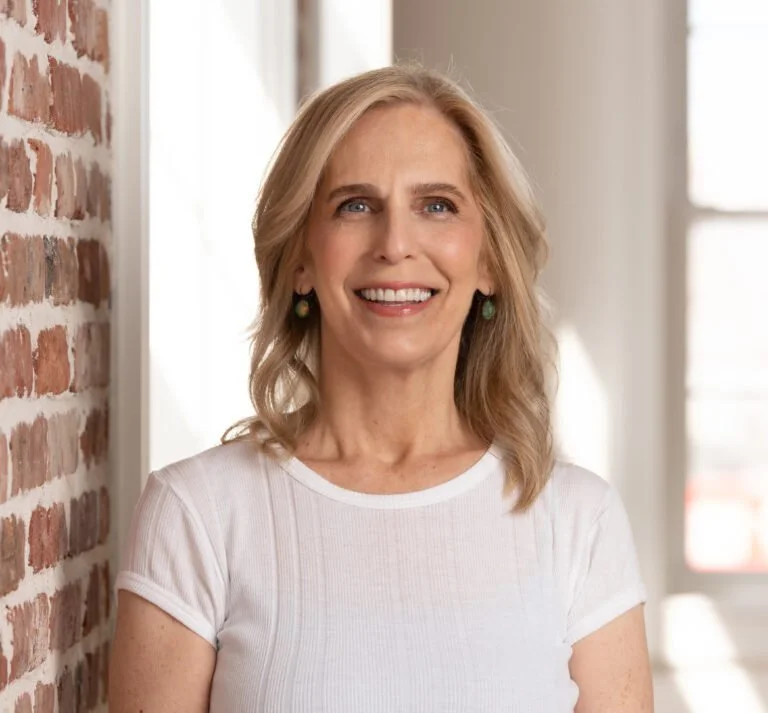
I absolutely do not understand why people tell kids that they need to develop their brand, as if they are a product to be marketed rather than a soul to be cultivated.
Summary
In this episode of “Leadership Matters,” Alan Fleischmann sits down with Dr. Deborah Kenny, founder and CEO of Harlem Village Academies, a network of charter schools that has provided a national model for educational excellence. Deborah's work has challenged traditional educational models by emphasizing student agency, intrinsic motivation, and curiosity-driven learning — creating graduates who are intellectually independent, deeply knowledgeable, and driven by purpose rather than credentials.
The conversation traces Deborah's unconventional journey from a philosophy-seeking teenager in New Jersey to a Columbia-trained educator, as well as the unique combination of entrepreneurial skills and educational vision that have propelled her to her position today. Deborah and Alan also dedicate meaningful time to Deborah’s latest book, titled The Well-Educated Child, which distills decades of hard-won wisdom about what truly drives learning and human flourishing. Deborah makes a compelling case for fostering informed skepticism over shallow opinion, emphasizing that she sees her duty as “soulcraft” — that is, the cultivating of inner life and purpose. The episode is a must-listen for anyone exploring innovation in the education space and interested in exploring what it means to enable an individual to live meaningfully.
Mentions & Resources
The Well-Educated Child, by Deborah Kenny
Letters to a Young Poet, by Rainer Maria Rilke
A Vulnerable Teacher, by Ken Macrorie
“How American Schools Can Address Political Polarization,”Time, by Deborah Kenny
Guest Bio
Deborah Kenny is an American educator, author, and the founder and CEO of Harlem Village Academies, a network of charter schools in Harlem, New York. She also founded the Deeper Learning Institute, a graduate school and learning lab embedded within the HVA campus, focused on preparing teachers to cultivate critical thinking and student agency.
Kenny began her career as a classroom teacher before moving into media, where she served as Group President of Sesame Street Publishing and Vice President of Marketing and Business Development at Time Warner’s Parenting Group. In 2003, following extensive research and planning, she opened the first Harlem Village Academy, building a school model centered on care for the whole child, rigorous academics and deeper learning.
Her educational philosophy emphasizes intrinsic motivation, performance assessment, restorative discipline, and independent thinking, with a focus on developing intellectually curious, self-directed students. Under her leadership, Harlem Village Academies has expanded to include elementary, middle, and high schools, incorporating programs such as Montessori and the International Baccalaureate for all students.
Kenny is the author of Born to Rise and The Well-Educated Child, which outline her vision for education and student development. She holds a Ph.D. and M.A. from Teachers College, Columbia University, and a B.A. magna cum laude from the University of Pennsylvania. Her work has been widely recognized, including receiving the Distinguished Alumni Award from Teachers College and being named to Oprah’s Power List and Esquire’s Best and Brightest.
Episode Transcript
Alan Fleischmann
Welcome to Leadership Matters on SiriusXM and at leadershipmattersshow.com. I'm your host, Alan Fleischmann, and I'm joined today by an educational pioneer and visionary who is working and has been working to reimagine what it means to receive the best education in the country.
Dr. Deborah Kenny is an acclaimed author and CEO of Harlem Village Academies, a network of charter schools in New York City that have provided a national model for excellence in education since opening the first Harlem Village Academy in 2003. Deborah has spent her career researching and experimenting with what drives real learning in pre-K to 12 education, emphasizing the importance of intrinsic motivation and student ownership. Her work challenges traditional educational models by centering the curriculum on the student experience, keeping agency and purpose in mind at every turn.
Deborah has just released her second book. It's titled The Well-Educated Child, and it draws on decades of wisdom accrued at HVA to champion curiosity-driven learning, emphasizing independence, strong argumentation, and a clear sense of purpose. Deborah is also a sought-after voice on education and leadership who regularly travels the country to discuss the opportunities and challenges for our educational system today and how we can replicate best models at scale.
We'll explore Deborah's early life on the show today, the development and impact of her multifaceted career, her latest book, which I urge each person to buy, and the lessons in leadership that she has learned along the way.
Deborah, welcome to Leadership Matters. It is such a pleasure to have you on the show.
Deborah Kenny
It's such a pleasure to be with you.
Alan Fleischmann
Let me tell you something. I get to meet these people on the show — people listening to the show know I have the great privilege of working with some extraordinary leaders around the world, and I get to go to some amazing places. And just every once in a while, I leave the presence of somebody where it's sticky and I just can't shake it. I think about it.
And I've been waiting for your book. I read your first book. Loved it. Been waiting for your book ever since I met you. And I met you with an amazing guy named Nir Bar Dea, who was the CEO of Bridgewater, the largest hedge fund in the world. And we went to visit you, and we pulled together this extraordinary roundtable in Harlem of the most unbelievable young people I've met. I'm on the board of Morehouse. I've been on the board of all these universities and colleges. I've never met a group of kids — and I will call them kids — in high school that inspired me more with their thought-provoking questions, their thinking, what they're doing.
So we're going to get into all that in a minute, but I just want to know that I have been waiting for this episode for a long time. Let's start with this. I know you recently lost your mom and dad, and I know how important they were to you. But your mom was a freelance journalist, if I recall, and your father was a school teacher turned stockbroker. Tell us a little bit about your mom and dad, especially now as I know you're still in mourning. What was life like around the house? Any brothers and sisters? Where did you grow up? And if you could encapsulate: what is the greatest learning? We talk about mentors here a lot. You light up when you talk about your parents and the example that they kind of shone through. I'd love to hear what their great mentorship for you is about as well.
Deborah Kenny
Wow, what a special question. I have to say I haven't been asked that.
My dad was a person who cared so much about people that he would help strangers. He helped people anonymously all the time. One of the things I just loved about him was his joie de vivre. He would do funny things, just funny things all the time, just to keep life fun. But the thing that I think was his essence was this belief in hard work. He was up at 5 a.m. He wanted to be — he had to be the first in the office. There's a family story that one day he got to the office and there was one person already there. So the next day, he woke up at 4:30 because he just had to be the first in. And he had his routine — up early, home by dinner, working Saturday morning, but then it would be tennis, and then the movies, and Sunday was family day. So, I think this ethic of hard work — and he really believed in the American dream.
And my mother was from Europe, and she was a very kind, soft, gracious individual. She would read — he was an early bird, she was a night owl. She would be — she had maybe 20 or 25 books stacked up next to her bed. She would read until two in the morning every night. She was a writer. I think some of her favorite interviews included Malcolm Forbes. She was an Ayn Rand aficionado. And I think among the many gifts from my mom, she was a real independent thinker. And yet, when she had an argument, an intellectual argument, let's say, with my cousins about religion or politics, she would hold her ground on what she believed, but do so in a gracious way. And I think that's what's needed more in the world.
Another interesting fact is that before the International Baccalaureate was international — and that's the curriculum we use in our high school, and I think it's a lot of the inspiration behind the kind of questioning you saw from the students you met was the training through the International Baccalaureate curriculum — well, she did the baccalaureate when it was — because it started in Europe.
So thank you for asking that.
Alan Fleischmann
Where did you grow up? Where was home?
Deborah Kenny
Oh, I grew up in New Jersey. One sister, kind of a typical American public high school with the typical cliques. I was very bored in high school and didn't quite fit in with any group.
Alan Fleischmann
You were a little bit — you probably thought you were an outsider, but didn't realize you were more original until you got older.
Deborah Kenny
I didn't even think about it. I just knew that I didn't fit with any of the cliques that existed. And I also saw life very differently. When I was in high school, by the time I was 16, I was thinking about the meaning of life in general, the purpose of my life in particular. I questioned why people chased prestige and success. And this line of questioning led me into a search for college. Most of these things were not talked about. Well, none of these things were talked about in my high school. So I think I just lived an inner life on my own for a while.
Alan Fleischmann
Which must have been — you developed your own self from the inside out.
Alan Fleischmann
Yeah, I don't know. Is your sister older or younger?
Deborah Kenny
Younger.
And I don't know who in my family — whether it's my kids or sister or others — is similar or not. But I do have three grown children now, and it was very important to me that I raised them with a very specific set of values. And I wanted them to understand that what life is; is not at all what the surrounding culture presents it to be. So when I was raising them, I cared a lot about them questioning everything, and especially questioning the predominant values in society.
Alan Fleischmann
Interesting. And I love that, actually, too. And did you — I think of you as such an integral part of New York. Now you obviously lived in New Jersey, which is amazing, and nearby. How much did New York play a role in you?
Deborah Kenny
Yeah, I was a New York girl all along. We would come into the city all the time with friends — parades, libraries, museums. But yeah, that classic — the minute I could leave, I left — very much a New York girl.
Alan Fleischmann
And I could see you as the New York girl, absolutely. Any mentors along the way that saw something in you?
Deborah Kenny
I mean, mentors, absolutely. I don't know about something in me, but mentors — there was a teacher at my summer camp. There was Jeff Canada, who I originally met shortly after — I think it was after — it was either when my husband had leukemia and passed away after 18 months of being sick when the kids were little. And Jeff Canada was someone who was a real mentor and still is, and urged me. I said I was going to start schools, and he supported the idea.
But I have a number of mentors. I really seek out and respect wisdom. I've always been drawn to people who are older. Regarding organizational culture, there's a business leader that I talk to a lot. If it's regarding education, there's a former superintendent I talk to.
Alan Fleischmann
I love that. And was college on your mind when you were growing up?
Deborah Kenny
Yes, but in a way that was very different than the norm. I was asked to be the editor of my school newspaper, and I remember I was not sure I wanted to do it because I had other interests as well. And I remember a guidance counselor said, "Ooh, this will look really good on your college resume." And I thought that was such a strange thing to say. And I was 16 at the time, and I was thinking, "Why would I do something just because it looks good?" That just didn't make sense to me.
And then I thought, "What's the purpose here? So I'm going to work really hard just to get into a good college so that I can work hard to get a good job, so that I can work hard to move up, so then in 20 or 30 years, I'll be where I am now, which is wondering what the purpose is."
And that whole line of thinking just went through my head at the age of 16, and it led me to spend a number of years in a philosophical and spiritual and intellectual search for truth, capital T, meaning of life. I spent time in Safed in Israel in a Kabbalah immersive seminary. I studied all different religions and spent a number of years immersed in the wisdom of the ages during college.
Alan Fleischmann
Tell us a little bit more about — studying the Stoics? Or was it —
Deborah Kenny
No, not the Stoics specifically, more the Zohar, the Kabbalah. But what I did believe at that time — I was looking at all the different religions of the world, like the spokes of a wheel. And if you look at the outside, the traditions, the ideas are very different, the rituals. But when you look at the mystical and spiritual writings within all the religions, they're profoundly similar. And I thought to myself, "Maybe it doesn't even matter which path you take, as long as you go deeply enough to get to the center."
And so I was thinking, "Maybe I'll study Hinduism. Maybe I'll study" — it could be a number of religions. And then I decided, "Well, I already know a bit about my own religion. I'm Jewish, so I'll take that path to the center of the wheel." But it was almost random in the sense that I thought it could have been another one. And so, I mostly studied Hasidic mysticism.
Alan Fleischmann
That's very cool. And you still find yourself drawn to Kabbalah today?
Deborah Kenny
Yes. More Chabad Hasidic philosophy. I still study and read and listen to lectures and sometimes go to classes to stay grounded, because I find that if you don't start your day, or at least ground yourself once a week in eternal, universal wisdom and values, then you can get lost in shallowness that is not particularly valuable. So even though in those college years I had the privilege of studying full-time and don't anymore, I still make it a point not only to study, but as much as I can to share what I learn with my children and so on.
Alan Fleischmann
So, I want to get to so many things today in our hour together. Tell us anything about the University of Pennsylvania. You went to college there. If I recall, you crafted your own major, which, by the way, does not surprise me. Tell us a little bit about — is that right? Am I wrong?
Deborah Kenny
How do you remember or know this?
Alan Fleischmann
I don't. You mentioned it actually when I was with you with Nir because we were looking at books on your bookshelf, and you made a comment. We talked to your husband, and what was it like raising your children when they were young. And then we were talking a little bit about your educational journey. You pointed out different authors. I think I saw some amazing books, actually, that I ended up writing down. But I remember you also telling me how you always were a little different, but you were lucky enough that when you actually tried to do certain things and you asked about it, that curiosity in you — the answer was often not a no. But you got no’s later in life, trust me, I know. But you overcame. But this idea that you created your own major — tell us a little bit about that.
Deborah Kenny
It was something that they offered. What I found when I was in college was that there were two things that would make me light up in a class. One was the quality of the teacher, and the other was which books they assigned. So, I just wanted a broad liberal arts education. So, what I would do is I would sign up for five classes. I would go — actually go in advance and look at the reading lists in the university bookstore and see which set of books was interesting. But then, instead of going to those five classes every semester, in the first week, I would go to 25 or 30 classes. I would just audit the other ones. And I would realize that of the five I originally picked off the list, maybe only one or two had an amazing teacher. The others seemed so-so. But then I would audit all these other classes and discover amazing teachers that would light me up.
And I thought, "Okay, well, I'll just" — they had the drop-add period where you could drop courses and add courses. So, I would just furiously drop and add so that I could craft a set of four or five classes per semester that had fascinating reading lists and exquisite teachers. And so, the only way, the only major that would match that kind of an approach, was the individual major, which they offered. And so, I just — I loved learning. I mean, I think the idea of going to college is such a privilege.
And the favorite course that I talk about all the time was American Intellectual History. It was reading a book a week and writing an essay about it, and learning about Thoreau and Emerson and the Transcendentalists. And, oh my God, I was in heaven in that course.
Alan Fleischmann
I love that. And are you in touch with any of your professors? Were you in touch with any professors for a long time?
Deborah Kenny
Not now. No, I'm not. But I went to Tanglewood with my daughter, one of my kids, recently. I have a boy and two girls. And discovered that the woman who owned the land that she then donated to create Tanglewood was a Transcendentalist herself, and she was friends with Nathaniel Hawthorne, who wrote Tanglewood Tales, which is where the name came from. So that was interesting.
Alan Fleischmann
And you said your favorite book in graduate school was — was it Ken Macrorie's The Vulnerable Teacher?
Deborah Kenny
Well, that was my favorite education book. My favorite personal book was Letters to a Young Poet by Rainer Maria Rilke. But I've lots more favorite books. They're all tied for first.
Alan Fleischmann
I love that. And they're on your bookshelves. I remember being in your office and thinking, if I ever wanted to be locked in a room, that would be the room I want to be locked in, because I would have a great time just going through your books. And your books told stories by the very fact of what you chose. It's not like you just chose things because you needed to. It's like each one seemed like it was part of your journey, and it was cool to see. It's like you get to know you by looking at your books in a way that I loved.
But tell us a little bit about — before you founded the Harlem Village Academies, you spent some time in media. You worked on Sesame Street, and you were at Time Warner's parenting group, I think it's called. How did those experiences shape the way you think about — I mean, I think of you as a great communicator. I think of you as a designer of curriculum. And I think of you as a — I don't know — life coach is a terrible word, but sometimes people design their own lives. So, let us a little bit how HVA became part of your life.
Deborah Kenny
Well, I went to a career counselor. I distinctly remember this. It was the one and only time I ever did that. And at the end of this exercise that she took me through, where she had me kind of present and analyze my interests — it was like a three-hour session — she said, "It's very clear to me you have a mission-driven heart, but a business-like, entrepreneurial head. And you really care about children, so you should find something that combines those two things."
And that's what led first to the parenting group at Time Warner, and then to Sesame Street. But I didn't fit in really well in either place, because I was not at all competent in corporate politics. And at the parenting group, I was interested in things like, "How could we bring important information to mothers living in poverty?" And the answer was, "How's that going to help our earnings? They don't have money."
I fought for it. I said, "Well, couldn't we get a sponsor?" But I didn't fit in. At Sesame Street, it was a little bit more mission-oriented — Jim Henson and Sesame Street — and that's around the time that I met Jonah Edelman, who introduced me to Jeff Canada. But still, ultimately, it was playing around the edges of mission-driven work, meaning it was still a business, and there was a lot of time spent around the business of the work.
And what I realized from those experiences was that everybody has their thing, and my thing is — it has to be more education. It has to be more central. It has to be more immersive. That's the short story of those two experiences. I learned a lot. But you find your place. And I think that the most effective leaders are authentic to what their own passion is, and then that's what they go with. And sometimes it takes a few experiences till you find it. And that's okay. I think that everything you do ultimately leads to what you're meant to do.
Alan Fleischmann
I love that. And you've really found it.
So tell us a little bit then — I'll say it differently. When I sat with your young people, I was struck by their humility, their confidence, universally. As different as each one person I met was, I thought that there was this ambition. And it was ambition — "I'm going to be the first in my family to do this, and I'm going to be the first to do that." They did research. They worked — they came from some really tough environments, and they saw that they could dream.
And honestly, I think if there's one legacy that I would say about your journey so far, it's that you give people the path to dream, and you give them the path to fulfill that dream. And that's two really hard paths to create in an environment where people have a lot of other distractions and a lot of pushback, where dreaming is impossible, and certainly the path to dream is even harder.
So tell us a little bit about that, because I think that is the core of what I observed that you've done at scale. And I'm just — tell us a little bit of how that all came to be. Am I wrong?
Deborah Kenny
You're right. And I'll tell you why I think it matters. Our kids in our schools, and all kids, by definition, have God-given potential. I mean that not in a religious sense, but just in a — Sidwell Friends, the school that many American presidents have sent their children to, they have this beautiful idea that there is, quote, "that of God in each person." And again, I'm not saying this in any particular religious way, but in a more universal way — that there is such infinite potential within each child to do truly world-changing things.
And what education can do is either squash that potential or enhance and support it, and so I'm so proud of our students. I also care about my own children. I care about our students. I care about all children, and just deeply care about them. I don't know why, but I'm just drawn to children.
And so, one of the things you have to do first in education is — it's not just what are you doing, but what are you not doing? Because you have to be careful not to do certain things that will turn their minds off, make them apathetic, make them sort of just follow along and undermine their natural curiosity. There are things you have to not do.
And then in both parenting and schooling, there are things you have to do to create the conditions in which the child will become a young adult who is self-motivated, driven. And that's, I think, what you saw. It's the curriculum and instruction that is described in the book The Well-Educated Child that is designed to have — not to motivate kids, but to have kids be self-motivated, right? And to have them feel driven and to care about the quality of their work and not to manage kids, but to teach them to self-manage. So, it's a very, very important distinction that changes everything. And I think what you saw was the fruit of that approach.
Alan Fleischmann
Yeah, I thought also something that I found extraordinary was the agency to design your own life. Rather, even though you're part of a community, they felt very — there was a lot of joy in the room and a lot of seriousness in the room too.
Deborah Kenny
I love that you said that. This idea of taking kids seriously is so important to me. When I was in summer camp — well, let me put it this way: the most important teacher in my life took me and my friends seriously as intellectual young adults who are capable of having conversations and taking actions in a pretty serious way. And because of that, we then took ourselves seriously. And I think that's what you were seeing.
One of the core chapters in The Well-Educated Child in the book is ethical purpose. And I talk about the idea that we need kids to understand that purpose is a thing. And it doesn't mean that we're going to be able to have a whole class about it every year. I know there's not time for that. But at least once a week, there should be time for conversations where kids, especially from pre-adolescent to high school, have a chance to begin to discern their calling — not that they will find their purpose by the time they graduate. Sometimes it takes until college or even your 20s, sometimes even your 30s. But that they understand that it is a thing — that having a purpose in your life and seeking it out is important. And that ties into the agency you were talking about.
Agency is another chapter in The Well-Educated Child, and I devoted a whole chapter to it because it is the central defining feature of a world-class education — if a child can take initiative, both in relation to their life and in relation to their studies, in relation to the work that they're doing. And then, after taking initiative, push through and persist through difficulties, concentrate for long periods of time, be resourceful, follow through, and ultimately care passionately about the quality of their work.
Now imagine you can foster this in high school, and that's what you saw when you met with the kids. You saw the fruits of that labor. Then that becomes the worker who cares about the quality of their work when you hire them, or the civic leader or the social leader who's going to change society for the better, who is passionate and driven. And that is the essence of what an education — the leaders in corporate America understand that this is what we need. But it's not — I can't stand that term "soft skills." It's not soft and it's not nonsense and fluffy. It's really serious. And it ties into the quality of thinking.
Alan Fleischmann
I love that. I also love the fact — one of the things I was struck by, they were in high school, but we were talking about their careers. And they were thinking ahead, and we talked about disruption and discovery. And they said, "What do you recommend for me to be ready? Each young person spoke around this incredible circle that you pulled together. And "Tell me, I want to be ready for the innovation. I want to be ready for the disruption. I want to talk about artificial intelligence. I want to understand what you're looking for so that I'm part of that."
And when you think about the biggest disconnect between business and colleges and business and universities — they don't always like — the people that are educating them are preparing them for the job demand that they're looking to recruit, the talent they're looking to hire. And that's become even more challenging as things are becoming more disruptive and change is happening so quickly.
But yet I felt like you're creating the agility, the curiosity, and the adaptability of young people that I want. People that I want people to go to college — it's an extraordinary opportunity to build community and to just drive yourself. But I almost felt like you're preparing people for tomorrow outside of college, that they were ready. Almost in some cases, I felt like some of these young people I met were just ready. They were ready to be — tackle whatever you needed them to tackle, asking all the right questions, having enormous humility, knowing they don't need to have all the answers.
And that's really something. As an employer myself, and as somebody who advises so many other people who are employing, that is hard to find. Really hard to find. So, you've got to build that curiosity muscle. I always thought you were born with it. But what I felt like when I went to HVA is it's something you could learn.
Deborah Kenny
Well, actually, it's about getting out of the way, because you're right, you are born with it. And then you get to kindergarten, and they tell you to sit down and be quiet and fill out a worksheet. And then they squash your innate intellectual curiosity.
We started a Montessori pre-K, and now Montessori in our schools is infused into kindergarten. We're working on first grade. Because one of the most important things — I know Barry Diller said this when he came to our school many years ago, right at the very beginning, and he talked about curiosity and serendipity. And the kids just light up when you give them a chance. You have to get out of their way. You have to allow the time to learn deeply. And that's what Montessori does. That's what the International Baccalaureate does.
The idea is not just what you're doing, it's what you're making sure you don't do. Do not give out worksheets. Do not bore them to death with PowerPoints. Be very careful how you're approaching the teaching. Make sure that the person in the classroom who's doing the reading, writing, thinking, and creating is the student, not the teacher.
And the typical approach in a school where the teacher stands up and starts talking right away is not the way class should start. Because if you walk into a room and sit down and somebody just starts talking, your mind kind of turns to passive. But imagine instead that if every time you walked into a classroom, you were given something to read and you had to think and write about it in the first few minutes, and that's how the class opened, then your mind turns on. You're active. So, there's a lot that goes into this.
Alan Fleischmann
How do you get — I mean, which fascinates me is you didn't choose the easiest place in the world just to experiment. You chose some of the most challenging communities where there's a lot of distraction, there's a lot of forces that would prevent someone from having the ability to sit still and learn because of all the disruptive nature around them. But yet I felt like I was in a room with so many kids, so many diverse, wonderful, beautiful kids who were determined to focus. I mean, how do you do that? Because you didn't — you could literally have created the great model. People always tell me, "Oh, Singapore is a model for this, that, and the other." And I think, "Okay, that worked for Singapore. How can that work elsewhere?" I feel like —
Deborah Kenny
Actually, it does. It does. Yeah, I mean, because —
Alan Fleischmann
I think what you're doing with HVA can, because you chose where there's disruption and distraction and, frankly, urgency and other things that happen in a young person's life. You can translate it to anywhere else. But if you chose the Gilmore Girls neighborhood, it might be a little harder to take elsewhere. I don't know. I just think that I was very impressed by the ambition and the focus and the joy and pride that you instill, or they instill in themselves, because you got all the distractions to get out of the way also.
Deborah Kenny
Well, sure. I mean, I can give you an example from Singapore, since you brought it up. And I think there's distraction everywhere. It's just different kinds of distraction. And the idea of how do you get kids to focus? That's a very interesting idea, because a lot of schools will do that in a performative way. They'll say, "You need to sit up straight like this, and you need to fold your hands exactly perfectly." And it's the appearance of focus. And it's important to teach manners. It's important to teach kids how to comport themselves.
But on a much deeper level, what I say to our teachers is, "Let's not worry about just what it looks like. Let's give students work that is so meaningful, interesting, and challenging that they actually are focused, not that they just appear to be focused or are obedient, but that they're actually intrigued. Is there a question that you could ask them at the beginning of the class that would be an intriguing question? Is there a fact or an idea or an excerpt from a book that you could give them to read that will have them so intrigued and the work is just the right level of challenge, that they're challenged and interested, intrinsically motivated? Therefore, they're focused."
So, it starts with that. And I'll give you an example from the Singapore approach to math. Because when we started our schools, the prevailing approach to math in America and in the schools that we visited was called "I do, we do, you do," which is — the teacher does it. "Here's a formula. Today we're going to learn this formula in math. Everybody watch me. Okay, now we're going to do it together. Okay, now you got it. Now you do it." And that's it. That's how math is taught.
There's a book by Stigler and Hiebert called The Teaching Gap. It's about the difference between how they teach math in Japan, Germany, and the U.S. And so, what we did instead was take the constructivist approach from the very beginning, from day one. In Singapore and in Japan, this is how they teach math. Instead, put a problem up on the board. The kids spend 15 minutes trying to solve the problem right from the beginning of the class.
Now, you have to make sure it's the right problem, the right level of challenge. It can't be too easy — Goldilocks — can't be too hard. It has to be the right level of challenge. And they're immersed in the math itself because it's interesting. And why is it interesting? Because you gave them a problem. You're not having them just sit and memorize and watch you and listen to you. You gave them a problem. And it's accessible but challenging.
And then after 15 or 20 minutes, and during that time, the teacher's walking around the room trying to find examples of common misconceptions that the kids have, will put some of their answers on the board, some right, some wrong. Then there'll be a discussion about it. I won't go through what the rest of the lesson looks like, but the point is, you get kids to focus by giving them something that is worthy of their focus.
Alan Fleischmann
Well, you also did something else. And you talk about in the book this idea, which I never heard the term before, honestly, or maybe it didn't strike me until I saw what you were describing, but this idea of self-discipline and self-management, this idea that you can be intellectually curious, knowledgeable, gracious, motivated — the words that you use in the book. But what I love is the idea that you challenge people. I saw you do it, by the way, because I saw people — I saw you do a little corrective course-making even when we had that circle and people were talking, because you didn't want people to get distracted from the very fact that they had something more to share and give. And you kind of would push a little bit in a delicate way, but in a forceful way enough that people kind of self-regulated. But this idea of self-regulation, self-discipline, self-management — you don't hear about that elsewhere. Maybe I'm wrong.
Deborah Kenny
Well, one of the reasons I wrote The Well-Educated Child is that I wanted to share with people everything I had learned, because I learned it the hard way. The fact is, all these ideas have been around for decades, in some cases half a century. So then why didn't I know about it? I went to college, I studied education. Why didn't I know all these ideas?
And as I looked around, I saw that this accumulated wisdom in the field of education was not effectively passed down from one generation to the next. So every teacher has to learn from the beginning. And sometimes it takes seven or eight years till they finally discover things that have been around forever. And so I wanted to pass along the wisdom in one place that took me 25 years of uphill struggle to acquire. And because — yes, I didn't create these ideas. I learned them from other people.
Alan Fleischmann
I love that. One of the things when you were talking earlier, I wrote this down. When I think about you, I think of you as — you're also about creating a climate where there can be — we're so obsessed right now in the world with this idea that we can live in a world where you can have debate, disagreement, discourse, dialogue. But actually disagree. And I really, really disagree, intellectually, personally, in every way. But you're doing it in a way where you're saying, do it with grace, do it with respect.
This idea — I wrote these words down when you were talking earlier — the combination of grit and grace. This idea that you are so wonderfully thoughtful and calming and substantive and respectful. But there's no question, if you watch, you listen to, you see, you interact with your students, there's an urgency in the way you approach the world. And at my firm, we talk about we're a bunch of warriors and worriers. I don't think of you as being a worrier as much as I think of you as being a light. Maybe you are. Maybe you worry at home at night, but the lights are to help. You're a warrior. I think of you being amazingly optimistic, honestly.
Deborah Kenny
That's something I got from my father. He was an abiding optimist. I mean, no matter what — even once he was in a wheelchair toward the end of his life, you'd say, "How are you, Dad?" He'd say, "Terrific."
So the most influential educator K to 12 in the 20th century was Ted Sizer, and he talked about the importance of students being informed skeptics. And skeptics meaning independent thinkers. And I think the problem we have with education today is that all the emphasis is on the independent and there's no emphasis on being informed. So in other words, kids are spouting off opinions without really seeking knowledge, having knowledge, respecting knowledge. And that is not healthy.
And I worry, and I've worried a lot, especially over the last two years, about what happens when the kids get to college. And one of the things I wrote about in The Well-Educated Child is this idea that a lot of us are disconcerted now with the quality of education going off the deep end, and kids getting to college and following the mob. And that's not independent thinking, that's not sophisticated. They are not properly educated.
So that when that happens, when they encounter shallow information, misinformation, what's popular, they don't have the confidence to stand on their own and say, "Well, let me learn about this before I join in. Let me study this. Maybe — does it make sense?" We don't want kids to be duped so easily. And so teaching them the art of argument, of discourse early — starting in middle school, and certainly with the Socratic seminar in high school — is critical. It's critical to the future of society, to everything we want about the kind of world we'll leave to our children and grandchildren, and to our politics.
There's an essay I wrote for TIME magazine coming out April 20 about the polarization and how it's undermining the fabric of society and how schools can contribute to addressing that.
In corporate America, it matters as well, because you want a team to be able to duke it out and then go have drinks together. My favorite thing, when there were five of us running the schools and we would have our weekly meeting to make our plans, my favorite thing was when I would have an idea and then three people would agree. And then the fifth person would disagree. And I thought, "Oh, I love that." It didn't matter that four of us had one opinion, the fifth person — and by the way, it wasn't always the same person. It's that we had cultivated a culture in our organization of respectful argument and disagreement. And you hash out ideas. And you come to consensus at the end. And your way isn't always the way.
But teaching the art of argument is so critical to a good education.
Alan Fleischmann
And respect, I would argue, in that art of argument. You've got to get out there with a book. You got to get out there even more and more, because this idea of what is wisdom, and how do you create a generation of wisdom. And I think with AI, it's so easy for people to think that critical knowledge, critical curiosity, critical questioning can all be solved by something else. And what I think you're doing, which is brilliant, is you'll use all the tools that are out there and encourage them to be used, but don't let it replace that critical thinking, that critical questioning, that critical imagining, and that agency that you're hoping that people are going to have, the young people are going to have. So that these are tools, because we're going to have too many people — the difference between leaders and followers in life — too many people are just going to rely on that and think they're being critically inquisitive or critically engaged. You're not. I hope that people will get from your book and from the example of the academies of HVA that that's not enough.
Deborah Kenny
Yeah, I'm a technology skeptic, and our schools are low-tech. And I think no matter what tools come along, the kind of education you need to leverage those tools is the same, just as I think that wild blueberries, almonds, chia seeds, flax, and hemp seeds are healthy, and that's never going to change, not in 100 years. Being healthy — eating healthy and lifting weights and doing your yoga are the way to be healthy. That's not going to change. It doesn't matter what technology comes along. There are still certain inputs you need.
And teaching students to read deeply and widely before forming an opinion — that's never going to change. And the way to do that is through extensive reading, writing, and discourse. That's not going to change either.
Alan Fleischmann
I want to get to your kids too, because you're a beautiful family, I know. And I want to just mention something. I think about — my wife and I, we are so proud to be parents of these two extraordinary daughters I've talked about. And they're amazing, and they're straight-A students, and they work hard in their community, and they're wonderful. But we've never been parents who expected them to be straight-A students or grade-focused. And in fact, we're just so lucky that they want to be the best where they can be. And it turns out they did well. But if they didn't — you talk about asking questions like, "What did you learn? What are you going to learn today? Learn something today. How did you do?" The journey, not just the destination.
And I was lucky enough to have parents that said that to me too. I had a mother who once said to me in college — I was a straight-A student, and I got out of a class when it was no longer allowed to get out of class. So I called home, and I was so proud. My father said, "Oh, how clever of you." And my mother said, "Go back and get back in the class. I don't want you to learn the muscle of using your personality to make life easy."
I want to make this — this is not the last time you're on the show. I want to ask my last question. I want to ask you: what question have I not asked you that I should have? But one of the things I do want to talk about, and maybe we'll have to do it the next time you're on — let's get that scheduled — is this idea of soulcraft, which you talk about in the book, which I think is so amazing.
You're listening to Leadership Matters on SiriusXM and at leadershipmattersshow.com. I'm your host, Alan Fleischmann. I'm here, and we've spent the last hour with the founder and CEO of Harlem Village Academies, Dr. Deborah Kenny. And her book — you got to get her book. It comes out on the 21st next week, but you got to get her book because it's going to be a book worth reading. Not only if you have children and how you actually can influence where you're an educator, but if you're someone who really believes that we've got to create and curate the best of ourselves in a greater society.
It's The Well-Educated Child, and it draws on the decades of wisdom that Deborah has accrued through her own leadership and through the incredible influence of others, including those many students that have graduated along the way.
Thank you so much, Deborah. Thank you.
This transcript has been edited and condensed for clarity.