Eduardo Carrera
Founder and CEO, Platform for Social Impact (PSI)
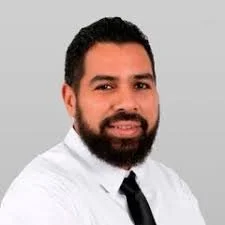
The one thing that we need to reestablish in communities is their ability to dream…When you allow people to see themselves as activators of that dream, magic happens.
Summary
In this episode of Leadership Matters, Alan Fleischmann sits down with Eduardo Carrera, Founder & CEO of the Platform for Social Impact, to discuss his remarkable path from the Boys & Girls Clubs of Puerto Rico to building innovative community hubs and impact funds. Eduardo shares how love, mentors and bold ideas shaped his leadership, and why connecting capital with communities is the key to breaking cycles of poverty. Hear about the Oasis Hub, the Fund for the People, and the blueprint Puerto Rico offers for global social innovation.
Mentions & Resources in this Episode
Guest Bio
Eduardo Carrera is the CEO and Founder of Platform for Social Impact, where he leads community-focused investment initiatives in Puerto Rico. Previously, he spent over 20 years at Boys & Girls Clubs of Puerto Rico, serving as Director of Operations, EVP, and eventually CEO. Under his leadership, the organization earned national and international recognition. Prior to joining Boys & Girls Clubs of Puerto Rico, Eduardo was COO of Emergency Mitigation Corporation, in charge of business development, budgeting and public relations. Eduardo specializes in mobilizing cross-sector funding to drive social and economic transformation.
Episode Transcript
Alan Fleischmann
Welcome to Leadership Matters on SiriusXM and at leadershipmattersshow.com. I’m your host, Alan Fleischmann. Today, I’m honored to be joined by a remarkable leader whose life and career have been dedicated to service, innovation, and impact, Eduardo Carrera. Eduardo is the founder and CEO of the Platform for Social Impact, or PSI, a pioneering organization designed to connect capital with communities and create systemic change in Puerto Rico and beyond. Under his leadership, PSI has launched transformative initiatives like the Oasis Hub in San Juan and the Fund for the People, which together are reshaping how philanthropy, investment, and grassroots leadership intersect. Before founding PSI, Eduardo led the Boys and Girls Clubs of Puerto Rico, where he championed education, workforce development, and two‑generation approaches to breaking cycles of poverty. His work reflects not only a deep commitment to equity and opportunity, but also a belief that Puerto Rico can serve as a global blueprint for social innovation. Throughout his journey, Eduardo has been an architect of possibility, building bridges between finance and community, and redefining what sustainable impact can look like. I’m excited to have Eduardo on the show today to explore his life journey, the bold steps he’s taken to build organizations geared for impact, and the many lessons in leadership that he’s learned along the way. Eduardo, welcome to Leadership Matters. I’ve been so much looking forward to this. It is such a pleasure to have you.
Eduardo Carrera
Saludos, Alan, and to all of your listeners. It is a pleasure to be here, to share a little bit of the journey, and to learn together with you.
Alan Fleischmann
You’re going to be very inspirational. You are an irresistible combination of confidence—knowing that we can do better—and humility—knowing there’s so much for us to learn. I love that about you because you live it every day. That’s why you’re inspiring and a transformational leader: you awaken in others what you live by, which is this great curiosity and great love of humanity. We were just talking earlier, before the show started, about how you approach time and how you manage it—probably the most important currency we have in our lives besides health.
Let’s begin with your story. You grew up in Puerto Rico. You’re from Puerto Rico. I’m speaking to you right now while you’re in Puerto Rico. What are your earliest experiences? Tell us a little bit about your family. When you look back at your family dynamic, are there mentors—teachers, parents, siblings, aunts, uncles? Give us an idea of the ecosystem that you were born into and those who, with a guided hand, had great influence on you.
Eduardo Carrera
I consider myself very blessed, and that blessing has a name: my grandmother, Isolina. For many years, she held the family together. She was the institution that created our moral compass and modeled hard work and the reality of what low‑income people have to do to put food on the table. All her life, she cleaned houses and ironed for a living. She had a big family—eight children—who grew up in a housing project in San Juan, Puerto Rico. From that woman, they saw faith, they saw hard work, and more than anything, they saw love.
I remember the rule that every one of her children had to visit her house every Saturday. So I grew up in a place with eight uncles and aunts, all of them with children, and we would all stop at our grandmother’s house every Saturday. Now that I know the type of work and hard life my grandmother had, it’s hard to think of an instance where there was not enough for everybody. I don’t know how she did it, but there was always enough food on the table, always a cup of coffee at the end of the day. Most important, everybody went there because they felt connected to love. Our upbringing was challenging, and there are stories that are hard to digest, but that love that came from my grandmother really carried the family through tough times. She’s a mentor I’ve always kept very close to my heart.
Alan Fleischmann
How old were you when she passed away?
Eduardo Carrera
My grandmother passed away when I was 18, just as I was ready to go to college and move to the United States. I ended up coming to college in the States. She was present for the first 18 years of my life. For a period of time, I basically spent half my days in her home.
Alan Fleischmann
Wow. Any brothers or sisters?
Eduardo Carrera
I have three younger sisters. One of my sisters is leading work in Philadelphia, working with communities and community development, and my youngest sister is back in Puerto Rico.
Alan Fleischmann
So you have some family still in Puerto Rico and some family elsewhere in the States. That’s great. I love the way you use the word “love,” and I know enough about you to know that you live very strong values. You wouldn’t do what you do for a living—or personally—without that. I now have this very strong image of your grandmother bringing everybody together and making herself the nexus.
Was there a particular moment in your youth when you started to feel that you were part of figuring out how to overcome inequities or how to influence others? The Boys and Girls Clubs, to me, are one of the greatest examples of mentorship and love. Was there a point where you went from being the beneficiary of this love from your grandmother and your family to feeling a responsibility to do more of this for others?
Eduardo Carrera
I wish I could tell you that it came early and out of self‑reflection, but it didn’t. I was fortunate to have great mentors in my community. The Boys and Girls Club helped me pick up basketball. I was good enough to get a scholarship to the States, and the Club helped me with that decision and facilitated the move.
When I came back from college to Puerto Rico, the mentor I’d had growing up at the Boys and Girls Club had become the executive director. He invited me to lunch and said, “I want to grow this organization. These opportunities should be available to more kids around the island—and you’re helping.” I said, “I’m helping? I just graduated, I’m starting a business, I don’t have time.” He said, “No, you’re helping. You don’t have an option. Remember when we helped you with plane tickets? With your scholarship? When we gave you the opportunities you’re now benefiting from? You’re coming. You’re helping.”
That day became the beginning of what is now a 25‑year career. Reluctantly, I started to return to the community where I grew up and to help. I took a job that had no pay. Months went by—at one point, six months without pay. At that time, there were about 18 staff members. I remember them coming to us and saying, “We love this community as much as you do. We love these kids as much as you do. But we’re not getting paid here. We’re leaving. We know this organization will be closed.”
I remember that conversation clearly. I remember what I had on. I remember walking to my car, still a bit of an athlete, putting on my shorts and tennis shoes, walking back into the building and thinking, “What if the day I first came here the doors had been closed?” In that moment, I understood the fragility of opportunities. I understood that in low‑income neighborhoods, programs and services simply cease to exist sometimes, and with them, opportunities for people. That was my first physical reaction to the job, and it became a call to action to stay.
Alan Fleischmann
How did you survive during that period when you weren’t being paid?
Eduardo Carrera
The first thing is to show up. We didn’t know what was going to happen, but we decided this wasn’t going to go away, so we showed up. Then we started talking to people who could help us out of the situation. We shared what was at stake—what would be lost if we didn’t provide these services. We found a partner who became the president of our board at the Boys and Girls Club, Víctor Rodríguez, a great mentor, always cool under pressure. Through him, we began to involve others and bring in partners who helped us turn the situation around.
When I left the Boys and Girls Clubs almost 20 years after that moment, we had gone from not having money to pay staff and having only 18 employees to becoming the largest nonprofit organization in Puerto Rico, with over 650 staff serving many low‑income communities. That journey became possible because we decided to show up and work through the problem.
Alan Fleischmann
I love that. Under your leadership, Puerto Rico has been noted as one of the great examples within the Boys and Girls Clubs network—not just because of growth, but because of scale and ambition. That’s part of what led you to PSI, where you said, “We can build blueprints here and build something at scale that can be replicated in other important ways and niches.”
Anything from college you want to share? How transformational was that experience? You’ve been one of the great ambassadors for Puerto Rico. I have a great love of Puerto Rico, and I know that stereotypes about it are not real. Even among great nations, Puerto Rico has something very special—not just its challenges, limitations, and marginalization, but a celebration of spirit and culture that is unique.
What was it like going to college in a place where there probably weren’t many Puerto Ricans? How did you explain yourself, and how did that change you?
Eduardo Carrera
Two experiences stand out. One was difficult at the beginning, because I had to put myself in other people’s shoes. I remember my dear friend and roommate, two months into college, looking at the pictures on my dresser. He asked, “How come your mom is white and your dad is Black?” I had never been asked that question before. That whole conversation—and the perspective on race in the United States—showed me I was in a different place from where I grew up. There were different frames of thinking.
I learned a lot by being exposed to friends from different races in college—something I hadn’t experienced in Puerto Rico. It taught me that we must be careful, because sometimes we take as truth what we’ve been socialized to believe. Only when we interact with other people do we realize there are other lived experiences. So I looked at the picture and said, “I guess my mom looks whiter than my dad. What does that mean?” Many nights of conversation followed, trying to understand why he saw that distinction in a picture. It was enlightening.
The most important thing that happened in college is that I met my wife. It was love at first sight. We’ve been together ever since. She’s an adopted Puerto Rican now; we have two Puerto Rican daughters. She changed my life.
Alan Fleischmann
I love that. What is her background?
Eduardo Carrera
Her whole family was born and raised outside Pittsburgh. Her parents worked in steel mills; her mother was a nurse. When we decided to go back to Puerto Rico, she took on the hard job of homeschooling our daughters. She was their teacher for many years. Now she’s transitioning to a new life as a landowner and an athlete, running marathons. I’m trying to run behind her in this new phase.
Alan Fleischmann
She keeps you active and busy. How many kids do you have?
Eduardo Carrera
I have two daughters, 15 and 21.
Alan Fleischmann
That’s amazing. We share that—I also have two daughters, and it’s the best thing for any dad.
When you came back, did you always know you would return to Puerto Rico? A lot of people go off to university and don’t come back. You decided to come back.
Eduardo Carrera
Mentors are so important. If I had to name one big theme in my life, it’s the benefit of mentors who saw potential in me. In college, I still didn’t know what I wanted to study. I had a great teacher who led the entrepreneurship program. He said, “This is different from anything else. To be an entrepreneur, you don’t have to be great at one specific thing. You have to be curious, think about problems differently, and be a bit stubborn. I think you have that. I want you in my entrepreneurship program.”
So I graduated with a business degree. In my mind, from the beginning, the place I wanted to impact was Puerto Rico. I graduated and immediately came home. I started an entrepreneurial business and did that for about two years before transitioning to the Boys and Girls Clubs.
Alan Fleischmann
Were you different when you came back? Did people see you as different after college? Were there things you learned or experienced that changed you so much that you felt different to yourself, let alone to others?
Eduardo Carrera
Yes, and that’s been constant. One of the things I try to share with young leaders is: we have to get out of our context. You learn so much just by being exposed to other environments, conversations, and people. You gain perspective.
Leaving the island at a young age but coming back at a young age—and then continuing to have opportunities to experience other cultures—shaped how I think. More than anything, it deepened my appreciation for the opportunities I had. It also made me see a responsibility toward younger generations. The world is becoming smaller, and sometimes we try to insulate young people from what’s going on. I think we should do the opposite. If we expose young minds to different perspectives and ways of living, we all benefit. I certainly did. The most important part is recognizing we are all conditioned by where we grow up, and that conditioning is not absolute truth.
Alan Fleischmann
In your case, you’ve never let yourself forget where you grew up. Some people try to transform themselves into something else—it doesn’t work. You had a calling to go back and make it better for others. You’ll say it wasn’t all planned, I know, but it has been part of the plan ever since.
How do you describe Puerto Rico?
Eduardo Carrera
First of all: home, in every sense of the word. Puerto Rico smells like home—there’s food cooking everywhere. A home should smell like food. Home is welcoming, and Puerto Ricans, and Puerto Rico, are welcoming. Home is also complicated. The worst fights happen at home. We don’t have a perfect society, and the contrasts of inequity and missed opportunities create big fights in a homelike place.
But we are resourceful people who have learned to do the best we can with what we have. We are grateful by nature. Even in tough situations, we recognize there are people who might have it worse. There’s a sense of, “These are the cards we were dealt; we’re going to have the best time we can.” And we are incredibly musical. I’ve traveled to many places, some very beautiful, and one of the things I miss is background music. In Puerto Rico, you hear music everywhere—from homes, businesses, cars. It’s part of how people approach life. If I had to describe Puerto Rico in one word, it’s home.
Alan Fleischmann
I love that—and how inviting. People should know that if you go to Puerto Rico, you’re coming to a home. I love how you describe all those elements of culture, because that’s what people want: the journey, the experience, to maximize their time.
You led the Boys and Girls Club, and it was a big part of your identity. When did you realize you might want to move on and create the Platform for Social Impact? Was PSI a project born out of Boys and Girls Club? Was there a period where it was simultaneous? What was the leadership moment when you decided to “bite the bullet,” start PSI, and move to that next step?
Eduardo Carrera
It was a combination of factors, but the main realization was personal and came from pain—family stories. When you go back to the neighborhood where you grew up and your friends are no longer there because they were killed, you start questioning whether you’re so special that you escaped, or whether you were just at the right place at the right time and simply lucky.
The painful reality is that for the majority of people in Puerto Rico—especially children, over 54% of whom live in poverty—those painful stories are often the only stories they have. Poverty is their final destination. Opportunities are not easily available in many low‑income communities. That’s a pain I still carry.
From that pain came the strength to question everything, always with a strong sense of mission. I had deep conversations with community members, staff, and board members. I started the conversation from an aspirational place: “If we are really about maximizing opportunities, where does that mission take us? What are the limits of what we have to do?”
When you give yourself permission to act based on mission, not on programs, services, or structures, everything changes. That’s what happened. I began an exercise with the people I led to confront the brutal reality that, for most people in low‑income communities, poverty was a final destination in Puerto Rico. That was not acceptable. Entertaining poverty was not going to be our legacy.
While Boys and Girls Clubs are lifesavers in some communities, we were humble enough to say, “This is not enough. People need something else. This should be a national policy priority.” That led to a series of social innovations. Under my leadership, we created the Youth Development Institute of Puerto Rico, the first think tank solely dedicated to lifting up policies for low‑income families and children. We also created the first charter school in Puerto Rico—not because we were driven by a charter movement, but because no one else was bringing quality and efficient education into that neighborhood. If nobody else was coming, we were coming.
A transformational moment came about 13 years ago. We brought about 30 people into a week‑long retreat and told them, “Bring everything you know about families and children: statistics, histories, pictures.” For a week we peeled the onion, taking things off the board. At the end, the only thing left was poverty. That became a rallying cry. Poverty is a construct, and we believe it can be addressed and reversed. Opportunities can and should be available to most people in society. That process was the beginning of what became the Platform for Social Impact.
Alan Fleischmann
Did you start PSI with others or by yourself? How did that work? Did others come in at the beginning?
Eduardo Carrera
We started within Boys and Girls Clubs. We had a very intentional board that understood that our mission was above any particular program. They allowed me to create an innovation unit focused on addressing poverty at scale. They supported the creation of the Platform for Social Impact with initial resources from the Boys and Girls Club.
I will forever feel personally indebted to that. I wouldn’t be here having this conversation if it weren’t for the opportunities I had growing up in the Boys and Girls Club, and for the board’s leadership and foresight in recognizing that Puerto Rico needed more of what we were offering and allowing PSI to emerge. It reflects how deeply people can care about their communities.
Alan Fleischmann
Did you have a certain litmus test for the kind of people you wanted around you, from a leadership point of view? By that point, I bet you knew what you needed—and what you didn’t need—in terms of character and personality.
Eduardo Carrera
If I’ve learned something over the years, it’s that the only thing that carries you through is your values. There will be tough decisions and either‑or moments, and only your values guide you.
I’ve had life‑changing conversations with low‑income folks who lack resources but hold powerful values around education, work ethic, and innovating around issues. They inspire me. I want to be around people who see work as a value—not because of how much they are paid or their job title, but because they appreciate the nature of work as a contribution.
I want to be with people who understand that challenges are for us to solve, not for “someone else.” For many years now I’ve repeated a phrase that has become my motto: “We do what is necessary, not what is possible.” In our communities, nothing is “possible” if you look at it that way. So we flip it: if it is necessary, we do it. Whether it seems possible or not is secondary. That mentality means people who constantly think in terms of “Is it possible?” are usually not the ones we end up working with.
Alan Fleischmann
When you describe the PSI model and philosophy to someone new, what do you say it is? And is it different today than when you founded it?
Eduardo Carrera
It’s not fundamentally different, but the context has sharpened it. If we step back—not just from Puerto Rico or the United States, but as humans and look at the world—we see incredible wealth and innovation, truly remarkable progress. At the same time, if we fine‑tune our view, we see enormous need, hunger, and suffering.
We argued, in creating the Platform for Social Impact, that there is a deep disconnect between resources and communities. That’s not unique to Puerto Rico; it’s a human problem. PSI’s core function is to connect resources to communities, because organically that connection doesn’t happen. It requires a specific set of skills to translate community needs to resource‑holders, and the intentions of resource‑holders back to communities, so both can benefit. That’s what PSI does: it recognizes that resources are abundant and that need is widespread, and it orchestrates the connection. For low‑income and working families in Puerto Rico, that is the role PSI fulfills.
Alan Fleischmann
It’s such an important part of combining capital with community. Otherwise, we’re not making capitalism work at all. I think what you’re saying is that we can fix capitalism—and build a new capitalism—if we prioritize what’s needed and then bring the right resources to make that happen. You’re making the impossible possible.
What’s the ultimate outcome you’re aiming for?
Eduardo Carrera
Often we’ve treated capital and financial resources as the end of the journey. I think we’re entering a phase where outcomes for humanity must be the driver, and resources are inputs to reach those outcomes.
When you talk to people in many places, at the end of the day they want to be happier, live longer, be healthier, and secure the best future for their kids. These are common desires. If we organize ourselves around those outcomes, we can direct resources to ensure everyone has a fair shot at them.
Alan Fleischmann
When you think about capitalism, are you optimistic that we can get this right through the kind of work PSI is doing? Or do you think capitalism has failed and needs to be rebuilt from scratch?
Eduardo Carrera
In reality, there are very few things you can start from scratch. In social innovation, your work is optimization. For us, the conversation is less about whether capitalism works or doesn’t work and more about putting people at the center and using people’s outcomes to judge whether we are doing the right thing.
Much of the world is shaped by economic systems, but there are also value‑based elements that matter just as much. Until you put people at the center and define what you want them to achieve, it’s easy to let the economic debate overshadow values, or vice versa. Putting people at the center forces everything else to be subordinate to human flourishing.
Alan Fleischmann
People also need to feel a sense of responsibility, which goes back to the way you described Puerto Rico as a home and your grandmother’s kitchen table. People should look at their community with the same priority as themselves. As I prosper and achieve, am I leaving a visible footprint in my community?
You’re saying: invest in the community. Bring resources not because you’re giving them away, but because you believe that, whether philanthropic or investment, capital is required to create opportunity. Access to capital and mentorship together can do a lot; without both, you can do very little.
Eduardo Carrera
One realization over many years is that community leaders and activists, myself included, sometimes have been part of the problem. We lead with our hearts and emotions because we are deeply engaged with communities. Sometimes we believe that giving more of our heart is enough. But we still live in a world that requires resources, and capital is necessary to reach many of the goals these families have.
For many years, communities have not felt comfortable engaging in capital conversations. There’s a different language around capital that communities often don’t speak. Community leaders must become better translators—for both communities and capital‑holders. I still believe there’s enough goodwill on both sides to do good for humanity.
Alan Fleischmann
And you’re optimistic?
Eduardo Carrera
I’m optimistic. We have to fix this, and it’s too important not to.
Alan Fleischmann
You’ve seen a lot. Are there examples of leadership that you consider the best examples—perhaps people you’ve learned from?
Eduardo Carrera
I’ve picked things up from many people. I’ll never forget an uncle who said, “You never ask anybody to do anything you’re not willing to do yourself.” I heard that early on and it never left me. My mentor for many years used to say, “Things are done when they’re done—not when they’re 99.9% done.”
I remember walking into my first basketball practice in college. I showed up on time. The coach looked at his watch and said, “On time is late. Fifteen minutes before is on time here.” Those routines create consistency in the day‑to‑day.
Leadership is a day‑to‑day thing. It’s what you do when we finish this conversation and you have a list of things to do—how you decide to approach them. Those daily nuggets from people have shaped my life. At the end of the day, there is no job too small for anybody. I value people who are not afraid of work—not just the workload, but the idea of putting themselves in service to others.
Alan Fleischmann
I’m sure there are people you admire who do just that every day. Those who understand they have an abundance to give are critical. We can do so much to inspire entrepreneurship and creativity in this age of digitization and technology, where people can bring innovation into their own lives. They know their challenges but need resources, community support, mentors, and capital.
Let’s talk about the Oasis Hub you created in San Juan. What was the vision behind it? How did you identify the most pressing needs to address? What impact has it had thus far? I believe a big part of it has been the community identifying its own needs and co‑designing the hub’s work. That’s not just “buy‑in”; that’s prioritization. You are lifting people up by making them part of their own destiny. It’s about dignity and prioritizing with people, based on what they see as essential. That’s what I know about it, but tell us more. To me, Oasis is one of the greatest examples of what can be done all over Puerto Rico—and in every urban environment in the country.
Eduardo Carrera
Like you mentioned, Oasis emerged from community co‑design. About eight years ago, we took an intentional design approach. We held sessions with children, adolescents, adults, and family members to hear, from their perspectives, what a functional, thriving community looks like, and what services they wished they had.
We were literally on the floor with children and action figures as they designed a school for superheroes. In the conversations, children talked about wanting a safe place free of violence. Some of the communities where we work have been plagued for years by intracommunity violence. These kids were demanding safe places in the school they were designing for superheroes.
Adolescents talked about how they were treated in school, and when seeking jobs, even though no one had ever explained to them what a job really entails. Families shared their views on health, education, and employment. We pulled all of that together into a plan.
Oasis became the physical representation of the community’s aspirations. We went back and said, “Physically, we can build something here that shows what we value: education, health, and work. When people come to this place, they will see those values on display.” The community rallied around the idea of seeing their dreams made visible.
Through my career, I’ve worked with policymakers, implemented programs, and now do capital work. One thing we must re‑establish in communities is the ability to dream. We have slowly killed the idea that dreams can become reality. When you allow people to see themselves as the activators of their dreams, magic happens.
When we decided to take over the most dilapidated building in the community—a building occupied by farm animals and people using drugs—we brought community members into the building as it was. On one wall, they wrote the things they wanted to leave behind with the demolition. On the other side, they wrote what they wanted to build for the current and future generations. So yes, Oasis is a physical project, and it will provide concrete services: K–12 education for hundreds of children in San Juan, health services for thousands of people, job opportunities, and case counseling for thousands more. But the most important aspect is the restored ability to dream big. And when you let people dream, they tend not to stop.
Alan Fleischmann
I love this. The greatest gift in life is to imagine, be curious, dream, and then realize those dreams. Are there ideas people have come up with that surprised you?
Eduardo Carrera
The surprises are often in small things. For some, it’s saying, “I’ve been coming here, and now I’m buying a car because it will make my life easier. I know I can. I know it’s necessary for my family to progress.” People think there has to be a big leap, but for some, the step is simply getting a car to access a better job.
For others, it’s transitioning from renting to owning a home. For others still, it’s going back to school because they want to be an example for their children—if they’re pushing their kids, they need to push themselves. In these day‑to‑day interactions, you see miracles happening and continuing to happen.
Alan Fleischmann
Can you imagine Oasis being an example not only for the rest of the United States but globally?
Eduardo Carrera
Absolutely. We are in community with the world, and we should see ourselves that way. If we’re responsible with resources, nothing that benefits us in Puerto Rico should be confined to us. If it’s good for us, it should be good for humanity. We envision, and are actively working on, sharing learnings, networks, and opportunities with others who could benefit from what we’ve learned.
Alan Fleischmann
Are there things about PSI and the Oasis Hub—and where you’re going—that people don’t immediately see but should know about?
Eduardo Carrera
One is our role in society. In Puerto Rico, and in many developing contexts, there is only so much you can expect from government resources. PSI brings an investor ally to government. We work in coordination and support of government, but we stand as an investor for low‑income people in Puerto Rico.
From that role emerges the Fund for the People, an impact investment fund that will catalyze public, private, and philanthropic investments to create opportunities for low‑income communities across the island. Our role as an integrator—working with government, philanthropy, and the private sector—is something not everyone sees day‑to‑day, but it’s central to what we do.
Alan Fleischmann
People should know this is not a traditional philanthropic model. It’s a partnership investment model. Whether it’s philanthropic dollars or investment capital, you’re somewhat agnostic; it’s about capital for community.
Eduardo Carrera
We are trying to solve the most entrenched problems in society—poverty, access to health, quality education. Trying to do that with philanthropy alone is a mismatch and a missed opportunity. What we bring is the deployment of the full spectrum of resources and capital to address these entrenched problems.
Alan Fleischmann
We’re talking about society‑wide issues: education, health care, job training, entrepreneurial development, and more. At a time of amazing disruption, there is also opportunity—if we can deploy capital and marry it with community, and be part of the solution quickly. Everyone will need to adapt and change. Why not make it so that we prioritize those who are most marginalized, so they can be part of the next era of opportunity as well?
Eduardo Carrera
Scale is the key. There have been many promising practices around the world, but scalability is what we are all after because the need is so great. One‑by‑one approaches don’t get us there. Impact models have to be larger, more flexible, and more entrepreneurial if we truly want to move the needle and serve more people.
Alan Fleischmann
Two last questions. We’re running out of time—which I knew would happen—so we’ll have to have you back on, Eduardo, for part two.
First, tell us quickly what the Fund for the People is about. Second, if there’s one call to action you want our listeners to hear about PSI—how to join you and why your work is so important—what would it be? If we can make this happen in Puerto Rico, we can make it happen across the U.S. Even if you don’t have a footprint in Puerto Rico, if you’re thinking globally, help us with Puerto Rico. We can take this blueprint on the road and show others how to adapt it, not only here but abroad. That’s one message I hope people take away.
Tell us about the Fund for the People and then how leaders and aspiring leaders listening can best get involved.
Eduardo Carrera
Fund for the People is an effort to institutionalize a vehicle that can receive capital and properly deploy it in communities across Puerto Rico. We set an initial goal of capitalizing the fund with 100 million dollars. We recently received a 20‑million‑dollar commitment from the municipality of San Juan, which allows the fund’s formal creation and encourages others to join.
Puerto Rico has the statistics of an emerging country, but it lacks the flexible capital that many emerging countries have used to incentivize new industries—especially those that lift people at the lower end of the economic ladder into growth opportunities. The Fund for the People is Puerto Rico’s first impact fund focused on lifting low‑income communities into full participation in the island’s economic transformation.
We’re engaging with people who are interested in supporting the development and launch of the fund, and we invite them to visit Puerto Rico and join our ongoing conversations with different players about collaborative models.
As I mentioned, if something works in Puerto Rico, we believe it can be replicated. Puerto Rico is a key connector to the Caribbean and Latin America. Our ability to engage with both sides of the hemisphere is something we take seriously.
We are documenting our learnings and organizing learning sessions, inviting people to the island to share best practices and build communities of learning. This work won’t be solved by any single institution. It will be solved through collaboration and pooling resources. We invite those who feel urgency, curiosity, and, more importantly, a desire to change the conditions of hundreds of thousands, if not millions, of people. Come join us. We’ll find ways to work together.
Alan Fleischmann
I love that. And the best way to contact you is how?
Eduardo Carrera
You can go to our website, where you’ll find direct contact information. You can also contact me directly by email at
Eduardo@impactpr.co
Alan Fleischmann
Perfect. This has been amazing. You’ve been listening to Leadership Matters on SiriusXM and at leadershipmattersshow.com. I’m your host, Alan Fleischmann. We’ve just spent the last hour with Eduardo Carrera, founder and CEO of PSI, getting a sense of what we can do and how we can spend our time, energy, and resources to partner with innovative leadership and scale models that meet communities in Puerto Rico as partners—so they can become an example for the rest of the United States and around the globe.
We’re going to want you back on the show, Eduardo, to continue talking about the model and to spend more time on your experiences as a CEO and leader—the lessons you’ve learned that others can apply so they wake up in the morning and say, “I want to join forces with other leaders who know that transformation is not only possible but essential.” That’s what you do every day. Thank you.
Eduardo Carrera
Great pleasure.