Simon Freakley
Executive Chairman, AlixPartners
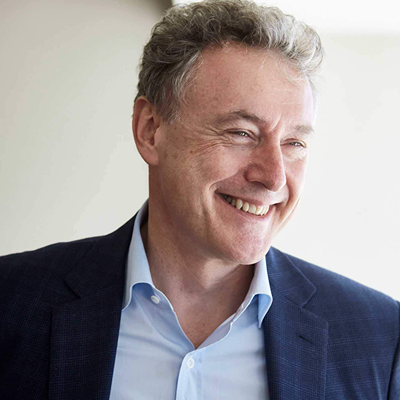
You can’t just mint CEOs or business leaders. They have to learn. The best ones know how to be their best selves in execution of the mission.
Summary
In this week’s episode of Leadership Matters, Alan Fleischmann is joined by Simon Freakley, Executive Chairman of AlixPartners, one of the world's premier consulting firms. Together, they discuss Simon’s life journey, his remarkable career guiding organizations through their most challenging moments, and his thoughts on today’s unprecedented levels of business disruption.
From a childhood on the English seacoast to leading one of the world's most respected consulting firms, Simon’s life and career have provided him with insights into a diverse variety of industries and geographies. Over the course of his conversation with Alan, Simon shares profound insights on what separates successful leaders in moments of crisis, emphasizing the importance of a “turnaround mindset” that prioritizes effective execution and communication over the quest for perfect strategy. Given the unprecedented rate of change facing today’s CEOs, Simon argues, leaders must become comfortable making increasingly consequential decisions with limited information. The episode also includes discussion of Simon’s passion for the arts, how it has influenced his leadership, and the importance of creativity and human connection to transformational leadership.
Mentions & Resources
Guest Bio
Simon serves as Executive Chairman of the Board of AlixPartners, bringing transformative leadership to businesses facing their most complex challenges. Since taking the reins in 2015, he has orchestrated performance improvement and accelerated transformation projects, leveraging over 30 years of experience in business turnaround, strategic consulting, and stakeholder management.
Simon is known for steering large companies through the intricacies of accelerated change, responding swiftly and decisively to the challenges faced by businesses and stakeholders. As a Chief Restructuring Officer, he has spearheaded financial and operational restructurings on a global scale.
Prior to AlixPartners, Simon served as the CEO of Zolfo Cooper Europe and Kroll Inc., a New York-based corporate investigations and risk consulting firm.
Key engagements and career highlights:
Chief Restructuring Officer for the world's largest independent steel trader, orchestrating financial and operational restructuring across 45 countries.
Led the restructuring of a UK-listed provider of print and digital directory services, negotiating and restructuring indebtedness of £2.2 billion.
Oversaw the financial stabilization and restructuring options for Lithuania's largest national bank.
Simon's leadership extends beyond the corporate landscape; he is actively involved in philanthropic causes. Serving as Chairman of Grange Park Opera and Music Masters, Simon's commitment also includes roles as a Board member for the John Jay College Foundation and Global Screening Services.
His previous Board affiliations include Chairman of the American Friends of the London Philharmonic Orchestra, as well as board roles with the Folger Shakespeare Library in Washington and the English National Ballet. Simon's influence spans both the business and cultural realms, leaving an indelible mark on every arena he engages with.
Episode Transcript
Alan Fleischmann
Welcome to Leadership Matters on SiriusXM and at leadershipmattersshow.com. I'm your host, Alan Fleischmann. I'm joined today by a very good friend: a global leader in business transformation who has spent his career guiding organizations and their leaders through their most challenging moments, helping businesses anticipate what sits just over the horizon.
Simon Freakley is the Executive Chairman of AlixPartners, a global consulting firm that specializes in helping businesses and executives navigate the most important challenges and opportunities their organizations are facing. With more than three decades of experience advising organizations, being an entrepreneur himself, and working with leaders across all sectors, Simon has a remarkable breadth of experience and a deep understanding of the many challenges CEOs and leaders face.
Earlier this year, Simon transitioned into the role of Executive Chairman after serving as AlixPartners' CEO for nearly a decade. Under his leadership, the company has become one of the world's premier consulting firms, helping businesses from a diverse range of industries navigate disruption, adapt to change, build transformation, and emerge stronger from crises and uncertainty.
In his spare time, I happen to know that Simon also has a great passion for the arts, and he believes firmly in their ability to enrich lives. He serves as Chairman of Music Makers and the Grange Park Opera, having previously held roles at the American Friends of the London Philharmonic Orchestra and the Folger Shakespeare Library.
I'm thrilled to have Simon on the show today to discuss these leadership experiences, others I haven't mentioned yet, his journey as a leader, his insights into business transformation, his advice for executives navigating this era of unprecedented disruption and uncertainty, and the many lessons in leadership he has learned along the way. Tempered by decades of experience serving as a great mentor himself, Simon's perspective can help us all better understand how business cannot only survive change but leverage it to achieve true transformation and thrive.
Simon, welcome to Leadership Matters. It is such a pleasure to have you on.
Simon Freakley
Alan, thank you so much for having me.
Alan Fleischmann
I didn't mention that you're British, because I figured it would be a clue in one second.
We are a radio show and not video. But for those who want to know what I'm looking at right now, I'm looking right at Simon and his glorious books around him, and it speaks volumes. I was just saying to Simon before we got on the show that he has an insatiable curiosity and it is so contagious. I believe that's a secret sauce for him, a secret ingredient — he is always leaning in and wanting to learn from others, and then taking those learnings and sharing them as a mentor and as a business adviser as well.
But let's talk about your life and your career, because those are the building blocks that got Simon where he is today. Your father was a shipbuilder, if I'm not mistaken. Your mother was a teacher. Tell me a little bit about your early life. You have a sister, I know. Tell us a little about the early life and how things were around the house.
Simon Freakley
My father was a boat builder, rather than a shipbuilder; I grew up in a boatyard. It was a small family-owned business. He built mostly pleasure craft, river boats, canal boats, that type of thing. It was, in some ways, an idyllic childhood. We lived on the edge of a town, so not in a town — in a house in the middle of the boatyard with some fields behind. So it was quite a relaxed upbringing. Because my dad was building his business, our family life revolved around the business, really. So every weekend, every school vacation, I'd be doing something in the boatyard with him or one of his team.
My mother, as you mentioned, was a school teacher. She taught PE, physical education, and was also the umpire for the English netball team. Netball — I don't think it's very common in the U.S., but it's a form of basketball played principally by women. So she would travel all over the place being their umpire.
So my sister and I were brought up in this boatyard environment. Both parents working pretty hard, doing their thing. Us being very much involved in the day-to-day activities of the boatyard. I have very, very fond memories.
Alan Fleischmann
I love that. Were you close to your sister growing up?
Simon Freakley
Very close. We sort of had to be, really, because we were slightly out on a limb. So unless my sister and I got on, we really didn't have many other people to play with.
But yeah, I was close to my sister. I am very close to my sister. She's three years older than me. She started off being a professional musician. She was a professional classical guitar player, and then she became a teacher. She was a music teacher and also gave private lessons. But her life's been very much around music.
We're still extremely close. I always say, if she wasn't my sister, she'd still be my best friend. So we have a very close connection.
Alan Fleischmann
When you grew up, was their music in the home? The fact that she loved music, and I know you love music so much — was that because music was a part of the house?
Simon Freakley
Funnily enough, quite the opposite. My father didn't really like noise, and so we didn't have music in the house at all. I started playing the trumpet when I was about 11. I was just drawn to music, so I petitioned for us to have a record player. I think we eventually got one when I was about 13.
So we didn't really have music in the house until our teenage years. But for whatever reason, both my sister and I were drawn to music. She was very good at it. I wasn't, but I still felt very drawn to it.
Neither of my parents were remotely musical. They really had no interest at all in music. So it wasn't that we had an upbringing of being taken to the symphony orchestra or being taken to the opera; that really wasn't part of our upbringing. But for whatever reason, we were both drawn to it. My mother had a relative who was a great musician, so somehow the genes came through to my sister.
But no, it wasn't the product of our upbringing, I have to say.
Alan Fleischmann
Do you remember — were you a young kid when you first got exposed to music in any way that made you think you loved it? Or was it later in life?
Simon Freakley
What happened was, I went to an all-boys school. My mother was profoundly Catholic, and my father was agnostic or atheist, depending on the day you asked him. But he respected the fact that it was very important to my mother, and she wanted us both to go to Catholic school. So I went to a day school, an all-boys school, which had an orchestra run by an extraordinary chap, actually, who really made it quite a good orchestra.
But anyway, I managed to fight my way into the orchestra playing the trumpet. I wasn't a very good student. I was quite a slow developer in most ways, actually, but certainly academically. So I struggled at school when I was 10, 11, 12, 13 years old. But I found that the music spoke to me, and I found that I could do it.
It's quite funny — there used to be orchestra practice every lunchtime at school, on the basis that the children probably wouldn't turn up more than about once a week, and there was a big concert at the end of the year. So Mr. Sefner, who was the chap that ran the orchestra, realized that unless he had rehearsals every day, then each child wouldn't be sufficiently proficient for the big concert at the end of the year. But of course, I loved it so much I went every day. So I simply went to orchestra practice five days a week, every week of the school year, because I loved it. And I think that for me — because I struggled a bit with my academic work — it was a bit of a refuge for me and gave me confidence.
Later in life — and maybe we'll touch on it — one of the reasons I'm so passionate about music education for kids, not just in terms of music education for its own right, but also as a vehicle for children's confidence and, ultimately, social mobility. I do think that music has an extraordinary role to play, as does art generally. But for me, my lunchtime orchestra practices were a lifesaver.
Alan Fleischmann
I love that. And I love the fact that it became even more important to you. I guess it started with a love and passion for music, and then it became something you wanted to not be just for yourself, but share with others as well. I mean, it is a barrier breaker; or maybe to say it more positively, it's a way of bringing people together.
Simon Freakley
And interestingly enough, there's an extraordinary correlation between musical outcomes and academic outcomes. So children that learn the discipline of practice and just the fortitude required to persist and become competent on an instrument — those skills, those learnings, are just as important as studying academic subjects. So people engaging in learning an instrument find that that's enormously helpful in terms of the disciplines of academic study.
So there are several collateral benefits from it, as well as, of course, being enormously enriching of one's life. This whole world that opens up — this window into all these different genres of music and types of people and types of lives.
Alan Fleischmann
I love that too.
So tell us a little bit — when you were growing up in school, all-boys school — any mentors that stand out along the way? Anyone that actually opened up the world to you in a different way than if they hadn't been in your life?
Simon Freakley
Well, my father — maybe this is true for many of us — but my father was an extraordinarily powerful mentor for me. My parents generally. A lot of his principled approach to things and his strong values were at the root of who he was, and he was an extraordinarily inspiring figure. My mother similarly.
But nobody, particularly, at school. School for me was a bit of a prison sentence, honestly. I always envy those people who look back on their school years and think that, somehow, it was the best years of their life. It certainly wasn't for me. It was a school run by monks, or Christian Brothers, as they were known in the UK. They're basically monks that take an annual vow rather than a lifetime vow. But some of the most dysfunctional and unsatisfactory people I've ever come across.
So for me, school was something to endure and survive. The music, of course, was therefore an incredible coping mechanism for that. And then, luckily, I did develop, albeit a little late. And so by the time I got to my mid-teens, I really had got the hang of academic work and was able to perform okay there as well. So ultimately, it turned out fine, but they weren't years that I look back on fondly.
Alan Fleischmann
I remember you telling me that your parents' background — your dad being more agnostic, you said, your mother being Catholic — that you learned early on that you don't have to agree and be of the same in order to be at the same table; you learned about differences at a very early age, actually. Am I wrong about that?
Simon Freakley
Yes. I mean, it's an interesting observation, Alan. I hadn't ever thought of it like that until you pointed it out. But I do think that it taught me that you can deeply love and respect somebody whilst having a completely different worldview. Maybe we can all learn something from that.
But yes, In that respect, they were quite different. In other respects, they were very similar, very aligned in terms of values and principles, but just a different sense of a grander context, spiritually. But yes, I think that was helpful.
Alan Fleischmann
That's actually a very powerful thing when you think about it. We need that more now than ever as well.
When did you start realizing what you wanted to study after, at university level? What led you to a career of being an entrepreneur and then being an advisor, a consultant? When I think about your journey, it's quite extraordinary. How did that start?
Simon Freakley
Well, because I grew up in this small family business — every weekend, every vacation, I was doing something in the family business — I think that I grew up in a business environment. So I'd always imagined that I would end up in a business environment. I remember, when I was about 16 and my father said, "What are you going to do?" saying something along the lines of, "Well, obviously, I'll carry on running the business." And him saying, "Well, if you want to run a business, go and start your own business. You're not running mine."
That was really founded, I think, on the fact that he was passionate about the whole process of designing and building beautiful boats. I didn't have any of his capabilities in that respect. I mean, I didn't have the skills in terms of being able to build a beautiful boat, but I was very interested in business. So, of course, with a twinkle in his eye, he was really telling me that, "Great, go and do business, but it'll need to be a different type of business for you."
So I went and did a business degree — in the UK, when I went to university in the end of the 1970s, 1978, business was not considered to be a legitimate academic subject to study. There were only three universities in the entirety of the UK that did an undergraduate business degree. And so I chose Birmingham University, which was only about 50 miles away from my parents' home. The other two — one was in Scotland, one was in Wales.
I went to that because I wanted to learn about business, but didn't quite know what that would mean. So I did a three-year undergraduate business degree. Funnily enough, the class that I was in — a couple of hundred people — were largely people like me, people who'd come from family businesses. So it was quite an interesting environment for me to have that next stage of my education. I then realized, of course, at the end of doing that degree, that it really didn't qualify me for anything. So I then joined Arthur Andersen, the accounting firm, to qualify as an accountant. Because in those days, whilst there were such things as MBAs, I think there was only one university in the UK that did an MBA and they really didn't accept students until they'd had five years or so post-undergraduate experience. So I decided that probably going to train as what we called a chartered accountant in the UK was probably the best next thing in terms of learning about business, being in business.
So I joined Andersen on a graduate trainee contract. I remember my annual income was £5,400 and I joined on a three-year training contract. During the first year of being at Andersen, it coincided with a big economic downturn in the UK, so there was a lot of restructuring work. Literally, I’d been with the firm for six months and I got put into the restructuring group. I absolutely loved it. It was just fantastic. Obviously, I was at a ridiculously junior level, but we were put into businesses that needed to be restructured or sorted out in some way or another, or, if they were in a terrible shape, shut down. I found myself in just the perfect environment for me. It was a business environment. It was real business issues. It was exciting and different. So from the first year of being at Andersen's, I think I was 21, and I found myself in this world that I just really, really enjoyed.
And of course, that world, the restructuring world, became my professional environment for the next 40 years. I was so fortunate. Luck played an enormous part in that, that I found myself in a discipline that the accounting firms were in, which really was a terrific opportunity for me. So I ended up staying at Andersen's actually for nine years. I qualified and then stayed on in that restructuring team. And then a few of the partners at Andersen decided to do a breakaway group and set up a boutique restructuring firm. So I joined them. I think I became the fifth partner in that group. We were a small team, about 60 people. So I continued to do restructuring work, but in this boutique environment.
Alan Fleischmann
Was that Buchler Phillips?
Simon Freakley
Yes, exactly. A firm called Buchler Phillips.
The senior partner, a chap called Peter Phillips, who I really, really liked — I liked the other senior partner too, David — ran the firm, and he then had a health problem. I'd been there for a couple of years, and he had a health problem and had to step down from running the firm for six months or so whilst he got better. For whatever reason, he asked me to lead the firm while he was away. So aged 34, I was put in charge of running this firm, which was still only about 80 people, but I was rather overawed by the prospect of doing that.
But very wisely, he said, "Look, Simon, we'd like you to run the firm, but on one condition." So I said, "Oh, what's that?" He said, "Well, the condition is that you have to have a mentor, and you have to meet with a mentor every week." So I went, "Okay, and how do I find one?" He said, "You don't need to find one, because we have the one for you." So this chap called Leslie Lewis turned up in my office on week one, and for the first hour, I thought, "Oh my goodness." He wanted three hours. And of course, I didn't have three hours to do anything at that stage in my career. But anyway, he wanted three hours.
So the first hour, I'm scratching my head and wondering however this was going to work. I couldn't see this guy had any interest in business or certainly not restructuring. In the second hour, I thought, "Actually, this guy is really quite something." And by the third hour, I was completely smitten with him. He was just such an extraordinary human being. He really had no interest in business, but he had an extraordinary interest in and facility for understanding people. So what happened was, for six months, I'd meet this chap, Leslie Lewis, every week, and he would just give me a masterclass on how to understand people, how to understand situations.
The six months passed, and Peter, fortunately, got better and came back to work and then said, "Oh, look, Simon, you seem to be enjoying this role and doing okay. Why don't you carry on doing it?" So I did carry on doing it. But I carried on meeting Leslie every week; not because it was a requirement, because I loved it. Leslie became, without doubt, the most important male figure in my life, other than my father. So the pair of them were towering figures in my development.
The firm did very well. We grew to about 300 people, and I was then approached by Jules Kroll, the eponymous Jules Kroll of Kroll Inc., to see whether we'd sell the firm to him. Of course, he had a U.S. listed public company, famous for its commercial investigations and intelligence. I couldn't quite see what the synergy was between restructuring and that, but he wanted to diversify, both in terms of service line offerings and also geography. So after a long period of dancing around each other, we agreed a deal, and we sold that firm to Kroll in June 1999. Then I joined the Kroll executive team and in due course was asked to be CEO of Kroll. So I sold our firm into Kroll, and then had the privilege of leading Kroll.
Then about that time, my father and Leslie Lewis, my great mentor, both died on the same day of unexpected heart attacks, which was devastating. But I couldn't possibly understand it in any other way than the significance of these two major, major figures in my life, guides in my life, both deciding to leave the earth on the same day in the same way. So I've always had — not in any way a dogmatically religious affiliation — but I do, and have always believed in a grander order of things. And for me, I made sense of it by seeing them leaving together in that way as being part of a grander order of things.
There I was, aged 40, feeling, "Gosh, they really have launched me. I'm now on my own, and I better take it seriously." So I really feel that at 40, my grown-up life started.
I ran Kroll for a few years. We sold it to Marsh & McLennan.
Alan Fleischmann
Did you love being CEO? Is that something you took to quickly?
You worked with someone… For those who don't know Jules Kroll, he was quite an icon. The very fact that he endorsed the young you and saw in you what others obviously see now is very insightful. But he was a man of great pioneering, I would say.
Simon Freakley
Jules is a remarkable human being, there's no two ways about it. Separate and apart from the fact that he not only founded and grew a remarkable business and in so doing, really founded an industry — Jules is the patron saint of business intelligence in the private sector — he's an extraordinary human being. He has an amazing facility of understanding how things fit together, which, of course, is why he was such a good investigator. But I would say that he has the greatest contextual intelligence of anybody I've ever had the privilege of knowing. He just had a terrific way of understanding how the parts fitted together.
He was a terrific mentor for me. I mean, he's 20 years older than me. We still meet for lunch and have a very active relationship. But he's further towards the horizon than I am. So I've always found him to be an inspiration, honestly, and extraordinarily wise. So if I ever have a really tough problem, he's one of the people I go and seek advice from, because he just has this expansive understanding of how things fit together.
Alan Fleischmann
Which is amazing too. People want to be in your orbit, but when they're in your orbit, they stay in your orbit, which I also find quite amazing.
And then you went on and were in the Marsh & McLennan world. Then, how did the AlixPartners journey begin? You’d been living in New York at this point for quite a while.
Simon Freakley
Yes, I moved to New York in 2002. I've basically done two tours of duty; I did 2002 until 2011, then my family and I moved to the UK for a number of years, and then I moved back again.
But we sold Kroll to Marsh & McLennan, which seemed to be a good idea because we were a public company — the offer was so good, we were obliged to do the deal. Otherwise, our shareholders would have sued us. But I think the synergies that we all hoped would be there for Kroll within Marsh & McLennan proved to be illusory. It was nobody's fault. It's just that there wasn't enough connective tissue between the types of business and clients that Marsh & McLennan had and the type of business and clients that Kroll had.
So I decided to set up a restructuring business again and I spun out the restructuring business of Kroll. We'd already joined forces with a firm called Zolfo Cooper. We'd done an acquisition of Zolfo Cooper. So we spun out the restructuring business. I then ran that in Europe, and my partner, Joff Mitchell, ran it in the U.S. We ran this restructuring business for, I don't know, eight years or so. I had met my wife when I moved to America in the early 2000s. We moved to the UK for eight or nine years, and then I moved back again in 2016 to New York. So I've lived here now for almost 10 years, but in two halves, being back in the UK in the middle.
I loved my time at Kroll. I also enjoyed, actually, when we spun the restructuring business out; I enjoyed running a smaller business again. Then in 2014, we found ourselves competing head-on-head with AlixPartners on several occasions on restructuring mandates, and we were fortunate enough to win a number of them.
So the then-CEO of AlixPartners reached out to me to say, "Look, maybe we shouldn't be competing against each other. Maybe we should be joining forces." So that then led to a discussion as to whether we should merge our firm, Zolfo Cooper, into AlixPartners. We did decide to do that and AlixPartners bought Zolfo Cooper Europe in February 2015. Shortly after that, in about May of 2015, Jay Alix, who is the founder of AlixPartners — he's no longer involved day-to-day in the business, but he's still an active board member — said that Fred Crawford, the then Chief Executive, wanted to retire. He had some family priorities he wanted to focus on, and would I consider becoming Chief Executive of AlixPartners?\ So I'd arrived in AlixPartners at the end of February. I'd literally just found where the bathroom was, and then I was asked to be chief executive of AlixPartners.
What I said to Jay was that, actually, I thought that was a bad decision. I thought that, in my experience, the relationships that come with partnership mean that really, if you don't know anybody or haven't had a chance to develop relationships, it's tough to lead a firm. Jay said, "Actually, I agree that generally that's true, but that's not the case with AlixPartners." AlixPartners is an unusual consulting model, because it tends to recruit people mid-career. So the AlixPartners consulting experience is really one of smaller, more experienced teams doing really quite challenging work. So the majority of people at AlixPartners, the vast majority, had been recruited mid-career. So the culture of the firm was one where lateral hiring was the norm, and as long as you knew what you were doing and people realized that you knew what you were doing, they were very happy for those people to take on senior leadership roles, including being CEO.
So he persuaded me that the culture of AlixPartners would accept an outsider coming in as CEO. And indeed, as he pointed out to me, on a couple of occasions, AlixPartners had had people come in and be CEOs, which had worked out very well. So I decided to take it on and became CEO in the middle of 2015. That started, honestly, probably what's been the most rewarding, fulfilling, possibly enjoyable, chapter of my professional career — the just short of 10 years, of being CEO of AlixPartners. We grew the business from about $800 million of revenues to about $2.5 billion of revenues, mostly organic. That whole journey of scaling the firm and just understanding how to lean into the opportunity of being a differentiated, best-of-class consulting firm has been just enormously enjoyable.
Now, of course, as you mentioned earlier on, I've stepped up to be Executive Chairman. We've appointed co-CEOs in the firm — long-tenured senior colleagues who are just terrific leaders and will be terrific CEOs for the next chapter of the journey. So from the slightly different perch of Executive Chairman, I'm now enjoying the next chapter of AlixPartners. We see enormous opportunity ahead of us, and I'm delighted to be playing my part, albeit from a different seat, in this next chapter.
Alan Fleischmann
We talk a lot on the show about this dawning of an age of Executive Chairman as a role, and how that allows, with a great CEO dynamic — the operational side being led by the co-CEOs in your case, and you being able to take on the next chapter of growth with them, but often with others as well. It's an extraordinary role.
In your case in particular and the state of leadership… When you get to be at AlixPartners, you get to see other CEOs and leaders in moments of extraordinary triumphs, even as it starts off often with turbulence. You are a mentor to many, I know, and you've had folks who've seen your talent and grown. I'm sure that the co-CEOs are working with you with great enthusiasm, because you have that personality.
But I'm curious, is there a single greatest leadership challenge that you see right now, especially where we are in the world of social media and being so exposed? And what separates the leaders who rise and those who stall? Because you've seen both. You've seen people in the midst of crisis who have actually managed to, with your help and with the help of AlixPartners, turn that turbulence into triumph. You’ve also seen others who fail because they're paralyzed, they're stiff. I'm curious if you can spot those traits quickly and what they might be.
Simon Freakley
Well, I think one of the great privileges of doing the type of work we do at AlixPartners is that we get a front-row seat with our clients as they either seize big opportunities or mitigate big challenges. So being in the room where it happens is wonderful to see how different leaders deal in different situations, and obviously, for us to help wherever we can.
The one thing, of course — this is profoundly obvious to say — there's no best leadership style. There's no formula. Different leaders in different ways can triumph or not. But I do think that at the moment, it's a particularly challenging time to be a CEO. I sometimes say that CEOs thought they'd get a throne, found they got a hot seat, and then worry that they're really in an ejector seat, because the pressures on CEOs now are enormous. Looking at an S&P 500 CEO, the average tenure is now the shortest it's ever been. Why is that? Well, the pressures and demands on CEOs now are enormous. While, obviously, chief financial officers or general counsels or chief operating officers have very important and demanding jobs too, a lot of the pressure is focused on the CEO, which makes that a hot seat.
At the moment, there is so much challenge in the world — we have this extraordinary technological shift going on, probably the most significant shift since the Industrial Revolution, what's happening with AI and all the technology developments that come on the back of that. So there's extraordinary technological change and innovation. There's economic nationalism that we haven't seen for really quite a long time. Those of us, if you're my age, Alan — we've had the privilege of living in a world for the last 30 or 35 years which has been largely flat, where there's been pretty frictionless movement of capital and labor and goods. We're now in a chapter of the world where the world isn't flat, where economic nationalism is driving some of the biggest economies and national agendas are well and truly trumping global agendas. That makes it tough to deal with the other seismic forces that are happening — climate change and demographics, for example. So I think it's a very, very challenging time for businesses generally and for business leaders in particular.
So what does all that mean? Because that's just the environment that we're in.
One of the things I've often thought, having spent so much of my professional career in businesses that are having to go through big transformations — some of which are distressed — is that business leaders need to have a turnaround mindset. Even if their challenge is to grow even faster rather than deal with a problem. They really have to have a mindset of leaning in, an action-orientated mindset. Most of the time, of course, we don't have perfect information, but we never have perfect information. So doing it merely right, but doing it now is often the best strategy. Because even if circumstances change, as long as we don't become a hostage to a previous strategy and have the ability to pivot quickly, we can course-correct as circumstances and events change.
So this turnaround mindset, in broad brush, is really about how to decide what the most important things are and prioritize accordingly, with the ability to pivot as circumstances change. So prioritizing the most important things and having really disciplined execution of the strategies. Because it turns out that writing the strategy is the easy bit; Executing the strategy is the hard bit. So I would take an okay strategy executed well over a perfect strategy executed badly every single time.
So prioritizing execution. And then communication. And of course, this is your world rather than mine. But as I've had this privilege of a front-row seat with so many CEOs over the years, working through their transformations, some of the very best CEOs I've worked with just have this ability to almost become their own chief communication officer. They're able to really, in a compelling way, explain where they're taking the company, what the destination looks like, and why the destination — and therefore the strategy — is not only purposeful, but also possible. Because people want to do something that's purposeful, but they also want to make sure that the strategy is capable of execution. So their ability to communicate a purposeful and possible strategy and to carry people through the journey — which often requires them to go through a valley of despair before they get to the sunny uplands of the chosen destination — that ability to communicate in a compelling way turns out to be a lot of what leadership is. Because leaders, by definition, need followers. And if people aren't following their leaders, then their leaders are failing.
So the ability to communicate in a compelling way is really at the root of good leadership. It isn't enough on its own, but my goodness, it really does separate the best from the rest.
Alan Fleischmann
People talk about the importance of experience, but often forget that, as artificial intelligence becomes so much more pronounced, the human side of leadership is probably going to be the secret weapon of so many who are ascending or wanting to maintain their spots as CEOs and C-suite leaders. It's the hard wisdom part that we can't underestimate.
Simon Freakley
Well, pattern recognition, of course, is important, and experience matters. But people follow people. This is a human endeavor, which is one of the reasons, by the way, that AI isn't going to entirely replace us. Human beings follow human beings. And people being compelling in being able to explain why the mission or the strategy is the right one is at the root of good leadership.
Obviously, there's many other things that have to be right as well. I think that every leader needs to be surrounded by very good people. I've often reflected on the fact that I've only achieved anything when I have had the privilege of doing these leadership roles because I've got a coterie of just first-class people around me. But ultimately, carrying people on a journey — it might be a growth journey, it might be a transformation journey — requires a compelling leader to explain how and why.
So you can't just mint CEOs or business leaders. They have to learn. And ultimately, the best ones know how to be their best selves in execution of that mission. It's not that they have to conform to any standard template of being a CEO. They just have to be their authentic selves, be able to explain, in a compelling way, why the vision that they're laying out is an important one, and also show and then support the execution of that vision.
So that turnaround mindset, if you like — the prioritization, the execution, the communication — that turnaround mindset is just as important for companies trying to go from good to great as it is for companies trying to go from distress to recovery. Those essential elements of leadership are actually very similar.
Alan Fleischmann
When you mentor — and you do mentor others, and you share with them the road ahead a little bit — you’re very strong on the tactical and the strategic. What's the one piece of advice you’d offer to a young leader, especially right now, when we're in the midst of such geopolitical and technological disruption? What piece of guidance would you want them to remember 10 years from now that rises above whatever noise there is right now? Knowing that it’s not all noise — I don't mean to suggest it's not real. What would be your one piece of advice that's carrying you forward that you'd want them to remember 10 years from now?
Simon Freakley
Let me answer the question in a roundabout way.
One of my colleagues at AlixPartners, on our support team, was a Broadway performer — just an extraordinary singer, performer. Then she had a family and changed careers. I asked her one day, "When you're standing on the front of the stage at a Broadway performance with a full house, and it's you, and the lights are on you, and you're singing, you're performing — how do you connect with the audience?"
She said, "Simon, a compelling performance requires you to have absolutely no membrane between you and the audience. You have to expose yourself, the core of yourself, your belief in your role or what you're doing in a completely unvarnished way. And if you can cause that connection with people and show the authenticity, the genuineness, the fullness of your commitment — in her case, the performance; in our case, leadership — then you can engage the audience, and you can carry the audience with you." Her name was Tonya Anderson — ever since that conversation, I've thought to myself, that's such a metaphor for leadership. There we are, middle of the stage. The light is on us. We have an audience watching us. There's nowhere to hide. And ultimately, we have to be able to show an authentic and compelling vision of where we're going and why we're going there.
So, if I had one bit of advice for business leaders and aspiring business leaders, it's a version of that. It's that you have to bring your whole self and the commitment that goes with it to leading — in Tonya's case, an audience, in our case, a bunch of stakeholders — on a journey, and ultimately, of course, to the destination.
Alan Fleischmann
Let’s talk about creativity for a moment. When I think of you, I think of music. I think of the arts and passion for music and culture. I think it's an enormous part of you as a leader and an individual human. How has music shaped the way you lead?
Often, creativity is not spoken about as intersecting high-stakes business decisions. But in some way or form, it's almost like the athlete getting ready for performing on the field. I often think that culture is the fiber that lets the corporate athlete, the business athlete, perform well in the field. I'm curious how much that plays a role in your life.
Simon Freakley
I think creativity is fundamental in all of our lives. I do think that it expresses itself in different ways.
I went to a remarkable performance at the Lincoln Center on Saturday where Nicola Benedetti performed a violin concerto which lasted for the best part of an hour. She didn't have one sheet of music in front of her. And of course, you couldn't do that just from memory. She was basically channeling what was in her. It was the most extraordinary performance. As a feat of memory, you'd say that it was supernatural, but it was more than that. It was an expression of creativity. So whether it's a violinist, or whether it's an athlete, or whether it's a business leader, I think we bring this creativity from ourselves to our roles.
Once again, I think when people say, "What's AI going to do to business? What's it going to do to consulting? What's it going to do to society?" Now, AI will be an enormous facilitator of many things, but it won't ultimately replace the creativity that's the essence of being a human being. I think that this is all part of what it means to create a strategy, create a vision, sketch out a future. So I think creativity is core. I stopped playing an instrument when I was in my late teens, so I've never continued to play, but I've always continued to appreciate and admire not just the facility of musicians and artists, but just the extraordinary commitment and discipline required to become a world-class violinist like Nicola Benedetti or a world-class artist of any description.
I think that creativity is this spark within us. The way in which you can use that spark collectively to infuse the culture of an organization — so that we're always, culturally as an organization, not just as individuals, trying to grow and learn and improve and uncover — is an extremely important part of leading and running a healthy organization. A friend of mine used to say this expression, which I've stolen, which is that a good idea doesn't mind who had it. I love that, because of course, if you have a culture of people bringing their best selves to work, bringing their whole selves to work, enabling their own creativity to play a part — the best ideas actually bubble up from within the organization.
Almost never have I ever had the best idea. It's always come from somebody else. What we then do with that idea in terms of how we organize around it, of course, is then the next challenge. But I think that creativity is a vital part of culture, Alan.
Alan Fleischmann
I think that's amazing. I think of you as being such a steady leader in moments of challenge, crisis, turbulence for the work you do. It's what AlixPartners and the work you've done through your whole career is about. Then I look at you and how you turn to art, you turn to music, books, you turn to performance when you're looking outside of the day job. I imagine that's part of your resilience. It's how you stay grounded, which allows you then to help others do the same during times of turbulence as well.
Is that a secret thing that you would share with others? Expose yourself a little bit to the curiosity of reading — to carry around the books of the Stoics, as you and I do?
Simon Freakley
Absolutely, yeah. I find that some of my best ideas come during those moments. I had been struggling with something recently, and my wife and I were meant to go to the Met to see Don Giovanni. She had a work issue come up at the last minute, so I went on my own. The Met is a 4,000-seat theater, and I’m sitting there listening to this wonderful music, letting my mind wander, and the answer to the question just came to me. It wasn't the process of deduction. It wasn't because I'd done an extraordinary deductive exercise to get to the answer. I was just letting my mind roam, listening to this beautiful music, and the answer presented itself to me.
So I think that allowing ourselves those moments to think… When my daughter was little, she used to say, "Oh, Daddy, please don't chat in the car. Because I like to imaginate." This whole idea of imaginating, of letting one's mind roam. I think that's partly what art and music does. It's partly what reading does, partly what going for a long walk does.
You asked, what advice do I give to my mentees? Oftentimes I'll be saying to them, "Are you sleeping enough?" Because I also find that my very best solutions come to me during my sleep. I'll go to bed not quite knowing what to do on something, and I'll wake up in the morning and it'll be obvious to me. There's something about the processing power that happens during that regenerative sleep that is illuminating for us.
So I do think that oftentimes, to be our best, we have to let ourselves operate. We have to not overly schedule ourselves, overly clutter our lives. We have to draw inspiration and ideas from lots of different places, and then we put it together in our heads. As I say, often the very best ideas come from other people. So it's just listening, with a desire to understand.
Alan Fleischmann
And allowing yourself those moments of freedom. I find this so fascinating, because I carry a little green notebook with me wherever I go, a Moleskine notebook. I find that if I'm alone, I need that notebook near me. If I'm sleeping at night and I wake up, I have — they're not always so brilliant, but I wake up in the night thinking they're brilliant ideas, and I write it down immediately, rather than getting my iPad or my phone lit up. They wake me up. I was at a concert at Carnegie Hall recently and I started writing. If I were on my phone, people would have thought I was emailing, but because I had a little notebook, I just started writing to myself so no one would actually think I was being offensive. But it was all the music that made me all of a sudden have these light bulb seconds, these epiphany moments. These ideas that were percolating all of a sudden became so relevant.
I love what you just said, because I've never articulated that, but it's exactly right. We need those moments.
Simon Freakley
I also think — and of course, this is now roaming into matters where I'm wholly unqualified to have an opinion — but I do think that as human beings, we are at some level plugged into a collective consciousness. So if we just allow ourselves to plug into that, there's all manner of information and insights available to us.
My mentor, Leslie Lewis, who I mentioned earlier in our conversation and was such an important influence on me, he'd always say, "Simon, all knowledge hovers half an inch above your head, and you just have to access it." So for most of the last 40 years, in much of my reading, I've been obsessed by the gap between religion and physics, or theology and physics, which I suppose you'd loosely call metaphysics. This whole idea of what happens in that space. So I do think — I guess this is roaming into spiritual matters — that if we open our minds, there's all sorts of information and indicators for us. Then we just put it together.
Back to your question as to what my advice to people is — it is not being closed minded, but being open-minded, being somewhat a receptacle for all these inputs and ideas coming in and then making sense of all of that. The inputs of ideas might come from reading a book, watching a show, or whatever else it may be. It may be absolutely unrelated to one's job, but it all comes together in an understanding of how to fit things together.
Alan Fleischmann
This idea of blending leadership in crisis, creativity, music, culture — to many, it's very separate. To me and to hearing you talk, it just becomes more seamless. I know we're wrapping up here. We need another hour with you, Simon. But I know you're also very committed to certain cultural institutions globally, in London, in New York, elsewhere. What is our responsibility? What is their responsibility as cultural institutions? And what is our responsibility? Even for those who don't necessarily realize that they'd be so welcomed and included if they were to knock on the door — we need to let them know as well, because that's the mirror of our lives. It's really how we sustain and support those institutions. Those cultural meccas that we need to support, and you're involved in a few.
Simon Freakley
Yes. Well, I first went on a nonprofit board — I think I was 30, so a long time ago. That happened by mistake, but I went on this nonprofit board, not too sure how I was going to be able to make a contribution, and I found two things.
One was that — it was a ballet company, actually, English National Ballet — and I realized, and I should have known it, of course, but I saw it firsthand, the extraordinary dedication of the people. Not just the dancers, who are Olympic-level athletes, but the dedication of the administrative staff, as well as the performing artists. The dedication and discipline that went with enabling performance of that standard. I realized that the people in the nonprofit world were just as hardworking, just as talented — often more talented — just as inspirational as people in my working life. So I was learning a lot from just being around those people and the extraordinary ambition and discipline to fulfill that ambition that they had.
The second thing that I realized was that the skill set that we have, if we come from a for-profit world — the skills that we need in running teams, businesses, or firms around strategies, governance, team development, and human capital issues — those skills are at least as valuable in the nonprofit world as they are in the for-profit world. So in that sense, there's something in it for both. There's something in it for the institution to bring people onto their boards from the for-profit world. There's something for individuals, like me, in being able to have the privilege of sitting in those environments. So ever since then, I've been on at least one and often two different nonprofit boards. I've been on boards of orchestras and opera companies. Libraries, as you mentioned. I had the privilege of being chairman of one of the great art museums in London, the Dulwich Picture Gallery, the first ever public art museum in the world. I've learned so much from those experiences.
I always recommend to people earlier in their careers to get onto nonprofit boards as early as they can, because they'll learn so much from them. But get onto the board of organizations that they're passionate about or that they believe in, because of course, there has to be a connection in terms of the purpose of the organization. I found that I've learned at least as much from being in those environments as I have in being in my wonderful for-profit environments. I think that both the individual and the organizations get a lot out of that.
Alan Fleischmann
I love that.
Central to your career, but also, to the work of AlixPartners, is stepping up in moments of challenge and crisis. I see crisis becoming clarity, I think — the music, the art, the culture, the wisdom of giving yourself moments of reflection as a leader helps turn crisis to clarity. It is necessary if you want to infuse that in what you do and also, frankly, if you're building a culture that you need to build.
You said this very eloquently earlier — you can only be a leader if you've got people that follow you. You need to show that commitment to that as well.
Simon Freakley
You mentioned crisis. Somebody said to me some time ago, "Crisis builds character." And actually, I think about it completely differently. I think crisis reveals character. I think that what happens at pivotal moments — it doesn't have to be crisis, but moments of extreme significance — is that the character of leaders is revealed. If you start with the right character, you can build the skills on top of the character. If the character doesn't exist, when you get to those pivotal moments, then there are misfires.
So I think in the early stages of our careers, we need to be doing things that are helping us develop our characters. Because later in our careers, most of the big decisions are not clear-cut. Some of them are, but most of the big decisions that you have to take as a CEO are 60-40, 55-45. Often, 51-49. You have to make a choice, and you have to decide which way you're going to go. Do you buy this business? Do you not buy this business? Do you hire this difference-making partner? Do you not?
At those moments, I always think, "What is my preferred problem?" Because I'm going to be left with a problem here. But which problem would I rather be left with?
We all have our filters that help us make decisions. I think about — if there's ever a client that wants to work with us that we haven't worked with before and there's a potential reputational angle to it — I always imagine for myself: if AlixPartners' name was to appear on the front page of the Wall Street Journal alongside this name, would I be proud of that or not? So that's one of my acid tests. If I don't think that we would be proud to be associated with a particular business or individual, we tend to thank them and make a recommendation for them to go speak to somebody else.
Because ultimately, it's not just the character of the leaders of a firm — it then becomes the character of the organization that defines the organization and ultimately gives that firm or organization the right to reach for its full potential. So I think these filters that we use for ourselves reveal the character of the organization.
Alan Fleischmann
I love what you just said there. I think there's something really deep in this that we should explore together offline. That is: I do think that character is something you build. It's a muscle you develop that you have to continue to build and hone. What you just said was, in the age of AI in particular, where information flow will be given to us on a silver platter, no one can shortcut that. All of a sudden they're going to seem smart, but wisdom, judgment, and all the skills that come with persevering aren’t going to be developed or built by having it just so easy.
It's going to be that intellectual curiosity — the reading of the books, sitting face-to-face with people, all the things that are human that you've been prescribing in this interview, that I think actually are going to make for the best leaders. It's an epiphany for me. The best leaders are not going to be AI-produced. They're going to be the ones that actually are strengthening that muscle, that character muscle, that wisdom muscle, that intuitiveness, that frankly, might be aided by AI, but won't be built by it.
Simon Freakley
Exactly. AI will be — and I think that Microsoft's branding in this sense is genius — a copilot. It will never be the pilot. It'll help accelerate speed to insight. I think it'll accelerate speed to action. But in so many ways, it can't be the pilot for all the reasons you've just said.
Alan Fleischmann
Well, you've been listening to Leadership Matters on SiriusXM and at leadershipmattersshow.com. I'm your host, Alan Fleischmann. We just spent the last hour with one of the greats, Simon Freakley, Executive Chairman of AlixPartners — not only discussing his career, but we got into what I really wanted to get into with him. What makes leaders, leaders? How do we build cultures? How do you become transformational? How do you navigate choppy waters and at the same time succeed?
There's so many levels here that I want to continue going deep with you, Simon. I want to have you back on so we can continue this conversation, because it's going to become even more indispensable and more essential.
The transcript above has been edited for clarity and brevity.