Michelle Tuplin
Owner, Serendipity Books
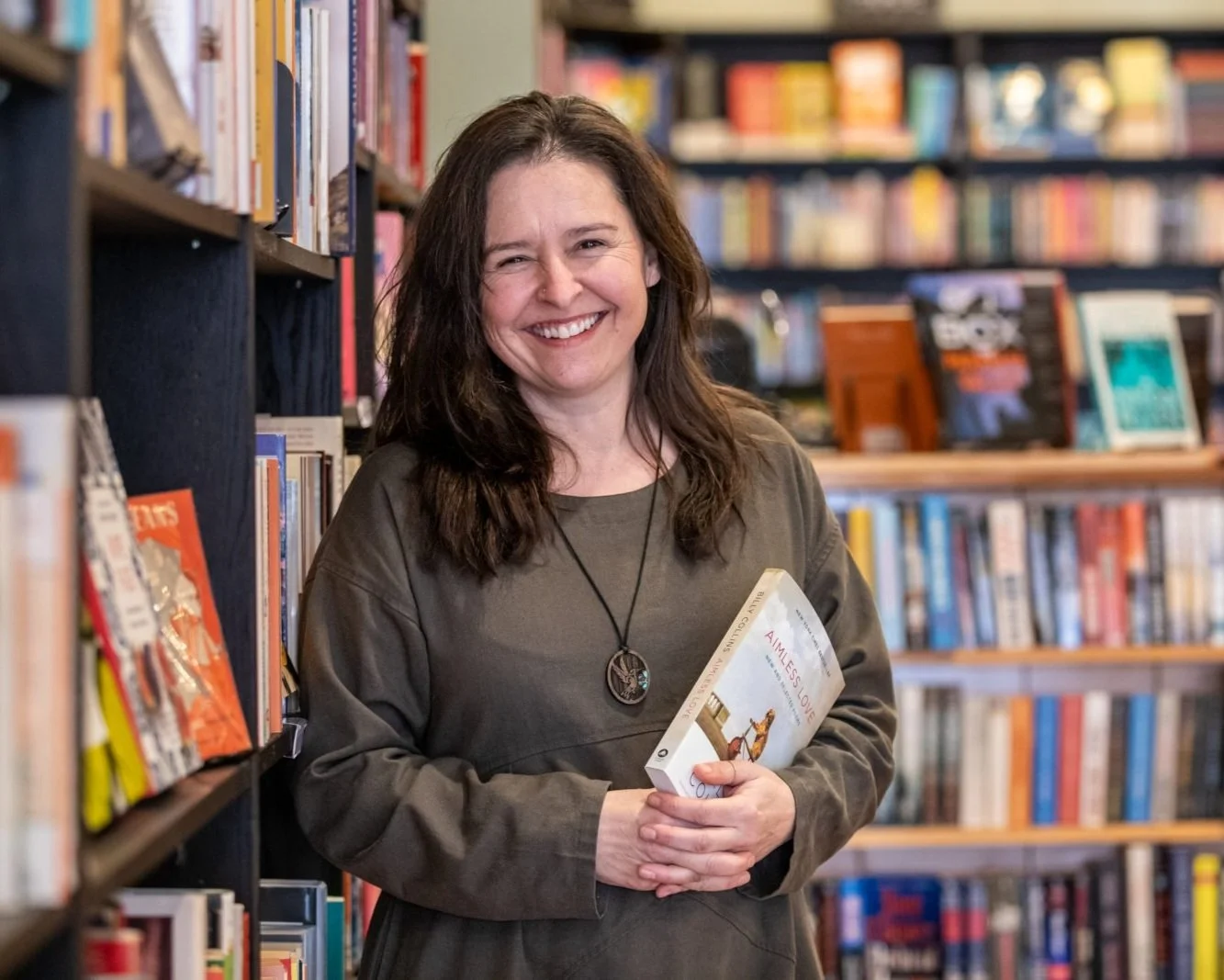
People are searching for authenticity. They want to touch the books, know their neighbors, and be part of something real. That’s what independent bookstores offer—community, connection, and a little bit of magic.
Summary
In this episode of Leadership Matters, Alan Fleischmann sits down with Michelle Tuplin—entrepreneur, community builder, and owner of Serendipity Books in Chelsea, Michigan. What started as a simple bookstore move has become a viral sensation, with thousands inspired by the “Book Brigade” that saw locals forming a human chain to pass nearly all of the store’s books to Michelle and Serendipity Book’s new store location.
In this conversation, Michelle reflects on her journey from a small town in Yorkshire to building a beloved literary and community hub in the U.S. She and Alan explore the power of authentic connection in a tech-heavy world, the challenges and triumphs of independent business ownership, and how a bookstore became a beacon of belonging and a place of community.
Mentions & Resources
Guest Bio
Michelle Tuplin is the owner of Serendipity Books, an award-winning independent bookstore located in Chelsea, Michigan. Originally from Yorkshire, England, Michelle has built a beloved literary hub that champions community, creativity, and connection. Under her leadership, Serendipity Books has grown into a nationally recognized destination for readers, authors, and book lovers—most recently gaining viral attention for organizing a “Book Brigade” where the local community helped hand-pass 9,100 books to the store’s new Main Street location.
A graduate of the Open University’s Creative Writing program, Michelle’s journey has taken her from the small towns of England to the close-knit neighborhoods of the American Midwest. Her passion for storytelling, lifelong learning, and community engagement fuels everything she does—from curating thoughtful book selections to leading local literary events and serving on Chelsea’s Downtown Development Authority.
Michelle has been featured by major news outlets and is widely admired for her leadership in independent retail and community-building. She believes in the power of books to spark connection and transformation—one reader, and one story, at a time.
Transcript
Alan Fleischmann
Welcome to “Leadership Matters” on SiriusXM and at leadershipmattersshow.com. I’m your host, Alan Fleischmann.
Today, I’m joined by a leader who has taken the world by storm thanks to her ability to bring together a local community. Michelle Tuplin is the owner of Serendipity Books, a bookstore in Chelsea, Michigan, that this week has taken her business to whole new heights. They’ve gone viral after the local community came together to help the store move 9,100 books and hundreds of boxes to its new storefront Main Street location. It will open on April 26 on Independent Bookstore Day. Michelle is also my sister-in-law.
I’m excited to have Michelle on the show today to discuss how she’s been building community, her dream for the bookstore, and how she has been able to take something and touch the spirit of communities all over the country. In the last few days, she’s been on the nightly news, the morning shows. She’s been on AP. She’s been in countries where this story has taken fire all over the world. She’s able to capture something in the essence of a community that we all aspire to be part of. And she’s inspiring the whole country and, frankly, all over the world, one page and one book at a time.
Today we’re going to discuss her early life, her upbringing, her career, and the lessons of leadership that she has learned along the way, and then how she’s been building community and continues to each and every day.
Michelle, you’re the first member of my family ever to be on “Leadership Matters.” I’m thrilled to have you on. It is a pleasure to have you on. You’ve had such an incredible few days. For those who might be hearing this on a different day — we are, I’m doing this from London today. Michelle, as you can hear by her accent in a minute, comes from the UK, but has been living in Chelsea, Michigan for many years. This is her third location for her bookstore, and it’s been a rather extraordinary few days. Her bookstore move truly has gone viral, and people know Serendipity Books in Chelsea, Michigan — something they didn’t know just a few days ago.
So, welcome to “Leadership Matters.”
Michelle Tuplin
Thanks, Alan. It’s great to be here. It’s going to be fun.
Alan Fleischmann
Tell us a little bit about what just happened. I know today — it might not be a Wednesday when people hear it, but today happens to be Wednesday — and I know that your planned move began this week. I don’t think you probably expected last Sunday that you would have become such an incredible sensation, literally one book at a time as you moved 9,100 books from the old location.
Michelle Tuplin
No, we got way more than we expected, for sure. We did this successful move, but the response — the global response — has just been extraordinary and such a thing. But let me tell you about the actual move itself first.
So we decided that we were going to do this book brigade, and we would ask the community to come out and pass the books from the old store on Middle Street to the new store on Main Street. We would ask them to stand in the line between the two locations and literally pass each one of 9,100 books, one by one, along the line. And they came out and they did this for us, and it was just so moving and so extraordinary. We took a video — we took a bunch of videos, posted them on our social media platforms — and then it’s just gone crazy after that.
Alan Fleischmann
I’ve seen some amazing celebrities also commenting on it. It’s been amazing who’ve been inspired by it. Like I said before, it’s just caught up in it in a beautiful way. And it has captured something. I was saying to you before we got on the show that in the age where people are talking about artificial intelligence, and we’re talking about Bitcoin, and we’re talking about technology in general, and robots — it just seems like everything we do is just overwhelmed by technology every day, increasingly. But something happened where it was probably the least technology, the opposite of a technology day, where human beings, neighborly people, came together in a way that they don’t normally do, helped each other out, and they were touching physically a book and handing it down one by one. That had to be —
Michelle Tuplin
Yeah, yeah. There was no high tech at all. I think, we didn’t even have an online sign-up or anything like that. We just said, “Hey, meet us at the bookstore at one o’clock.” And, people can line up outside, and when somebody else arrives, ask them to stand next to you, and we’ll see how far we get and take it from there. And people just really responded to that.
I think people are searching for authenticity too. And it was that and then some. The people who came out ranged in age from about five to 91. Because they passed one book at a time, they could do that. It was accessible for many people. And people were dancing, people were singing, people were sharing stories about the books as they passed them. “Have you read this one? This is a good one.” It got very juicy as they passed the romance section. There were lots of titters as that went by. People enjoyed that very much. There were these little boys who were singing, “Pass one book at a time.” It was just so cute.
Alan Fleischmann
How long did it take to do the whole thing — from every book at the old store to having it delivered at the new store?
Michelle Tuplin
So it was 9,100 books, and it took just under two hours.
Alan Fleischmann
Wow. And you did it, right? You actually — which I found so brilliant — you actually did it so that, literally, the books would just go right onto the bookshelves when they came into the store.
Michelle Tuplin
Yes, yes. That was — we wanted to involve the community. People had asked how they could help. And this wasn’t a ploy or something cutesy. This was a huge help, because this way, we didn’t have to box up any of the books, which would have truly taken days. We didn’t have to unbox and reorganize and categorize, which also would have taken days. Instead, literally, they were moved by their categories, by their genre. So we started at science, and then we moved on to history, all the way through, and they were still alphabetized in the correct sections when they arrived.
Alan Fleischmann
Were people buying books along the way? “I really want that book”? Or did they understand that the books had to get onto the shelves?
Michelle Tuplin
People very much wanted to. People said, “Oh, you should have allowed us to buy the books.” And I said, “No!”
Alan Fleischmann
Exactly. Come back on April 26.
Michelle Tuplin
Yes!
Alan Fleischmann
I love that. Well, those who are hearing your voice now realize that you’re not from Chelsea, Michigan originally. You’re from the UK. Tell us a little bit about your early life and upbringing, where you’re from. I think there’s a big correlation we’re going to learn between how you grew up in this great community, small town, and how that probably played a role in where you ended up deciding to settle with my brother and raise my nieces and nephew.
Michelle Tuplin
Yeah. So I grew up in a small town called Hedon, which is in Holderness, which is a part of Yorkshire — so we’re talking the northeast of England. And then Holderness is a peninsula that sticks out into the North Sea. And I think the fact that it’s somewhat isolated adds to the character, because in small villages, people really do know one another.
And yeah, I knew most of the people who I went to school with. We would go to the market on a Saturday and a Wednesday afternoon. There were a number of small shops in town, in the town center. And it was — neighbors knew neighbors, and neighbors would help out neighbors. And it definitely is something that, when I found this new home in Chelsea, Michigan, I think, without realizing it, I guess that’s what I was looking for.
Alan Fleischmann
And did you actually — I mean, I know your parents moved since you left — do you ever go back to the place you grew up in?
Michelle Tuplin
Well, yes. My uncle and my aunt still live close by. So now that it’s harder for my dad, who moved to the south of England — well, he’s there now in Ely, which is about an hour from Cambridge — it’s harder for him to drive up to see his brother. So when I go over, I drag them up there and we go and see my uncle and aunt, and they get to do a visit. But I do, yeah.
Alan Fleischmann
That’s cool. Let’s talk a little bit more about your early life and upbringing. Tell us a little about your parents. You just made reference to your dad. What did they do? And then your sister, Helen, and your brother, Andrew, what do they do?
Michelle Tuplin
Yeah. So Mom and Dad — no surprise — were teachers. Books were just always central. I mean, it wasn’t even, I didn’t even think that it was something that they emphasized. It was just a thing. It was just, they were there. I mean, that’s what we did. So yeah, books were always important. My sister is 18 months older than me. We were always very close. And then my brother’s three years younger. My sister, she’s a teacher, no surprise there. And my brother, he is a professor in virology at Leeds University, so I guess those books paid off.
Alan Fleischmann
Yes, exactly. Good study and good reading, which is great. But what values do you think — when you’re reflecting on your priorities today — are there values that were instilled in you by your community or by your family that still guide you today?
Michelle Tuplin
Yeah, I think — it’s hard, I guess, to summarize those things — but decency, I think, is a big one. People from Yorkshire, they’re not showy people generally. There’s lots of stereotypes, but generally, they’re basically decent people, I guess, is how people would characterize a Yorkshire person. And it would be nice to think that I was also somewhat decent. I’d like that, I think.
Alan Fleischmann
I think you are. Your degree is in Latin American Studies. And then you decided — what made you decide to study Latin America, focus on Latin American Studies? And then, obviously, you went abroad for a bit as well. What was that about? What was there? Well, that was the anti, the kind of small town feeling — you probably wanted to get to see the world a little bit.
Michelle Tuplin
Very much so. I was fortunate. Not that many people from my small town, honestly, went to university. I think from my graduating class — it was maybe, I don’t know, I can tell you actually — it was 16 people out of, well, most people left school at 16. So then from about, I would guess, about 500 people, maybe 30 stayed to do what are called A levels. And then of those 30 people, I think 12 of us went to university. So it was a very small percentage who went to university from that high school.
So it was a time — it was in the late ’80s — and gritty northern towns were very trendy at that time. So Manchester, Liverpool, Sheffield, Leeds, I guess to a lesser extent, everybody wanted to go to one of those places. And Liverpool was one of those places. So I was very attracted to Liverpool, even though I probably should have studied English literature. I decided I wanted to do Latin American Studies. And the reason for that was because the universities would hand out what they call prospectuses — pamphlets that advertise the different courses. And on the prospectus for Liverpool, for their Latin American Studies course, there was a picture of Machu Picchu. Well, I thought I wanted to go to Machu Picchu, and there was no way that I could have traveled from this small town in Yorkshire to Peru without some kind of — for both financially and in terms of the logistics. So pretty much the picture on the pamphlet was why I went to Liverpool and studied Latin American Studies.
Alan Fleischmann
And did you get to Machu Picchu?
Michelle Tuplin
I did. I spent my 21st birthday there.
Alan Fleischmann
That’s very cool. And you learned Spanish, right? You lived in Ecuador?
Michelle Tuplin
Yeah. So at the time, if you did a degree in England that had a language component, it was — instead of a three-year degree, which is the standard — it was turned into a four-year degree. And the third year, the government at the time would pay for you to travel to a country that spoke that language, where you would immerse yourself in the language. So I chose to go to Quito and then traveled around from Quito, which was why I spent my 21st birthday actually walking the Inca Trail. And it was on my 21st birthday that I woke up in a tent overlooking Machu Picchu.
Alan Fleischmann
That’s pretty amazing. One of the most beautiful places in the world. That’s amazing. And then you were back home? Are you staying?
Michelle Tuplin
So I was back home for a year, graduated. And I just was ready to leave that very small town. I worked in a pub. I was one of the bartenders who would pull the pints. And somebody said to me, “Oh, we haven’t seen you for a long time. Where have you been?” And I said, “Oh, well, I was in South America for a year.” And they said, “Oh, did you go to New York?” There just wasn’t a very broad awareness of other places in that town. And I was enamored by other cultures, the languages, and I just really wanted more. So that’s when I moved to Vienna.
Alan Fleischmann
And did you have a job when you went to Vienna?
Michelle Tuplin
No, I did not. I moved to Vienna and I started to apply for jobs, and ended up working pretty quickly at the United Nations.
Alan Fleischmann
Wow. I love that you went there, but you had no job, and you went there anyway.
Michelle Tuplin
No, no, no. And I, at the time, could speak French and Spanish, of course, but no German. So it was an interesting choice. But never mind, that worked out just fine. And with mother tongue English and as a recent graduate, it didn’t take me long to get hired into an admin position at the United Nations, and that was just so much fun.
Alan Fleischmann
And Vienna was such a fun place to be — big city in many ways. And an international city, certainly an international city for you, where you were working as well. And did you think at the time you would go back to the UK, or go back to the village you grew up in, or did you think you’d stay?
Michelle Tuplin
Oh, no, no, I knew that I wanted to see new things. And yeah, I didn’t think that I would live there. I think since then, England has become much more international and has really changed massively. This is now, shockingly, like 30 years ago. But at the time, I just wanted to live abroad.
Alan Fleischmann
I love that. And you wanted to speak languages and you wanted different things. Had you always been writing too? And was it journaling you were doing? Were you writing short stories? Just a little bit about the kinds of stuff that you were exploring. And were books big in your life during that period when you were in Vienna? Or was it more writing than reading?
Michelle Tuplin
Yeah, no. I think books have always been massive for me. If anybody ever asked my hobbies, books always were a thing. It wasn’t really until — fast forward, I had three kids, the youngest was in preschool — that I then really started to be able to write properly. I was always interested in writing, but at that point, I started to write, and eventually that led me down a path to doing a master’s in creative writing, which was a really fun experience.
Alan Fleischmann
And that you did at Open University.
Michelle Tuplin
I did. So living in Michigan, I looked at the different options. And because all of my education was in England, if I tried to do something in the US, it would have been really tricky. The easiest thing for me to do was to continue in the English system. And there’s a university called the Open University, which is very well-known in England, and that seemed like a great option for me. So I enrolled in a master’s course. I think it took two, maybe three years, I can’t remember. And yeah, it was really, really fun. I had all these classmates from all over the world, although predominantly from the UK. And yeah, it was a great experience.
Alan Fleischmann
I love that. And then what brought you to the United States?
Michelle Tuplin
So I met Steve, your brother, in Vienna. We fell in love. He got posted back to the State Department in DC. And if we wanted to be together, pretty much we had to get married, and I had to move to DC. And he said, “Oh, Michelle, you’ll love it. Washington is so much nicer than Vienna. It’s going to be great.” And I believed him. And so we moved there.
Alan Fleischmann
It sounds like you didn’t come to that same conclusion. It sounds like, by the way —
Michelle Tuplin
It just took me a little while to get over the culture shock, I think. Even though the language was different in Vienna, I just felt as if, culturally, it was easier, honestly, for me to understand the Austrian culture than it was for me to understand the American culture. I spoke the language — many people, yourself included, couldn’t understand me because of my thick Yorkshire accent. But it wasn’t just that. It was culturally, it felt more foreign to me than a European country, for sure. And that took a while for me to understand.
Alan Fleischmann
And how long did you live in Washington? What did you do in Washington before you moved off?
Michelle Tuplin
I landed in Washington and the first thing I did was I went to a temp agency just to get a job. And they sent me to the National Gallery of Art in the exhibitions department. And there was a very famous Vermeer exhibition going on at the time. Well, my job in the exhibitions department was to field the phone calls from all of these Washington types who wanted to bypass the regular system of getting tickets, and instead, because they were special, to be given these special VIP tickets. So I was kind of a bit of a gatekeeper for the exhibition department. It was kind of extraordinary, because I didn’t know any of these American names. So people would call and they’d say these terribly important names, and I would say, “Oh no, I’m sorry, you’re not on the list. You can’t come in.”
Alan Fleischmann
They’re like, “Do you know who I am?” “You can’t come in.”
Michelle Tuplin
Yes! So that was a fun job. Unfortunately, to be hired at the National Gallery, I had to be a citizen, which, of course, I wasn’t at the time. And so even though I would have loved to have stayed, and I think they said they would have loved to have me, that wasn’t going to last. So then I moved to PBS, and I worked at PBS in their marketing department for a year or so before we moved to Michigan.
Alan Fleischmann
And what made you choose Chelsea, Michigan? Because I know that you guys could have been anywhere in the Detroit area, but you chose —
Michelle Tuplin
We could have been, and we — it was just kind of random. There was an ad in the newspaper for a little house for rent in Chelsea, and we drove out here and just thought it was the cutest place. We didn’t have kids. We were about to have kids, but we didn’t at the time. But it just — I guess it appealed to those things that I didn’t realize that I missed from Yorkshire, but I must have done. And so that’s where we ended up. And we’ve been here for 30 years since then.
Alan Fleischmann
Which is quite something when you think about it. Tell us a little bit about the idea of the bookstore. You took over and you transformed — obviously, Serendipity Books has been around before you became sole owner. And now is just your third move. It keeps getting stronger and obviously more beloved. And you’re very big, as I said, in the indie bookstore world, the independent bookstore world. It’s a big passion of yours. What made you say, of all the things you could do, “I want to run a bookstore. I want to own a bookstore”?
Michelle Tuplin
Well, I guess the theme here is that not a lot was planned beyond that trip to Machu Picchu, because a friend of mine owned the bookstore, and it was a very sleepy bookstore at the time. We sat in the bookstore doing a puzzle together, and she said to me she really needed a break. She was going to go to Florida. Would I watch the bookstore for a week? And then she said, “Actually, Michelle, would you buy in?” And I said, “Sure.”
So that’s how it all began. So then I bought in 50/50, that lasted a couple of years. Then I bought her out, and then I just started to figure out how these things worked. And the pandemic hit, and that was a huge thing, because it was a very small, as I said, sleepy bookstore. We did not have any online systems. We didn’t have an industry, a book industry point of sale or inventory management system. And we certainly didn’t have a website. Initially when the pandemic hit and bookstores were closed down, lots of bookstores just immediately turned to their website. We didn’t even have one of those, so we had to do some serious, quick pivoting.
Alan Fleischmann
Amazing, actually. And when you took this on, you took this on knowing that there were the Amazons of the world and small bookstores and medium-sized bookstores and even big bookstores were closing, and have been closing for a long time. But you said, “I want to do this.” Is that because you knew that there was a demand for it, that there was a market for it? Or is it just because you wanted to preserve it, more like a crusade? Or it wasn’t planned so much. It was more like, “I can have this and let’s see where it goes”? Or maybe all the above?
Michelle Tuplin
Well, I think, I always — books have always been central. And I knew that books were important. I didn’t realize the extent to which community was important too in running an indie bookstore. So it really came as a surprise to me. I knew books. I could talk about books. I had the master’s by this point in creative writing, I’d written short stories, had those published. But it was the community element, I think, that really surprised me, and that, truly, I just fell in love with. I could always talk about books. Books were always super important to me, but it was the community aspect that really appealed.
Alan Fleischmann
You said something earlier about authenticity, and the idea that people are looking — it’s not just the non-technology, because that sounds like an anti-something. It wasn’t. It’s actually more of a longing for something that people are looking for. Know my neighbor, trust my neighbor, celebrate my neighbor. And I’m just curious whether you’re seeing a renaissance of that, or do you think that it’s just, it’s always been there, it still exists. It’s not going anywhere. Or is it under threat, or is it coming back? Is there a rebound for it?
Michelle Tuplin
Well, I don’t think it’s under threat, honestly. I mean, there’s always going to be things that threaten smaller things, but it’s absolutely a renaissance. I think, particularly our kids — we see it in them. We see how they want experiences. They don’t want more stuff. Everything’s already online anyway. So instead, what they want to do is they want to go out with their friends. They want to have an experience. They want to go get coffee. They want to go to a coffee shop, they want to go to a bookshop, they want to touch the books. And it’s all part of an authentic, really simple experience. And that’s what we offer.
You have to pay more for books from independent bookstores because you get an experience too. You go in, if it’s the right indie bookstore, the person behind the counter is probably going to know your name. If you ask for a book — it’s your aunt’s birthday — they may have recommended one before, and they’re going to remember that and ask you, “Did they like that book? How did that one go down? Shall we get something similar? Or do you want something different?” So they have this whole connection and experience. They’re not just buying a book. And I think that’s what people crave, and that’s what indie bookstores are offering. And people now see that, recognize that, and they’re prepared to shop mindfully to make sure that those spaces, those third community spaces, are preserved. And I think that’s what we’re seeing.
Alan Fleischmann
And how many independent bookstores are there in the United States? Any idea?
Michelle Tuplin
I would have to check, but I think it might be something like 450 is my guess. I think there’s more. So the American Booksellers Association is the industry group, and they said that there were more independent bookstores opening now than ever.
Alan Fleischmann
And who comes into the bookstore?
Michelle Tuplin
All sorts of people. I mean, truly the whole gamut. We have people who travel to Serendipity Books from hours away. They sort of come on these pilgrimages, which is just wonderful. Then we have the neighbors. We support the local schools. So we have the school kids come in. We just did a school book fair for the middle school. The high school, they order their books through us for their media centers. We have book clubs. The same people, they’ll sign up for every month’s book club because that’s their thing. That’s their community. We have people who have just moved to town and they want to make friends and get to know people, so they come to the bookstore, and that’s where they start, and they’ll join some of our events. Yeah, the whole gamut of people.
Alan Fleischmann
Tell us a little bit about the events you have there, because you’ve had some pretty awesome events. And you share them — because of your social media, you get to see a lot of them, actually, now, not physically in Chelsea. You can still celebrate what you’re celebrating or observe what you’re sharing. What kind of events?
Michelle Tuplin
So we do — we have our regular monthly events. So we have a whole range of book clubs, and those happen every month. Then we have seasonal events, some that we do in collaboration with other groups. Like, actually, this past weekend, the big one was called the Midwest Literary Walk, and that’s organized by the library. That happens every April. They bring in big authors and the community comes out. They came out in massive numbers.
Actually, this Saturday, three authors came out. Have you heard of Remarkably Bright Creatures by Shelby Van Pelt? That’s a big book. It’s sometimes referred to as that octopus book, where there’s a talking octopus who’s one of the main characters. That book has sold more than a million copies. She came out. I think about 450 people came out to see Shelby Van Pelt, and I interviewed her. So that was super fun. That was Saturday.
Also an author called Angie Kim. Actually, she’s a Korean American, and her family moved to Lutherville, would you believe? And she went to the Catholic school across the street from Gilman, she told me. So I interviewed her on Saturday too. So Midwest Literary Walk, that’s a big one. We do that every year. It’s through the Midwest Literary Walk — I got to interview Billy Collins, who’s a famous poet. Sarah Vowell, the historian, she came on Saturday.
Yeah, so those are the big ones. One of our biggest events last year was when Governor Whitmer came. That was a crazy event. That was an event that we did in collaboration with the Purple Rose Theater. The Purple Rose Theater is a theater in town that’s owned by Jeff Daniels. And so there was the Jeff Daniels draw. There was the Governor Whitmer — she came the night, I think she announced in the morning what she was going to do or not do for the presidential campaign race. So it was just, it was crazy timing. And it was just so fun to be part of the thing.
Alan Fleischmann
I love that, actually. And her book was great. So you’ll have the actual author come and do like a fireside chat, come and talk, which was great too. Through this experience, are there other things you’re realizing that people are longing for, that they’re missing? In other words, in the bookstore, coming together in the bookstore and being together and buying books and sharing books and talking about books, are you seeing other things that people are longing for in the quest to build community?
Michelle Tuplin
Well, I think this whole book brigade experience has gone viral, right? And I think that’s because people just wanted to see kindness. People wanted to see — they’re desperate right now for a heartwarming kind story where they can see community coming together, and they can see that happening in action. And that, for sure, is what we’re seeing.
We also — it’s a very difficult time to navigate politically for indie bookstores. And certainly, people are demanding book clubs about nonfiction. There’s a book by Timothy Snyder called On Tyranny. People want to talk about that. There’s another one called Mutual Aid.
Alan Fleischmann
Small book, yeah, yeah.
Michelle Tuplin
People want to talk about these books. And as an indie bookstore, I feel, and I’m sure my colleagues do too, a sense of responsibility to curate collections of books so that those themes, those questions, can be explored and addressed in as thoughtful a way as possible. So certainly, when I buy the books, when I select the books that we put on the shelves, that is always top of mind.
Alan Fleischmann
Are there any titles, new or old, that people regularly come in looking for, no matter what?
Michelle Tuplin
There are books that in the bookseller industry are called evergreen books, and those are the titles that we always need to have on the shelves. And those are the books that aren’t going to go out of fashion. Maybe, the classics — there’s the Jane Austen type thing. But also books that have just been around for a long time. Because I just interviewed Shelby Van Pelt, the L.M. Montgomery kind of books, those science books about the octopus, that springs to mind, for example. So yeah, those books. In my town, anything to do with nature as well is always really popular, because it’s a very outdoorsy area. There are lots of lakes around here. People like to go mountain biking and hiking and foraging, and that’s reflected too in the collection of books that we have. We have a lot of that kind of title.
Alan Fleischmann
That’s cool. And how do you decide what books you’re going to have in the bookstore? Since you can’t have every genre, you can’t have every type of book in the bookstore. Or can you?
Michelle Tuplin
Yeah, no. Although, in my new space, I can have a lot more, which is very nice. There’s — I really do try and curate based on what I know. And so it’s difficult for some genres where I’m really not very knowledgeable. For example, sports. I really struggled to curate a decent sports section. And so there’s a guy in the community called Tom, and he actually said to me, “Michelle, what can I do? What can I do to help?” And he’s not terribly mobile. And so I said, “Tom, how about you come up with a list of sports books for us that we can carry?” And so he came in with a list that he’d written and created for us very proudly last week. And he’s like, “Here you go.”
So usually I choose all of them myself. For the sports, my friend Tom curated a list for me. The way it works is you have what are called frontlist meetings with the different publishers, and the publishers will present to you the new catalog for the next season. There are three seasons, three big seasons a year. And then they’ll go through and they’ll say, “This would be a good fit for your store. This one, maybe not so much.” And so you’ll go through with the rep and pick the frontlist buys for the season, and then you’ll also make choices about how many. And so you’ll kind of try and bet what’s going to be big, what’s going to be trendy, what’s not.
Mushrooms — anything mushroom-related was massive for a while there. Mushrooms are kind of dying down. Now we’re into mythological creatures. That’s very trendy. So you kind of have to pick what’s going to explode, what’s not, and make your bets.
Alan Fleischmann
And you find that — people, you said earlier, that people have to spend a little more money if they’re going to buy books in the independent bookstore. Do you find that people are yearning for that? Are they disappointed with that? Do they totally understand it?
Michelle Tuplin
They totally understand it. We get very little pushback. And maybe because it’s a small town and people know who we are, maybe in a big city it wouldn’t be the same. But for us, no. We get — people are more than happy to pay what’s fair so that they can support us and keep us around and have that added value as well, that authentic connection that people are yearning for, for sure.
Alan Fleischmann
And is there a time of day that people are in the bookstore more than other times a day? Like, is it an evening kind of reality, or is it an afternoon, midday?
Michelle Tuplin
Well, so this new spot that we have on Main Street is right on Main Street, across from quite a well-known restaurant. But it’s also part of an area that’s about to be developed. There’s going to be a kind of speakeasy bar beneath a music venue down the street. There’s going to be another restaurant. And historically, Chelsea has been very sleepy. At nine o’clock at night, most people are home. At 10 p.m. there are two sets of lights, and rather than them being regular stoplights, traffic lights, they just turn to red flashing lights at 10 p.m.
And I think maybe this is going to change, and I’m going to have to stay up a bit later, which is horrifying to me. And the bookstore is going to have to be open till — ooh, maybe 8 p.m. So we’re going to try. We’re going to try. Right now we close at six. But I think a change is afoot for both the bookstore and Chelsea as a whole too. And it’s going to be just fine. We’re just going to have to adjust.
Alan Fleischmann
Which is great, I guess. Right?
Michelle Tuplin
Yeah, we can do that.
Alan Fleischmann
How much is the digital book world playing a role in your life? And then how do you guys make money if people are buying it on your website or buying it digitally?
Michelle Tuplin
Well, there’s — for the audiobooks, there’s a group called Libro.fm. And Libro.fm is a company that provides people access to audiobooks. But instead of Audible, which sends money to Amazon, Libro.fm sends money to partner independent bookstores. So when you sign up for your monthly membership and you get your credits, just like you would on the well-known Audible, through Libro.fm you select your local independent bookstore, the one that you would like to support. And so there are options from all over the world. Yeah, it’s the world. Now, initially it was just in the US. It’s now spread, certainly to the UK and I think Europe as well. So Libro.fm is great for people who prefer to listen to their books rather than read them. That’s definitely a massive support for indie bookstores.
There’s also an organization called Bookshop.org. Bookshop.org sprang up just in the pandemic too, and that was an organization that really helps really small independent bookstores, myself included at that time — bookstores that didn’t have an online platform. So if people wanted to buy a book and have it sent through the mail, they could go to Bookshop.org and similarly select their partner independent bookstore. And a portion of those sales are sent to the indie bookstores too. That tends to support the tinier micro bookstores.
If the bookstore has its own website and platform, which I do now, then generally we send customers just directly to our website, and we can fulfill all those orders and ship nationally, which is great. And so that’s what we do. We ship all over the place. And we have happy customers who pre-order their new releases through us. We have somebody in Arizona — she knows that we get independent bookstore swag, like extra pins or stickers or whatever, which we include. And she loves that too. So it works. It all works.
Alan Fleischmann
I love that, actually. And then are there other bookstores near you? And are you guys friendly with other independent bookstores? Are you kind of rooting for one another and saying, “I wish you all the success”? Or if you’re also digital and you’re able to buy through your own website, does it mean that everybody’s competition or nobody is?
Michelle Tuplin
No. So everybody is a competitor, for sure, but the indie bookstore world is — it’s kind of, it just reflects the community space that indie bookstores have in their own communities, because we’re such a great community together too. So yes, I’m friends with so many bookstore owners. The local bookstore owners in Ann Arbor, for example — we all come together. We chitchat. I’ve had some great messages from other bookstores in the last couple of days. People are rooting me on. And yeah, it’s wonderful.
There are big annual conferences that I go to, and then there are smaller ones for our regional. The regional organization is called GLIBA, that’s the Great Lakes Independent Booksellers. And they meet — last year it was Detroit, and then there’s the big annual conference that we go to. And yeah, without, honestly, without those organizations, I wouldn’t have known how to build a bookstore. Because I bought it and then was the sole owner, I couldn’t ask anybody any questions. There was nobody to tell me how to do frontlist buying, all the other technical things. And so it was through these organizations and that community of other bookstores that I figured out how to make it all work.
Alan Fleischmann
Which is not easy to do.
Michelle Tuplin
No, but it was really fun.
Alan Fleischmann
That’s so cool. It’s like the things that we don’t plan for in life are usually the things that become —
Michelle Tuplin
Yeah, yeah, yeah. But then, also, figuring out how to play a role in the community has been massively important too. We have a really strong Chamber of Commerce, and I’m also on the board of the DDA, the Downtown Development Association. And I spearhead many, many things that really support other businesses in town. I was awarded a Small Business of the Year Award from the chamber for that kind of work, also won from the state. And it’s just really fun. But playing that leadership role in the town is super important too.
So tonight, I met Terris, who is the director of the Chamber of Commerce, as I was walking home to do this interview with you, Alan. And he’s like, “Oh, Michelle, are you overwhelmed yet?” And people are starting to tease me with all of this media attention, which is so nice, because once people can tease you, then you know that they know you well. So he was teasing me, and I was saying that I’m not sure how many times I want to talk about this. And he said, “No, keep going. Do this for Chelsea. We’re doing it for Chelsea.” And so I feel, an ambassador for the town at this point. It’s just really fun.
Alan Fleischmann
You’re doing for Chelsea, you’re doing for community, you’re doing for families. You’re doing amazing things. Tell us a little bit about the books you love and a little bit about the books that are out there right now that you think are either evergreen or they’re new, and you think people should universally read them.
Michelle Tuplin
So I have to read for so many events, but sometimes it’s hard for me to remember what I like to read and what I choose to read. And so when I do get a moment like that, it’s really special. I love, I’ve always loved historical fiction. So yeah, anything historical fiction for me is always going to be an absolute winner. I also like contemporary, edgy fiction, more literary fiction, I guess. But sometimes that’s harder to be fully engaged. So, in the pandemic, I struggled with literary fiction or historical fiction, so then I turned to cozy mysteries, which was a whole new genre for me. Cozy mysteries means nobody — you don’t see anybody get killed. Maybe somebody was killed, but you don’t see it. No blood, and it’s all going to work out happily ever after. So for me, cozy mysteries were great.
Currently, I’m really enjoying nonfiction, I have to say, which is not something that I always turn to. But like the Timothy Snyder kind of books, I’m reading a lot of that stuff right now. I’m also — one fiction book that I read recently that I loved, which just came out, it’s called Tilt by Emma Pattee. And that was a book that I read in one sitting. It was about a woman who’s in IKEA on the West Coast, and there’s an earthquake, and then she has to escape. And that was a super fun book that I couldn’t put down.
I just read a great book by a young adult author from Chicago that comes out in a few weeks. And I think we’re going to do an event, a Pride read event with this author. She’s going to come to the bookstore, and we’re really going to try and engage a lot of community with that event, because it’s on an important topic — LGBTQ and how that intersects with Christianity. That is going to be a good one.
We have potentially people who are running for Senator Peters’ seat, the Michigan seat, who might come to the bookstore. But I can’t really talk about that yet, but we’re working on that. Yeah. So lots of good stuff in the pipeline, and just great, great books.
Oh, I did read a really fun book the other day that was set in the Louvre and it was a graphic novel. The premise of this book was that it addressed the way that the female body is depicted in art over the centuries, particularly nudes. And all of these naked women in the statues and the pictures in the Louvre, the pictures and statues, went on strike. So these women became invisible, and they decided that the only way they would present themselves again was if the male clientele who were coming to see them also took off their clothes.
Alan Fleischmann
What is it?
Michelle Tuplin
Highly entertaining. My favorite book of all time — gosh, my favorite book of all time is by Leo Lionni, and it’s called Frederick. Do you know that one? It’s a children’s book. Did you see that book? There’s a little mouse, and his mouse friends — it’s the fall, I guess — and he and his mouse friends are collecting resources to get them through the wintertime. And so the mouse friends are collecting seeds and they’re collecting nuts. And Frederick is sitting on a rock and he’s just staring into space. And his friends are really not very impressed, because they think Frederick is really lazy and needs to do more. And Frederick says, “No, I’m good. I’m good, I’m doing my job. Just leave me be.” And then the friends go back to collecting the nuts, and they start to complain a bit more.
But then the winter comes. They’re in their little burrow. They’ve eaten most of the seeds and nuts. There’s not much left. And they turn to Frederick and they say, “Hey, Frederick, all that time you were working, like, what’s up with that? What were you doing?” And Frederick said, “Let me share.” And then he shares poems of the colors that he collected when he looked at the sky, and he shares all of his words and these wonderful poems, and it’s all about creativity. And that’s my absolute favorite children’s book, and probably favorite book of all time.
Alan Fleischmann
I love that. Have you thought about sharing a reading list or picks for people? I know you do that anyway, but because you recommend them when they come in. But what would you say would be a good way to kind of get the word out about the things you love, the books that they may love, things that they may not even know that are out there now?
Michelle Tuplin
Yeah, so there’s — when you go into indie bookstores, I’m sure you’ve seen them, there’s something called Shelf Awareness, and it’s kind of a pamphlet. And there are different books that have come out, and there’s a small little paragraph underneath each book which is a recommendation from different indie bookstores across the nation. And often, so we read those books before they’re published, and we submit those recommendations. And so many times, you’ll see Serendipity Books as one of the recommendations, the summary paragraphs that’s been selected. So that’s one way.
Also in Serendipity Books itself, you’ll see these little cards that we put on many, many books with our recommendations. We call those shelf talkers, and those are scattered throughout the bookstore. People love those because sometimes it’s overwhelming and they don’t know where to start, and maybe they’re not in the mood to talk to us and they don’t want the personal recommendation directly from us, but they’re happy to just quietly read the cards themselves. And so those work really well.
And then we make recommendations on our social media, of course. And then finally, we have in the new space — we have this great space that we’ve created for staff recommendations, and it’s a bricked arch that there was kind of like an old window. I can’t wait to show it to you. It’s this arch space — that’s where we’re going to have all of our staff picks. So it’s going to be a great space.
Alan Fleischmann
That’s so cool. And then you said this is your last move, I should say. What advice would you have to other small business owners? And how much would you want that to be, the future small businesses getting involved in their communities, certainly doing and bringing value to their customers, but also pledging, working, scaling in the community?
Michelle Tuplin
Well, I just think they have to find their people, whoever your people are, who can be allies and who you can support and build up together. So for me, that was both my community in Chelsea, my bookstore customers, and then also my broader community with other independent bookstores, both GLIBA and then also nationally with the ABA. Without each one of those, I would not have been able to make this big move, for sure.
Alan Fleischmann
That’s pretty amazing, actually, too. What can people do for Serendipity?
Michelle Tuplin
Well, you can buy your books through the website. That would be great. Yeah, serendipity-books.com, and we ship nationally. And that, yeah, that would be great.
Alan Fleischmann
And I’ve done it, so I know that buying books nationally through you and your website is easy.
Michelle Tuplin
Yeah, no, it’s just like you would, any other online order. Yeah, it’s all doable.
Alan Fleischmann
And do you have a favorite bookstore other than Serendipity Books?
Michelle Tuplin
Well, there’s one in England, of course, in Ely, which is where my parents live, called Toppings. And I really like Toppings, so I think that would probably have to be my favorite one. It’s hard. I mean, there’s so many great ones, and it’s hard as a bookstore owner, because of course there are different elements that you love about different bookstores too. And I have friends and colleagues as well. So that makes things a little bit biased, for sure. But Toppings in Ely, in the UK, is the top contender, for sure. Yeah.
Alan Fleischmann
Yeah. And are there some issues that you’ve learned as an owner of a small business? And you’ve covered, you’ve worked with small businesses, you probably have a lot of them go in and out of your bookstore. Are there growing pains as you scale the store that you could share, and how do you overcome those growing pains?
Michelle Tuplin
For me, it was learning the industry, I think, and figuring out how to do that as a sole owner and employee at the bookstore. It truly was just me. So figuring out how to get that information that I needed, and then it was really technical skills — the point of sale, the inventory, those were huge too. The point of sale inventory platform that I wanted to use is called Book Manager, but that cost many, many thousands of dollars, and that was way too much for me to spend at the time.
This was in the pandemic when, when I told you many bookstores pivoted to their websites and I didn’t have one. But without a good inventory management system, I couldn’t have a website, because I had both used and new books, predominantly used at the time. So I actually — there’s a group called BINC, B-I-N-C, and that is a book industry — it’s a charitable organization for booksellers and comic bookstores. And they knew that bookstores were going to have to close during the pandemic. So they established this grant program, and 30 bookstores across the nation were going to be awarded $10,000. The grant program was called Survive to Thrive, and they wanted to provide sufficient funds so it would make a big difference to a bookstore. And obviously, that much money was going to go a long way for many bookstores.
So there was a big application process. Everybody put in their grant applications, and I was fortunate enough to be selected as one of those 30 bookstores. With that money, I was then able to invest in the technology, which meant then that I could launch the website and then make that move into predominantly new books, and also to the bigger location with the windows on the other side of Middle Street. So that grant and the support from BINC was absolutely key.
Alan Fleischmann
That sounds amazing, actually. Your parting messages to the listeners who don’t want to be the big corporate CEO, but they do want to be the CEO of their lives, and they see opportunity to do something entrepreneurial. What would you say to them? What would you warn them about, and what would you actually encourage them to either overcome or embrace in order to be a successful entrepreneur?
Michelle Tuplin
Yeah, well, I think you have to figure out what it is that you’re working towards and where your priorities are, what it is that makes you tick, that makes things exciting. And then find your people. Find your people. If there isn’t a community that’s obvious to you, make one. But find your people, and then it’s all going to come together. You can’t do this alone, and you shouldn’t want to do it alone anyway. But if you support other people and build other people up, they’ll do just the same for you. Stronger together.
Alan Fleischmann
I love that. You’ve been listening to “Leadership Matters on SiriusXM” and leadershipmattersshow.com. I’m your host, Alan Fleischmann. We’ve just spent an hour with the owner of Serendipity Books from Chelsea, Michigan, Michelle Tuplin, who’s a great entrepreneur. She’s touched on something by the opening of her new bookstore, and she’s expanded in Chelsea. And she’s really touching on something that actually is affecting so many people in a positive way, because she’s letting us know how important community is and how important our neighbors are. And the more we can actually engage and the more we look at our neighbors and our community leaders as partners, the best is yet to come. And you’re striking at something here. And I think a lot of people want to see that scale even further.
So your last parting words would be to buy books at Serendipity, support your local independent bookstore, and to get involved in your community. I suspect, hearing your story and having people really, truly understand how important it is to know your neighbor and trust your neighbor and to embrace what it’s like to have a neighbor.
Michelle Tuplin
Yeah, thank you. This has been really special.
Alan Fleischmann
It’s been really fun. Thank you so much.